Inside Dolby Laboratories as it moves beyond sound
 The biggest lab, a 230-seat private theater, is scheduled to open Nov. 17, becoming a place to test and showcase Dolby Cinema technology that the company is installing in commercial theaters around the world.
But the research goes beyond developing equipment. Dolby employs teams of scientists that study how humans react physically and emotionally to the technology, research that otherwise might be only in the realm of academia.
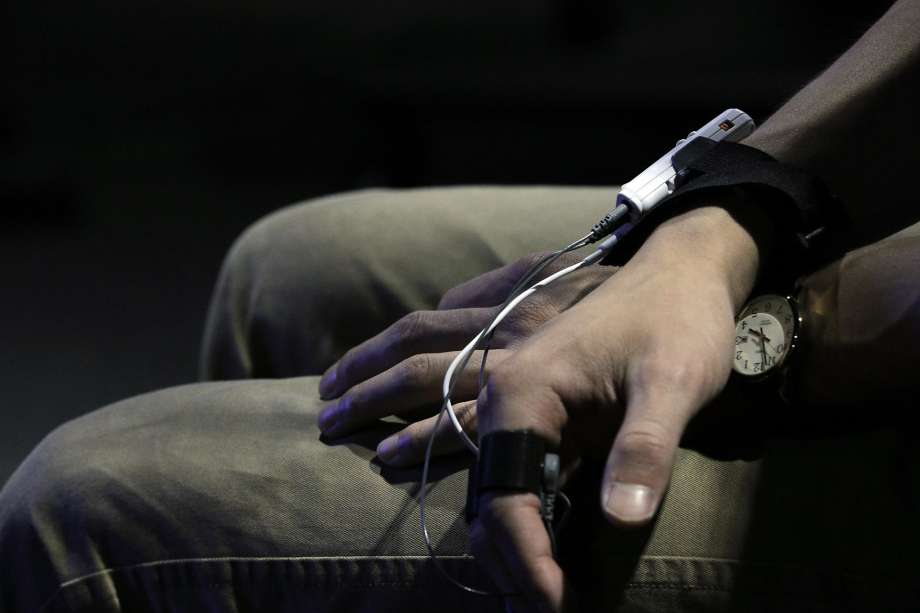
In the Biophysical Lab, for example, Gitterman wore a 64-channel biosensor system to measure brainwaves, while a hand sensor tracked galvanic skin response, a measure of how sweat glands and the nervous system react to emotional stimuli.
They were researching the sensation Crum described as “feeling” heat on her cheek while watching a video of a bright flame from a movie, an image made even more realistic through high-dynamic-range video monitors developed at Dolby.
...Crum said researchers have also found an interesting skin reaction when soccer fans like Gitterman watch a match on TV. “Every time, right before a penalty kick, you can see a spike, and it’s entirely predictable,” she said. “And these aren’t even teams he cares about. It’s just that human anticipation of this event.”
The research might explain why one moviegoer loves a film while another in the same audience hates it. “Experiences, emotions, arousal, the same fear or salient piece of information might cause one person’s heart rate to go up and another person’s to go down,” Crum said.
...In the basement, the Sensory Immersion Room is a lab with 3-foot-thick walls that shield all perceptible noise from busy Market Street. The entire room rests on a slab of concrete that floats on springs to provide more acoustical dampening. The lab’s door is controlled by motors because it’s too thick and heavy to be opened and closed by hand.
Beneath a covering of gray fabric is a web of more than 50 speakers and 40 microphones that can instantly change the acoustics of the room. There is also a 40-speaker audio subsystem. To demonstrate, Crum hit controls on an tablet, stomped her feet, and the echoes made the room sound like a large hall. She hit another control, stomped her feet, and the room sounded 3 feet long.
...Analyst Avi Greengart of the technology research and consulting firm Current Analysis said he is excited about the potential research that could come out of the immersion room, which he likened to the fictional Holodeck from “Star Trek.”
“I’ve seen a lot of corporate labs, but what they’re doing over there (at Dolby) absolutely blows me away,” Greengart said.
Compared with research efforts he’s seen at Microsoft and Google, Greengart said, Dolby’s scientists are working on “very pragmatic, practical technologies that they can sell to theater owners and to consumers.”
See the full story here: http://www.sfchronicle.com/business/article/Dolby-Laboratories-scientific-research-examines-10594019.php