All We Want to Do Is Watch Each Other Play Video Games
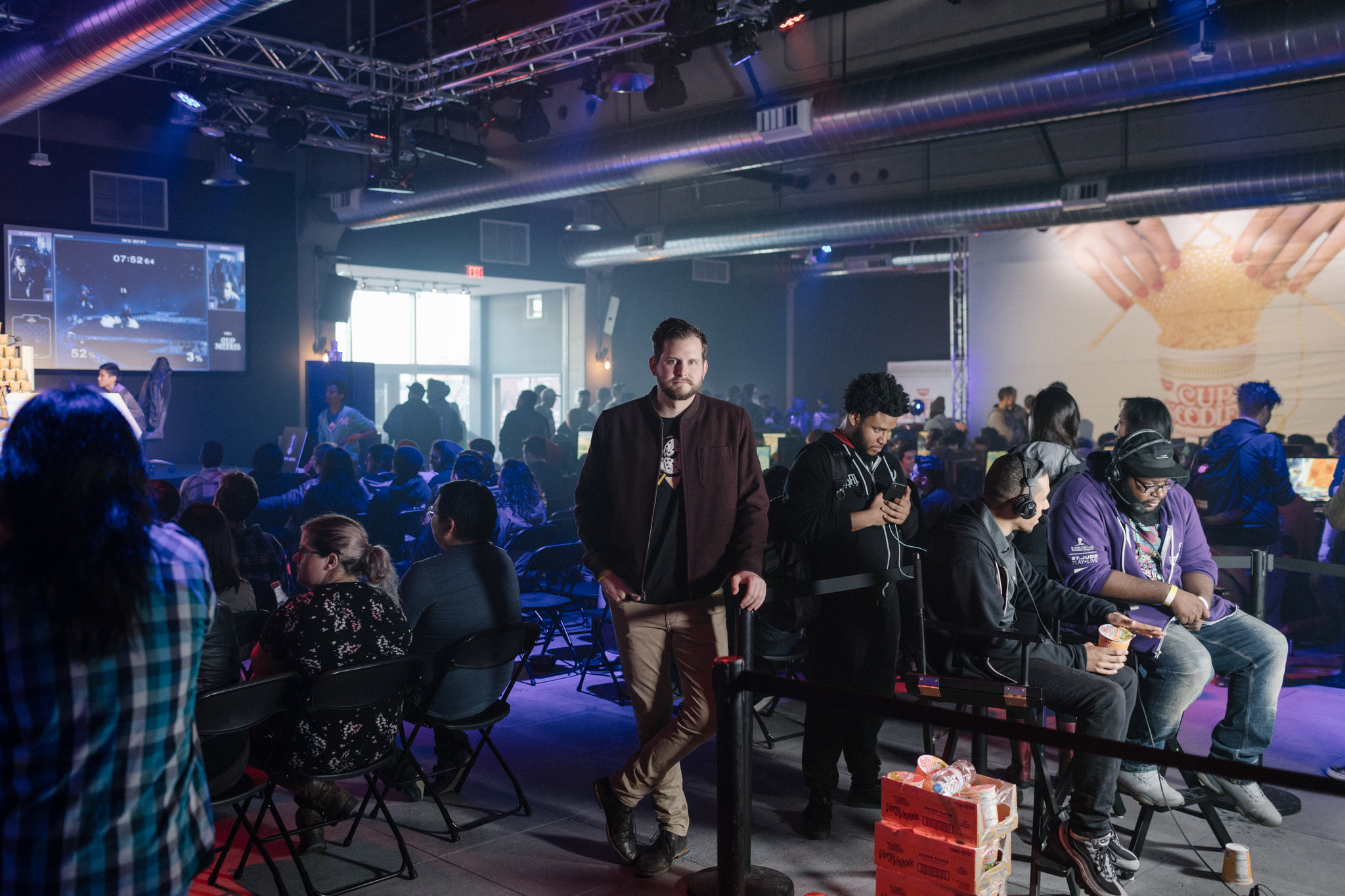
Across North America this year, companies are turning malls, movie theaters, storefronts and parking garages into neighborhood esports arenas.
At the same time, content farms are spinning up in Los Angeles, where managers now see gamers as some peculiar new form of famous person to cultivate — half athlete, half influencer.
And much of it is powered by the obsession with one game: Fortnite. Over the last month, people have spent more than 128 million hours on Twitch just watching other people play Fortnite, the game that took all the best elements of building, shooting and survival games and merged them into one.
How obsessed are people? After each of their wins this season, the Houston Astros — among many other sports teams — are doing a very specific dance, their arms in the air, fingers spread, their legs bent, toes tapping rapidly. It’s a Fortnite dance.
Gamers are coming together for practical reasons as well as social ones. Games are so sophisticated that they can overload home connections. And cryptocurrency miners have driven the price of crucial gear — like the graphics card gamers use to amp up their computers’ processing speeds.
“We’re seeing the rebirth of social gaming,” Luigino Gigante, 27, who opened a gaming center called Waypoint Cafe on the Lower East Side of New York late last year. “It’s bringing back the community aspect of gaming again. It’s like, ‘O.K., we’re still playing separately, but we’re together.’”
And there’s an underused asset already at hand.
“The movie theater!” said Ann Hand, the C.E.O. of Super League Gaming, which converts movie theaters into esports arenas, and has raised $32 million from investors. “It has that thunderous sound, and it’s empty a lot of the time.”
Two days a week, Ms. Hand and her crews convert about 50 movie auditoriums into esports arenas, where kids, mostly younger, compete and watch the game projected onto the big screen.
For the Super League Gamers, the events can accompany or replace traditional sports. It’s a new Little League and Minor League for today’s athletes. Each city plays together as a branded team — there’s the Chicago Force, the New York Fury, the San Francisco Ionics. So far, there are 50,000 players.
Parents accompany younger players, and the real-life experience opens their eyes. “The most common piece of feedback was that they knew their son or daughter loved this game, but they had no way to understand the game or know if they were any good at it,” Ms. Hand said. “Like, ‘I didn’t know my son or daughter was that competitive.’”
By 2019, she expects to be in 500 venues.
See the full story here: https://www.nytimes.com/2018/05/02/style/fortnite.html