“A major aim is to understand how our brains process self-motion cues in general,” Harris noted, “and to provide a quantitative model for how sensory information is combined together to do this.”
27Dec/18Off
Astronauts are using VR to study perception in space
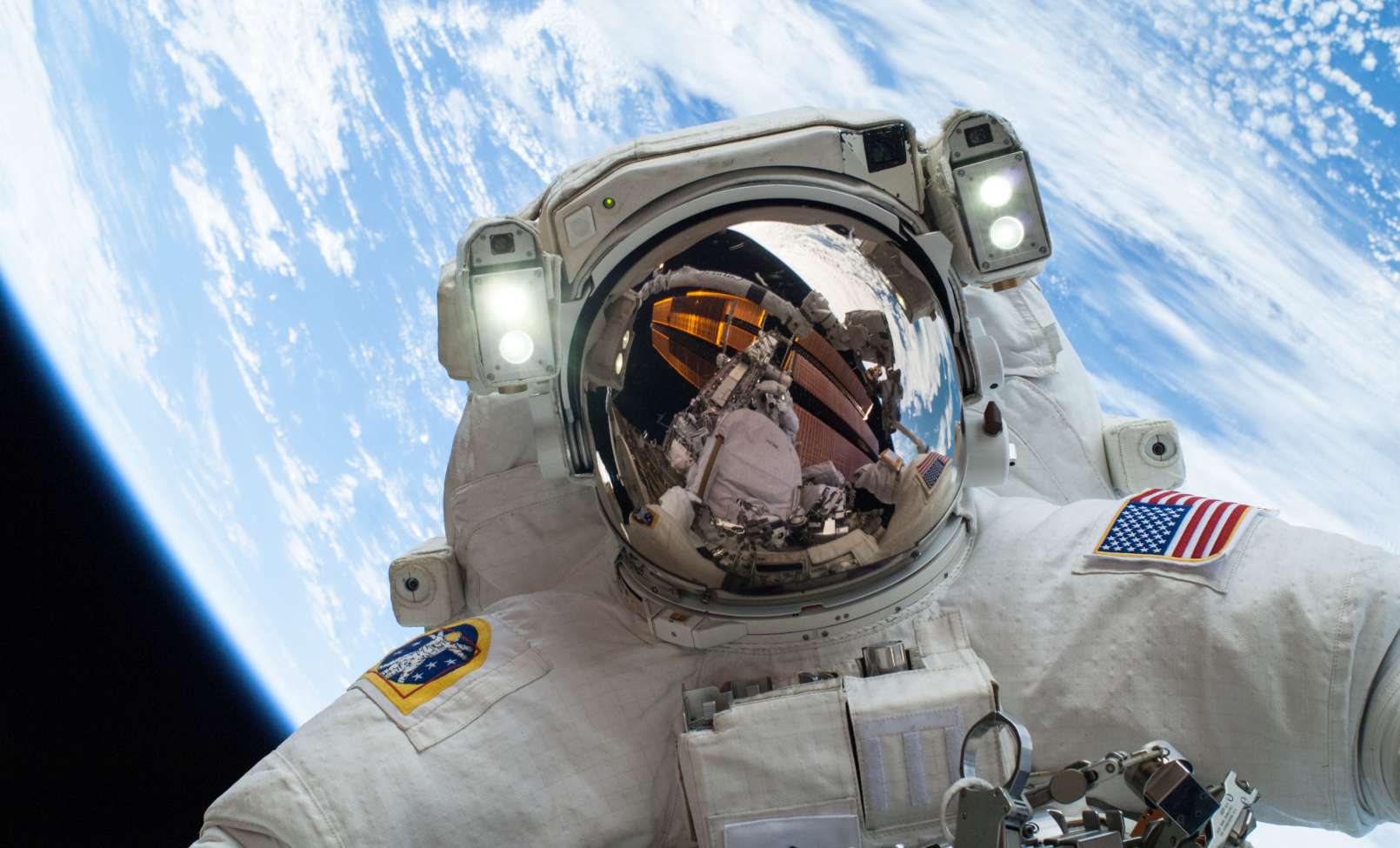 Scientists know that astronauts in microgravity often feel like they’re moving if they see another object moving, even when they’re immobile, which is a phenomenon that makes depth perception more difficult. This would especially be a problem when capturing a cargo spacecraft using the robotic Canadarm2.
This is where Saint-Jacques’ experimental challenge came in. Saint-Jacques spent a half hour participating in Vection, a virtual reality experience that will help scientists learn more about how astronauts estimate the size and motion of objects in space. He donned a VR headset and took part in three experiments: estimating the size of an object, “moving” in the virtual world to where he thought the object was placed in a hallway, and determining how he perceives tilt and visual acceleration.
The results of the experiment could be used to enhance the safety of operations aboard the ISS, and also help future astronaut crews working on the moon or on Mars.
There are applications on Earth as well, such as better controlling moving vehicles or assisting people who have trouble with balance, such as the elderly.
See the full story here: https://www.seeker.com/space/astronauts-are-using-virtual-reality-to-study-perception-in-space