Fable’s Neil Gaiman VR Experience ‘Wolves in the Walls’ Gets Sequel at Tribeca
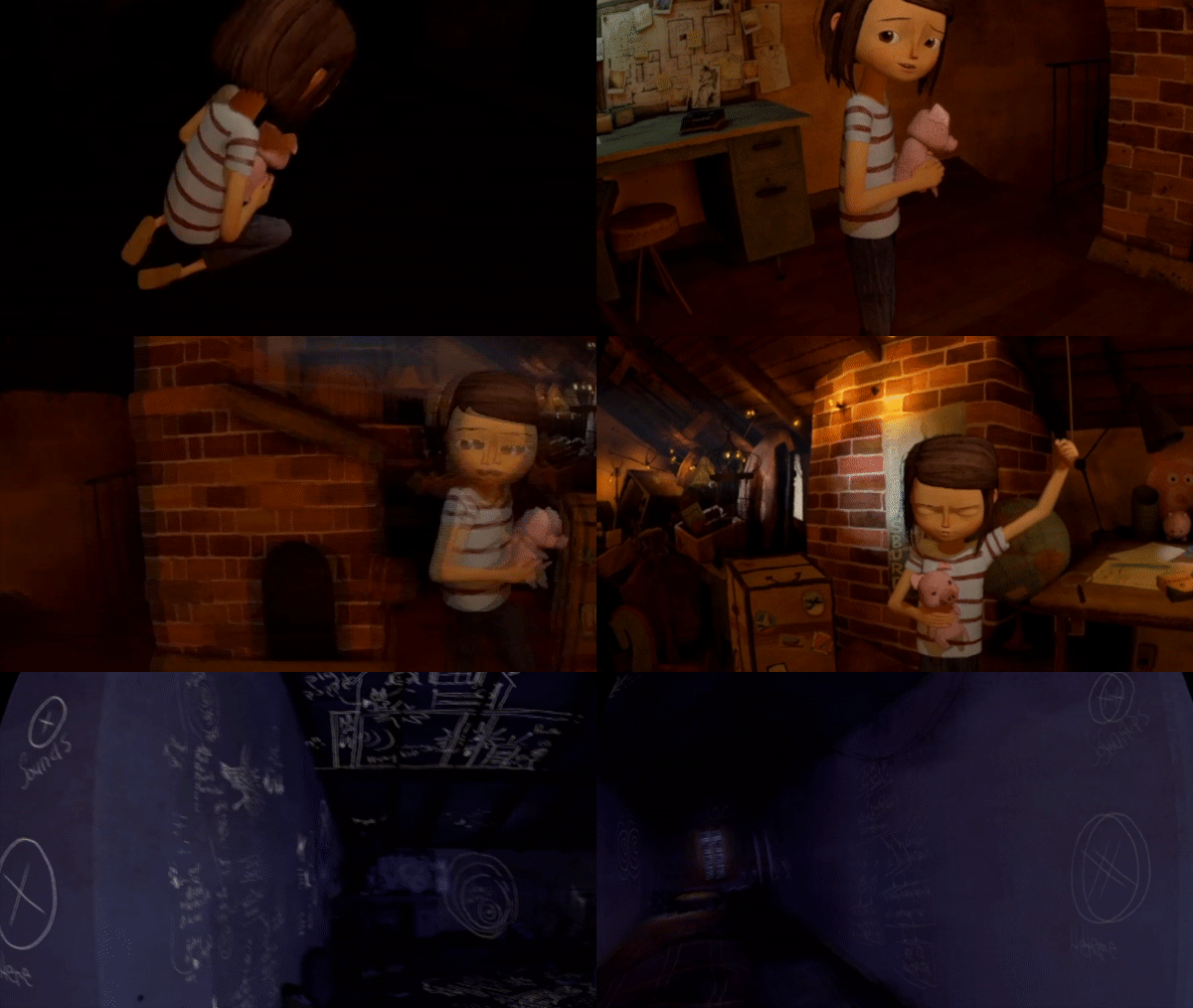 San Francisco-based immersive entertainment startup Fable is premiering the second part of “Wolves in the Walls,” a VR experience based on the Neil Gaiman children’s book by the same name, at the Tribeca Film Festival this week. “Wolves in the Walls: It’s All Over” effortlessly connects to the existing story, and immerses viewers in the world of an imaginative 8-year-old.
“Wolves in the Walls,” of which a first part premiered at Sundance in 2018, is the story of Lucy, an 8-year-old girl who is convinced that there are wolves living in the walls of her family home. She hears their noises, she fears their presence — but no one else in her family believes her.
“Wolves in the Walls: It’s all Over” also continues to play with interactivity, which includes the manipulation of objects. At one point, viewers get to take a canning jar to listen to the sounds in the walls. In another instance, we help Lucy and her Mom to fill jars with jam — an overwhelming process that some involves strange, one-of-a-kind automated machinery. And then there is “Wolf Slayer,” the in-experience video game played by Lucy’s brother, which we get to play along with for a little while.
“Wolves” parts 1 and 2 run a total of 20 minutes together, and Billington said that he was expecting part 3 to add another 20 minutes to the story. To make the piece interactive, the team had to produce an extra 20 minutes of material that viewers may or may not see, based on the choices they make during the story.
“We call it a twigging narrative,” he joked, adding: “We see choice and interactivity slightly differently.” Shamash explained that the focus was on the main character of Lucy, and her decisions, as opposed to decisions that viewers may make for her. “This is her quest, her journey,” she said.
“we create moments” as a mission statement during its first offsite meeting after spinning out of Facebook.
Some of these moments may be stories, others may be just small interactions with virtual characters, he suggested.
Key to both those future plans and a story like “Wolves in the Walls: It’s all over” is the ability to create emotional connections with characters, argued Shamash. That’s because a virtual beings like Lucy, be it in stories or other contexts, becomes more believable when you feel for them. Said Shamash: “It should have its own soul.”
See the full story here: https://variety.com/2019/digital/news/wolves-walls-tribeca-1203197492/