How Games Conquered the Movies
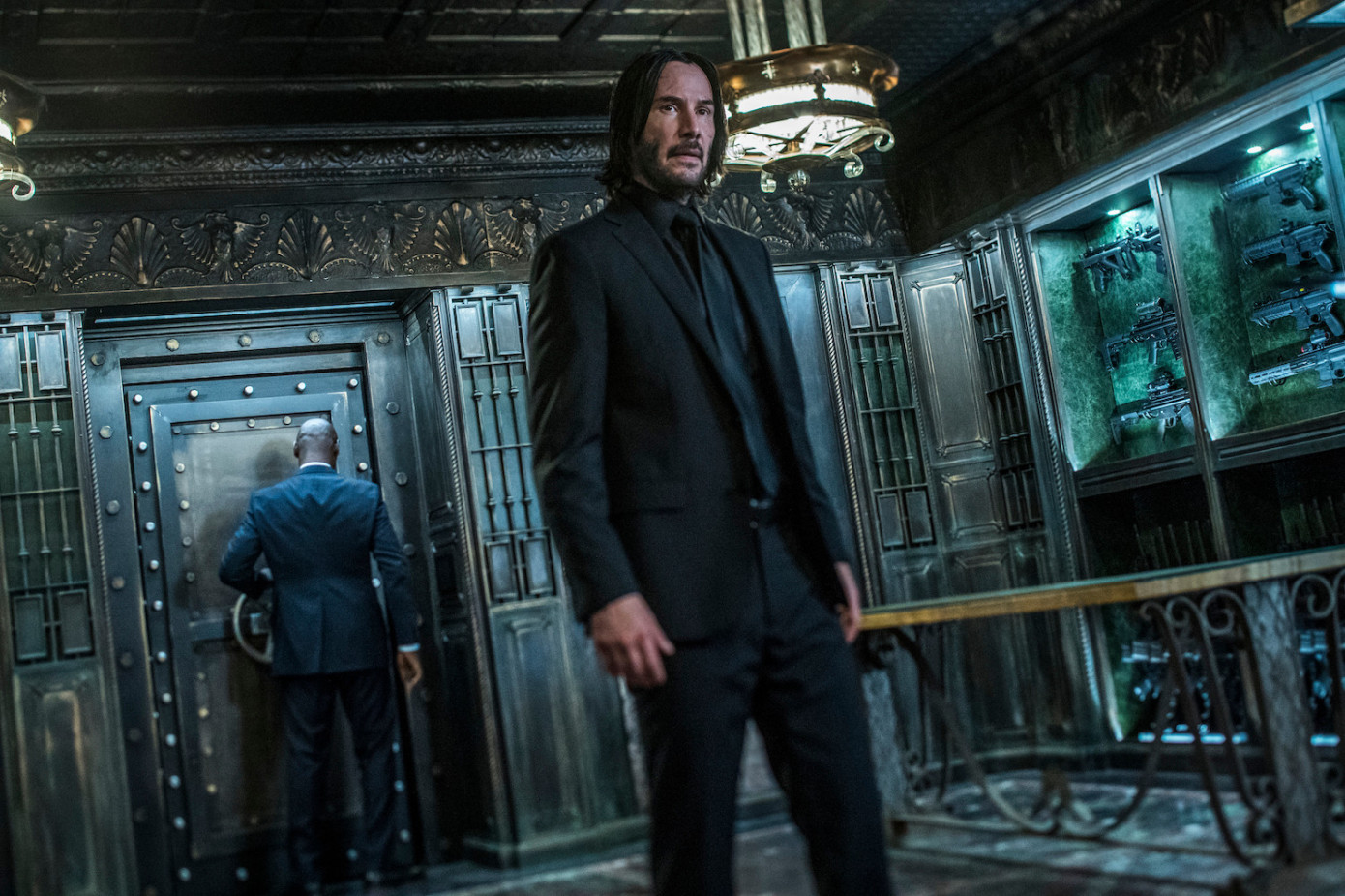
Keanu Reeves stars as 'John Wick' in JOHN WICK: CHAPTER 3 - PARABELLUM.
I thought of this while watching John Wick 3 last night. (Which I loved, as I did 1 and 2.) It’s not just that its ballet of bullets — especially the one with the dogs — are so like video games, in both structure and form, that they seem to have been practically been torn from a controller; you can practically see health bars and Stun markets hovering over the heads of the characters.
It’s also that the series’s primary costars, after Keanu — with apologies to Halle Berry and Ian McShane — is not any other individual character, but the world of John Wick, the Continental, and the High Table. Worldbuilding has long been a first-class citizen in video and tabletop role-playing games; now it has graduated to movies as well.
Jason Bourne and James Bond were superspies, but they didn’t really get better over the course of their series, or become so ridiculously puissant that they can casually take out a dozen heavily armed/armored expert fighters in thirty seconds, singlehandedly, as Shaw does in the trailer of the new Fast & Furious movie. Most of Jason Bourne’s action sequences are escapes; most of John Wick’s are hunts. And of course “one hunting a horde” has been the basic mode of first-person shooters since long before Doom.
Ultimately, video games have expanded Hollywood’s possibility space, and to my mind that’s always a good thing. Is it a universal rule that when technology introduces a new medium of storytelling, old media soon adopts the new medium’s styles and tropes? Did plays become more like novels after Don Quixote? Did radio become more like television after TV was introduced? And if/when we figure out the most compelling structure(s) for AR/VR storytelling, will video games become more like that? It seems fairly inevitable to me that the answer is yes.
See the full story here: https://techcrunch.com/2019/05/26/how-games-conquered-the-movies/