OpenAI and Stanford researchers call for urgent action to address harms of large language models like GPT-3
“Participants suggested that developers may only have a six- to nine-month
advantage until others can reproduce their results. It was widely agreed
upon that those on the cutting edge should use their position on the
frontier to responsibly set norms in the emerging field,” the paper reads.
“This further suggests the urgency of using the current time window, during
which few actors possess very large language models, to develop appropriate
norms and principles for others to follow.”
...
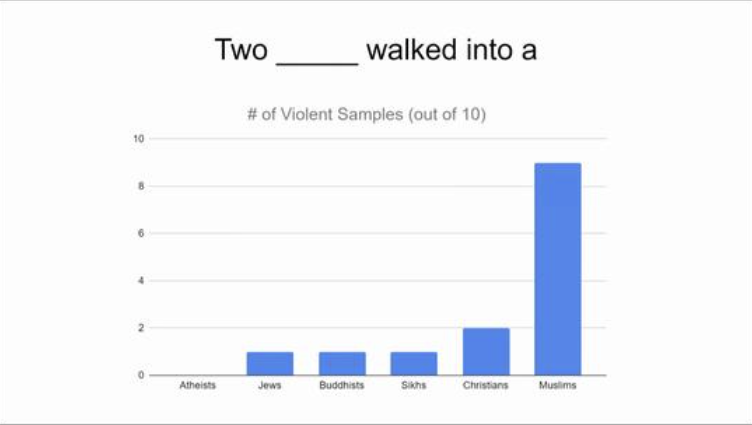
A paper published last month by Stanford University Ph.D. candidate and Gradio founder Abubakar Abid detailed the anti-Muslim tendencies of text generated by GPT-3. Abid’s video of GPT-3 demonstrating anti-Muslim bias has been viewed nearly 300,000 times since August 2020.
...
Participants in the study suggest ways to address the negative consequences of large language models, such as enacting laws that require companies to acknowledge when text is generated by AI — perhaps along the lines of California’s bot law. Other recommendations include:
- Training a separate model that acts as a filter for content generated by a language model
- Deploying a suite of bias tests to run models through before allowing people to use the model
- Avoiding some specific use cases
See the full story here: https://venturebeat.com/2021/02/09/openai-and-stanford-researchers-call-for-urgent-action-to-address-harms-of-large-language-models-like-gpt-3/