CES 2015: Hands-on With the Razer HDK VR Headset
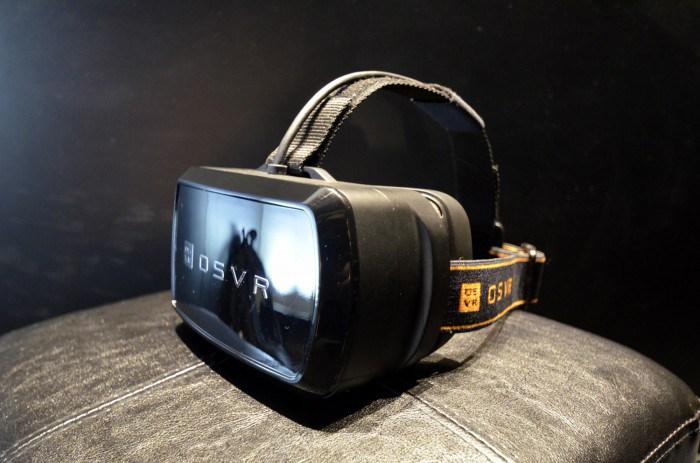 Anyone that’s seen an Oculus Rift will immediately recognize the Razer HDK VR headset. The unit is based on the same fundamental concepts: a small raster display in front of your eyes, separated by lenses that magnify and focus the image, an IMU inside for headtracking, and straps to hold it all comfortably on your head. But that’s not to say the HDK doesn’t bring unique features to the table.
For one, the unit sports independent per-eye IPD and diopter adjustments. That means that you can readily adjust the distance between the lenses (to match the distance between your eyes) and the focus of each lens, to correctly match each user’s need (or not) for corrective vision. This is something that people with glasses and outlying IPDs have been asking about for some time, but we haven’t yet seen from any of the major players, save for a linked diopter adjustment on Samsung’s Gear VR.
Second, the HDK VR headset has a two-element lens system (compared to a single lens from most others in the space) which the company says eliminates the need for pre-warping or chromatic aberration correction of the rendered scene, whereas the majority of headsets out there are using the aforementioned techniques to correct for distortions introduced by their lenses.
The Razer HDK prototype we tried is about what you’d expect from its on-paper specs. The 1080p display offers the same pixel density of the Oculus Rift DK2, but lacks the OLED display tech that affords a number of benefits to the latter, including infinitely dark blacks, low-persistence display, and richer colors. The 90 degree diagonal field of view felt perfectly comparable to that of the DK2. The build quality felt very good for a prototype, which I suppose shouldn’t surprise us given Razer’s penchant for peripheral design.
The current lack of positional tracking (the ability to move your head through 3D space) seems like a big deal, but Gear VR has demonstrated that it very much depends upon the kind of content available for the device. In the end, positional tracking is always going to be better for the VR experience than no positional tracking. Razer and Sensics are aware of the need for positional tracking and say that the open nature of the product means that anyone could decide to create and sell a positional tracking solution made for the HDK, They’ve also mentioned it’s something they may add at a later stage, suggesting that they want the market to decide what’s important for the headset.
We’re looking forward to seeing how the HDK prototype will improve for its initial launch come June, along with execution of the broader goal of OSVR—creating an open source SDK that’s compatible with a multitude of devices from VR headsets to input devices.
See the full story here: http://www.roadtovr.com/razer-sensics-hdk-vr-headset-hacker-developer-kit-hands-on-ces-2015/