VIRTUAL NOSE KEEPS GAMERS FROM FEELING SICK
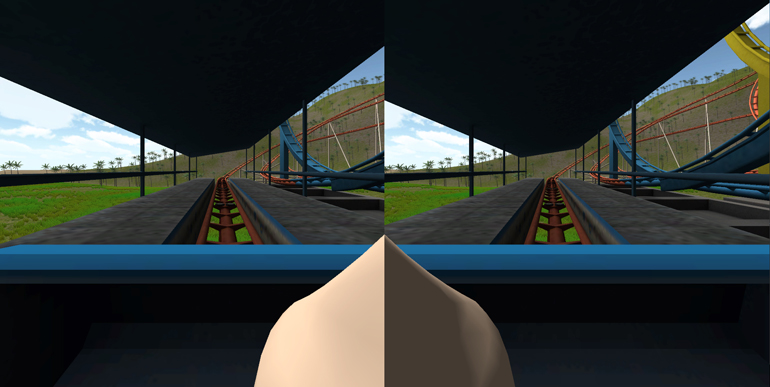
41 test subjects operated two virtual reality applications of varying motion intensity (a slow wander through a Tuscany villa and a white-knuckle roller coaster ride) while wearing a virtual reality headset. They were not told about the nose. Some subjects had the virtual nose, while others played standard versions. “Surprisingly, subjects did not notice the ‘nasum virtualis’ while they were playing the games, and they were incredulous when its presence was revealed to them later in debriefings,” Whittinghill says.
The virtual nose allowed people using the Tuscany villa simulation to play an average of 94.2 seconds longer without feeling sick, while those playing the roller coaster game played an average of 2.2 seconds longer.
The research is ongoing. “Our long-term goal is to create a fully predictive model of simulator sickness that will allow us to predict, given a specific set of perceptual and individual inputs, what level of simulator sickness one can expect,” Whittinghill says.