Virtual reality may be effective tool for evaluating balance control in glaucoma patients
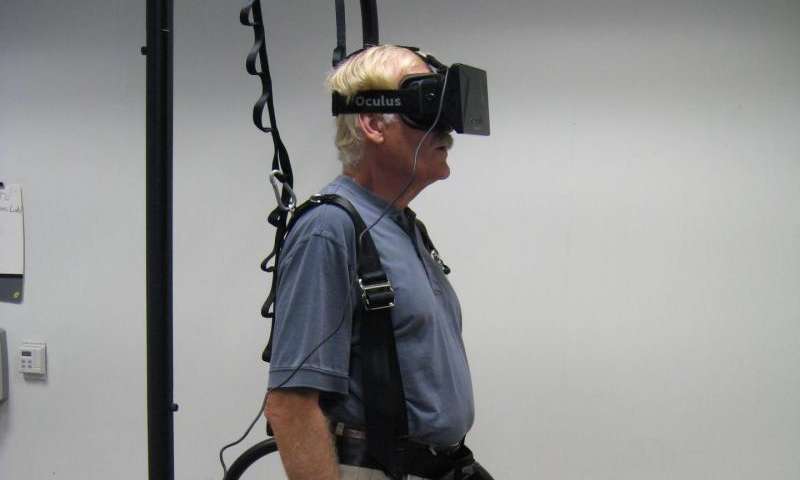 The team of ophthalmologists, vision scientists and engineers studied 42 patients with open-angle glaucoma and 38 healthy subjects as a control. The subjects wore Oculus Rift stereoscopic goggles that can simulate different settings while standing on a force platform, a device that measures balance and movement. Measurements were recorded by the force platform, including when the goggles simulated movement such as moving through a tunnel or a spinning floor, and when the goggles were not worn or were not providing visual stimulation.
During simulated movement, researchers found that participants made balance adjustments that were an average of 30 to 40 percent more pronounced in glaucoma patients than in healthy subjects, who were able to regain balance more quickly than those with glaucoma. The study authors suspect that the pronounced lack of balance control in the subjects with glaucoma may be related to the loss of retinal ganglion cells caused by the disease, which leads to slower visual processing and impaired motion perception.
The study also found that the degree to which balance was lost was strongly linked to a history of falls, which validated the study's methods and metrics. The researchers hope that future studies using this paradigm will help ophthalmologists better understand the relationship between risk of falls and retinal ganglion cell loss in people with glaucoma.
See the full story here: http://medicalxpress.com/news/2015-04-virtual-reality-effective-tool-glaucoma.html