Charity buys 3D equipment to entertain children in hospital
The equipment is already proving very popular with the young patients as there are a variety of short 3D programmes available. The features range from exciting rollercoaster rides to calm underwater fish scenes and winter wonderlands.
Staff have noticed how the children appear more relaxed and less conscious of their discomforts when they are enthralled by the programmes on the 3D distraction equipment.
See the full story here: http://www.thenorthernecho.co.uk/news/10089488.Charity_buys_3D_equipment_to_entertain_children_in_hospital/
China’s first 3D documentary begins shooting in the Wudang Mountains
 China's first 3D documentary began a 15-day shoot in the Wudang Mountains on Nov 1. The documentary will explore the world cultural heritage of Wudang. It will be the first episode in a large-scale 3D serial documentary, World Heritages in China.
See the full story here: http://www.chinadaily.com.cn/m/wudang/2012-12/05/content_15989610.htm
Lytro re-shoots pics as 3D clay scenes
Okay, this strikes me as one of the better marketing ideas I’ve seen in the photo business in, like, ever.
 For a few days, selected shots — even old treasured images — will be “Lytro-ized.”
Lytro is working with Screen Novelties, the demented brains behind the satirical Robot Chicken show [really — it’s demented] who will model the people and settings of a photo — and then shoot that with a new Lytro camera!
See the full story here: http://pmanewsline.com/2012/12/04/lytro-re-shoots-pics-as-3d-clay-scenes/#.UL90dqX6LiM
Silicon Valley Accellerator to Tackle the Future of Journalism

Entrepreneur Corey Ford is in an interesting spot: Today he launched Matter, the startup accelerator that aims to help companies tackling the future of publishing and media. But as of yet, no one, including Ford, necessarily knows what that future of journalism looks like. So what kind of companies will Ford accelerate to build that future? Companies that change how people think and learn, and companies that do things that well, matter.
Ford, who was an award-winning journalist with Frontline before teaching entrepreneurship at Stanford’s design school and starting Runway at Innovation Endeavors, isn’t going at it alone. While Matter (no relation to our former colleague Bobbie Johnson’s Matter startup) is structured like a typical accelerator, incubating companies for four months and giving them $50,000 in funding, it has backing from KQED, the John S. and James L. Knight Foundation and Public Radio Exchange (PRX). KQED and the Knight Foundation have each put $1.25 million into the initial $2.5 million fund, and PRX will provide strategic support. Applications for interested companies are due by Jan. 6.
International 3D Society Forms I3DS-Canadian Chapter in Vancouver
The International 3D Society has announced the formation of its Canadian chapter to be based out of Vancouver BC. The Canadian Chapter will commence with the conference 3D[Fwd] on January 26th in Vancouver with an exclusive networking event on the 25th.
See the full story here: http://3droundabout.com/2012/12/8832/international-3d-society-forms-i3ds-canadian-chapter-in-vancouver.html
China exhibits first domestic 3D dome theatre
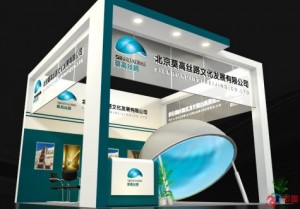 During the recent CIFTE China (Shanghai) International Film Technology Exhibition, China’s first homegrown digital 3D dome theatre system.

Dome theatre technology, such as IMAX Omnimax, has been around for many years, but it has been foreign technology that has dominated in China. Like China’s DMAX – the domestic equivalent to IMAX, a new Chinese made dome technology from Beijing based company Silkroading, will entertain patrons with beyond peripherial vision 3D visuals.
See the full story here: http://www.3dfocus.co.uk/3d-news-2/3d-in-china/china-exhibits-first-domestic-3d-dome-theatre/11370
CAMERON- NEW HOBBIT MOVIE WILL CHANGE THE INDUSTRY
Jackson this week likened the higher shooting rate to the introduction of compact discs, saying it was the way of the future for film. "I personally think it's fantastic, but it's different," he told Radio New Zealand. "I remember when CDs came in and there was a nostalgic feeling that the sound of a needle on vinyl was what music should sound like -- suddenly you've got this pristine clarity and a lot of people were nay-saying it."
See the full story here: http://www.3dtv.com/news/Cameron-New-Hobbit-movie-will-change-the-industry
‘Hobbit film wizardry left us feeling sick’ / Others thought it was wonderful
 Hollywood director Bryan Singer wrote on Twitter after the world premiere of The Hobbit: An Unexpected Journey on Wednesday: 'Having some serious frame rate envy. Amazing and involving. Loved it!'
The 3D company that worked with Jackson on the shoot said the new technology should actually stop people feeling ill.
Matt Cowan, chief scientist at RealD, told stuff.co.nz: 'What you will experience is smoother motion.
'The effect you get for things like explosions is much more real.
'It is a great experiment and kudos to Peter Jackson for doing it.'
Objet Launches A Large-Format 3D Printer
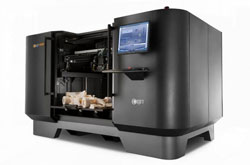 Rehovot, Israel – Objet Ltd., the innovation leader in 3D printing for rapid prototyping and additive manufacturing, launched today at Euromold the Objet1000, the company’s largest 3D printer to date. Featuring a 1000 x 800 x 500 mm (39.3 x 31.4 x 19.6 inch) wide-format build envelope, the Objet1000 is ideal for automotive, defense and aerospace, industrial machinery, consumer goods and household appliance sectors as well as high-end service bureaus that need to create industrial size, 1:1 scale prototypes.