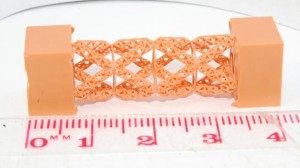
 If you start 3D-printing custom beams for the exact purpose they're intended to serve though, you've got a regular space-age material on your hands. It's lighter than steel and orders of magnitude stronger.
With each iteration of ever-smaller fractal innards, the beam can gain strength by the order of magnitude, with practically negligible weight gain. Third generation beams, about as far as we can hope to go with current tech, are 10,000 times stronger than steel.
See the full story here: http://gizmodo.com/5964609/custom-3d+printed-beams-can-be-10000-times-stronger-than-steel
[Philip Lelyveld comment: a long time getting to the obvious conclusion that glasses-free aren't developed sufficiently for the consumer market yet.]
It has been almost three years since 3D TVs first appeared in the consumer market. Now, there are three predominant 3D display technologies used by the TV manufacturer. Panels based on active shutter 3D goggles are the first to arrive on the home 3D entertainment scene. This was quickly followed by their passive 3D glasses counterparts, as well as glasses-free versions which have only been recently debuted.
Conclusion
At this point in time, an active shutter or passive 3D TV is probably a more logical choice for most users. Aside from a higher price premium, most active shutter 3D TVs can deliver good picture quality in darker rooms. If you have a limited budget, nothing beats passive 3D displays with their equally strong 3D visuals, save for the visible artifacts at close viewing distances.
With better performance and affordability, glasses-free 3D panels will be a lot more appealing, but not for now.
See the full story here: http://asia.cnet.com/active-vs-passive-vs-glasses-free-3d-tvs-62219631.htm
[Philip Lelyveld comment: at last nights Sony 4K event the sales rep said that buyers of the $25K panel or projector will receive playback hardware/software upgrades and new 4K content as they are released.]
Sony released the titles of the 4K movies it will bundle with its new 4K home theater system. The system includes an 84-inch 4K LED TV, an Xperia Tablet S that serves as a remote control, and a video player with 10 pre-loaded 4K feature films:
“The Amazing Spiderman,” “Total Recall (2012),” “The Karate Kid (2010),” “Salt,” “Battle Los Angeles,” “The Other Guys,” “Bad Teacher,” “That’s My Boy,” “Taxi Driver,” and “The Bridge on the River Kwai.”
The player is also “designed to be updated with additional 4K titles and video clips. More delivery solutions will continue to evolve rapidly, with further product and content announcements coming shortly.”
See the full story here: http://www.tvtechnology.com/article/sonys-k-ultra-hd-titles-available-/216608
To whatever extent BitTorrent can build a reputation as a legitimate media distribution platform, it doesn't help that its premium brand is The Pirate Bay, a file-search portal that declines to identify or filter out content that is shared without rights-holder permission. The site ranks in the top 100 websites worldwide, in some estimates, and has undergone lawsuits, server raids, andmultiple impermanent shutdowns. The Pirate Bay is regarded by movie and music companies as a blistering internet inflammation that infectiously poisons proper media consumption.
But legit players in the file-sharing biz quietly use Bittorrent for its network efficiency, while introducing new distribution and revenue opportunities for creators, and offering new media discovery sites for consumers.
In this article, the word "legitimate" means "in agreement with rights-holders." There is no philosophical stand here for or against The Pirate Bay or its users. The opinion here is that media companies adjust to technology disruption slowly, defiantly, and that they often intensify their own problems in a copy-share world.
See the full editorial here: http://www.engadget.com/2012/11/28/legal-torrent-sites-are-innovators-of-media-consumpti/
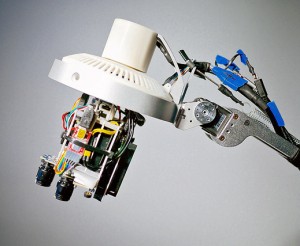 [Philip Lelyveld comment: How many MIT Media Lab students does it take to change a light bulb?]
The LuminAR device, created by Linder and colleagues at the Media Lab, can project interactive images onto a surface, sensing when a person’s finger or hand points to an element within those images. Linder describes LuminAR as an augmented-reality system because the images and interfaces it projects can alter the function of a surface or object. While LuminAR might seem like a far-fetched concept, many large technology companies are experimenting with new kinds of computer interfaces in hopes of discovering new markets for their products (see “Google Game Could Be Augmented Reality’s First Killer App” and ”A New Chip to Bring 3-D Gesture Control to Smartphones”).
See the full story here: http://www.technologyreview.com/news/507836/augmented-light-bulb-turns-a-desk-into-a-touch-screen/?utm_campaign=newsletters&utm_source=newsletter-daily-all&utm_medium=email&utm_content=20121129
Imagine landing on the moon or Mars, putting rocks through a 3D printer and making something useful – like a needed wrench or replacement part.
To test the idea, NASA researchers provided Bandyopadhyay and Bose with 10 pounds of raw lunar regolith simulant, an imitation moon rock that is used for research purposes.
The WSU researchers were concerned about how the moon rock material, which is made of silicon, aluminum, calcium, iron and magnesium oxides, would melt, but they found it behaved similarly to silica. And, they built a few simple shapes.
See the full story here: http://www.pddnet.com/news/2012/11/using-3d-printer-make-parts-moon-rock
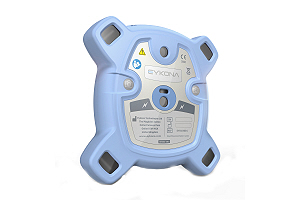 A portable 3D imaging camera developed by an Oxford based medical technology company is being used in Afghanistan to assess the nature of wounds received by soldiers.
The Eykona camera – shortlisted for Electronic Product of the Year in the 2011 British Engineering Excellence Awards – creates a detailed 3D model of any wound or scar, from which accurate measurements of distance, area, colour, width or volume can be made.
This model can then be assessed from all angles using rendering software and shared with other doctors and clinicians. Small sterile 'targets' allow the focus and position of the camera to be set, eliminating inconsistency between images.
Using the models created using the camera, medics can assess fresh wounds and understand if and how the wound is healing, allowing them to adjust the treatment plan accordingly.
See the full story here: http://www.newelectronics.co.uk/electronics-news/_3d-camera-helps-wound-assessment-in-afghanistan/46436/
Of the approximately 60 graduate engineering students who completed the survey, 68% stated that they did not know enough to answer the question “what is a trade secret?” 21% stated that they did not know enough to answer the question “what is a patent?” The percentages of students unable to provide an answer to “what is copyright?” and “what is a trademark?” were 32% and 51% respectively.
This problem is even more pressing now that many cash-strapped universities are making IP a key focus of efforts to more effectively leverage their research output.
See the full article here: http://www.forbes.com/sites/johnvillasenor/2012/11/27/intellectual-property-awareness-at-universities-why-ignorance-is-not-bliss/?utm_source=feedburner&utm_medium=email&utm_campaign=Feed%3A+mediaredef+%28jason+hirschhorn%27s+Media+ReDEFined%29
5. The Team Spirit
USC, UCLA, Cal Tech and JPL are geek-rich feeding ponds for tomorrow’s big-fish startups. Kevin Winston’s Digital LA is the largest networking organization for the digital entertainment industry. Add in coworking spaces, hackerspaces, consulting firms, startup capital events and monthly breakfast lecture series and Los Angeles is an interactive idea hive of startup juju. Take a look at this visualization map of L.A.’s startup scene to see all the connections.
See the full article here: http://www.forbes.com/sites/davidhochman/2012/11/26/six-reasons-los-angeles-is-suddenly-booming-with-startups/
[Philip Lelyveld note: the 3D will be shown at 24fps triple flash, 48fps double or single flash - depending on the projector's capabilities.]
Wendy Aylsworth fixed her eyes on a screen at the Landmark theater in West Los Angeles, carefully studying a scene of hobbits preparing a lavish feast.
"We're seeing good detail and a richness in the characters," Aylsworth said. "It's right on."
The Warner Bros. senior vice president of technology was reviewing a test reel for the "The Hobbit: An Unexpected Journey," and a new projection technique that will show the highly anticipated Peter Jackson movie at 48 frames a second.
The controversial new technology could revolutionize traditional movies, which have been projected at a standard 24 frames per second for almost 90 years. Warner Bros. will become the first studio to release a major Hollywood movie in 48 frames a second when its "Hobbit" premieres in the U.S. on Dec. 14.
Warner is also hedging its bet: The high-frame-rate version of "The Hobbit" will be shown on only about 450 screens of an estimated 4,000 screens in the U.S. and Canada that will show the movie.
For now, theaters will not be charging extra for the higher-frame-rate screenings, which will be included in the higher-priced 3-D tickets.
The cost of bringing high-frame-rate viewing to most theaters is $1,000 to $2,500 per screen. Cinemas that already have the newest digital projectors typically require only a software upgrade or a new video card.
See the full story here: http://www.latimes.com/entertainment/envelope/cotown/la-fi-ct-48frames-hobbit-20121121,0,5343864,full.story
 If you start 3D-printing custom beams for the exact purpose they're intended to serve though, you've got a regular space-age material on your hands. It's lighter than steel and orders of magnitude stronger.
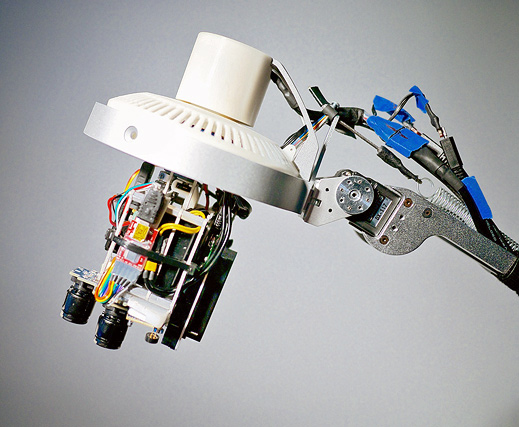 [Philip Lelyveld comment: How many MIT Media Lab students does it take to change a light bulb?]