OpenAI’s attempts to watermark AI text hit limits
PhilNote: this sounds like the DRM debates at the CPTWG (copy protection technical working group) all over again.
"We want it to be much harder to take [an AI system's] output and pass it off as if it came from a human," Aaronson said in his remarks. "This could be helpful for preventing academic plagiarism, obviously, but also, for example, mass generation of propaganda -- you know, spamming every blog with seemingly on-topic comments supporting Russia’s invasion of Ukraine without even a building full of trolls in Moscow. Or impersonating someone’s writing style in order to incriminate them."
... At their cores, the systems are constantly generating a mathematical function called a probability distribution to decide the next token (e.g., word) to output, taking into account all previously-outputted tokens. ...
OpenAI's watermarking tool acts like a "wrapper" over existing text-generating systems, Aaronson said during the lecture, leveraging a cryptographic function running at the server level to "pseudorandomly" select the next token. In theory, text generated by the system would still look random to you or I, but anyone possessing the "key" to the cryptographic function would be able to uncover a watermark. ...
Unaffiliated academics and industry experts, however, shared mixed opinions. They note that the tool is server-side, meaning it wouldn't necessarily work with all text-generating systems. And they argue that it'd be trivial for adversaries to work around. ...
Even if OpenAI were to share the watermarking tool with other text-generating system providers, like Cohere and AI21Labs, this wouldn't prevent others from choosing not to use it. ...
See the full story here: https://news.yahoo.com/openais-attempts-watermark-ai-text-131511322.html
Also see https://www.deseret.com/2022/12/10/23501933/does-ai-mean-the-death-of-the-college-essay
How Australian rock art warns us about 2023
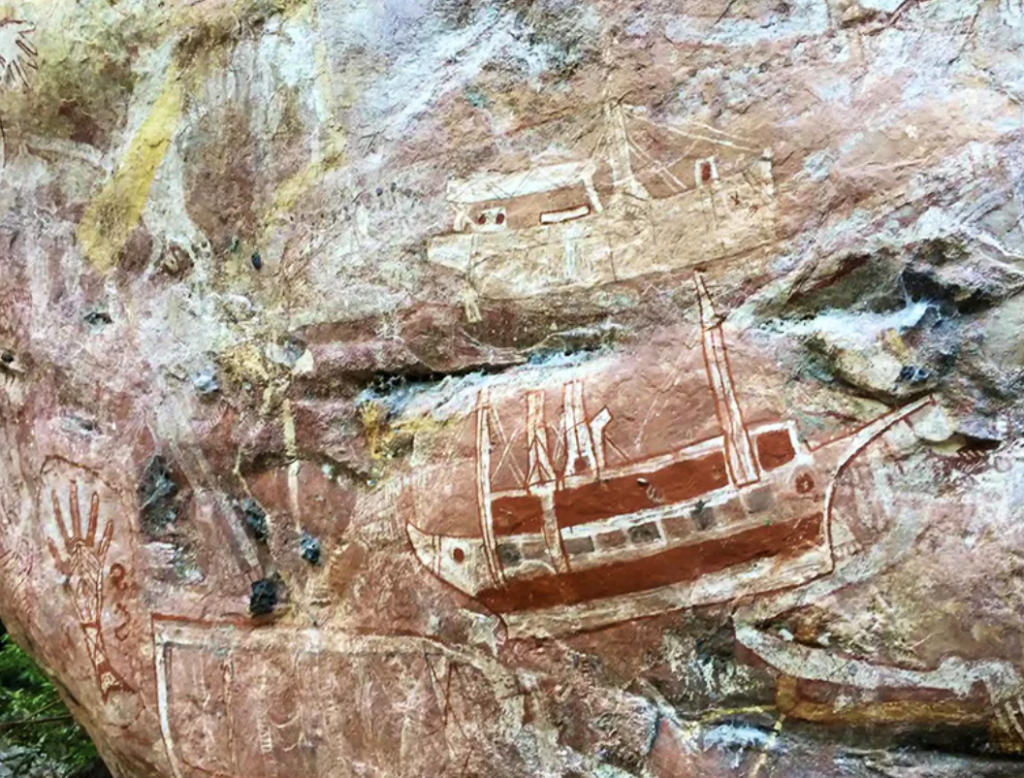
... There is throughout a poignant dissonance: because these haunted paintings show fearful humanity encountering something alien, strange, highly advanced – and utterly unknowable. ...
Recently a sibling of GPT3, a LLM designed by Meta/Facebook, started defeating humans at Diplomacy – a game requiring deep verbal skills and the ability to deceive. ...
GPT4 might be so powerful it will appear entirely and flawlessly intelligent to everyone; that is to say, it will breeze through the Turing Test ...
A few decades after the first contact art appeared in Arnhemland, the Aboriginal people were largely swept from their homelands by the economic forces and political changes brought by European settlers. But not everyone deserted these silent red canyons and bright lilied waterways. In the 2000s, the last native speaker of the local Amurdag language, Charlie Mungulda, returned to the Mount Borradaile rockfaces to paint a symbolic and final hand, a scarlet print which says remember us, because we were here. With this ritual, he signalled an end to 50,000 continuous years of Aboriginal art in West Arnhemland. Nothing has been painted in Mount Borrodaile since. Nor will it be.
See the full story here: https://www.spectator.com.au/2022/12/how-australian-rock-art-warns-us-about-2023/
MIT’s Future Intergenerational Digital Immortal Expert
A Fortune 500 company CEO in his 80s is taking part in the MIT trial project, Augmented Eternity and Swappable Identities. The beta MIT project is tested on the digital footprint of 25 volunteers with the goal of creating digital immortal personas. The trial aims to use social media data to train an avatar to behave like the human identity it is connected with. The avatar could share an opinion, his or her likes or dislikes, and create “emotional legacies”for loved ones left behind. ...
Researcher Hossein Rahnama is leading the MIT Media Lab project and sees the platform as supporting bereavement or as business research and expert knowledge transfer.
Rahnama asks the question, “can software agents become our digital heirs?” And his project works by using a “distributed machine intelligence network” to enable users to control their digital footprint and turn it into their digital persona, which in turn can be shared on social networks. ...
“We believe that by enabling our digital identity to perpetuate, we can significantly contribute to global expertise and enable a new form of an intergenerational collective intelligence.” ...
See the full story here: https://medium.com/technology-hits/mits-future-intergenerational-digital-immortal-expert-dbdfa216d970

Real Calamity Far Outpaces Virtual Reality At Struggling Social Media Pioneer Meta Networks
... Meanwhile, poor privacy choices made long ago have come back to haunt Zuckerberg. In the early years Facebook was heavily dependent on third-party developers to drive growth. User and demographic data was routinely made available. The flaw in this business model became apparent in 2018 when Cambridge Analytica used this data to drive disinformation campaigns during the 2016 presidential election run-up.
VR is Zuckerberg’s plan to own the foundation, and build business models with Meta at the core.
This new strategy popped up Tuesday all over the Quest Pro reveal. Several big corporations appeared to be latching onto Meta’ VR coattails. Among other deals, the company announced partnerships with Microsoft (MSFT) for its Teams, Office, and Windows 365 software suites. The Redmond, Wash,-based company’s official blog notes that Xbox Cloud Gaming will also be ported to Meta headsets. YouTube is moving its massive VR video platform to Quest. And NBCUniversal will bring its Peacock streaming application and other content to Quest headsets, according to a report at Variety. ...
And that’s the rub. Meta’s VR business simply is not big enough to offset its lost revenue from the Apple OS changes. Plenty of people believe VR will never be foundational at Meta. Convincing people to buy expensive computers they will wear on their faces is a tougher sell than building a smartphone application for a device most people feel they can’t live without. ...
See the full story here: https://www.forbes.com/sites/jonmarkman/2022/12/09/real-calamity-far-outpaces-virtual-reality-at-struggling-social-media-pioneer-meta-networks/?sh=536fdad0172d
Bringing the field to students with ‘Virtual Field Geology’
... Even though people can now travel and assemble, the team believes virtual experiences could become part of a “new normal” for geology research and education.
“Part of increasing access to the field is to help people know what to anticipate,” Crider said. “To the extent that we can help students anticipate both the outdoors experience and the science experience, then the uncertainty and maybe anxiety is reduced, and people can focus on the learning goals.”
The virtual experiences allow people to visit the field site and use common geology tools to measure angles in the rock layers or orientation of cracks that explain a landscape’s history. While a virtual option benefits anyone challenged by the travel and access to a remote field site, it also lets all students and researchers have a “dry run” experience and review techniques before reaching the actual location. ...
See the full story here: https://www.newswise.com/articles/bringing-the-field-to-students-with-virtual-field-geology
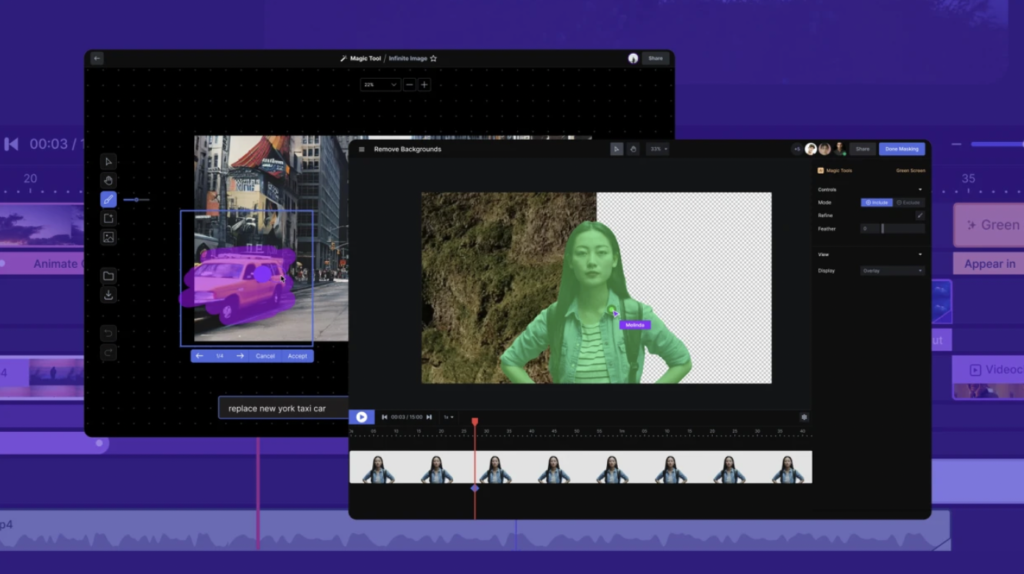
A new film festival will only show movies made using AI
... Runway ML, the artificial intelligence startup that was instrumental in creating the text-to-image tool Stable Diffusion, began taking submissions today for an AI Film Festival slated for February that will only showcase movies created with the help of AI. ...
To qualify for the festival, movies need to be between one and 10 minutes in length and “feature AI-generated content and/or AI-powered editing techniques.” ...
Festival judges plan to evaluate each submission based on quality of composition, cohesion of narrative, originality, as well as the AI techniques used. Top films will be awarded cash prizes, including a $10,000 grand prize, and many of the films will be screened in New York in February and online. ...
See the full story here: https://www.fastcompany.com/90820457/a-new-film-festival-will-only-show-movies-made-using-ai
Artificial Intelligence Act: Council calls for promoting safe AI that respects fundamental rights
PhilNote: This is still a work in progress within the EU, but the story with links is a good update.
"Artificial Intelligence is of paramount importance for our future. Today, we managed to achieve a delicate balance which will boost innovation and uptake of artificial intelligence technology across Europe. With all the benefits it presents, on the one hand, and full respect of the fundamental rights of our citizens, on the other." Ivan Bartoš, Czech Deputy Prime Minister for digitalisation and minister of regional development
The draft regulation presented by the Commission in April 2021 is a key element of the EU’s policy to foster the development and uptake across the single market of safe and lawful AI that respects fundamental rights.
The proposal follows a risk-based approach and lays down a uniform, horizontal legal framework for AI that aims to ensure legal certainty. It promotes investment and innovation in AI, enhances governance and effective enforcement of existing law on fundamental rights and safety, and facilitates the development of a single market for AI applications. It goes hand in hand with other initiatives, including the Coordinated Plan on Artificial Intelligence which aims to accelerate investment in AI in Europe.
See the full story here: https://www.consilium.europa.eu/ga/press/press-releases/2022/12/06/artificial-intelligence-act-council-calls-for-promoting-safe-ai-that-respects-fundamental-rights/
What is Lensa, the AI self-portrait generator going viral on social media?
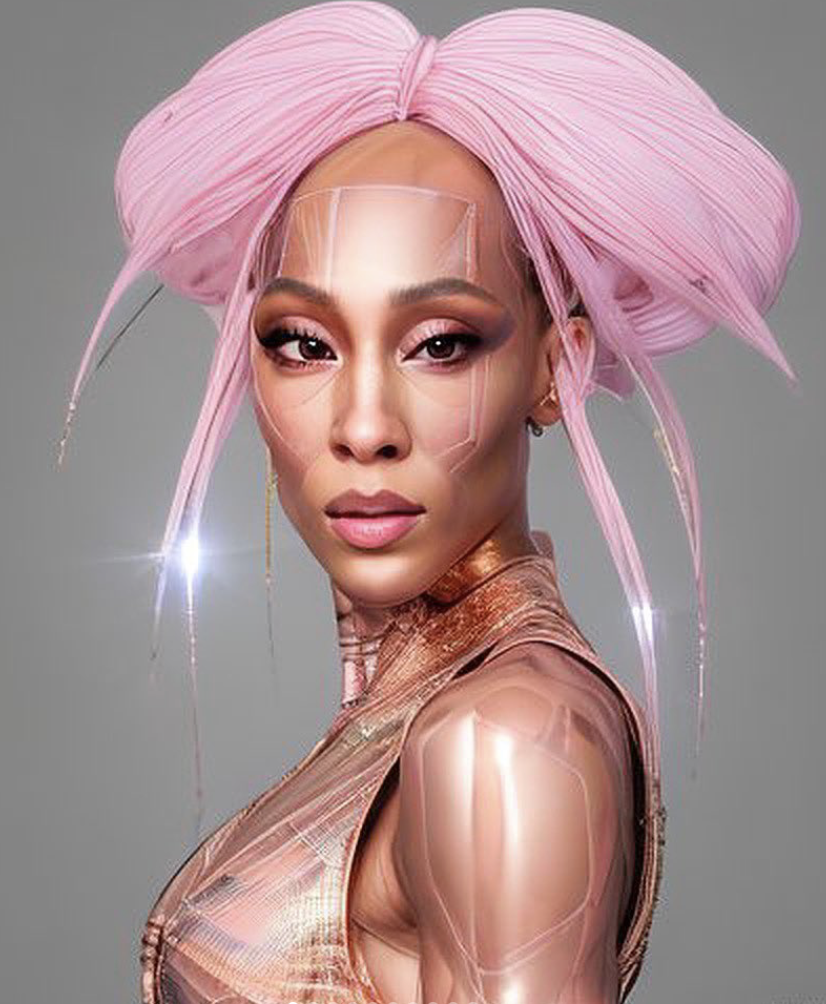
Lensa AI — an app that takes photos from your camera roll and transforms them into digital works of art — has taken Instagram by storm over the last few weeks. Though the app is not new, developers at Prisma AI released the new "magic avatar" feature on Nov. 28, which uses artificial intelligence to turn your ordinary selfies into a stylized portrait. ...
Though the app is free to download, you will be prompted to sign up for a subscription for the in-app photo and video editor, which starts at $40 per year. There is a 7-day free trial available if you intend on using all of Lensa's features. After you choose your photos, the app will prompt you to pay $3.99 for a series of 50 images, or a few extra dollars for 100 or 200 photos. ...
The algorithm used by Lensa AI is derived from Stable Diffusion, a text-to-image artificial intelligence model that has been accused of stealing art by generating images from more than 2 billion datasets, including from places like Pinterest, Tumblr, DeviantArt, Blogspot and Fine Art America, The Verge reported earlier this year. ...
Other users are concerned about Lensa AI and Prisma Labs' terms of service and privacy policies, which outline how the company uses data it collects from users, including the AI-generated photos it spits out for a small fee. Though users are greeted by a prompt to read and agree to these policies before they can make a purchase or upload their images, users are pointing to a few concerning details about Lensa's policy on user content. ...
See the full story here: https://www.phillyvoice.com/lensa-ai-prisma-labs-app-ai-self-portraits-camera-roll-artists-privacy-generator-how-to-use/
ChatGPT AI program results temporarily banned from coding advise website
Coding advice website Stack Overflow has temporarily banned responses generated by OpenAI's ChatGPT AI program, citing "a high rate" of incorrect answers. ChatGPT, based on the GPT-3.5 language model, can answer questions about coding problems but often produces "plausible-sounding but incorrect or nonsensical answers," according to OpenAI.
More:
- ChatGPT can write new code, fix errors, and ask for additional content in coding problems.
- On Stack Overflow, users turned to ChatGPT to supply many answers without first checking if they were factually correct, according to ZDNet.
- In a statement, Stack Overflow said it has temporarily banned ChatGPT as the AI's average rate of correct answers remains "too low."
- The organization is concerned that the responses could be "substantially harmful." It plans to hold a staff discussion and issue a permanent decision on ChatGPT use at a later date.
See the full story here: https://www.vice.com/en/article/wxnaem/stack-overflow-bans-chatgpt-for-constantly-giving-wrong-answers
The text above is from the Inside AI newsletter
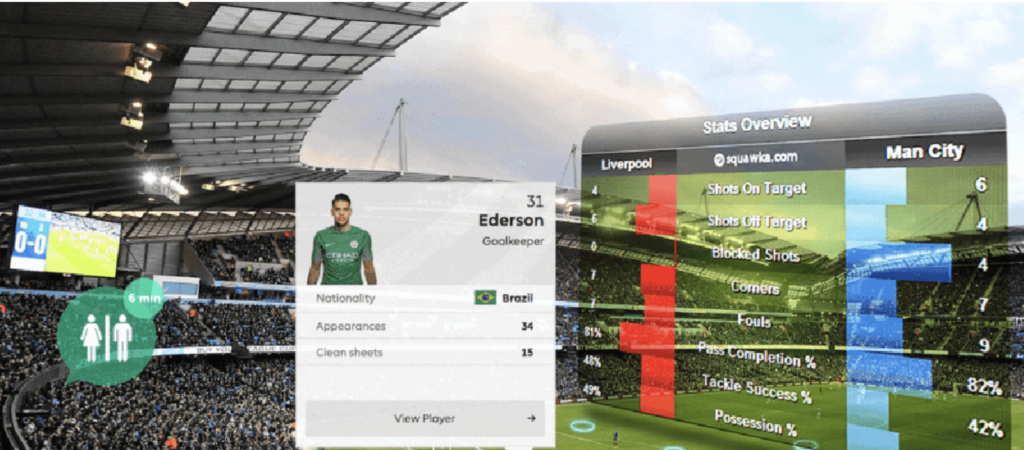
Imagining the Future of Fandom
...
SSI (Self-Sovereign Identifiers) vs. FIDO (Fast IDentity Online)
The concept of passwordless, cryptographically protected digital identification has been around for a very long time. Today there are two competing technologies offering differing visions for our potential future digital identities: FIDO2, a specification from the FIDO Alliance, and SSI, a catchall phrase for a group of decentralized identity schemas.
FIDO’s mission is to eliminate the password and make multi-factor authentication (MFA) easy, fast, and ubiquitous. The standard is singularly focused on security. Google brags, “On the employee side, there has not been a successful phishing attack against Google’s 85,000+ employees since requiring use of FIDO security keys.”
But FIDO2 is a centralized system, and while it does a wonderful job with security, it does not offer individuals complete control of their own data.
On the other hand, SSI is a set of open digital identity standards that gives individuals control over the information they use to prove who they are. It can be used to exchange data between issuers, holders, and verifiers without the involvement of any central authority.
You can think of your SSI as a non-transferable, non-fungible token (NFT) or smart contract that allows you to choose what data you wish to reveal and have them verified by anyone you authorize to view them on a public blockchain.
Web3 has the potential to “flip the script” for marketers. Instead of collecting email addresses and hoping to tag users with some form of digital ID, a potential customer could enter your funnel by allowing you to know their identity via their SSI. This would allow you (the marketer) to follow the customer’s digital wallet and have access to the data the individual wanted you to have about them. With this subtle shift, it now becomes possible for you to create a system where both you (the marketer) and the user (potential customer) can both share in the value you create. ...
Read the full story here: https://www.shellypalmer.com/2022/12/imagining-the-future-of-fandom/?mc_cid=d41cbc819e&mc_eid=116e9f337b
Pages
- About Philip Lelyveld
- Mark and Addie Lelyveld Biographies
- Presentations and articles
- Trustworthy AI – A Market-Driven approach
- Tufts Alumni Bio