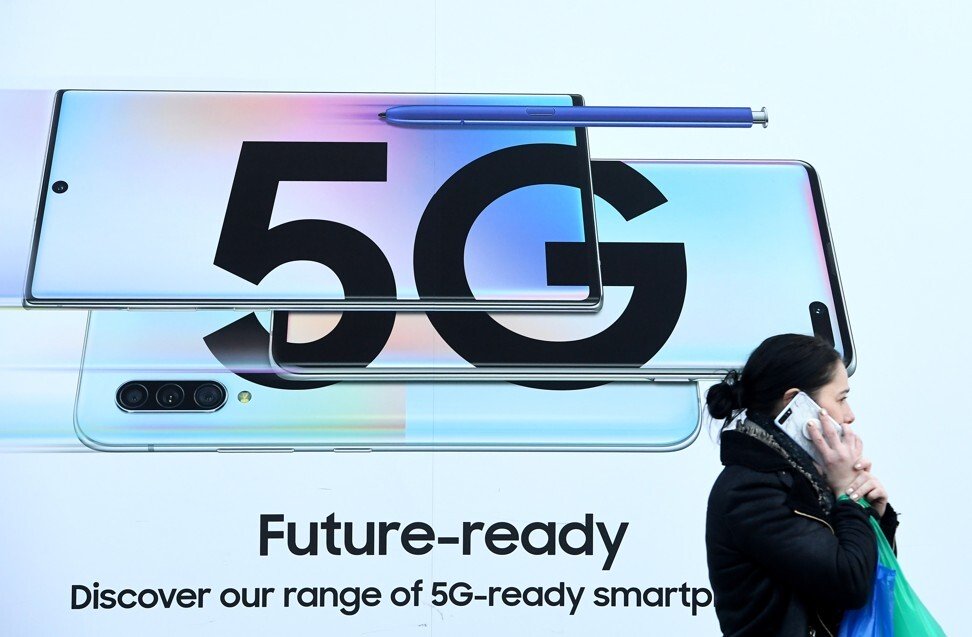
How AI, virtual reality and augmented reality will improve social services: the future of health care in the 5G era
 [PhilNote: this story could have been PR from any global telco, but because it is about Hong Kong it has a political undercurrent.]
“Physical boundaries will no longer be a concern. In the future, medical assessments of a Hong Kong client could be done by an expert in the US quite easily and quickly, and services could be easily delivered across borders,” Wong says.
He adds: “Medical professionals could conduct virtual home visits to examine the living conditions of the vulnerable and make assessments more comprehensively and with precision.”
Ultimately, Wong says, medical and social services will become more affordable and accessible, and will be delivered more quickly and from anywhere in the world.
See the full story here: https://www.scmp.com/lifestyle/health-wellness/article/3086976/how-ai-virtual-reality-and-augmented-reality-will-improve
Royal Mint launches first-ever augmented reality dinosaur coins
[PhilNote: 50pence coins, although it isn't clear that banks will accept them. The Royal Mint is The Fed plus Franklin Mint.]
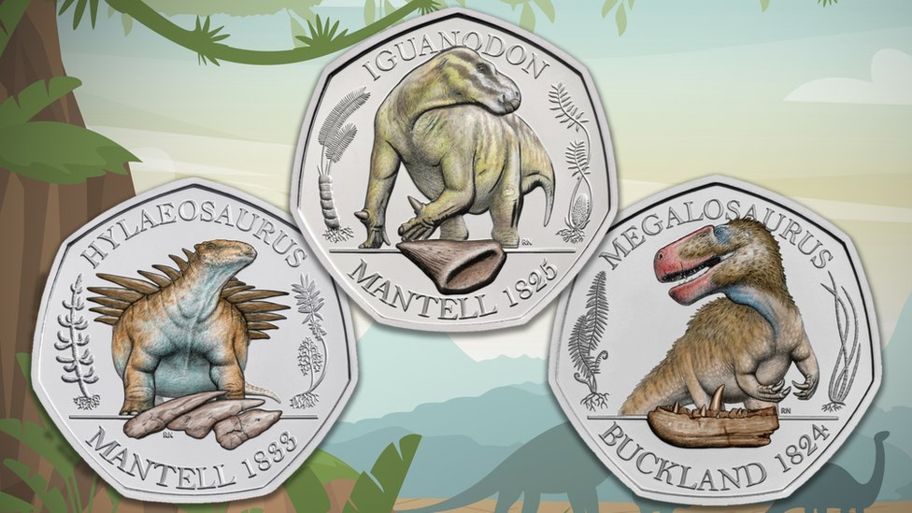
Not only do they have amazing pictures of dinosaurs on them but they also are the first-ever to use augmented reality (AR).
Royal Mint, which makes most of the the UK's coins, used the latest colour printing techniques to vividly show the megalosaurus, iguanodon and hylaeosaurus on the coins.
After receiving the coin, collectors can use AR to scan the packaging to unearth facts, clips and images about the prehistoric beasts.
Fossils from the megalosaurus, iguanodon and hylaeosaurus led British anatomist Sir Richard Owen, the founder of the Natural History Museum, to first use the term 'dinosauria' in 1842.
See the full story here: https://www.bbc.co.uk/newsround/52874357
john craig freeman invites us to virtually visit the wet market of wuhan in augmented reality


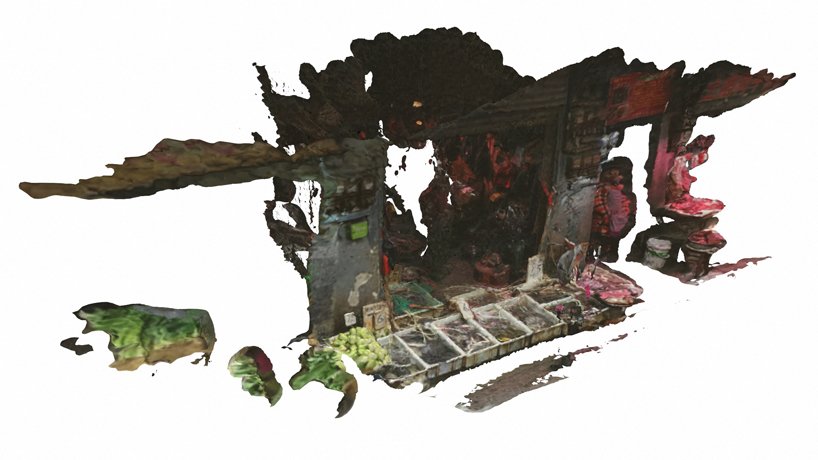 through the emergent technology of augmented reality, artist john craig freeman invites viewers worldwide to virtually visit the wet markets of wuhan — the place where COVID-19 is believed to have originated.
during the development of the augmented reality project ‘wet market, wuhan,’ artist john craig freeman traveled to the city of wuhan in 2016. the trip was part of the U.S. state department’s cultural diplomacy program, ‘zero1 american arts incubator.’ the project serves as a part of an extensive body of work which documents the rapidly changing city and sheds light on the complex and nuanced historical culture it holds.
photogrammetry. with this strategy, the artist stitches together thousands of individual images into one single three dimensional file.
See the full story here: https://www.designboom.com/design/wuhan-wet-market-augmented-reality-john-craig-freeman-05-29-2020/
INDE announces touchless version of its Augmented Reality ‘HeroMirror’
INDE has today announced the introduction of ‘HeroMirror Touchless’, a technology that enables users to navigate the company’s kiosk-sized augmented reality experience without having to touch the device itself.
With the outbreak of COVID-19 though, health concerns regarding public touchscreens have likely prompted many companies to look at alternative activation solutions.
To activate the feature, users have to scan a QR code on the mirror with a smartphone, which leads them to a website. Once enabled, users are able to use their own smartphone as a remote control, allowing them to select all options on the AR mirror without having to touch it. As with every other HeroMirror installation, users can also choose their favourite snapshot and share it online right away from the website.
See the full story here: https://www.auganix.org/inde-announces-touchless-version-of-its-augmented-reality-heromirror/
‘Why I recreated my local pub in virtual reality’
Tristan Cross taught himself how to make the 3D models from scratch by watching YouTube videos.
See the video here: https://www.bbc.com/news/av/technology-52833546/why-i-recreated-my-local-pub-in-virtual-reality
U.S. Joins Global Partnership on AI to Check China’s Power
 The United States became the last of the Group of Seven countries to sign on to the G7 AI Pact, an initiative focused on responsible development of artificial intelligence. The Global Partnership on AI will, after study, create recommendations on AI technologies that “respect privacy and civil liberties.” At a G7 meeting of science and technology ministers, U.S. chief technology officer Michael Kratsios and President Trump’s science adviser Kelvin Droegemeier will describe the U.S.’s involvement in the program.
Bloomberg reports that the Global Partnership on AI “will ask member states to follow principles drafted by the Organization for Economic Cooperation and Development, which recommends developing AI technologies that respect human rights and are transparent to anyone affected by them.”
...
Kratsios noted that, “the idea of both the 5G and AI initiatives is to set limits on Chinese companies seeking to expand abroad.” Referring to China joining the World Trade Organization in 2001, he also warned that adopting Chinese 5G and AI standards would “run the risk of repeating the same mistakes our nations made nearly 20 years ago.”
See the full story here: https://www.etcentric.org/u-s-joins-global-partnership-on-ai-to-check-chinas-power/#more-150778
FAROE ISLAND REMOTE TOURISM: ABOUT THE PROJECT
See the full story here: https://www.visitfaroeislands.com/remote-tourism/about-the-project/
How Tim Cook’s Augmented Reality vision paid off for Apple
 The unexpected, 5 year failure of smartphone VR
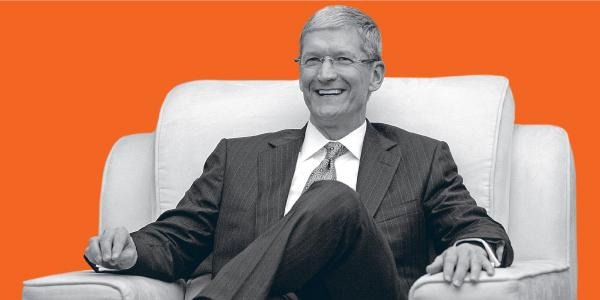
The unanticipated success of smartphone AR
Cook's unpopular take on AR
Apple sneaks out AR to the masses
The alternative reality of the tech media
AR Software Sells Systems
See the full story here: https://appleinsider.com/articles/20/05/23/how-tim-cooks-augmented-reality-vision-paid-off-for-apple
How Britain’s oldest universities are trying to protect humanity from risky A.I.
- The University of Oxford’s Future of Humanity Institute is led by Professor Nick Bostrom, who is the author of “Superintelligence.”
- Over at the University of Cambridge, just 66 miles away, there is the Center for the Study of Existential Risk and the Leverhulme Center for the Future of Intelligence.
- Researchers at both universities are carefully studying how to ensure artificial intelligence is developed safely.
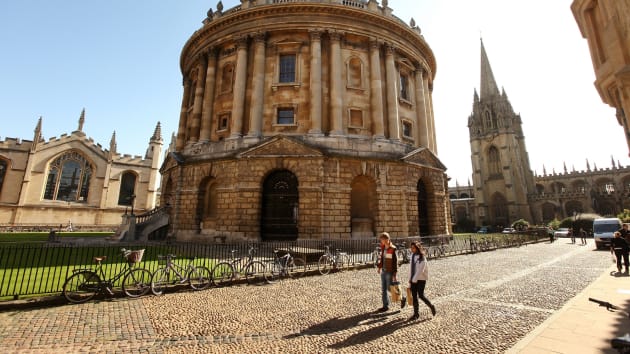
In the main foyer of the institute, complex equations beyond most people’s comprehension are scribbled on whiteboards next to words like “AI safety” and “AI governance.” Pensive students from other departments pop in and out as they go about daily routines.
It’s rare to get an interview with Bostrom, a transhumanist who believes that we can and should augment our bodies with technology to help eliminate ageing as a cause of death.
“I’m quite protective about research and thinking time so I’m kind of semi-allergic to scheduling too many meetings,” he says.
...
Bostrom’s institute has been backed with roughly $20 million since its inception. Around $14 million of that coming from the Open Philanthropy Project, a San Francisco-headquartered research and grant-making foundation. The rest of the money has come from the likes of Musk and the European Research Council.
...
The idea for CSER was conceived in the summer of 2011 during a conversation in the back of a Copenhagen cab between Cambridge academic Huw Price and Skype co-founder Jaan Tallinn, whose donations account for 7-8% of the center’s overall funding and equate to hundreds of thousands of pounds.
“I shared a taxi with a man who thought his chance of dying in an artificial intelligence-related accident was as high as that of heart disease or cancer,” Price wrote of his taxi ride with Tallinn. “I’d never met anyone who regarded it as such a pressing cause for concern — let alone anyone with their feet so firmly on the ground in the software business.”
...
The Leverhulme Center for the Future of Intelligence (CFI) was opened at Cambridge in 2016 and today it sits in the same building as CSER, a stone’s throw from the punting boats on the River Cam. The building isn’t the only thing the centers share — staff overlap too and there’s a lot of research that spans both departments.
Backed with over £10 million from the grant-making Leverhulme Foundation, the center is designed to support “innovative blue skies thinking,” according to ÓhÉigeartaigh, its co-developer.
...
See the full story here: https://www.cnbc.com/2020/05/25/oxford-cambridge-ai.html