Facebook is using bots to simulate what its users might do
 The context: Like any software company, the tech giant needs to test its product any time it pushes updates. But the sorts of debugging methods that normal-size companies use aren’t really enough when you’ve got 2.5 billion users. Such methods usually focus on checking how a single user might experience the platform and whether the software responds to those individual users’ actions as expected. In contrast, as many as 25% of Facebook’s major issues emerge only when users begin interacting with one another. It can be difficult to see how the introduction of a feature or updates to a privacy setting might play out across billions of user interactions.
SimCity: In response, Facebook built a scaled-down version of its platform to simulate user behavior. Called WW, it helps engineers identify and fix the undesired consequences of new updates before they’re deployed. It also automatically recommends changes that can be made to the platform to improve the community experience.
Hidden from view: In order to create as realistic a simulation as possible, WW is actually built directly on the live platform rather than a separate testing version—another key difference from most testing schemes. The bots, however, stay behind the scenes.
Future perfect: Right now the company is using it to test and improve features that would make it much harder for bad actors to violate the platform’s community guidelines. But it also sees other potential applications for the system, such as testing how platform updates might affect engagement and other metrics.
Soul Machines Unveils Bella, the Kiwi Digital Helper for Times of Crisis and Need, Bringing Innovation and AI to the Forefront of Crisis Communications
Bella, the Digital Helper, aims to show how she can assist in New Zealand’s robust response to the ongoing public health crisis by providing a new, interactive channel to help the public receive easily digestible, up-to-the-moment information in a manner that frees up important resources for other relief efforts. As a company founded in New Zealand, Soul Machines designed Bella to be distinctively Kiwi, with an understanding and sensibility of the questions specific to the population.
Powered by the world’s first autonomous animation platform, Bella is a friendly and engaging digital helper available to answer questions based on data from a wide variety of sources. As New Zealand progresses to a phase of gradually reopening society, Bella could provide even more assistance, helping citizens to navigate the changing measures designed to contain and prevent the spread of the virus and restart industries and the economy.
Say hello to Bella here: https://bellahelps.com
See the full story here: https://finance.yahoo.com/news/soul-machines-unveils-bella-kiwi-150010412.html
Supporting small airports using virtual reality
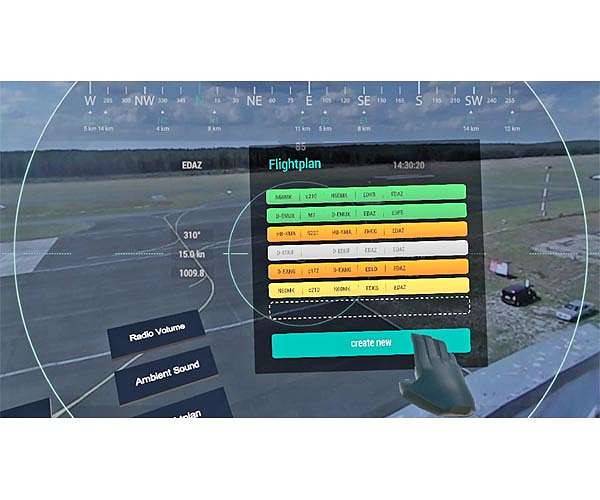 Looking through virtual 'binoculars'
The idea for such airports is to have a combination of a single Pan-Tilt-Zoom (PTZ) camera and a simple panoramic view of the airfield, video images from which are displayed using a VR headset. If traffic announces itself via the air traffic radio system, the controller puts the VR headset on and uses it to control the PTZ camera. They capture the aircraft with the PTZ camera and see the corresponding video image.
Their head movements allow them to intuitively alter the direction of the PTZ camera, so that they can monitor the airfield site and the traffic in a similar way to using binoculars. To give the air traffic controller a better overall view, the PTZ camera image is supplemented with a simple panoramic image of the airfield.
The VR headset also enables the operator to interact with the workplace systems and other participants. The operator could, for instance, use virtual control elements to communicate with other air traffic control services, operate airfield systems or process electronic flight strips.
See the full story here: https://www.spacedaily.com/reports/Supporting_small_airports_using_virtual_reality_999.html
THOUGHT LEADERS Introducing New Levels of Transparency with AI – Thought Leaders
 But it was a Canadian health monitoring platform that had beaten them both to the punch, sending word of the outbreak to its customers as early as on December 31, 2019! The platform, BlueDot uses artificial intelligence-driven algorithms that scours foreign-language news reports, animal and plant disease networks, and official proclamations to give its clients advance warning to avoid danger zones like Wuhan.
Yet, for all the hope that AI brings, it still poses unanswered questions around transparency and trustworthiness.
There is currently no direct mechanism to trace the reasoning implicitly used by deep learning models.
This concern has created a need for transparency in machine learning, which has led to the growth of explainable AI, or XAI. It seeks to address the major issues that hinder our ability to fully trust AI decision-making — including bias and transparency. This new field of AI brings accountability to ensure that AI benefits society with better outcomes for all involved.
Explainable, predictable and traceable AI
One way to gain explainability in AI systems is to use machine learning algorithms that are inherently explainable. For example, simpler forms of machine learning such as decision trees, Bayesian classifiers, and other algorithms that have certain amounts of traceability and transparency in their decision making. They can provide the visibility needed for critical AI systems without sacrificing too much performance or accuracy.
Noticing the need to provide explainability for deep learning and other more complex algorithmic approaches, the US Defense Advanced Research Project Agency (DARPA) is pursuing efforts to produce explainable AI solutions through a number of funded research initiatives. DARPA describes AI explainability in three parts which include: prediction accuracy, which means models will explain how conclusions are reached to improve future decision making; decision understanding and trust from human users and operators, as well as inspection and traceability of actions undertaken by the AI systems.
The launch of the first global conference exclusively dedicated to XAI, the International Joint Conference on artificial intelligence: Workshop on Explainable Artificial Intelligence, is further proof that the age of XAI has come.
See the full story here: https://www.unite.ai/introducing-new-levels-of-transparency-with-ai-thought-leaders/
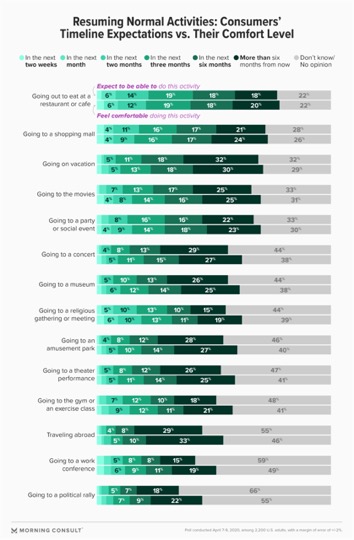
When Consumers Say They’ll Feel OK About Dining Out and Other Activities
See the full story here: https://morningconsult.com/2020/04/10/consumer-expectations-normal-activities-comfortable/?fbclid=IwAR24W4eTAporhXmP5x1N0LfUta_cBLtEdTAUCQUCcmYWI8tO8RrYnd9TUsY
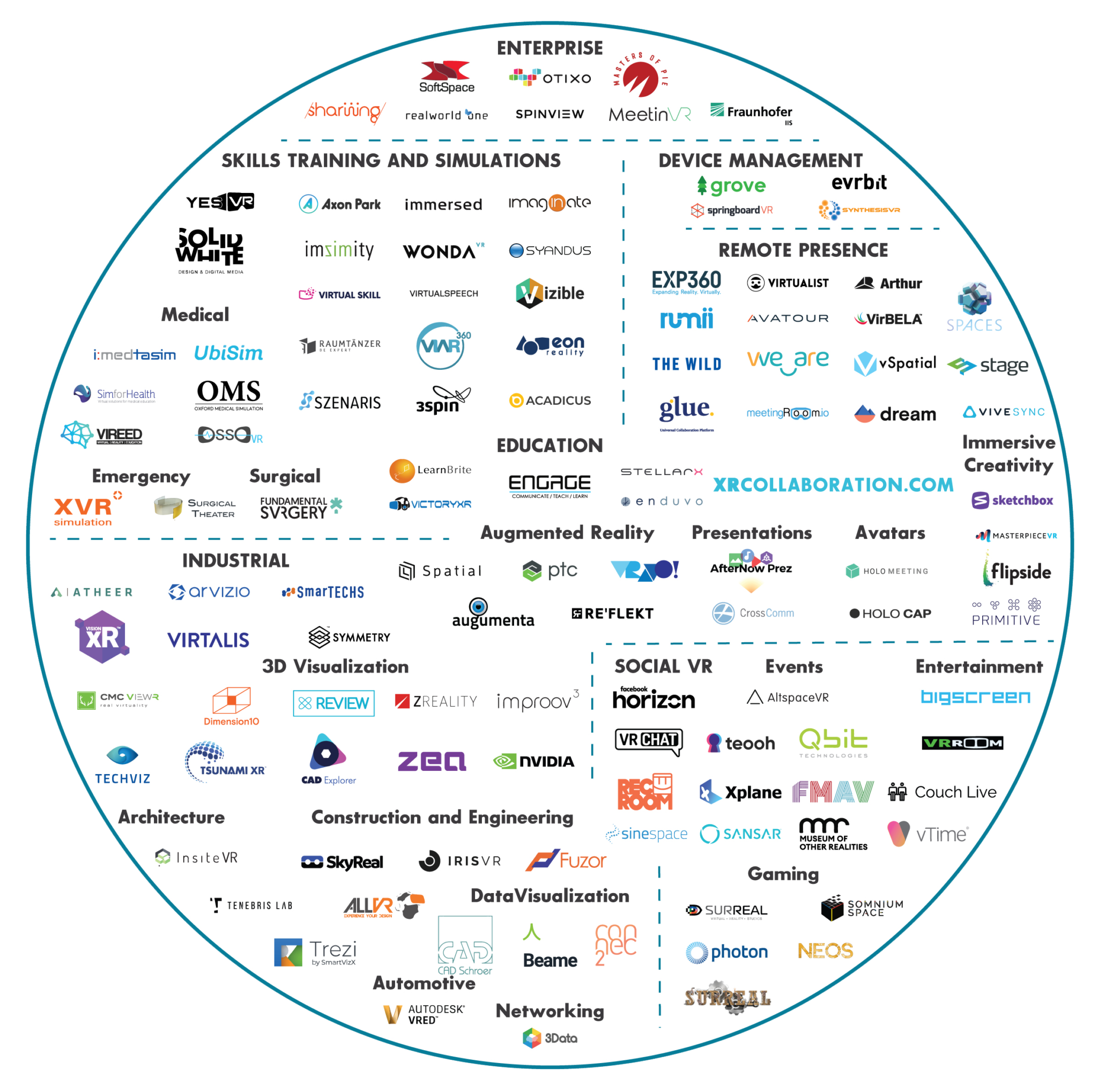
Collaborating in XR
The “Global Resource Guide to XR Collaboration” is a comprehensive guide to using Augmented Reality (AR), Virtual Reality (VR) and Mixed Reality (MR) collaboration platforms for business and education.
Produced by the XR Ignite and assembled by coalition members from technology companies and associations – including AREA, AWE, Deutsche Telekom, Cleanbox, MetaVRse, Qualcomm Technologies, VR/AR Association and XR Bootcamp – the guide and website are meant to become a one-stop-shop for all your XR collaboration questions and needs.
See the full story here: https://techtrends.tech/tech-trends/collaborating-in-xr/