Hauser & Wirth unveils VR program to explore virtual exhibitions
PhilNote: Hauser & Wirth has a gallery in the DTLA Arts District.
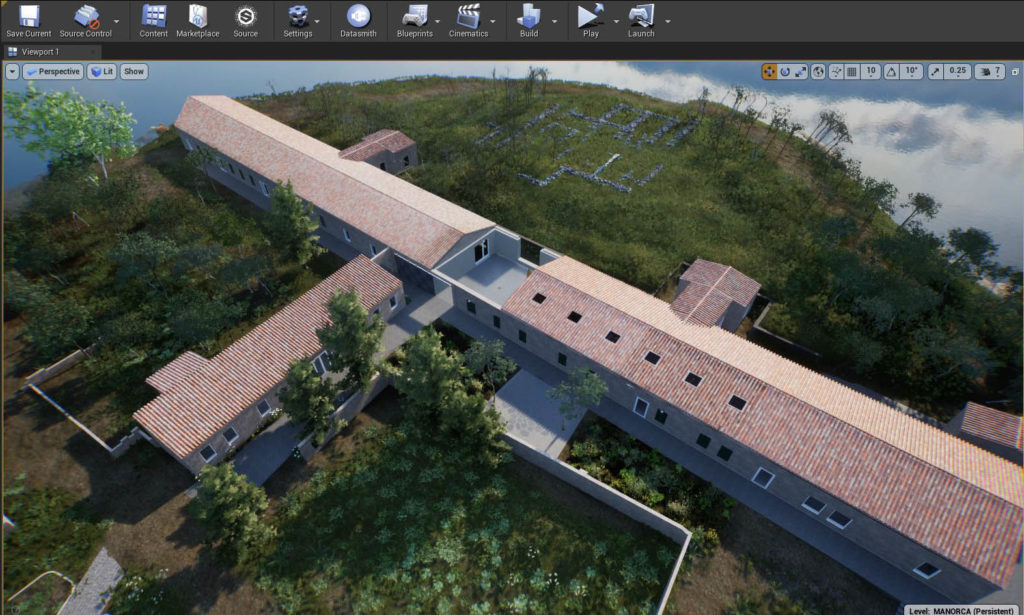 Hauser & Wirth claims that the program is the first initiative of its kind to be developed entirely within the art world to create true-to-life exhibition spaces, comparable to the fidelity found in the latest video game technology, by developing a technique for converting the gallery’s database of artworks in 3D assets. “HWVR builds the virtual 3D space from the ground up at a pixel level, rather than relying on combined photos, which gives an unprecedented level of flexibility,” the gallery boasted.
See the full story here: https://archpaper.com/2020/04/hauser-wirth-unveils-vr-program-to-explore-virtual-exhibitions/
"Artist Spotlight" will highlight one artist each week and present a single artwork along with pricing information on the gallery's website for a 48-hour period.
Participating artists include Sarah, Sze, Stanley Whitney, Jennifer Guidi, Roe Ethridge, Titus Kaphar, Katharina Grosse, Theaster Gates, Dan Colen, Urs Fischer, Mark Grotjahn, Mary Weatherford, Rudolf Polanszky, Damien Hirst and Jenny Saville.
https://news.yahoo.com/hauser-wirth-launches-virtual-reality-platform-reaction-covid-150316525.html
REGULATION The Different Challenges and Approaches to AI by Country
 China - facial recognition and surveillance
US - cybersecurity and skills gap
Germany - disinformation and the economic impact
UK - business value and retraining
France - integrating the technology and retraining
Canada - slow adoption and lower emphasis on AI's importance
See the full story here: https://www.unite.ai/the-different-challenges-and-approaches-to-ai-by-country/
Mirror Arrays Make Augmented Reality More Realistic
 ...it has remained challenging to make virtual images appear more “solid” in front of real-world objects, an effect that’s essential for us in achieving depth perception.
Now, a team of researchers has developed a compact AR system that, using an array of miniature mirrors that switch positions tens of thousands of times per second, can create this elusive effect. They describe their new system in a study published February 13 in IEEE Transactions on Visualization and Computer Graphics.
Their design relies on a dense array of miniature mirrors that can be individually flipped between two states—one that allows light through and one that reflects light—at a rate of up to tens of thousands of times per second.
Krajancich notes some trade-offs with this approach, including some challenges in rendering colors properly. It also requires a lot of computing power, and therefore may require higher power consumption than other AR systems. While commercialization of this system is a possibility in the future, she says, the approach is still in the early research stages.
See the full story here: https://spectrum.ieee.org/tech-talk/sensors/imagers/mirrors-augmented-reality-more-realistic
IEEE link is https://ieeexplore.ieee.org/document/8998139
Augmented-reality cable technicians are here to fix your internet
But what if there were a way for that technician to come to your home and guide you through the diagnostics and repair in real time without once stepping inside? That’s what Cox Cable‘s On-site with Virtual Assist service does, using an augmented reality (AR) platform created by Birmingham, Alabama-based Help Lightning.
As long as you have a phone or tablet with a rear-facing camera and a working Wi-Fi or mobile data connection, a tech support representative can see what you’re seeing and insert their hands, tools, parts, or diagrams onto your screen so you can see exactly what needs to be done.
The Help Lightning app effectively merges two video feeds: The one captured by your device’s camera and a second video shot by the technician of their hands. The result is a combined video that lets the technician virtually point to the different devices and connections in your home while they talk you through the fix.
Cox Cable has the on-site virtual assist option in all of its markets right now, but the company isn’t alone. Siemens Healthineers, Otis Elevator, Ricoh, Bunn, and Johnson Controls are among Help Lightning’s other clients, and they too can offer virtual assistance if needed.
See the full story here: https://www.digitaltrends.com/home-theater/cox-cable-augmented-reality-tech-support-for-help-while-social-distancing/
Dance Majors’ New Virtual Reality
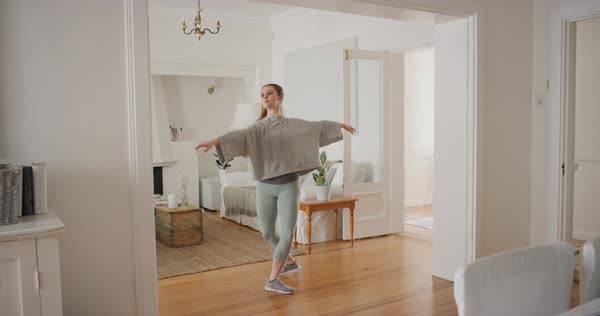 As we all know, all University of Utah classes were moved to online learning because of the sudden outbreak of COVID-19.
“One of the biggest challenges is obviously not being able to dance out fully, thus risking the deterioration in the technique we’ve worked so hard to attain this year,” Walterscheid said. So, the dancers aren’t shattering mom’s favorite decorative figurine, but they could be endangering their coveted dance form and technique. Walterscheid explained an additional characteristic to the change in location, which is the new “workspace” that she has to work with — “Most of us are having to take class on hardwood floor, tile or carpet.”
See the full story here: https://dailyutahchronicle.com/2020/04/10/dance-majors-new-virtual-reality/
Some shirts hide you from cameras—but will anyone wear them?
The world, when we eventually enter it again, is waiting for us with millions of digital eyes—cameras, everywhere, owned by governments and private entities alike. Pretty much every state out there has some entity collecting license plate data from millions of cars—parked or on the road—every day. Meanwhile all kinds of cameras—from police to airlines, retailers, and your neighbors' doorbells—are watching you every time you step outside, and unscrupulous parties are offering facial recognition services with any footage they get their hands on.
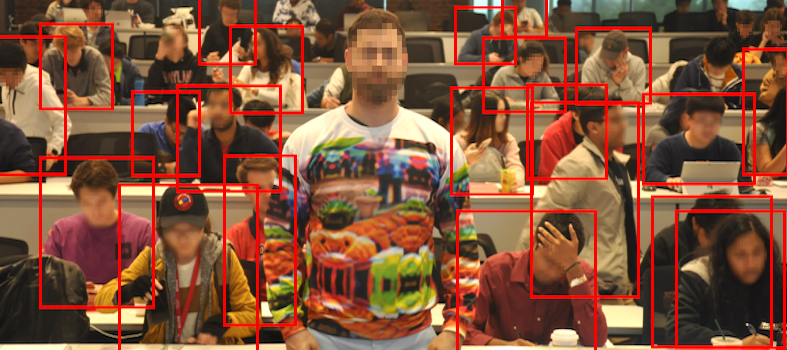 Goldstein and a team of students late last year published a paper studying "adversarial attacks on state-of-the-art object detection frameworks." In short, they looked at how some of the algorithms that allow for the detection of people in images work, then subverted them basically by tricking the code into thinking it was looking at something else....what if you make a point of being seen, and in doing so generate enough noise in a system that a single signal becomes harder to find?
That's the approach designer Kate Bertash takes with her Adversarial Fashion product line, which she presented at DEFCON in 2019. Her prints are designed first and foremost to mess with automatic license plate readers (ALPR), systems that scoop up images from the fronts and backs of everyone's cars all over the country and hoover them into massive databases.
The trick to expansion is threefold. First, people have to be interested in wearing adversarial designs. Second, the design actually has to work as intended. And third: the design has to be something you wouldn't mind being seen wearing while also, ideally, being good-looking enough that others will want to wear it, too.
See the full story here: https://arstechnica.com/features/2020/04/some-shirts-hide-you-from-cameras-but-will-anyone-wear-them/