To gauge the risk of falling, the researchers utilized a virtual reality (VR) device that simulated the act of walking down a hallway while participants walked on a treadmill. The researchers would then introduce the illusion of side-to-side “wobbles” in the simulation to make participants feel that they were falling, and measured how they responded to the illusion.
The theory behind the use of VR is that MS patients may be compensating for walking deficiencies by relying on their visual abilities. They may have the impression that their walking is normal, but these patients are still at risk for falls.
To measure the participants’ responses, the researchers used 3D motion capture cameras to look for any fluctuations in each step (gait variability), differences in overall motion (kinematics), and balance (margin of stability).
Results showed that the measurements taken for standard walking — before the wobbles were introduced — were similar between MS patients and healthy volunteers.
However, once participants experienced the falling simulation, there was a clear and statistically significant difference in how MS patients responded — they exhibited a higher variability in step width, position, and stability.
Furthermore, MS patients performed worse than healthy controls on the standing sensory organization test, which assesses a person’s ability to use visual cues and others to maintain postural stability.
XRHealth, the leader in extended reality and therapeutic applications, announced the first Virtual Reality (VR) telehealth support groups for people in isolation due to the coronavirus, where patients with similar ailments can gain support from each other and from doctors associated with the XRHealth telehealth clinics. XRHealth clinics are now certified in Boston, Connecticut, Florida, Michigan, Washington D.C., Delaware, California, New York, Texas, North Carolina, and many others and are covered by Medicare and most major insurance providers. Due to the immediate need of this technology because of social distancing in response to the spread of coronavirus, XRHealth will make the technology available sooner than originally expected and it will officially be available to the public on April 1st.
XRHealth support groups are tailored for patients with the following conditions: Multiple Sclerosis, Parkinsons, breast cancer, menopause, an injury that effected motor function, anxiety, chronic pain, fibromyalgia, substance abuse, post-stroke rehabilitation, brain injury and there will also be general support group for the elderly population that is most impacted by the coronavirus.
[PhilNote: We've seen all the elements before, but they've done a good job putting them together into a telepresence device.]
The Haptoclone, created by haptic researchers from the University of Tokyo's Department of Complexity Science and Engineering, consists of two boxes, one containing an object and the other displaying a hologram of it.
When a human hand comes into "contact" with the 3D image in the second box, the hologram emits ultrasonic radiation pressure, making the user feel they are actually touching the object. Meanwhile, special aerial imaging panels act like a kind of mirror, making a hologram of the hand appear visually in the other box, too, so it can "interact" with the original object.
The British Army, Royal Air Force and Royal Marines are to trial using a virtual reality platform based on the computer game Fortnite as part of soldiers' training for battlezones.
The new simulator will allow 30 soldiers to take part in virtual battlefield combat at the same time.
The innovative technology uses the Unreal Engine 4, the same software used in the popular online shooting game Fortnite.
Instead of just clicking a mouse at a desk, servicemen and women will be able to hold a replica gun, and crouch and crawl.
Virtual reality (VR) is becoming a more popular training tool to help workers gain skills in technical or risky jobs. Hilton Worldwide Holdings Inc. is using VR training to show corporate employees how hard hotel housekeepers work, ZD Net reports.
Hilton trainers want corporate leaders to understand the complexity of hotel operations and the vital role housekeepers play. So, they are having leaders perform hotel immersion simulations, in which they clean guest rooms, set up room service trays, and perform other tasks essential to guest comfort.
The IEEE Conference on Virtual Reality and 3D User Interfaces (IEEE VR) will take place completely virtually, from 22-26 March 2020, instead of in-person in Atlanta, Georgia. ... Some of the IEEE VR technology that would have been on display will now be the technology used to deliver the conference experience.
The highly anticipated virtual conference experience will stay true to the original technical program of presentations and invited talks on VR and 3D user interfaces. Authors will virtually deliver presentations, and conference attendees participate in real-time via the online platform. All IEEE VR proceedings are published in the IEEE Xplore Digital Library and the Computer Society Digital Library.
For more information about IEEE VR 2020, including ways to attend the conference virtually, visit ieeevr.org/2020/.
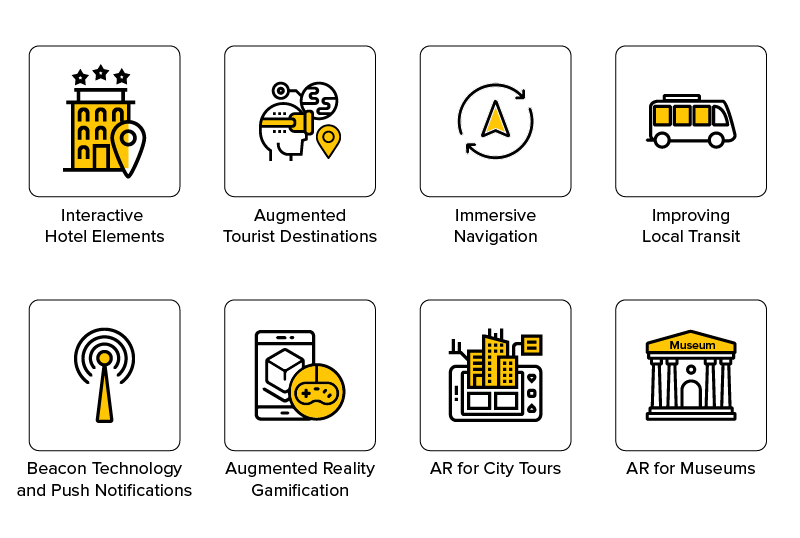
[PhilNote: the story goes into detail on each of the 8 areas]
Types of AR travel applications
Location based
Marker based
SLAM - Simultaneous Localization and Mapping SLAM technology makes use of complex algorithms to identify colors, patterns and other characteristics of physical objects.
Instagram is fighting coronavirus misinformation in augmented reality.
On Friday, Instagram sent a note to its AR community telling people to avoid spreading bad information about the pandemic. “We’ve removed previously published effects and are rejecting all new effects, which claim to predict, diagnose, treat or cure coronavirus,” Instagram said through its Spark AR program, which is a community of graphic designers who build augmented reality features for the app. Facebook owns Instagram.
Instagram also said that it would no longer allow people to search for coronavirus-related AR effects. There could still be filters related to the virus, they just won’t be easy to discover. Those that provide bad information won’t be approved.
Instagram said it would allow reputable health organizations to create AR filters, however.
Meanwhile, on Snapchat, there also have been coronavirus-related filters. The company does not allow misinformation in Lenses, either, a Snapchat spokesman said. Lenses are Snapchat's name for AR filters.
This appears to be the first time AR has been cited as a target of fake news.
As the show often does with the top story, the 40-foot curved video wall in Studio 1A was used for a “walk and wander” and “video on video” handheld floating shot while imagery and headlines appeared on it.
To fully enjoy Half-Life: Alyx in all its glory, you have to not only get the right compatible virtual reality headset but also a VR-ready PC with the right specs. The Valve Index is considered the ‘default’ Half-Life: Alyx headset but there is a host of other cheaper VR headsets that you can use to play the game, including Oculus Quest and the Windows Mixed Reality headsets. Oculus Quest headset can be connected to a PC via the Oculus Link cable in order to play the game.
This article provides a quick overview of the headset and PC requirements needed to get off the ground with Half-Life: Alyx. We show you the components that you will need as well as the Virtual Reality headset specs that the game is compatible with.
 The British Army, Royal Air Force and Royal Marines are to trial using a virtual reality platform based on the computer game Fortnite as part of soldiers' training for battlezones.
 Instagram is fighting coronavirus misinformation in augmented reality.
 Although its Saturday anchors originated the March 14, 2020 edition of “Today” from Washington, D.C., NBC News still had the show’s main studio in NYC up and running — and it made multiple appearances with an augmented reality element.
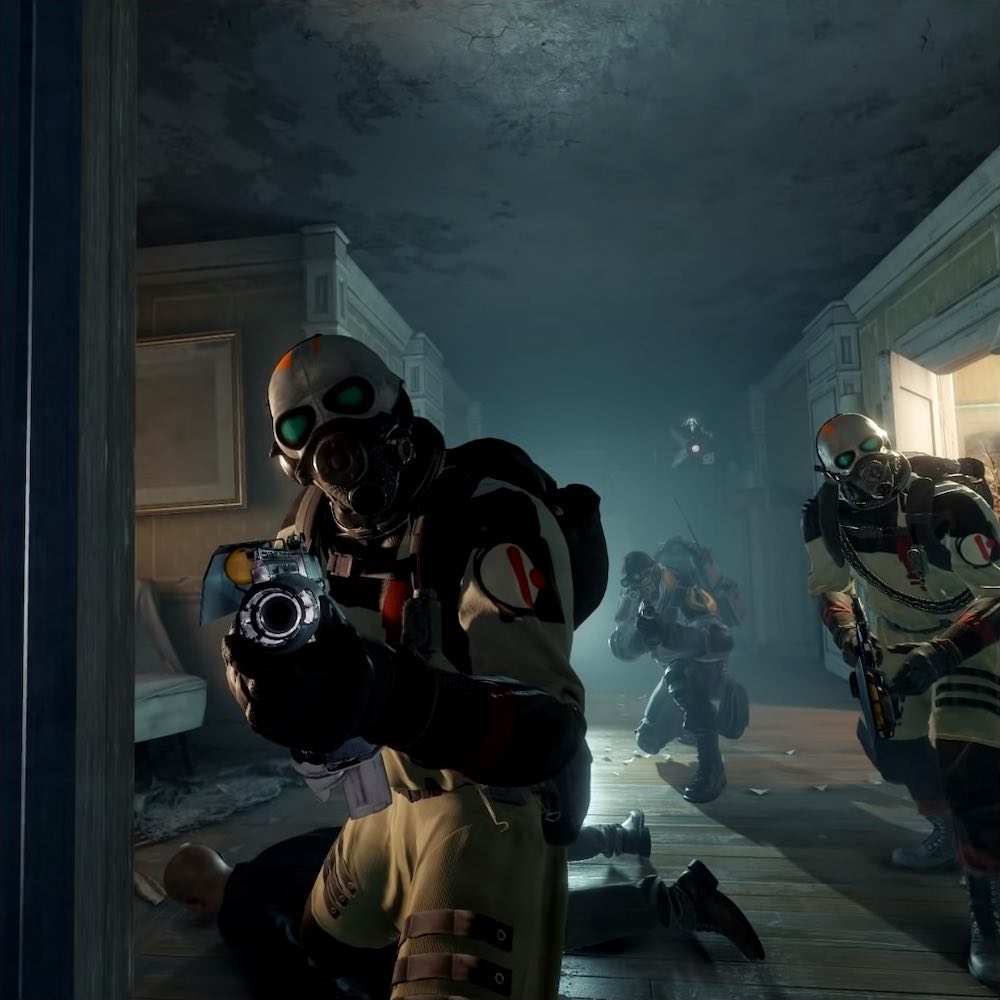 To fully enjoy Half-Life: Alyx in all its glory, you have to not only get the right compatible virtual reality headset but also a VR-ready PC with the right specs. The Valve Index is considered the ‘default’ Half-Life: Alyx headset but there is a host of other cheaper VR headsets that you can use to play the game, including Oculus Quest and the Windows Mixed Reality headsets. Oculus Quest headset can be connected to a PC via the Oculus Link cable in order to play the game.