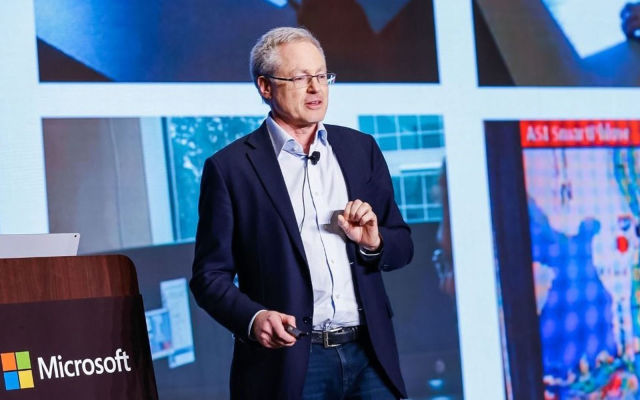
 For the first in its history, there's a chief scientific officer at Microsoft. This week, the company appointed Eric Horvitz to the role as part of a broader reorganization following the departure of a key executive in February.
15Mar/20Off
Looxid Link Brain Interface Comes to Oculus Rift S
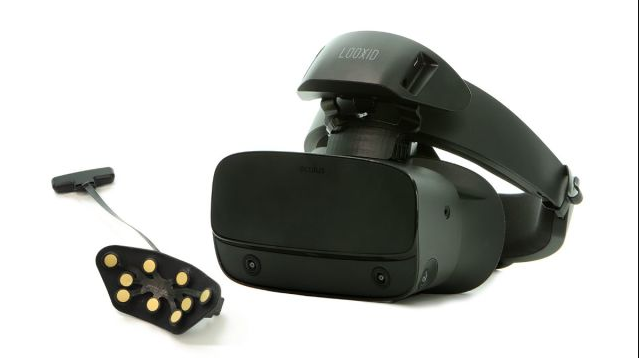 Looxid Labs has now revealed that its Looxid Link brain monitor for HTC Vive has now been adapted for Oculus Rift S via a modified slick EEG-equipped attachment as an add-on.
The add-on will be attached just above the Oculus Rift S goggles. This enables its nine EEG electrodes to come into contact with the user’s forehead. The design seems like a natural fit. A video of the attachment shows the wearer dodging enemy fire in a virtual reality game without the brain monitoring interface wobbling.
The Vive versions of the Looxid Link brain interface cost $300.
To adapt the device for Oculus Rift S, the Link measuring device is clamped between the facial foam and the forehead attachment. It does not require major modifications to work with the Oculus Rift S.
The VR add-on can also be used by therapists to have a less stressful exposure therapy while also getting a better understanding of the patient’s reactions.
See the full story here: https://virtualrealitytimes.com/2020/03/14/looxid-link-brain-interface-comes-to-oculus-rift-s/
15Mar/20Off
Cao Fei on the limits of truth and virtuality
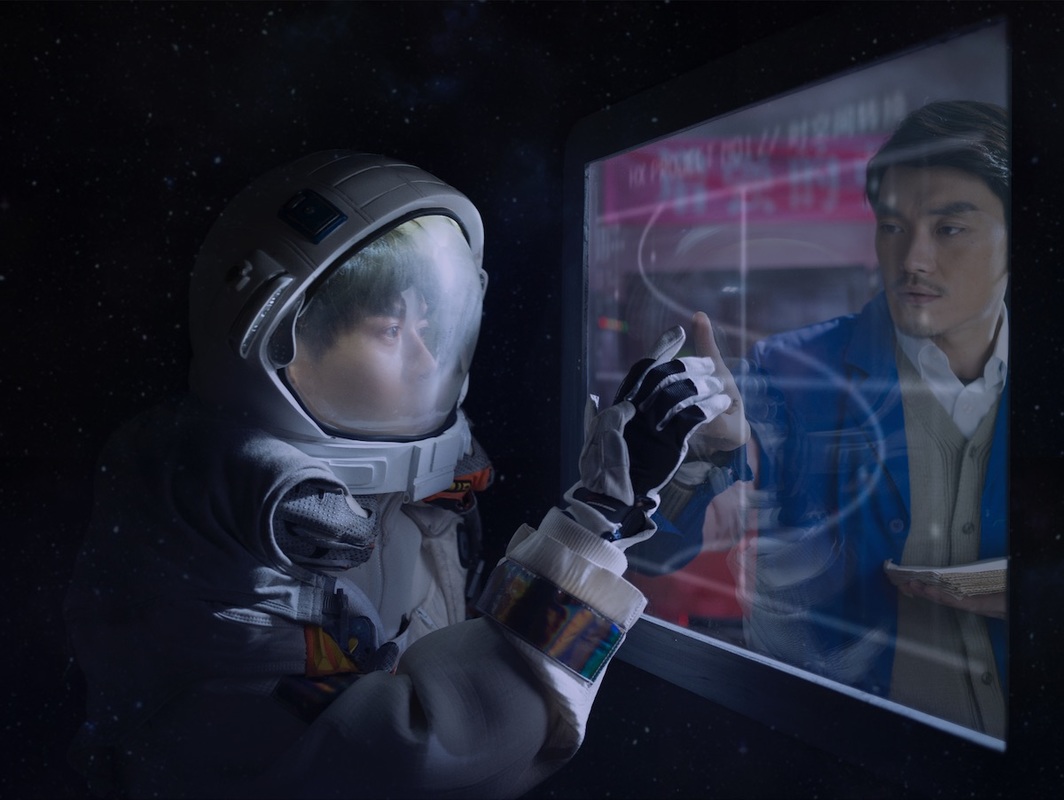 The immersiveness of virtual reality has been greatly exaggerated. In fact, the obstruction of immersion is VR’s greatest drawback. Its cumbersome headset, dizzying eyepieces, the lag between intent and control, distractive scene transitions, and popup notifications are constant reminders of its distance from “reality.” It hardly reaches the empathy effect provided by cinema. I’m interested in expanding VR’s boundary, to look beyond beauty, shock, and interactivity. I’m interested in virtual reality as agitprop, or whether or not it can disrupt experience as we know it. How will VR change our memories, our dreams?
At the end of the day, it doesn’t matter that we’ll never get to know the truth, including the historical truth. We can only look for its traces. My recent work considers China’s first computers. Where are the workers today who built them alongside Russian industrial advisers? What technologies and ideologies did those Russian industrial advisers leave behind exactly?
We are sandwiched between the “real” world and cyberspace, and through acceleration and diffusion of attention, we accept such changes rapidly. Before doubts are even formed, our thoughts are interrupted by funny videos sent by friends, or by our ecstasy for the hundreds of “likes” that a selfie earns in ten minutes. More is less. ... By the time we are about to leave this world, we might feel like we have never lived.
See the full story here: https://www.artforum.com/interviews/cao-fei-on-the-limits-of-truth-and-virtuality-82445
14Mar/20Off
Facebook is finally shutting down MSQRD, the selfie app it bought in 2016 and then didn’t update for years
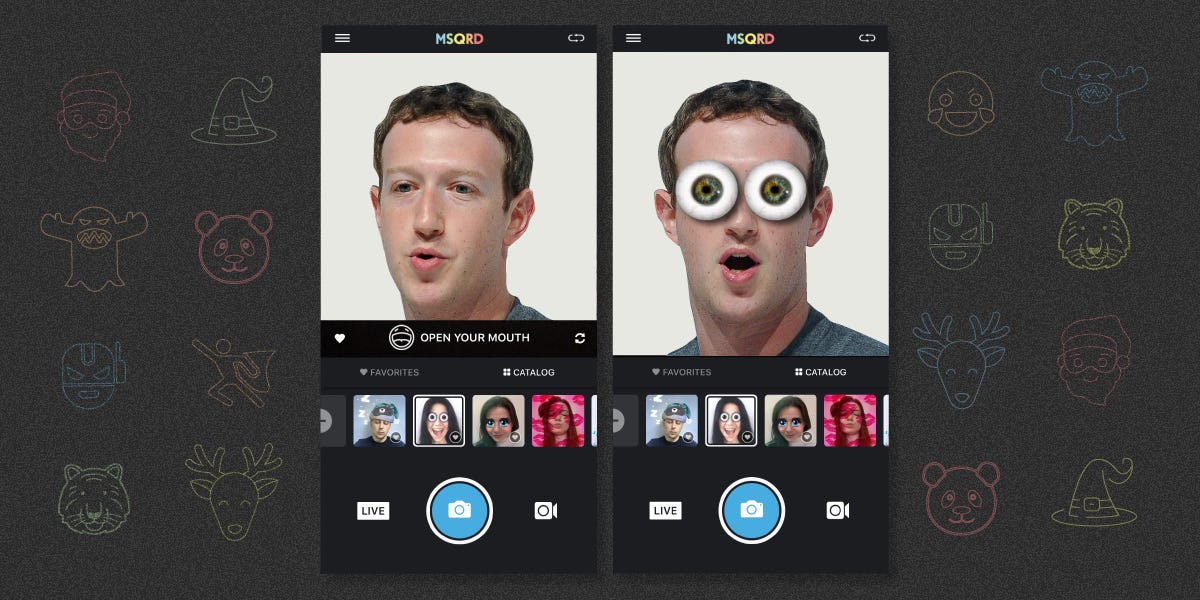 Facebook is shutting down MSQRD, an augmented reality selfie app it acquired in 2016 and which hasn't been updated for years.
Facebook acquired MSQRD in January 2016, after it exploded to the top of app store charts thanks to its face filters that transformed users into superheroes, animals, and more. Facebook promised to keep developing the app while also integrating its tech into its own products — but it stopped updating the app entirely before the end of the year, as Business Insider reported in a feature on the status of MSQRD in January 2020.
For the next three-plus years, MSQRD existed as a kind of zombie app, available to download but without updates to keep it fresh, with its once-enthusiastic userbase long evaporated — as Facebook's own AR grew progressively more sophisticated.
See the full story here: https://www.businessinsider.com/facebook-closes-msqrd-ar-selfie-app-acquired-2016-2020-3
13Mar/20Off
Facebook is testing new social VR app Horizon
Facebook has begun inviting users to participate in its closed alpha test version of Facebook Horizon — a social VR world where users can design their own cartoon avatars and interact with other users — by playing multiplayer games or building communities with the app's creator tools, per Social Media Today. Horizon is only accessible as an app on Oculus headsets and, at least for testers, it requires a linked Facebook account.
Business Insider Intelligence
Horizon is Facebook's latest effort to combine social networking with the immersive aspects of VR in a way that drives wider interest and consumer adoption among users. Horizon aims to build on past VR product launches from Oculus that likewise focused on realizing a vision of social networking and VR technology combined: Oculus Rooms, launched in 2016, and Spaces, launched in 2017.
See the full story here: https://www.businessinsider.com/facebook-testing-horizon-social-virtual-reality-app-2020-3
13Mar/20Off
NIST pushes augmented reality for first responders
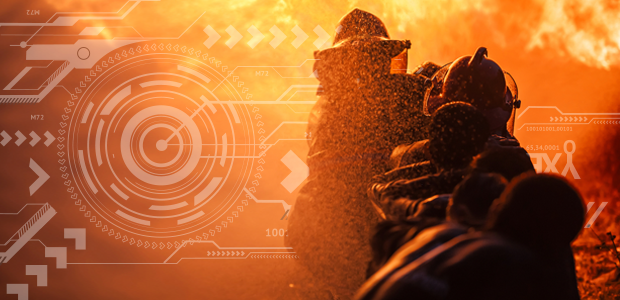 The National Institute of Standards and Technology is looking for innovators who can build intuitive augmented reality (AR) interfaces based on internet-of-things (IoT) data streaming from smart buildings, city sensors and personnel monitors to provide first responders with real-time situational awareness.
NIST’s Public Safety Communications Research Division and its challenge partners launched the CHARIoT Challenge, which will award over $1 million in prizes for solutions that can emulate and transmit scenario-accurate data streams for AR devices that will help public safety personnel communicate and respond more efficiently.
The four-phase challenge has two related tracks – IoT and AR – and calls for data streams and interfaces that provide insights for decision-making and resource deployment in wildfires, floods, active shooter situations and tunnel collapses. The systems must support both incident commanders and responders in the field.
Winning contestants will receive additional prizes and technical mentorship opportunities with key challenge partners, including Magic Leap, the First Responder Network Authority, FirstNet built with AT&T, MSA Safety and Blueforce Development.
See the full story here: https://gcn.com/articles/2020/03/12/iot-ar-responder-challenge.aspx
13Mar/20Off
5G confirmed safe by radiation watchdog
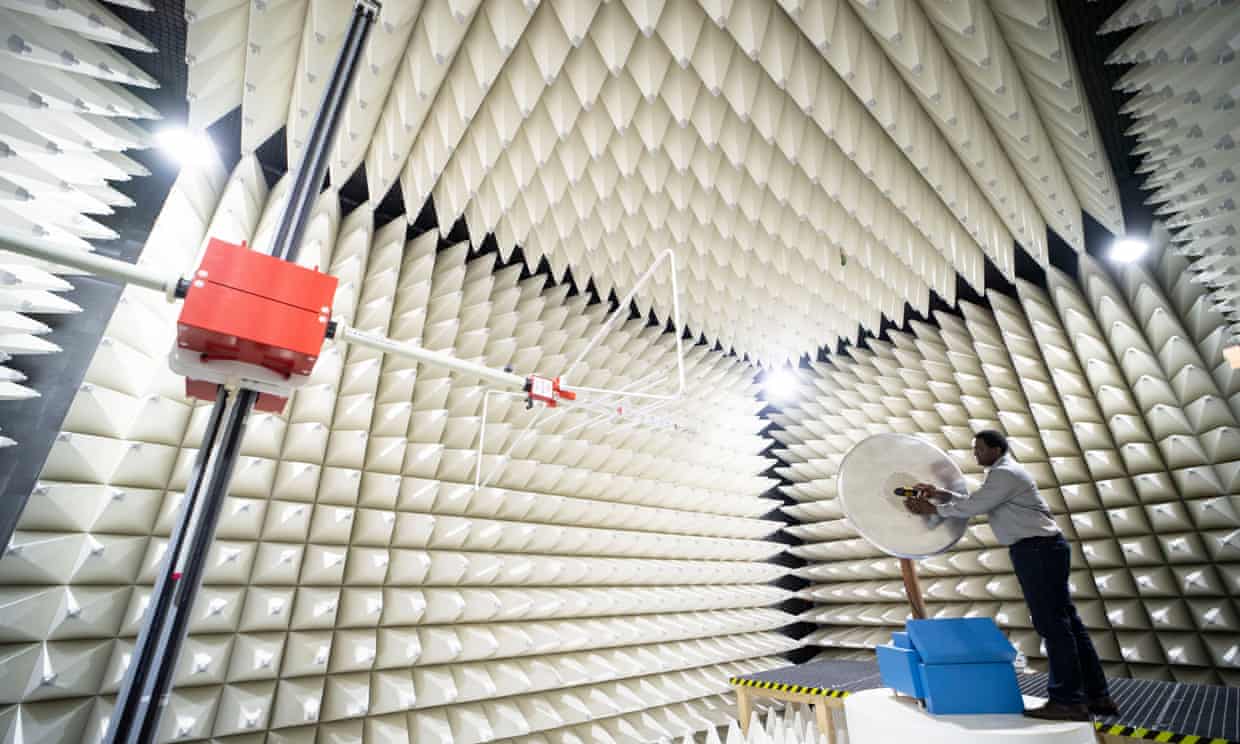 5G is safe, according to the international body in charge of setting limits on exposure to radiation, which has updated its advisory guidelines for the first time in more than 20 years.
The International Commission on Non‐Ionizing Radiation Protection (ICNIRP), the Germany-based scientific body that assesses the health risks of radio broadcasts, called for new guidelines for millimetre-wave 5G, the most high-frequency version of the telecommunications standard.
But in practice, that form of 5G, which is in use in the US and will be coming to Europe, still has output levels significantly below the new maximum.
See the full story here: https://www.theguardian.com/technology/2020/mar/12/5g-safe-radiation-watchdog-health
12Mar/20Off
TikTok to open a ‘Transparency Center’ where outside experts can examine its moderation practices

ZHEJIANG, CHINA - OCTOBER 18 2019 Two us senators have sent a letter to the us national intelligence agency saying TikTok could pose a threat to us national security and should be investigated. Visitors visit the booth of douyin(Tiktok) at the 2019 smart expo in hangzhou, east China's zhejiang province, Oct. 18, 2019.- PHOTOGRAPH BY Costfoto / Barcroft Media (Photo credit should read Costfoto / Barcroft Media via Getty Images)
TikTok, the popular social media app owned by Chinese tech company ByteDance, has been under a national security investigationby U.S. lawmakers who have raised concerns about the company’s access to U.S. user data and whether it was censoring content at the behest of the Chinese government. Today, TikTok tries to combat these concerns with the opening of a “Transparency Center” that will allow outside experts to examine and verify TikTok’s practices.
The new facility in TikTok’s LA office will allow outside experts to view how TikTok’s teams operate day-to-day, the company explains, as staff moderates content on the platform. This includes how moderators apply TikTok’s content guidelines to review the content its technology automatically flagged for review, as well as other content the technology may have missed.
In addition, the experts will be shown how users and creators are able to bring concerns to TikTok and how those concerns are handled. TikTok will also explain how the content on the platform aligns with its guidelines, the company says.
While the larger concern to U.S. lawmakers is potential for China’s influence through social media, TikTok at times makes other moderation choices that don’t appear to be in line with U.S. values. For example, singer Lizzo recently shaded TikTok for removing videos of her wearing a bathing suit, even as TikTok stars posted videos of themselves dancing in their bathing suits....And The Guardian reported on bans of pro-LGBT content. Again, TikTok said the guidelines being referenced in the article were no longer in use.
The Center will open in early May, initially with a focus on moderation. Later, TikTok says it will open up for insight into its source code and efforts around data privacy and security. The second phase will be led by TikTok’s newly appointed chief information security officer, Roland Cloutier, who starts next month.
TikTok in January announced its L.A. operations had moved to a new 120,000-square-foot office in Culver City, California. The company now has over 400 U.S. employees across L.A., New York, and Silicon Valley.
See the full story here: https://techcrunch.com/2020/03/11/tiktok-to-open-a-transparency-center-where-outside-experts-can-examine-its-moderation-practices/