2019 Was a Major Inflection Point for VR—Here’s the Proof
by Tipatat Chennevasin
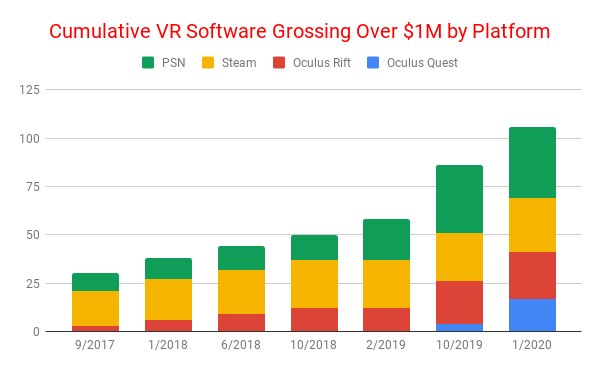
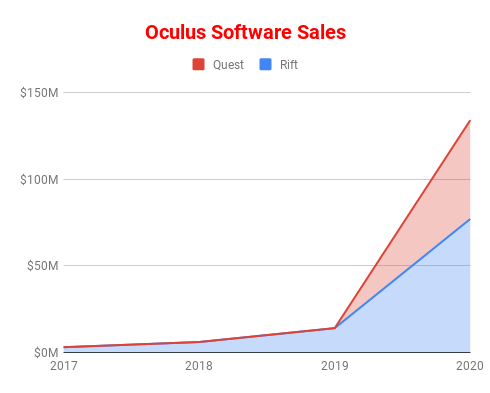
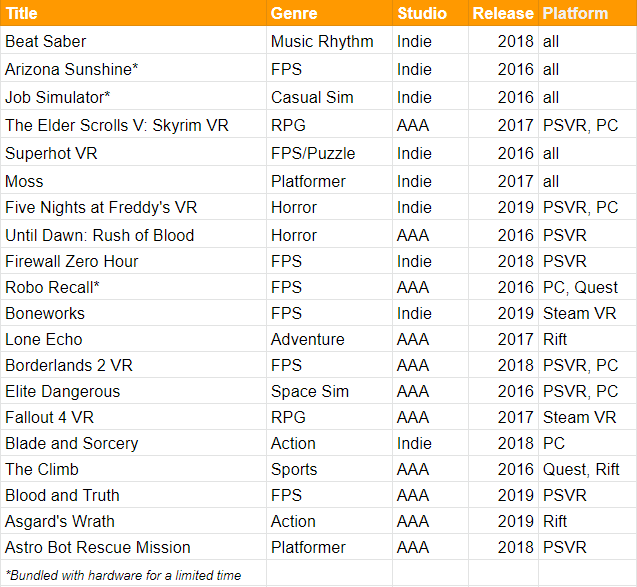
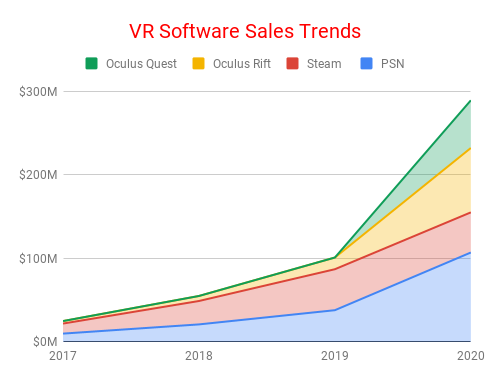 VR adoption is accelerating thanks to the Oculus Quest. We’ve seen over 100 VR titles break $1 million in revenue, growing the total VR software market by 3x in 2019. Top grossing VR titles have cleared $10 million in revenue, and can reach up to $60 million in sales given the current distribution of headsets in the market so far. Though still small, VR is a growing and sustainable platform for developers.
Oculus proved that VR was more than a product when they officially released numbers about their ecosystem last September at Oculus Connect 6. During the convention, they announced that VR software sales on their platform had exceeded $100 million; $20 million of that just from the Oculus Quest ecosystem, which launched only four months prior. But that’s not the only signal we have that VR is a growing and sustainable platform.
See the full story here: https://www.roadtovr.com/2019-major-inflection-point-vr-heres-proof/?fbclid=IwAR2rSKxz6Gvx0dVMhsQY6cldTWT-Dh8FPd-D3723M5Zq8N1KY94OQ34UWiA
The Future of Deep Learning Is Unsupervised, AI Pioneers Say
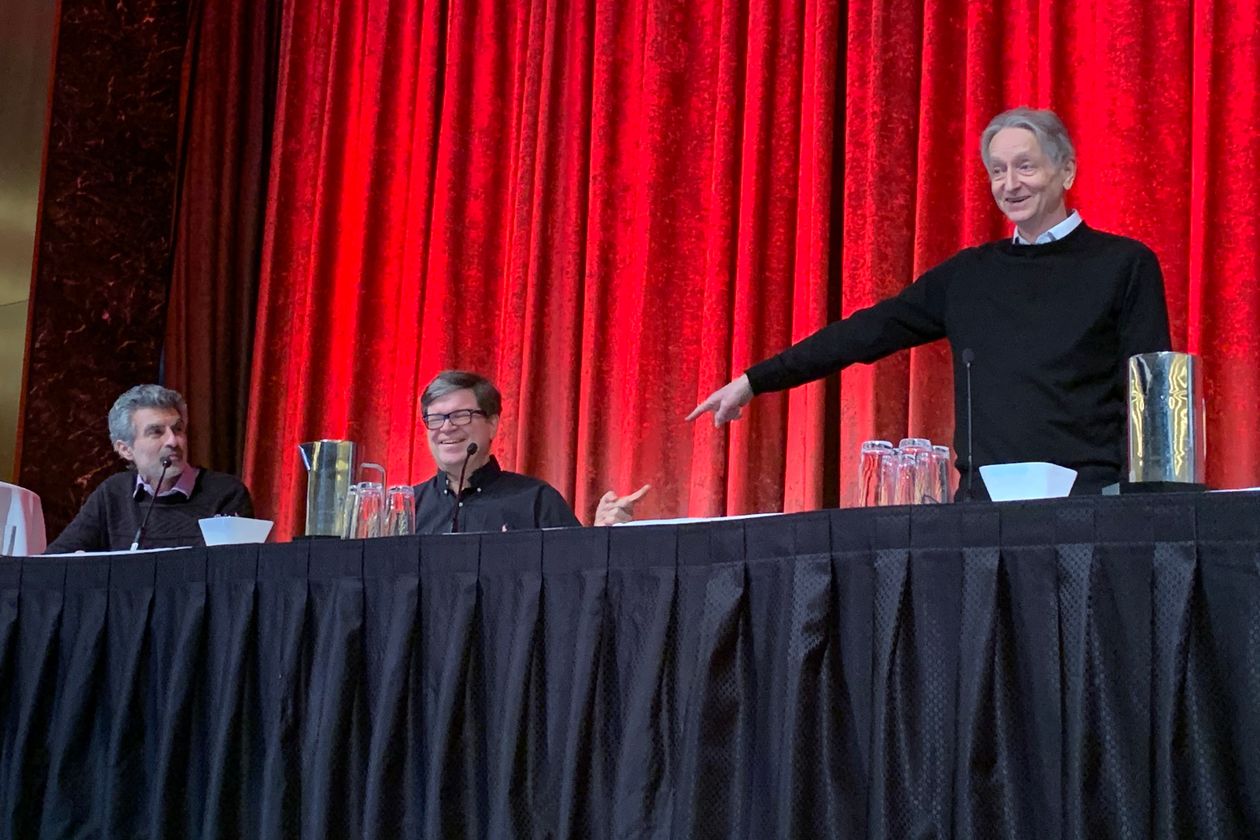 “How do we learn with fewer labels, fewer samples or fewer trials?” asked Mr. LeCun, speaking at an event organized by the Association for the Advancement of Artificial Intelligence. “My suggestion on it…is to use self-supervised learning, which is basically learning to fill in the blanks. Basically it’s the idea of learning to represent the world before learning a task, and this is what babies do.”
Mr. LeCun was speaking during a session with Yoshua Bengio, of the University of Montreal and the Montreal Institute for Learning Algorithms, and Geoffrey Hinton, of AlphabetInc.’s Google, the Vector Institute and the University of Toronto. The three shared the 2018 A.M. Turing Award for their work advancing the field of deep learning, a technique that powers image-recognition systems, natural-language understanding and more. The Turing Award, bestowed annually by the Association for Computing Machinery, recognizes lasting, major contributions to the field and comes with a $1 million prize.
Self-supervised machines will be able to better handle new situations they encounter, Mr. Bengio said. That would be comparable to the way people figure out how to drive in an area where they’ve never been or when construction activity forces them to change a familiar route.
Self-supervised learning works well when it is applied to natural-language problems, such as filling in the blanks of missing words in a sentence. But it doesn’t work so well with predicting the next frame of a video image, Mr. LeCun said. Humans can predict what’s going to happen next in a video of a ball dropping, but machines struggle with that sort of intelligence, he said.
Efforts to get to the next level in AI face three challenges, Mr. LeCun said. Researchers want to develop AI that can learn with fewer labels, reason more like people and “plan complex action sequences.”
How tech companies are trying to make augmented and virtual reality a thing, again
See the full story here: https://www.vox.com/recode/2020/2/11/21121275/augmented-virtual-reality-hiring-software-engineers-hired
This NYC pop-up uses augmented reality to teach visitors about sustainability
It’s one thing to tell someone about sustainability, but it’s another thing entirely to show them.
And that’s exactly what Arcadia Earth aims to do. The New York City pop-up features 15 high-tech (and highly photogenic) rooms that let visitors feel, smell, hear and see their way through a lesson in environmental awareness.
The 14,000 square foot exhibit was created by designer Valentino Vettori, who got the idea after visiting a sustainability event in Los Angeles.
But the exhibit does a lot more than telling. Arcadia Earth uses virtual reality and augmented reality — through an iPhone-friendly app that lets visitors “see” deer prancing around them or walk through an ocean full of fish.
See the full story here: https://sports.yahoo.com/2020-02-11-arcadia-earth-new-york-sustainability-pop-up-recycle-vettori-23923638.html
Samsung’s Z Flip has a cool hinge and a helpful split screen UX
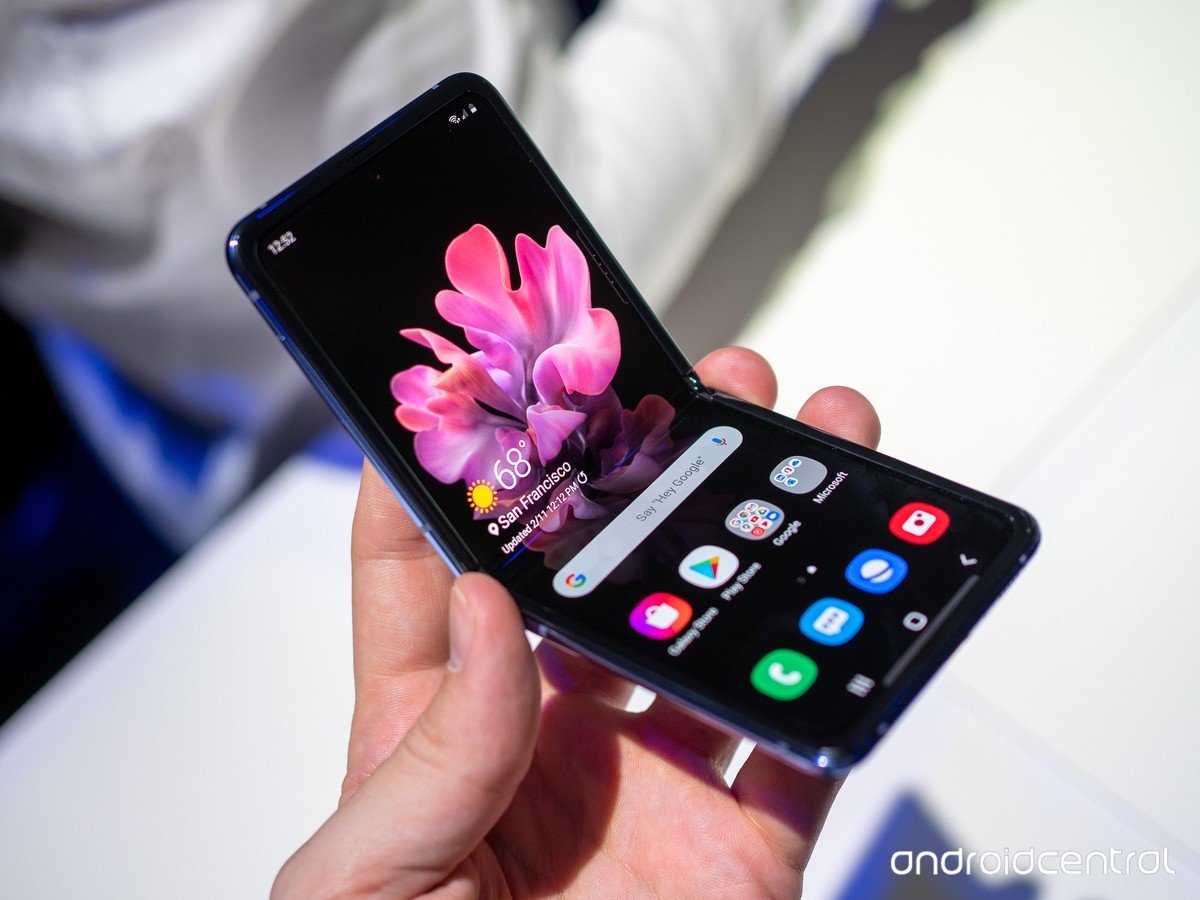 Samsung jumped right in with the most anticipated news at Unpacked and put the Z Flip at the top of the show. The foldable phone changes the shape and size of the smartphone as well as how we use it, a Samsung spokeswoman said.
The screen is ultra thin glass that will fold up to 200,000 times, according to Samsung. The hideaway hinge connects both halves of the phone and prevents dust and sand from getting into the phone.
The phone goes on sale Friday, Feb. 14 with a $1,380 price tag. Buyers will get a subscription to YouTube premium.
Samsung's One UI 2 is built to take advantage of the phone's form factor. The most interesting new feature of this interface is the split screen; half is for viewing, and half is for interacting.
For example, a user can watch a video on the top half and type a comment on the bottom half. This interface could make the expensive phone more productive for business users when traveling. The One UI 2 interface making it even easier to multitask. A user can lock the phone at its 90-degree angle and have a video call and still have the laptop free for taking notes, referring to files, or adjusting a presentation.
Here are the specs for the Samsung Galaxy Z Flip:
- 6.7-inch screen
- Rear cameras: 12-megapixel ultra-wide-angle f/2.2 123-degree; 12-megapixel wide-angle f/1.8 78-degree
- Front camera: 10-megapixel f/2.4 80-degree
- 8 GB memory
- 256 GB storage
- Folded: 87.4 x 73.6 x 17.3 mm
- Unfolded: 167.3 x 73.6 x 7.2
- 183 g/6.46 oz
- Nano-SIM, eSIM
- Samsung Pay
- Always-on display
- Foldable dynamic AMOLED capacitive touchscreen, 16M colors
- Android 10.0, One UI 2
- Qualcomm SM8150 Snapdragon 855+
- No memory card slot
- No headphone jack
- Side-mounted fingerprint sensor
- Wireless charging
- Non-removable Li-Po 3300 mAh battery
See the full story here: https://www.techrepublic.com/article/samsungs-z-flip-has-a-cool-hinge-and-a-helpful-split-screen-ux/
Facebook Acquires the Computer Vision Startup Scape Technologies
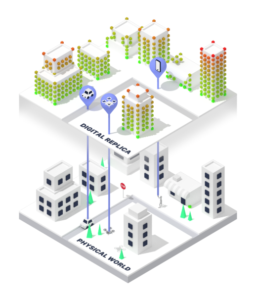 TechCrunch discovered a regulatory filing that shows that Facebook has acquired the London-based computer vision startup Scape Technologies. The startup uses computer vision to determine location accuracy beyond the capabilities of the global positioning system (GPS).
It uses a cloud-based “Visual Positioning System” which translates images into 3D maps that provide very precise outdoor location over whole cities. It can come in handy when someone wants to know the exact location of store in a particular street block, for example.
The technical principle behind it has already been used by Google in developing a Visual Positioning System that is already being used for Augmented Reality navigation in Google Maps.
See the full story here; https://virtualrealitytimes.com/2020/02/09/facebook-acquires-the-computer-vision-startup-scape-technologies/
SUNDANCE VR AND AR GOT EXTREMELY WEIRD IN 2020
BEST CONCEPT: BREATHE
(DIEGO GALAFASSI)
 The medium: Magic Leap mixed reality headsets with biometric sensors.
The premise: Four people put on mixed reality headsets and step into an empty space. Sensors estimate when they’re breathing, then visualize the air they exhale as a cloud of light — mixing with the breaths of the other participants and then drifting into the ether. And the whole system is set in a larger context by some soothing narration about air (and Earth’s larger ecosystem) from Zazie Beetz.
MOST INEXPLICABLY COMPELLING: SCARECROW
(JIHYUN JUNG, SNGMOO LEE, TAEWAN JEONG, COOPER YOO)
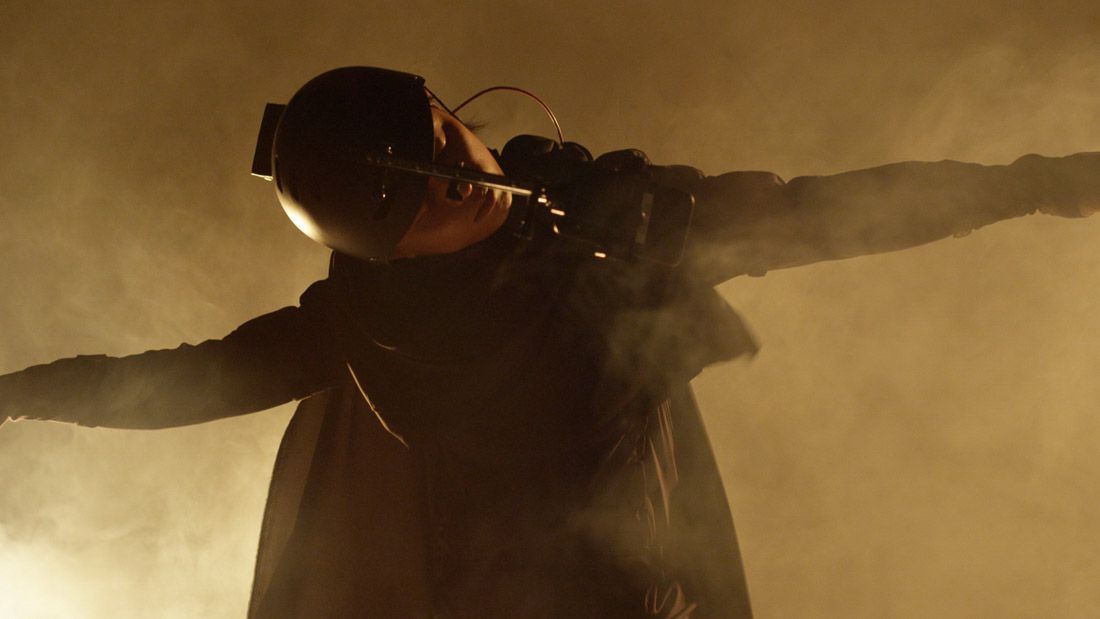 The medium: Full-body virtual reality — plus a physically present dancer, a thermal hand plate that simulates touching hot and cold objects, and a scanner that digitizes an image of your face. It’s a lot.
The premise: A New Frontier pamphlet gave Scarecrow a one- or two-sentence synopsis about reawakening creativity in artists, or something similarly vague. This turned out to be nonsense, because Scarecrow is about dancing with a scarecrow whose heart has been stolen by a large mythological bird.
See all the mentioned installations here: https://www.theverge.com/2020/2/7/21125284/sundance-best-vr-ar-film-festival-new-frontier-2020