Yesterday, the White House Office of Science and Technology Policy released 10 principles for AI in government, which is part of its American AI Initiative signed by President Trump last year. According to the White House, the principles have three main goals: to ensure public engagement, limit regulatory overreach, and promote trustworthy AI that is fair, transparent, and safe. The principles, as outlined by MIT Tech Review, are:
- Public trust in AI: The government must promote reliable, robust, and trustworthy AI applications.
- Public participation: The public should have a chance to provide feedback in all stages of the rule-making process.
- Scientific integrity and information quality: Policy decisions should be based on science.
- Risk assessment and management: Agencies should decide which risks are and aren’t acceptable.
- Benefits and costs: Agencies should weigh the societal impacts of all proposed regulations.
- Flexibility: Any approach should be able to adapt to rapid changes and updates to AI applications.
- Fairness and nondiscrimination: Agencies should make sure AI systems don’t discriminate illegally.
- Disclosure and transparency: The public will trust AI only if it knows when and how it is being used.
- Safety and security: Agencies should keep all data used by AI systems safe and secure.
- Interagency coordination: Agencies should talk to one another to be consistent and predictable in AI-related policies.
See the full story here: https://www.technologyreview.com/s/615015/ai-regulatory-principles-us-white-house-american-ai-initiatve/
Jason Levine, principal worldwide evangelist for Adobe Creative Cloud, took the stage at CES to demonstrate the company's AI-powered instant vertical video tech, which both creates vertical clips from horizontal ones and automatically follows and focuses on a subject. According to Levine, the technology combines Adobe's Sensei AI engine and Intel chips. The video tech eliminates or reduces the need for an editor, since it can track subjects automatically, he explained. On that note, Intel also announced a number of AI-related initiatives at CES, including improvements to its DL Boost technology to track athletes.
See the full story here: https://www.engadget.com/2020/01/07/watch-adobe-intel-press-ces/
After much fanfare, Samsung's Technology and Advanced Research (STAR) Labs unveiled its "Neon" AI project, which turned out to be digital avatars. The company has hyped up the project in the days preceding CES, but didn't offer much information until Tuesday. The technology is described as "a computationally created virtual being that looks and behaves like a real human, with the ability to show emotions and intelligence." Reports noted that the Neon AI "humanoids" are essentially video chatbots that can speak a variety of languages but are not AI assistants like Alexa that can answer basic questions and interface to the internet. As far as their uses, the company says they could be used in roles that interact with people, "such as friendly customer service," and work as concierges, TV anchors, spokespeople, and companions. Samsung hasn't specified when it could roll out the technology, which apparently uses AI to "learn" about each person it interacts with.
See the full story here: https://www.cnet.com/news/samsung-neon-project-finally-unveiled-humanoid-ai-chatbot-artificial-humans/
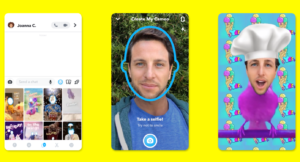 After acquiring Ukraine startup Looksery in 2015 to supercharge animated selfie lenses in Snapchat — arguably changing the filters game for all social video and photo apps — Snap has made another acquisition with roots in the country, co-founded by one of Looksery’s founders, to give a big boost to its video capabilities.
The company has acquired AI Factory, a computer vision startup that Snap had worked with to create Snapchat’s new Cameos animated selfie-based video feature, for a price believed to be in the region of $166 million.
Cameos, launched last month, lets you take a selfie, which is then automatically “animated” and inserted into a short video. The selection of videos, currently around 150, is created by Snap, with the whole concept not unlike the one underpinning “deepfakes” — AI-based videos that look “real” but are actually things that never really happened.
See the full story here: https://techcrunch.com/2020/01/03/snapchat-quietly-acquired-ai-factory-the-company-behind-its-new-cameos-feature-for-166m/
 XR’s has three nascent but truly giant categories developing quietly in the background that will be deeply disruptive: Telepresence, being co-present in a distant place with one or more people, Volumetric Capture, 3D live-action videos, and Dimensional Displays or, 3D without glasses. Coming to a television set near you.
See the full story here: https://www.forbes.com/sites/charliefink/2020/12/30/the-biggest-xr-stories-of-the-year/#26f2ae0970ab
1. AI will increasingly be monitoring and refining business processes
2. More and more personalization will take place in real-time
3. AI becomes increasingly useful as data becomes more accurate and available
4. More devices will run AI-powered technology
5. Human and AI cooperation increases
6. AI increasingly at the “edge”
7. AI increasingly used to create films, music, and games
8. AI will become ever more present in cybersecurity
9. More of us will interact with AI, maybe without even knowing it
10. But AI will recognize us, even if we don’t recognize it
See the full story here: https://www.forbes.com/sites/bernardmarr/2020/01/06/the-top-10-artificial-intelligence-trends-everyone-should-be-watching-in-2020/#7e5430ae390b
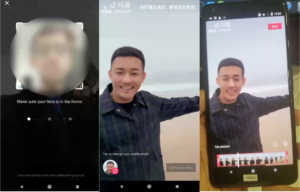 TikTok parent company ByteDance has built technology to let you insert your face into videos starring someone else. TechCrunch has learned that ByteDance has developed an unreleased feature using life-like deepfakes technology that the app’s code refers to as Face Swap. Code in both TikTok and its Chinese sister app Douyin asks users to take a multi-angle biometric scan of their face, then choose from a selection of videos they want to add their face to and share.
Most problematic has been Chinese deepfakes app Zao, which uses artificial intelligence to blend one person’s face into another’s body as they move and synchronize their expressions. Zao went viral in September despite privacy and security concerns about how users’ facial scans might be abused. Zao was previously blocked by China’s WeChat for presenting “security risks.” [Correction: While “Zao” is mentioned in the discovered code, it refers to the general concept rather than a partnership between ByteDance and Zao.]
See the full story here: https://techcrunch.com/2020/01/03/tiktok-deepfakes-face-swap/
 https://www.pocket-lint.com/apps/news/instagram/150575-how-to-get-the-disney-pokemon-and-harry-potter-character-filters-on-instagram
Sex toys are allowed. Cannabis is not.
Facial identification works on a consumer-friendly rebrand
Certain CES check-in locations will have a camera set up that will snap a person’s photo and automatically match it to the photo they used to register. It’s opt-in and an example of how the conference and its exhibitors are trying to give the technology a more consumer-friendly image.
...Now the same companies making those systems want it to be embraced as a fun, user-friendly technology that makes tasks easier.
Lots of bathroom technology, for some reason
Toilets are getting sensors to help determine how much water each flush requires, voice assistants are standing by to flush your toilet, and wearables monitor your stomach and send you a smartphone notification when it’s time to use the bathroom. Toilet paper maker Charmin is even showing off demos of something mysterious called a “roll bot.” And multiple companies promise to revolutionize teeth with high-tech toothbrushes.
Billboards: Where the real CES drama happens
This year, there is already a giant Google structure with slides in front of the convention center and more monorail ads.
We’ll find out whether Apple started a new sub-tweeting-via-outdoor-advertisements trend in a few days. The company will also have a speaker at CES for the first time in 28 years via an appearance from its senior director of privacy, Jane Horvath, on a privacy roundtable.
See the full story here: https://www.washingtonpost.com/technology/2020/01/05/ces-preview-surveillance-sex-toys-futuristic-gadgets/
Abstract—Fibromyalgia (FM) causes debilitating pain and muscular stiffness, amongst other symptoms, which can be eased over time through regular exercise. As FM patients have an abnormal perception of pain, adherence to exercise programmes can be difficult due to the pain experienced whilst exercising. Virtual reality (VR) has been shown to distract users from physical and mental pain and therefore may be utilized to increase adherence to exercise. This project involved the creation of a VR game using the HTC Vive, designed to induce exercise at a moderate intensity and distract Fibromyalgia patients from pain experienced whilst exercising. This game was tested using 8 participants who completed a questionnaire regarding the enjoyability of the game as well as the intensity of exercise whilst playing the game. All except two participants felt as if they had exercised at a moderate intensity or higher whilst playing the game, with the remaining two participants just under the threshold for moderate exercise. All participants enjoyed the game and all except one would play it again and spend money on this or similar games. The participant who would not play this or similar games again fell into the 65+ age range, supporting research which states that over 65s have little interest in gamified VR.
See the full story here: https://www.peterlang.com/view/9783631805237/html/ch13.xhtml
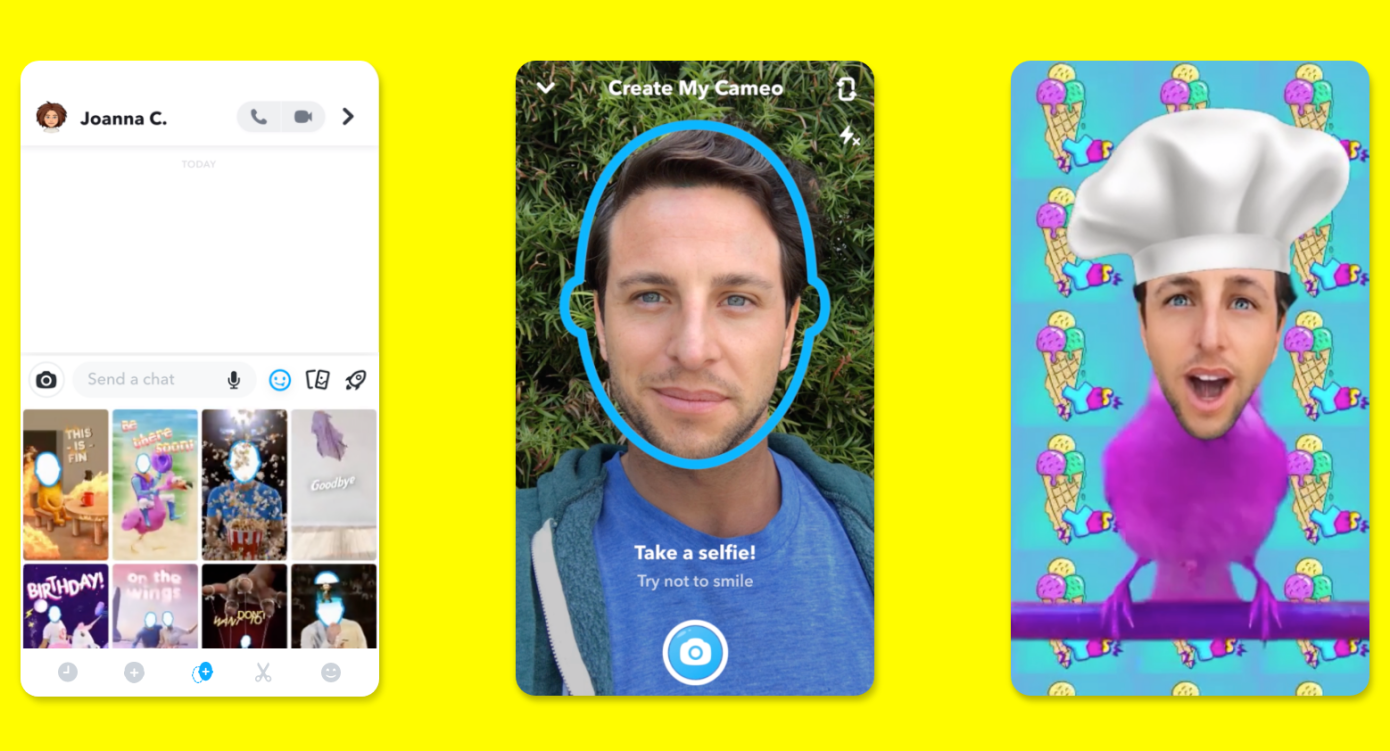 After acquiring Ukraine startup Looksery in 2015 to supercharge animated selfie lenses in Snapchat — arguably changing the filters game for all social video and photo apps — Snap has made another acquisition with roots in the country, co-founded by one of Looksery’s founders, to give a big boost to its video capabilities.
 XR’s has three nascent but truly giant categories developing quietly in the background that will be deeply disruptive: Telepresence, being co-present in a distant place with one or more people, Volumetric Capture, 3D live-action videos, and Dimensional Displays or, 3D without glasses. Coming to a television set near you.
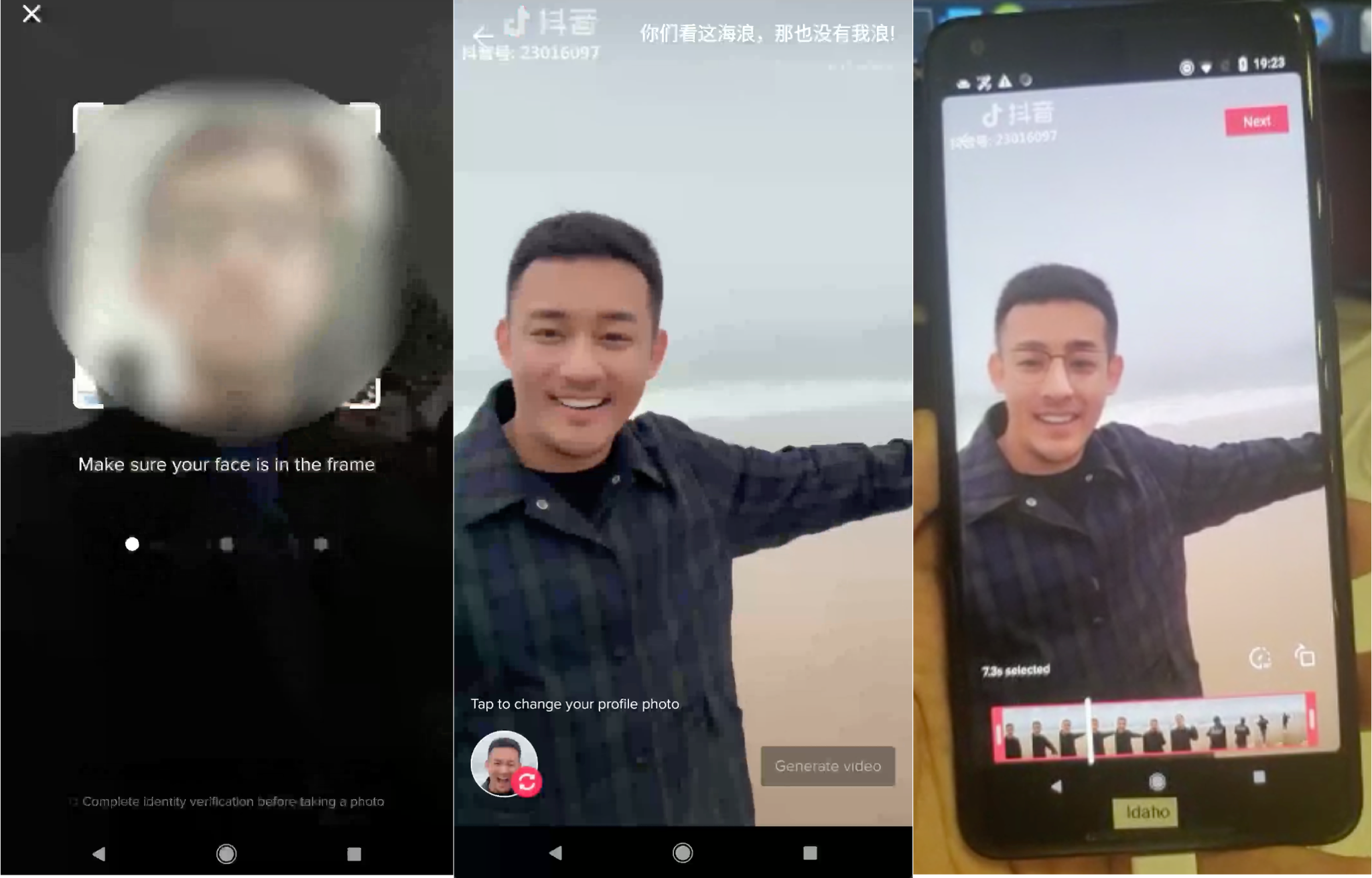 TikTok parent company ByteDance has built technology to let you insert your face into videos starring someone else. TechCrunch has learned that ByteDance has developed an unreleased feature using life-like deepfakes technology that the app’s code refers to as Face Swap. Code in both TikTok and its Chinese sister app Douyin asks users to take a multi-angle biometric scan of their face, then choose from a selection of videos they want to add their face to and share.
 https://www.pocket-lint.com/apps/news/instagram/150575-how-to-get-the-disney-pokemon-and-harry-potter-character-filters-on-instagram