Would you like fries with that? McDonald’s already knows the answer
 McDonald’s has a new plan to sell more Big Macs: act like Big Tech.
Over the last seven months, McDonald’s has spent hundreds of millions of dollars to acquire technology companies that specialize in artificial intelligence and machine learning. And the fast-food chain has even established a new tech hub in the heart of Silicon Valley — the McD Tech Labs — where a team of engineers and data scientists is working on voice-recognition software.
The goal? To turn McDonald’s, a chain better known for supersized portions than for supercomputers, into a saltier, greasier version of Amazon.
At some drive-thrus, McDonald’s has tested technology that can recognize license-plate numbers, allowing the company to tailor a list of suggested purchases to a customer’s previous orders, as long as the person agrees to sign away the data.
In March, McDonald’s spent more than $300 million to buy Dynamic Yield, the Tel Aviv-based company that developed the artificial intelligence tools now used at thousands of McDonald’s drive-thrus.
The deal “has changed the way the high-tech industry thinks about potential M&A,” said Liad Agmon, a former Israeli intelligence official who co-founded Dynamic Yield. “We’ll see more nontraditional tech companies buying tech companies as an accelerator for their digital efforts. It was genius on McDonald’s side.”
McDonald’s insists that the rollout of the voice technology will not cost jobs. But at a time when it faces renewed protests from workers over low wages and sexual harassment, the chain’s new focus on technology could intensify scrutiny of how it treats its workers and how they might be affected by automation. While McDonalds has reported impressive growth over the last couple of years, some employees at its restaurants make less than $10 an hour.
See the full story here: https://www.kentucky.com/entertainment/restaurants/article236751163.html#storylink=cpy
Microsoft president warns AI could be ‘formidable weapon’
 The president of Microsoft (MSFT) has warned artificial intelligence (AI) could become a “formidable weapon” unless tech companies build in limits to prevent its “abuse”.
“Any tool can also become a weapon,” Brad Smith said on Wednesday. “The more powerful the tool, the more formidable the weapon.
“When we look to the decade ahead, in many respects AI will be a tool of the sort the world has seldom seen before. And hence it can become a weapon as well.”
Smith made the comments during a speech at the Web Summit, one of the world’s biggest technology conferences. He called on the audience of tech professionals in Lisbon to “think hard” about the potential problems that could be caused by AI.
“We shouldn’t just ask what computers can do, we need to ask what they should do,” Smith said. “We are the first generation in the history of humanity … who will empower machines to make decisions that previously were made only by people.
“If we get it wrong, every generation that comes after us will pay a price.”
He called for “guard rails on the technology we are creating to protect against their abuse or their misuse or their unintended consequences.”
He also called for greater engagement with governments around the world and called on lawmakers to “move faster” to keep up with the pace of change.
See the full story here: https://www.yahoo.com/entertainment/microsoft-president-brad-smith-ai-weapon-ethics-guard-rails-113018171.html
Cosmic cats and nuclear blasts: the strange history of interstellar messages
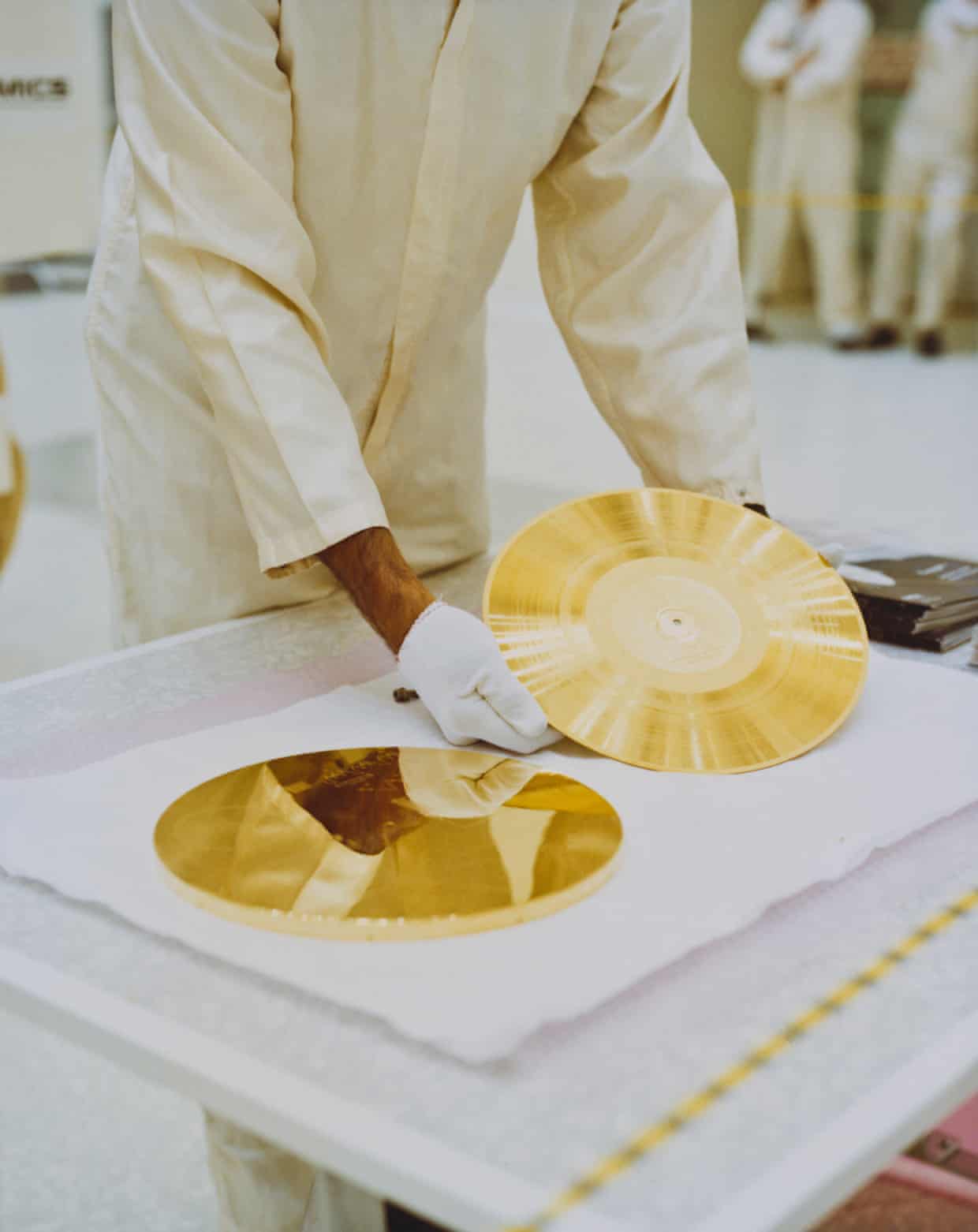 Any solution to the problem of interstellar communication comes laden with assumptions about the nature of extraterrestrial intelligence and inevitably reflects the technological sophistication of the era.
The problem, briefly stated, is how to design a message that can be understood by an extraterrestrial intelligence about which you can know nothing with absolute certainty.
This turns the design of interstellar messages into an exercise in identifying universals that can be presumed to be recognised by any entity endowed with higher intelligence. It is, in other words, the search for what may be called a language of the universe.
See the full story here; https://www.theguardian.com/science/2019/nov/06/cosmic-cats-nuclear-interstellar-messages-extraterrestrial-intelligence
Facial Recognition Technology is Helpful to Combat Piracy in Adult Entertainment Industry
 Facial recognition technology is being used in the adult entertainment industry for many purposes, especially for combatting piracy. The industry has big copyright and piracy problems. It is grossing as much as $3 billion per year on the Internet. Face recognition technology is using artificial intelligence through machine learning. It is helping viewers to detect which porn star is in each video and is allowing them to find other videos of that porn star. The adult entertainment industry is finding this behavior of users helpful to combat piracy and copyright problems.
Once a viewer uses this technology, AI searches for over 50,000 videos and provides the best match for a particular adult actor. AI checks for hair color, biometrics, and other face related measurements. Every adult platform is using face recognition technology to eradicate piracy and provide the legal content to the viewers.
See the full story here: https://www.bigtimedaily.com/facial-recognition-technology-is-helpful-to-combat-piracy-in-adult-entertainment-industry/
THE NEXT CHOPIN COMPETITION WILL BE DONE IN VIRTUAL REALITY
Dr Artur Szklener, Director of the Fryderyk Chopin Institute, Warsaw (which runs the Competition) said:
 “For the first time in history we are introducing virtual reality, the highest quality broadcasting and fully interactive digital and physical spaces so that music-lovers all over the world can fully immerse themselves in the exceptional music-making and drama of the International Chopin Competition. The international streaming of the last edition in 2015 attained 60 million views on YouTube alone. At the next edition in 2020 we hope to reach many more people in a variety of ways and ensure they enjoy the richest and deepest experience possible. We also hope to shape the history of pianism in the 21st century and once again celebrate Warsaw as the Chopin capital of the world.”
In a first for any major classical music event, the Competition is introducing virtual reality streaming. With a VR camera close to the pianist on stage, remote viewers will be able to experience performances from the pianist’s perspective on the stage of National Philharmonic Hall in Warsaw. Anyone who has VR goggles at home will be able to watch the VR streaming at www.chopin2020.pl. For those who do not have VR goggles, the Competition is introducing special Listener Zones all over the world where music lovers can come together to share the virtual reality experience, and much else.
See the full story here: https://slippedisc.com/2019/11/the-next-chopin-competition-will-be-done-in-visual-reality/
Why Microsoft and Warner Bros. Archived the Original ‘Superman’ Movie on a Futuristic Glass Disc

Project Silica at the Microsoft research lab in Cambridge with Ant Rowstron and Richard Black. 21 Station Road, CB1 2FB. 16 September 2019
The piece of silica glass storing the 1978 “Superman” movie, measuring 7.5 cm x 7.5 cm x 2 mm. The glass contains 75.6 GB of data plus error redundancy codes.
Microsoft has teamed up with Warner Bros. to store a copy of the 1978 movie “Superman” on a small glass disc about the size of a coaster. The collaboration, which will be officially unveiled at Microsoft’s Ignite 2019 conference in Orlando, Florida Monday, is a first test case for a new storage technology that could eventually help safeguard Hollywood’s movies and TV shows, as well as many other forms of data, for centuries to come.
“Glass has a very, very long lifetime,” said Microsoft Research principal researcher Ant Rowstron in a recent conversation with Variety. “Thousands of years.”
And to this date, Warner Bros. is storing most of its movies and TV shows on film, even if they’re being shot digitally. For archival purposes, the studio splits a film into its YCM color components, resulting in three distinct copies that are then written on black-and-white film. The results are being stored away in a cold vault, which is kept between 35 and 45 degrees Fahrenheit.
Hollywood studios have been storing films like this for decades, explained Collar. “This process is tried and true.” And it works: When Warner Bros. recently decided to reissue “The Wizard of Oz” in 4K, employees just had to go back into the studio’s vault, retrieve those 3 color-isolated copies, digitize each, and reassemble them to the color master copy. “It is an evolved process,” said Collar.
However, the process doesn’t work for all kinds of assets. Video games, for instance, need to be stored digitally. Light field video captures, holograms, or whatever else the future may hold for next-generation entertainment, will likely also require different solutions. And with recent visual improvements like 4K and HDR, there is an ever-increasing need for petabytes of storage, said Warner Bros. chief technology officer Vicky Colf. “It’s the quality of the content that we are dealing with.”
See the full story here: https://variety.com/2019/digital/news/project-silica-superman-warner-bros-microsoft-1203390459/
Adobe and Twitter are designing a system for permanently attaching artists’ names to pictures
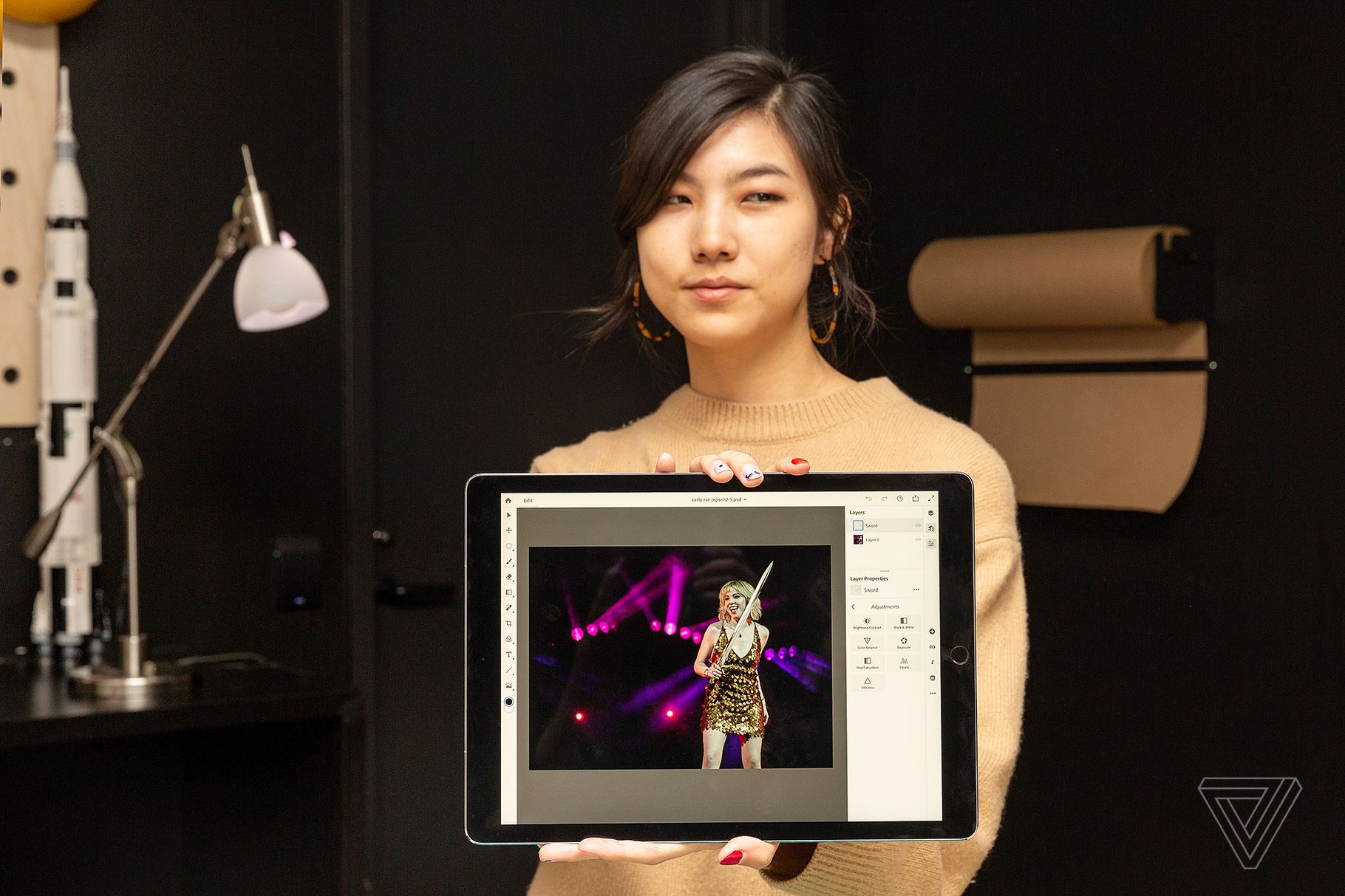 Adobe, Twitter, and The New York Times Company have announced a new system for adding attribution to photos and other content. A tool will record who created a piece of content and whether it’s been modified by someone else, then let other people and platforms check that data. Adobe showed off a prototype in Photoshop today, but many of the details are still in flux, and there’s no release date.
The overall project is called the Content Authenticity Initiative, and its participants will hold a summit on the system in the next few months.
See the full story here: https://www.theverge.com/2019/11/4/20948229/adobe-twitter-nyt-company-content-authenticity-initiative-attribution-misinformation-tool
BMW’s magical gesture control finally makes sense as touchscreens take over cars
 BMW has been equipping its cars with in-air gesture control for several years and I never paid attention to it. It seemed redundant.
Now, in 2019, with giant touchscreens set to takeover cars, I find BMW’s gesture control smart and a great solution to a future void of buttons.
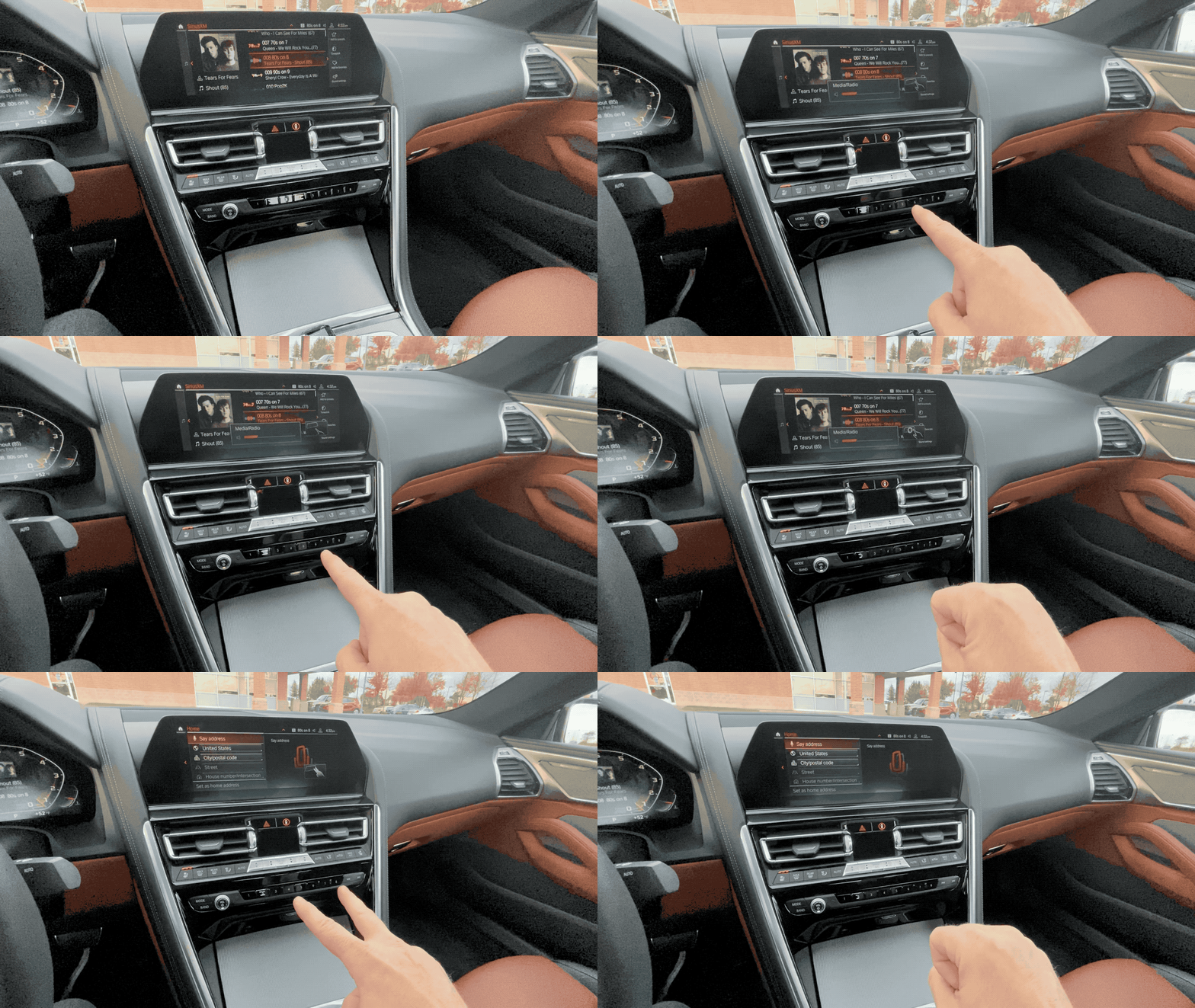
Here’s how it works: To control the volume, take one finger and spin it in the air above the center stack. Anywhere. The range is impressive. A person can do this next to the screen or two feet away. A person’s arm could be resting on the center armrest and lift in the air and twirl their finger. Bam, it controls the volume. Put two fingers up – not spinning, like a flat peace sign – and the screen turns on or off. Make a fist and open it twice to load the navigation or phone (user picks the function).
After using the system for several days, I never had a false positive. The volume control took about 10 minutes to master, while the other gestures worked the first time.
See the full article here: https://techcrunch.com/2019/11/04/bmws-magical-gesture-control-finally-makes-sense-as-touchscreens-take-over-cars/
Enhancing AR with machine learning
Layering ML on top of AR apps extends their usefulness.
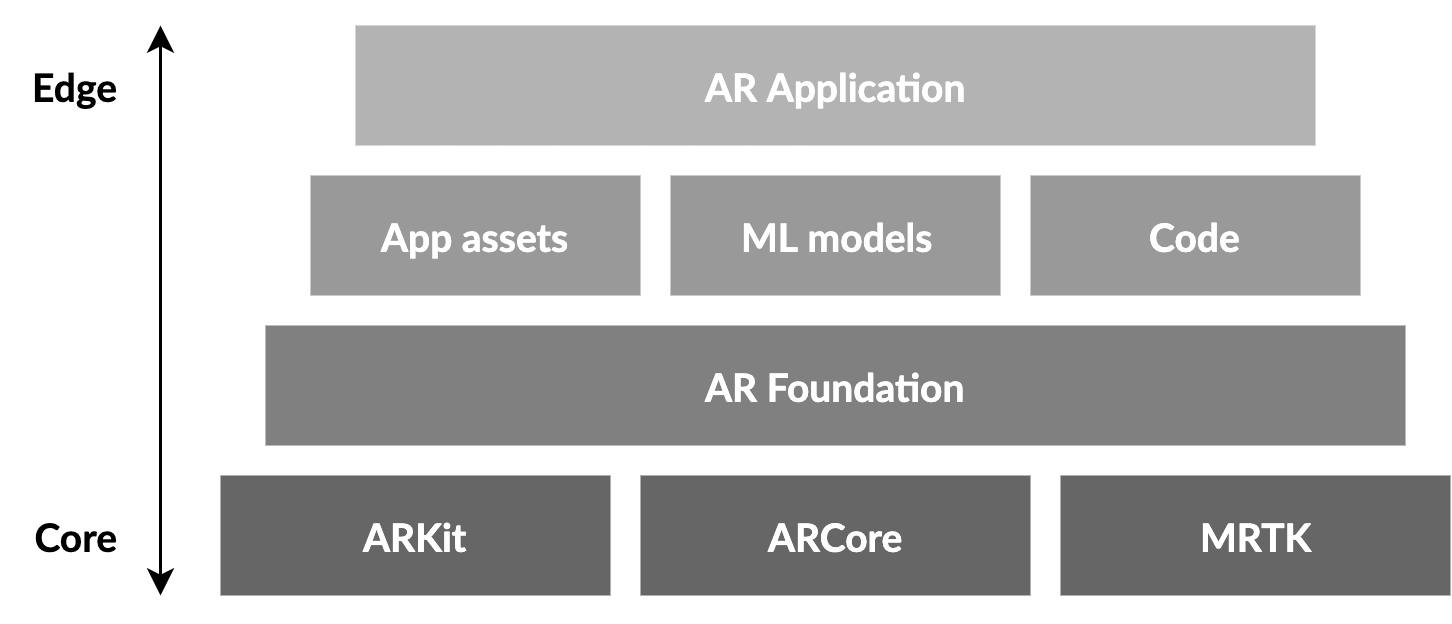 AR technology often uses SLAM (simultaneous localization and mapping):
In conclusion.
Because of the technological progress made in the last couple of years, AR apps are exceeding expectations in terms of what they can do.
Since the camera image is always available, these apps also provide a unique opportunity for using visual data to enrich the experience: Enabling the app to read text, find objects or detect anomalies, for example. These features can be powered by a custom machine learning layer built on top of the core tech.
See the full story here: https://towardsdatascience.com/enhancing-ar-with-machine-learning-9214d2da75a6
If you’re worried artificial intelligence is coming for you, read Melanie Mitchell’s new book
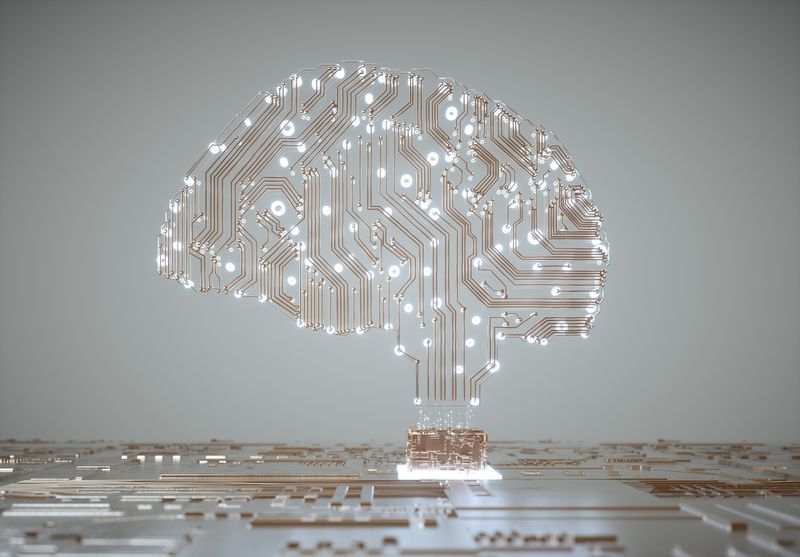 According to a Pew survey, 72% of us are “worried” rather than “enthusiastic” about the potential developments in automation.
Count me among the worried, though I am not worried about artificial intelligence coming for my job so much as the unthinking embrace of technology as a “solution” for flawed human behavior. It seems as though there’s a story every day about the failure of a so-called intelligent algorithm, including recent news of the Amazon facial recognition technology, “Rekognition,” “matching” 28 pictures of New England-area pro athletes with a database of police mugshots.
“Artificial Intelligence: A Guide for Thinking Humans” by Melanie Mitchell (Farrar, Straus and Giroux, $28).
Mitchell holds a Ph.D. in computer science and is an artificial-intelligence researcher who has worked alongside some of the pioneers of the field, including Douglas Hofstadter, author of the seminal “Gödel, Escher, Bach: An Eternal Golden Braid.” That book established many of the ground rules for how we discuss issues of computer intelligence and automation.
Algorithms can now compose music that we may call “art,” but as Mitchell points out, those algorithms will always be incapable of appreciating that art.
See the full story here: https://www.chicagotribune.com/entertainment/books/ct-books-biblioracle-1110-20191104-yx36rnivkrfbdeohsd572bfyxi-story.html