philip lelyveld The world of entertainment technology

1Nov/19Off

AI could help us deconstruct why some songs just make us feel so good

https://www.technologyreview.com/s/614666/ai-machine-learning-music-feel-good/ 
 
 In a new paper, researchers describe how they trained machine-learning algorithms to predict what features in a song were most likely to impact people's neural, physiological, and emotional responses.
 

A Multimodal View into Music's Effect on Human Neural, Physiological, and Emotional Experience

In this paper, we investigate how music affects brain activity, physiological response, and human-reported behavior. Using auditory features related to dynamics, timbre, harmony, rhythm, and register, we predicted brain activity in the form of phase synchronizations in bilateral Heschl's gyri and superior temporal gyri; physiological response in the form of galvanic skin response and heart activity; and emotional experience in the form of continuous, subjective descriptions reported by music listeners. We found that using multivariate time series models with attention mechanisms are effective in predicting emotional ratings, while vector-autoregressive models are effective in predicting involuntary human responses. Musical features related to dynamics, register, rhythm, and harmony were found to be particularly helpful in predicting these human reactions. This work adds to our understanding of how music affects multimodal human experience and has applications in affective computing, music emotion recognition, neuroscience, and music information retrieval.

See the full story here: https://dl.acm.org/citation.cfm?id=3343031.3350867
1Nov/19Off

VR Simulation Puts You On The Frontline Of The Hong Kong Protests

HongKongProtestsVR_4-1140x639To help spread awareness of the protests and assist users in empathizing with protestors, a team of Hong Kong students has developed a VR simulation that puts you on the frontline of the ongoing conflict.

Players take on the role of a frontline protestor and are tasked with dodging tear gas, ducking behind barriers to avoid projectiles, and avoiding capture by riot police. According to an interview with one of the developers, it was important for the team that the player only be allowed to commit non-violent actions, as to more accurately represent the non-violent behavior of real protestors. As a result, payers are unable to inflict damage on riot police or engage in any illegal behavior.

Along with participating in anti-government demonstrations, players also have the opportunity to learn about the actual protests. Player can visit a VR recreation of one of the cities “Lennon Walls,” which feature words of encouragement written across colorful post-it notes; this includes phrases such as “fight for freedom” and “five demands, not one less.” There’s also an interactive element that educates players on major protest events, such as the Yuen Long Mob Attack, the Prince Station Attack, and the highly-publicized shooting of an 18-year-old protestor by law enforcement on National Day.

The development team is currently speaking to online distributors in the hopes of releasing the title to the public next month, though past events have shown the process to be anything but simple.

See the full story here: https://vrscout.com/news/hong-kong-protests-vr-simulator/?utm_source=VRScout+Scouting+Report&utm_campaign=88cf770829-VRScoutReport_110119&utm_medium=email&utm_term=0_f3642cd298-88cf770829-162003161#

1Nov/19Off

Smart Fabric Technology Brings Touch Haptics To The Oculus Quest

...one-size-fits-all Forte Data Glove can now be combined with the Oculus Quest controllers, integrating BeBop’s hand tracking technology with the Quest’s 3D tracking. Together, these two tech systems — along with BeBop Sensors SDK, allow you to experience force, location, size, weight, bending, twisting, and various other presences across any size, resolution, and geometry in VR.

...the response time between the real-world and the virtual world is just under 6 milliseconds, all thanks to fast sensor speeds clocking in at 160Hz and six full-range haptic actuators.

See the full story here: https://vrscout.com/news/smart-fabric-haptic-touch-oculus-quest/?utm_source=VRScout+Scouting+Report&utm_campaign=88cf770829-VRScoutReport_110119&utm_medium=email&utm_term=0_f3642cd298-88cf770829-162003161#

1Nov/19Off

Measuring egocentric distance perception in virtual reality: Influence of methodologies, locomotion and translation gains

Virtual reality has become a popular means to study human behavior in a wide range of settings, including the role of pedestrians in traffic research. To understand distance perception in virtual environments is thereby crucial to the interpretation of results, as reactions to complex and dynamic traffic scenarios depend on perceptual processes allowing for the correct anticipation of future events. A number of approaches have been suggested to quantify perceived distances. While previous studies imply that the selected method influences the estimates’ accuracy, it is unclear how the respective estimates depend on depth information provided by different perceptual modalities. In the present study, six methodological approaches were compared in a virtual city scenery. The respective influence of visual and non-visual cues was investigated by manipulating the ratio between visually perceived and physically walked distances. In a repeated measures design with 30 participants, significant differences between methods were observed, with the smallest error occurring for visually guided walking and verbal estimates. A linear relation emerged between the visual-to-physical ratio and the extent of underestimation, indicating that non-visual cues during walking affected distance estimates. This relationship was mainly evident for methods building on actual or imagined walking movements and verbal estimates.

See the full story here: https://figshare.com/collections/Measuring_egocentric_distance_perception_in_virtual_reality_Influence_of_methodologies_locomotion_and_translation_gains/4720817

1Nov/19Off

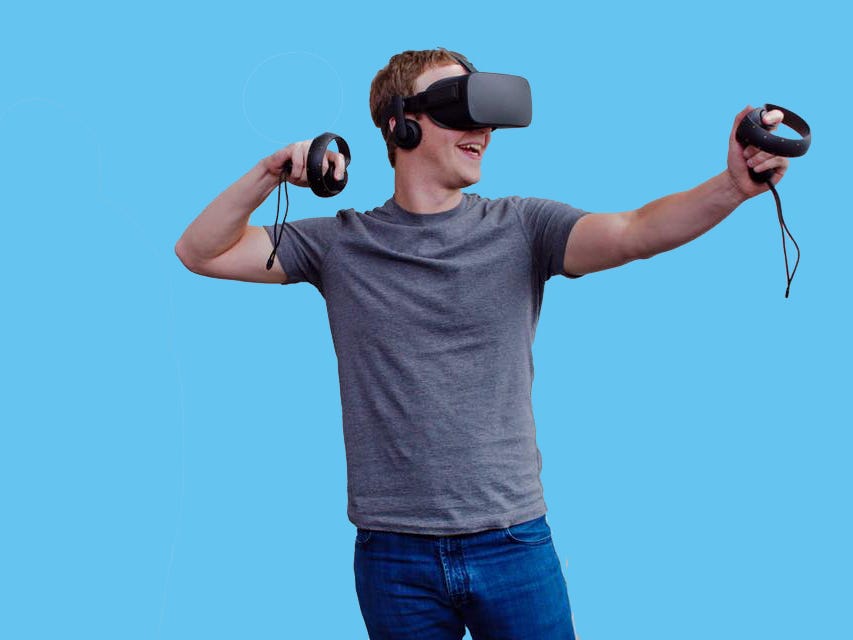
Mark Zuckerberg admits that Facebook’s $2 billion bet on virtual reality ‘is taking a bit longer than we thought’ to pay off

  • Mark Zuckerberg's vision for VR and AR at Facebook is "taking a bit longer than we thought" to materialize, he said Wednesday during the company's quarterly earnings call.
  • Facebook purchased Oculus, a virtual reality headset startup, five years ago, but has struggled to cultivate even a niche audience for the product. However, Zuckerberg is still optimistic.
  • The tech giant is still betting on a future where VR is more prominent — Facebook unveiled its newest VR headset, the Oculus Quest, in May, and the product has made headway in early sales.
5dbafedbdee0196b4961c703See the full story here: https://www.businessinsider.com/mark-zuckerberg-facebook-oculus-vr-bet-taking-longer-than-expected-2019-10

1Nov/19Off

Vanderbilt Univ. – VandyHacks VI: Where dreams become (virtual) reality
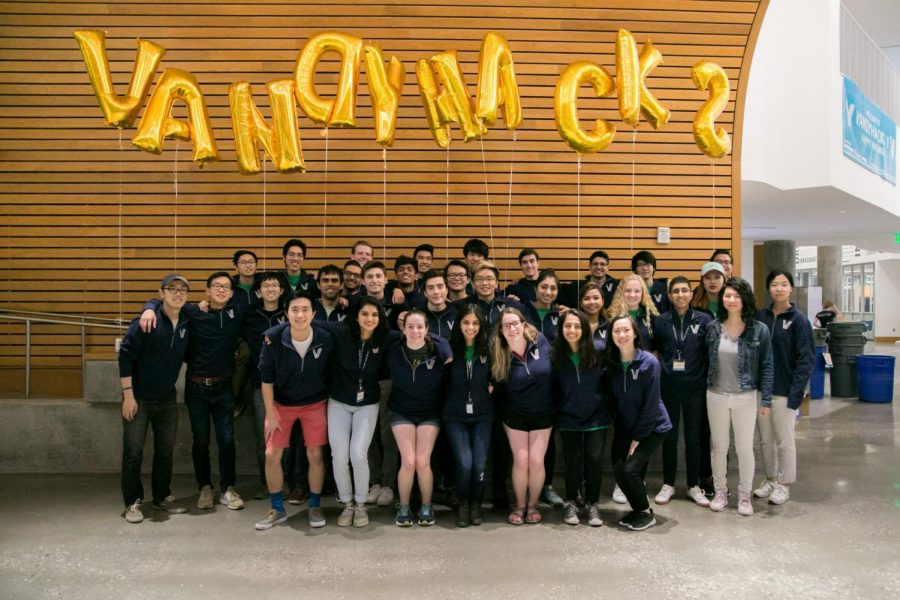
VH1-900x600Beginning Nov. 1, the Wondr’y will be filled with 36 hours of hacking, creativity and community. The sixth annual student-run and self-funded VandyHacks hackathon will allow college students to explore their creativity in developing any project that makes use of their programming skills, regardless of experience level. 700+ students will have the chance to win prizes, interact with professionals, expand their programming abilities and bond with fellow students at this year’s VandyHacks VI: Art Edition, challenging students to “code a masterpiece.”

VandyHacks is a student programming organization started by Sam Pepose and Carolyn Zeng in 2014. Students desired a program similar to other hackathons beginning around the country and wanted a way to engage programmers outside of the classroom. Now, co-presidents Matt Leon and Nidhi Mehta, with Nidhi being the first female president of the club, are challenging programming stereotypes and working to expand VandyHacks even further, VandyHacks organizer sophomore Sophia Chen said.

The competition officially begins at 10 p.m. Friday Nov. 1 and the expo to display the completed projects will take place at 10 a.m. Sunday Nov. 3. Events in between include Zumba, networking, a morning walk, a typing competition, a hand spa and 1:30 a.m. karaoke on Nov. 3, according to the event schedule on the Vandyhacks VI website.

See the full story here: https://vanderbilthustler.com/27820/featured/vandyhacks-vi-where-dreams-become-virtual-reality/

1Nov/19Off

Snapchat Now Lets You Draw Your Own 3D Augmented Reality Filters

Snapchat is introducing one more way for you to get creative in AR – a new 3D Paint feature that lets you draw 3D objects on your face – or on objects in your environment. This is done using only your mobile device’s front or back-facing camera to capture the scene, and your finger to draw.

If you want to try the feature, go to Lenses and press the “Create” button to access.

It is currently only available on iOS at the moment – and will be rolling out on Android as well, soon.

See the full story here: https://wersm.com/snapchat-now-lets-you-draw-your-own-ar-filters-in-3d/

1Nov/19Off

The Teens Are Making History on TikTok

On TikTok, you can find a delightful collection of DIY #history parodies set to hip hop, Soviet anthems, and Rick and Morty sound bytes, shot in dorm rooms on iPhones, with TikTok text stickies indicating the date and event. (TikTok is an app for teens in which users can pair up to 15 seconds of video to samples from pop music or self-recorded audio, which is common knowledge at the time of this writing, but given the lifespan of apps–R.I.P. Vine–I feel it necessary to explain.). Teens and twenty-somethings (mostly dudes) use the tools God gave them–Nerf guns, washcloths for wigs, a flashcard marked “HAT”–to depict bickering nations at war, colonial invasion, and institutional racism in America. (Costumes vary in realism, but a high-quality World War I uniform suffices just as well as a bedsheet for a Medieval shawl.) They’re often one-man shows, switching camera angles to signal different characters. They range from both hilariously weird one-liners to sobering commentary: in one, a 16th-century layman, voiced by Spongebob, shrieks against the backdrop of a Catholic church when Martin Luther, voiced by Patrick, interjects “I know: Let’s leave!” In the next, an African in 1400 is interrupted from his hunt when a series of European countries dance through the door to Lil Keed’s “It’s Up Freestyle.” The civil rights movement features prominently: Martin Luther King Jr., Malcolm X, and John Lewis have a dance party in hoodies, and a guy labeled “white guy” walks in on Rosa Parks sitting on a chair in the bedroom to the lyric “get the fuck up.” (The caption is “Its a joke.”) Sometimes they’re off-color, like Anne Frank sneezing in a closet while a Nazi hunts for her downstairs. Sometimes they’re funny in the implicit acknowledgment that our forebears perished on the shores of Normandy so we can make TikToks about them from our bedrooms.

He added, surprisingly: “Obviously, the way things are now, someone’s going to get offended. But if they do, it’s their fault, because that’s history, and that’s the way things work.”

See the full story here: https://gizmodo.com/the-teens-are-making-history-on-tiktok-1839453860

31Oct/19Off

TikTok has broken rap music

Musicians are changing their songs for viral success on TikTok. But it's infantilising rap music
wired-tiktokAt a recent show in Los Angeles, the rapper onstage made the crowd wiggle their fingers and “sit down, stand up, sit-stand, si-sta...” like a game of musical chairs, as bright cartoons coloured the stage. It smacked of a six year old’s birthday party rather than the sweaty, fleshy rout of LA’s live rap scene. The artist responsible for the jamboree was Philly rapper Tierra Whack, whose debut album Whack World is a perfect companion to TikTok, the app that’s currently taking Gen Z by storm, and which now seems to be changing the entire genre of rap music.

Known as musical.y in an earlier incarnation (which the New York Times referred to as “the youngest social network we’ve ever seen”), the app merged with Bytedance in 2018 to become the singing-dancing conglomerate that the world is now struggling to make sense of. It has upwards of 500 million active users, and every day, teens and tweens are uploading millions of fifteen-second videos of themselves lip-syncing to music.

TikTok also seems to be stripping music of any of its severity. “Even the really dark scary songs are all made out of fun; even the really serious songs aren’t taken seriously anymore,” says Llusion, a popular producer on the app who posts videos almost daily. "For some reason, our ears just absorb all the songs we hear on TikTok and they just get stuck in our heads and we fall in love with them.”

See the full story here: https://www.wired.co.uk/article/tiktok-baby-rap

31Oct/19Off

NBCUniversal rolls out its ShoppableTV ads
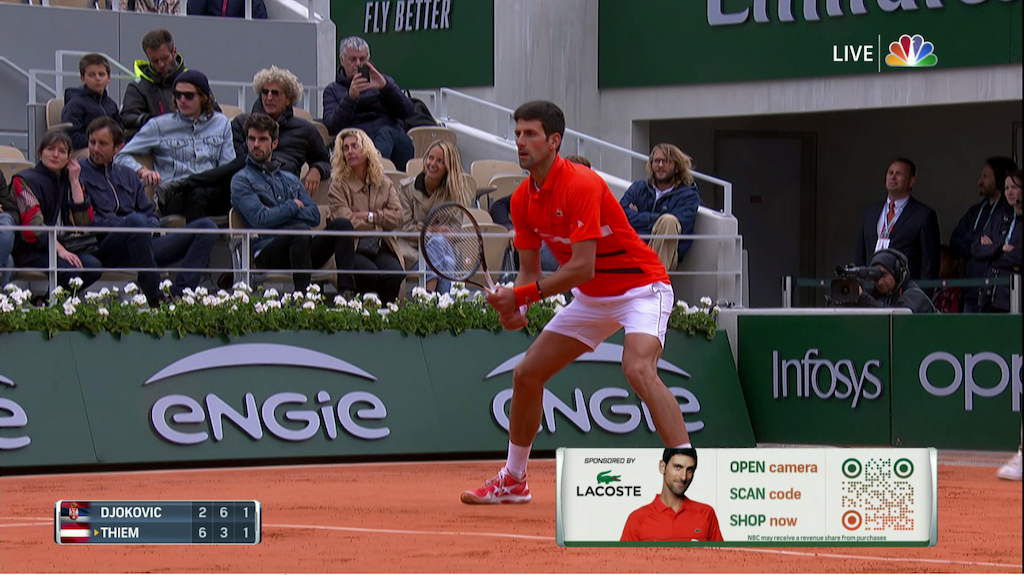
2019-07-31_Djokovic_Shoppable_Execution_-_NBCSN1NBCUniversal has been testing a new ad unit that allows viewers to buy — directly from their phone — products featured on the show they’re watching.

We’ve written about other companies creating shoppable video technology, but that usually means adding links or other elements to online videos — very different from NBCU’s ShoppableTV, which connects the programming on your living room TV with a shopping experience on your phone.

The company is using QR codes to achieve this. An ad with the code will pop up at on the bottom of the screen during relevant moments of the show. If you’d like to purchase the product, you can point your camera at the code and you’ll end up following an affiliate link to the sponsor’s e-commerce site.

See the full story here: https://techcrunch.com/2019/10/28/nbcuniversal-rolls-out-its-shoppabletv-ads/