Islamic State Turns to Teen-Friendly TikTok, Adorning Posts With Pink Hearts
 Videos, since removed, represent challenge for app’s Beijing owner, Bytedance, which has hired thousands of moderators to curate content.
The videos—since removed, in line with the app’s policy—featured corpses paraded through streets, Islamic State fighters with guns, and women who call themselves “jihadist and proud.” Many were set to Islamic State songs. Some included TikTok filters, or images, of stars and hearts that stream across the screen in an apparent attempt to resonate with young people.
The posts from approximately two dozen accounts, identified by social-media intelligence company Storyful, appeared to target TikTok’s users as part of a new show of strength—and possible enlistment tool—as U.S. troops withdraw from Syria. Islamic State has focused on online propaganda since its inception, including using social media to spread its message, setting it apart from other jihadist groups.
The extremist content marks a new challenge for TikTok. The app, owned by Beijing-based Bytedance Ltd., features short videos that started becoming popular in the U.S. in 2018 and has been embraced by teens. It was the third-most installed app world-wide in the first quarter, behind Facebook Inc.’s WhatsApp and Messenger, and about 30% of users are under the age of 18, according to internal TikTok documents viewed by the Journal.
To maintain its culture of light-hearted fun, TikTok has invested in advanced algorithms that people familiar with the matter say can detect many types of harmful content. TikTok has also hired thousands of content moderators in China, the U.S. and elsewhere to curate what ends up on the app.
The company’s rules prohibit terrorist and criminal organizations from using TikTok. “DO NOT use TikTok to promote and support these organizations,” the company says in its guidelines. The videos promoting Islamic State show that enforcing the guidelines proves difficult.
“This is an industry-wide challenge complicated by bad actors who actively seek to circumvent protective measures, but we have a team dedicated to aggressively protecting against malicious behavior on TikTok,” a spokeswoman for TikTok said.
Less extreme content now poses a bigger challenge for Facebook, Twitter and YouTube. Those companies are struggling at times with how to decide when to remove messages that promote conspiracy theories, racist tropes and other hateful or misleading content.
When those companies leave such posts on their sites, users charge them with facilitating harassment and abuse; other users charge the companies with censorship when the content is removed.
See the full story here: https://www.wsj.com/articles/islamic-state-turns-to-teen-friendly-tiktok-adorning-posts-with-pink-hearts-11571680389
Deepfakes are being used to dub adverts into different languages
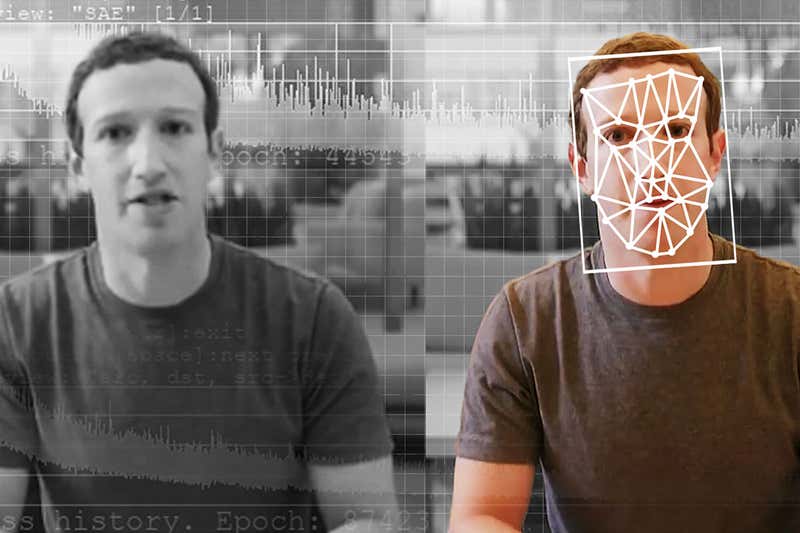 Fake videos created by artificial intelligence are now so realistic that they are becoming useful.
Israeli tech firm Canny AI is one of several companies cashing in on so-called deepfakes, using the technology to dub videos into different languages. The firm is currently using it to dub advertisements or messages from celebrities for audiences in different countries and plans to use it for television shows and films in the future.
See the full story here: https://www.newscientist.com/article/2220628-deepfakes-are-being-used-to-dub-adverts-into-different-languages/
We Have No Reason to Believe 5G Is Safe
 The chairman of the Federal Communications Commission (FCC) recently announced through a press release that the commission will soon reaffirm the radio frequency radiation (RFR) exposure limits that the FCC adopted in the late 1990s. These limits are based upon a behavioral change in rats exposed to microwave radiation and were designed to protect us from short-term heating risks due to RFR exposure.
Yet, since the FCC adopted these limits based largely on research from the 1980s, the preponderance of peer-reviewed research, more than 500 studies, have found harmful biologic or health effects from exposure to RFR at intensities too low to cause significant heating.
... The scientists who signed this appeal arguably constitute the majority of experts on the effects of nonionizing radiation. They have published more than 2,000 papers and letters on EMF in professional journals.
The World Health Organization's International Agency for Research on Cancer (IARC) classified RFR as "possibly carcinogenic to humans" in 2011. Last year, a $30 million study conducted by the U.S. National Toxicology Program (NTP) found “clear evidence” that two years of exposure to cell phone RFR increased cancer in male rats and damaged DNA in rats and mice of both sexes. The Ramazzini Institute in Italy replicated the key finding of the NTP using a different carrier frequency and much weaker exposure to cell phone radiation over the life of the rats.
Since 5G is a new technology, there is no research on health effects, so we are “flying blind” to quote a U.S. senator. However, we have considerable evidence about the harmful effects of 2G and 3G. Little is known the effects of exposure to 4G, a 10-year-old technology, because governments have been remiss in funding this research. Meanwhile, we are seeing increases in certain types of head and neck tumors in tumor registries, which may be at least partially attributable to the proliferation of cell phone radiation. These increases are consistent with results from case-control studies of tumor risk in heavy cell phone users.
See the full story here: https://blogs.scientificamerican.com/observations/we-have-no-reason-to-believe-5g-is-safe/
Women in Motion AR Portrait Gallery
 Studio Moshon has created oil painted portraits celebrating inspirational women in entertainment, sharing their stories through AI and AR technology. The portraits showcase Ava DuVernay, Geena Davis, Meredith Walker, and Dee Rees. The four oil paintings and instructions will be displayed on-site in Los Angeles at the Women in Entertainment Summit and Infinity Festival Hollywood in October and November.
Each original oil painting has gone through a series of AI processes to create a fully animated portrait. The animations are complete with sound, and visitors will see and hear the portraits come to life. To view the portraits with AR, patrons are encouraged to load a custom website onto their phones, allowing them to see each piece come to life through their phone’s camera, which serves as a viewing window.
See the full story here: https://patch.com/california/los-angeles/calendar/event/20191024/674885/women-in-motion-ar-portrait-gallery
Full Bore Studios adds augmented reality to annual ‘Economic Growth’ tour in Joplin
 JOPLIN, Mo. - 55 community leaders got on a bus to visit more than 10 current and upcoming businesses in the area.
"This tour is being enhanced by augmented reality, meaning we’re actually going to use technology to show what will be in the future” added Teeter. Showing the community leaders, the augmented reality additives to the tour was something he was most excited about.
"We’re talking about a new vision, about a new brand, what is Joplin, and we’re talking about a community that’s growing" added Teeter.
Some projects on this tour are still in development, while others like Full Bore Studios will be opening to the public within a few months or the beginning of next year.
See the full story here: https://www.koamnewsnow.com/news/full-bore-studios-adds-augmented-reality-to-annual-economic-growth-tour-in-joplin/1133572505
Target And Other Retailers Give Augmented Reality A Deeper Look
 That’s an opportunity for a company called Cupixel, which is leveraging augmented reality (AR) into an app to help would-be creators.
The company matches the AR in the app with a $70 kit they began selling over the summer via the Home Shopping Network. The kit is sort of an “artist in a box” setup, which comes with custom canvases, pencils, paint, brushes and frames – everything customers need to create 9” x 9” pieces of artwork.
The customer can either upload a photo of their own or pick one from Cupixel’s online gallery. The software then recreates the picture into a sketchable image. On the phone or tablet screen, the chosen image is divided into nine squares that correspond with the nine canvas tiles provided with the kit. By using the device’s camera, the artist can see the image they are creating laid out over the canvas, and can then follow the lines with pencils and brushes.
At the end of the experience, the paint puts the nine tiles together – and a masterpiece is born.
See the full story here: https://www.pymnts.com/news/retail/2019/target-and-other-retailers-give-augmented-reality-a-deeper-look/
What happens if your mind lives for ever on the internet?
 The foundation world would be full of people who are mere youngsters – mainly under the age of 80 – who are still accumulating valuable experience. Their unspoken responsibility would be to gain wisdom and experience before joining the ranks of the cloud world. The balance of power and culture would shift rapidly to the cloud. How could it not? That’s where the knowledge, experience and political connections will accumulate. In that scenario, the foundation world becomes a kind of larval stage for immature minds, and the cloud world is where life really begins. Mind uploading could transform our culture and civilisation more profoundly than anything in our past.
Michael SA Graziano is a professor of psychology and neuroscience at Princeton University
See the full story here: https://www.theguardian.com/technology/2019/oct/20/mind-uploading-brain-live-for-ever-internet-virtual-reality
High Schools to TikTok: We’re Catching Feelings
 The embrace of the app at this school is mirrored on scattered campuses across the United States, where students are forming TikTok clubs to dance, sing and perform skits for the app — essentially drama clubs for the digital age, but with the potential to reach huge audiences.
“You see a lot more teamwork and camaraderie,” he said, “and less — I don’t want to say bullying — but focus on individuals.”
“We’re thinking this is possibly the new Schoolhouse Rock,” he said.
“There’s a lot more than just funny videos,” Kaylani Heisler said. “I see countless ways to take notes, get organized. I see chemistry study aids.”
See the full story here: https://www.nytimes.com/2019/10/19/style/high-school-tiktok-clubs.html
The Ethics of AI: What Happens When Humans Can’t Agree on What is “Right?”
 One of the appealing features of artificial intelligence is the ability to come up with the “right” answer automatically, faster and more reliably than humans. In many cases, the right answer is singular and unambiguous, such as 2 + 2 = 4 (3.9 or 4.1 are close, but not right.). But, as is often the case in matters of ethics, what is AI to do if humans cannot agree on the right answer?
This challenge has two important consequences. First, it can delay the introduction or acceptance of new AI applications, such as autonomous vehicles. Second, it will require that management be prepared to explain and justify the rationale for how their AI will make these decisions.
Under the basic principles of Utilitarian ethics, saving thousands of lives even at the cost of a few is obviously the right thing to do—but could you forgive the computer, especially if it was your relative who was killed?
See the full story here: https://blogs.wsj.com/experts/2019/10/17/the-ethics-of-ai-what-happens-when-humans-cant-agree-on-what-is-right/