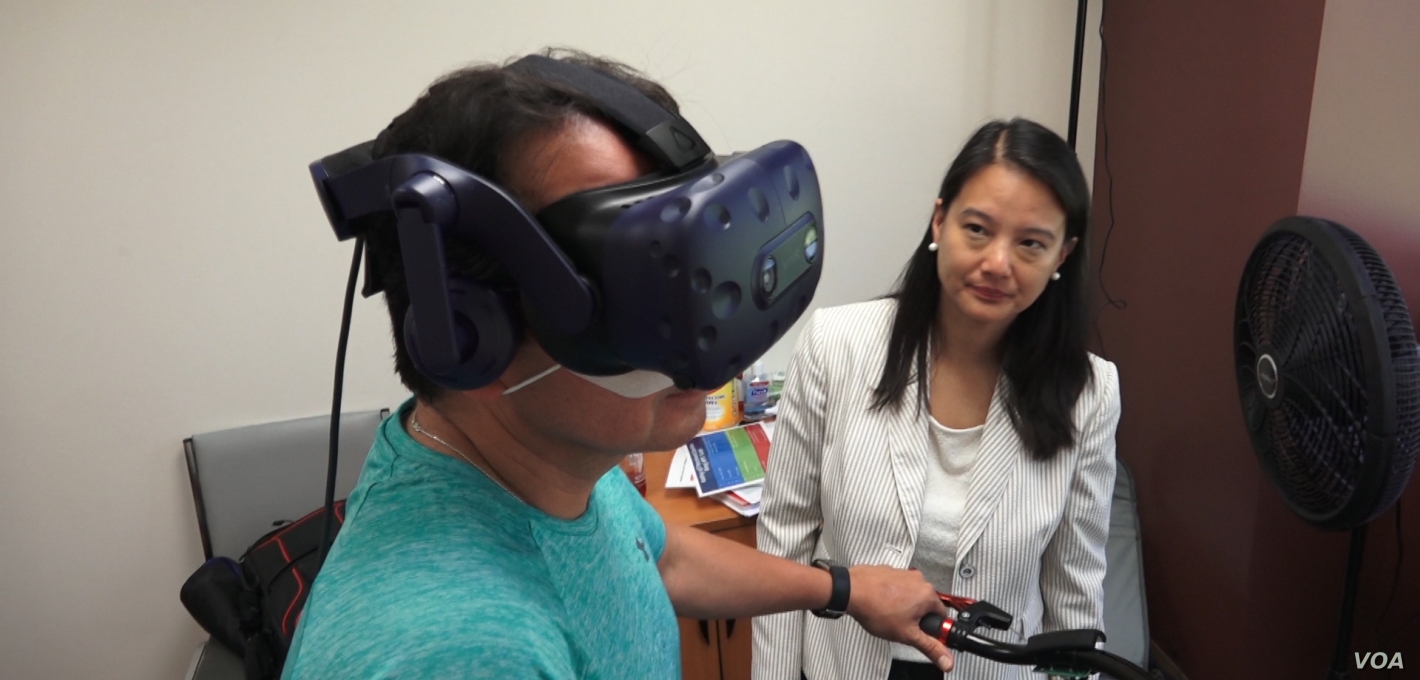
 For three days a week, Wayne Garcia has been getting an unconventional workout. He starts by putting on a virtual reality (VR) headset. He then gets on a specially designed exercise bike and starts peddling. He is taking part in a study at the University of Southern California’s Keck School of Medicine to see if a dose of VR can help prevent age-related cognitive decline and dementia.
“It’s very scary that one day that could be me. Grandparents both had dementia. My father, he had dementia, as well, and my mom has dementia,” said Garcia, who painfully remembered his father reading the newspaper upside down and almost setting the house on fire by putting a towel on the heater.
Even if virtual reality can help, it may not be for everyone. In a feasibility study, 4 out of 20 people withdrew from the research because of symptoms of motion sickness. Pa will be conducting trials over the next year with participants who are 50 to 80 years old to gather additional data.
Still, in the early stages of research, the goal is to prevent or even delay the onset of cognitive decline so people can have a solid quality of life during their golden years.
See the full story here: https://www.voanews.com/science-health/scientists-study-whether-virtual-reality-can-prevent-cognitive-decline-dementia
 Mr. Klynge said in an interview last month at a cafe in central Copenhagen during an annual meeting of Denmark’s diplomatic corps. “Our values, our institutions, democracy, human rights, in my view, are being challenged right now because of the emergence of new technologies.”
He added, “These companies have moved from being companies with commercial interests to actually becoming de facto foreign policy actors.”
Silicon Valley companies and their leaders have given Mr. Klynge a mixed reception. He has never met with Mark Zuckerberg of Facebook or Sundar Pichai of Google or Timothy D. Cook of Apple. Danish officials said it was like dealing with an opaque new world superpower.
“We’ve been too naïve for too long about the tech revolution,” said Jeppe Kofod, Denmark’s minister for foreign affairs.
See the full story here: https://www.nytimes.com/2019/09/03/technology/denmark-tech-ambassador.html
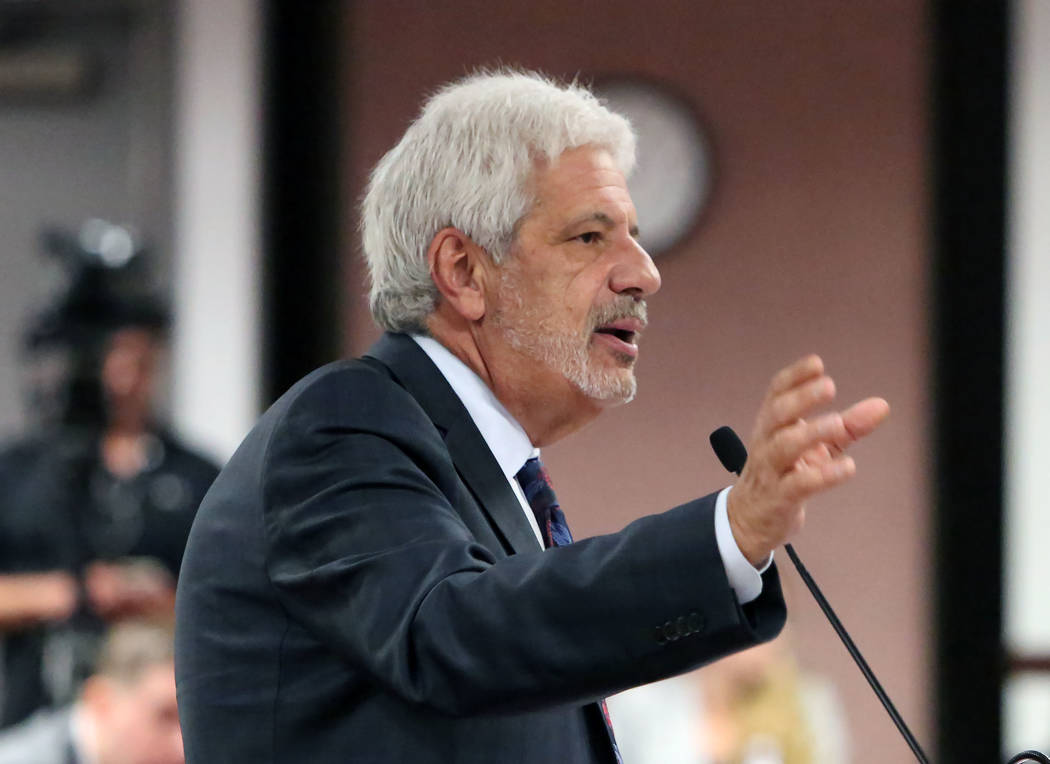
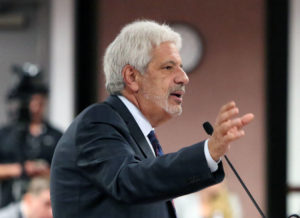 A team of 10 executives from Las Vegas-based R&R Partners spent nearly two hours Thursday with a five-member LVCVA committee explaining the strategies of “Hypervegas.3,” a campaign now in its third year designed to convince travelers to make more leisure and business trips to Southern Nevada.
The end of 2020 or early 2021 also are the targeted opening dates for the LVCVA’s new convention center expansion and the MSG Sphere at The Venetian, a 17,000-seat performance venue being built by The Madison Square Garden Company near The Venetian and Palazzo.
Marketing to potential Las Vegas visitors is challenging because messages being designed by R&R Partners, the LVCVA’s contracted marketing and advertising consultant, are reaching four different demographics — Generation X and Baby Boomers that range in age from 35 to 64 and Generation Z and Millennial travelers that are 21-34.
Each demographic consumes media and makes travel decisions differently.
“Yes, we have a 12-month plan and we’ve pre-bought some things for efficiency. But generally speaking, this is very much a day-to-day if not hour-by-hour exercise.”
See the full story here: https://www.reviewjournal.com/business/tourism/lvcva-panel-gets-look-at-ai-virtual-reality-marketing-program-1842060/
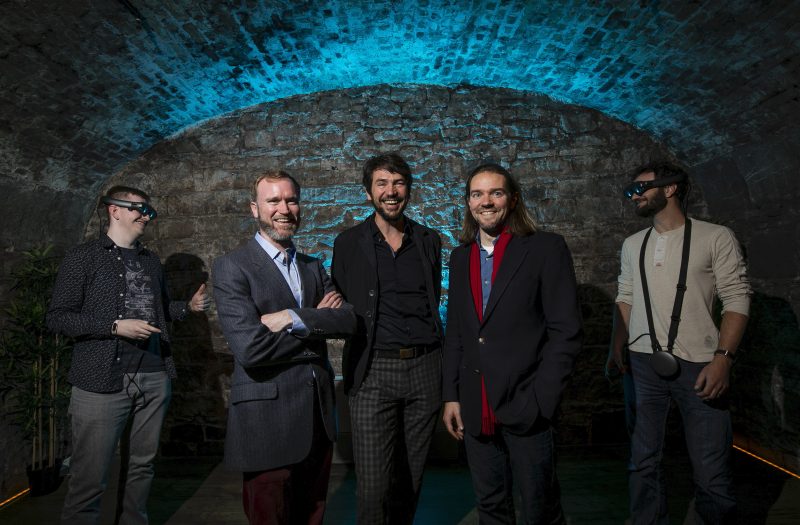
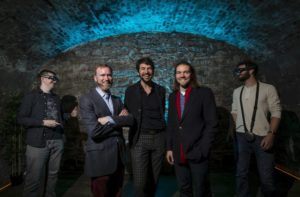 In this pioneering production of AR drama, Augmented Play reimagined Beckett’s ground-breaking theatrical text, Play (1963), for digital culture.
Guests activated the characters into speaking simply by looking at them. This technological artwork acknowledged the new condition of active audiences and recognised new opportunities for narrative, by affording audiences a central role in the story.
The characters – recorded using world-leading technology for volumetric video content creation, developed by V-SENSE and Volograms – were displayed using Magic Leap’s AR headset. Augmented Play affirmed the maturity of this technology as a viable option for live action, immersive storytelling in VR and AR.
Augmented Play presented a ground-breaking milestone for V-SENSE, a leading computer science research group at Trinity; Volograms, a domestic SME leading VR, AR and Mixed Reality technologies for the creative cultural industries; and the Trinity Centre for Beckett Studies based at the Trinity Long Room Hub, whose partnership was pivotal in the production, translation and dramaturgical direction of Beckett’s play.
See the full story here: https://www.tcd.ie/news_events/articles/creative-experiment-delivers-samuel-beckett-in-augmented-reality-for-the-first-time/
Innovation Outpacing Preparation
The business proposition of AR is causing it to be adopted before the risks have been vetted or having tech developed by companies without significant IT experience, leading to technologies that are actually incompatible with existing infrastructure. I strongly recommend including IT security experts in your early AR discussions, as they can help you vet security capabilities and adopt your security best practices.
Dark Clouds
Many wearable AR companies require cloud connectivity, which exposes new threat vectors. Those vectors include:
• Data moving to and from the cloud can often be intercepted. Even TLS encryption can be breakable with common IT infrastructure stacks that do packet inspection.
• Interruptions of internet connections can disrupt production.
• Cloud servers can be breached, potentially exposing sensitive data.
...
To appreciate how quickly new realities can replace old assumptions, consider the extraordinary speed with which quantum computing capabilities — which are already starting to make standard RSA encryption look vulnerable — are increasing. We're not at the exponential rate described by Moore’s Law, which famously states that computing power roughly doubles every two years — but double the exponential rate.
At that pace, new threats can emerge and reliable security protocols become obsolete quite literally overnight. Implementing your cyber strategy is an ongoing process to keep up with the sophisticated threats of an increasingly connected — and increasingly augmented — world.
See the full story here: https://www.forbes.com/sites/forbestechcouncil/2019/09/06/cybersecurity-and-the-explosion-of-augmented-reality/#7df41bab3c07
 The CTO of Facebook says videos forged using AI will be used maliciously on its platforms before long, reports Will Knight.
The logic: As they become easier to produce and more convincing, Facebook fears deepfakes could be the next big source of viral misinformation. It’s directed its own team of AI researchers to produce a set of deepfake videos of actors doing and saying routine things, set to be released at the end of the year.
Why? The idea is that they will help researchers build and refine detection tools. Although such methods exist, they often involved painstaking expert analysis. Tools for catching deepfakes automatically are only just emerging.
A challenge: Facebook will spend $10 million on detection tech, launching theDeepfake Detection Challenge with Microsoft and academics from MIT, Oxford University, and other institutions.
Unintended consequences: Despite all the fears over the use of deepfakes in the political arena, the technology is more likely to become a potent tool of cyber-stalking and bullying in the short term, says Henry Ajder, an analyst at Deeptrace. Read the full story here.
Deep dive: For more on the emerging threat of deepfakes and where the technology is heading, check out our profile of Hao Li, the world’s top deepfake artist.
Axon, the largest provider of police
body-worn cameras in the U.S., is bringing on an expert in virtual reality, signaling an emergent interest in the field.
 Caitlin Kalinowski, head of VR hardware at Facebook's Augmented Reality/Virtual Reality division, will become the seventh independent director on Axon's board.
In addition to spearheading engineering and product design for Oculus VR devices at Facebook, Kalinowski has worked on technical teams at Apple and sits on the strategic board of Lesbians Who Tech & Allies.
See the full story here: https://www.govtech.com/biz/Axon-Names-Facebook-Virtual-Reality-Leader-to-Board.html
The .pdf of the presentation deck given at the Sept. 5, 2019 launch event is 190905-IMC

A Japanese man who has lived as a social recluse, or hikikomori, for more than two years is finding a new life in the virtual world.
"Phio" is a virtual YouTuber who posts videos using an avatar he made of a girl with green hair.
Phio says the joy he got from participating in VR platforms pushed him to re-engage with society. He talks to other virtual YouTubers about things such as online games. His channel has gradually gained popularity, recently passing 10,000 subscribers.
"Thanks to technology, we are able to live in virtual space in a similar way to how we live in the reality," Phio says. "I hope to create a virtual society in which those who think they can't recover in the real world can be reborn and start over."
See the full story here: https://www3.nhk.or.jp/nhkworld/en/news/backstories/660/
Two years after addressing the impact of artificial intelligence on international arbitration in an article entitled ‘March of the Robots’, Paul Cohen and Sophie Nappert explain blockchain, augmented reality and quantum computing and predict their future impact on the arbitral process.
The full story is behind a sign-in here: https://globalarbitrationreview.com/article/1196707/robots-redux-blockchain-augmented-reality-quantum-computing-and-the-future-of-arbitration