Why Hackers Aren’t Afraid of Us
 So what is to be done?
First, the United States must significantly improve its cyberdefenses. The wide-open vulnerabilities in America’s networks have essentially deterred the United States from credibly threatening retaliation against the Russians, the Chinese, the North Koreans and the Iranians. One way to start is to make sure no new equipment goes on the market unless it meets basic security requirements. We won’t let cars on the road without airbags, so why do we do less with the systems that connect them to the internet?
Second, we must decide what networks we care most about defending — and make those priorities clear. Mr. Mattis’s threat to turn to nuclear weapons hardly seems credible — unless the cyberattack would create an existential threat to America. That requires an intensive public review of what is critical to our nation’s survival. President Trump forfeited the perfect opportunity when he decided against a commission to learn the larger lessons from the 2016 election. Our politics have gotten in the way of our safety.
Finally, the United States needs to end the reflexive secrecy surrounding its cyberoperations. We need to explain to the world why we have cyberweapons, what they are capable of and, most important, what we will not use them for. Clearly, it is in the nation’s interests to develop global norms clarifying that some targets are off limits: election systems, hospitals and emergency communications systems, and maybe even electric power grids and other civilian targets.
See the full story here: https://www.nytimes.com/2018/06/16/sunday-review/why-hackers-arent-afraid-of-us.html
Inaugural European Immersive Computing Summit Puts Italy On The Map For VR & AR
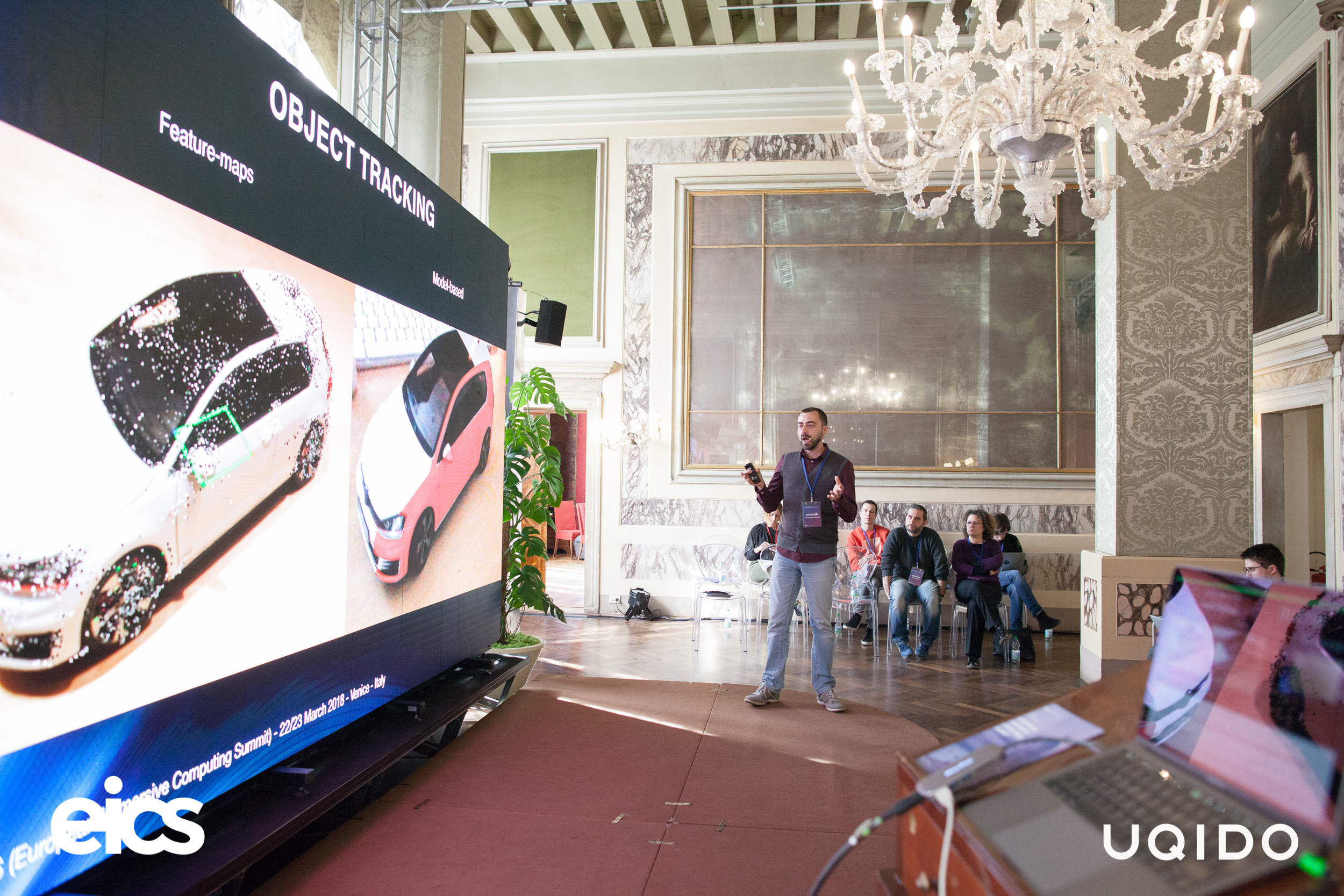 One of the presenters, Luca Prasso, shared his vision of the potential future of VR/AR. Prasso has has 30 years of experience in tech and digital media, including as a supervisor at Dreamworks during the production of Shrek. Now he works as UI/UX Prototype Engineer/Designer at Google Daydream Labs, a small rapid prototyping team tasked with looking 1-to-3 years into the future and finding aligned, innovative use cases for VR and AR. He described a process in which someone from their team would pitch a concept on a Monday, and by the following Friday a usable prototype would be in existence.
The event also spotlit more niche-focus presentations, such as Marco Mortillaro’s discussion around directorial techniques in VR gaming. In particular, Mortillaro, lead game designer of Milan-based Forge-Reply, presented his company’s approach to creating a seamless 3rd-person player experience in their Playstation VR game Theseus–sharing insights around camera placement, avoiding motion sickness, and the “consistency of gaze” method for transitioning between scenes in VR games.
The diverse range of speakers continued after a lunch of delicious Italian cuisine and a perhaps-too-early-for-this glass of wine because…“when in Venice…” A representative from MSI spoke about the future of their hardware, and a startup developer showed off his AR app to not only help people learn how to draw, but to aid muralists and street-artists with scaling up their images in real time.
And this was the beauty of EICS. Yes, it’s an event that singlehandedly put Italy on the VR/AR map.
Netflix’s Kiss Me First Is a YA Thriller Set In a Virtual Reality
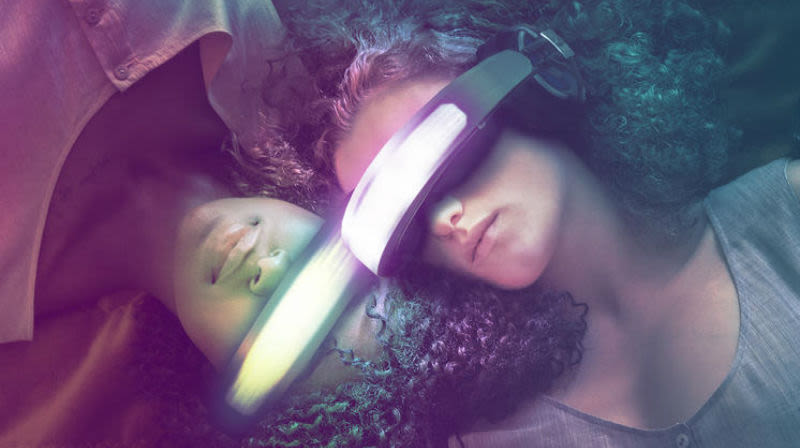 Movies like Ready Player One and The Matrix have done it, but what about TV? Well, Netflix is about to launch a new series called Kiss Me First, and it’s also partially set in a fully functional virtual world.
Created by Skins co-creator Bryan Elsey, Kiss Me First is based on the YA novel of the same name by Lottie Moggach. It’s about a young girl (Tallulah Haddon) who, after the death of her mother, becomes increasingly involved and dependent on virtual reality. However, the deeper she gets, the more she realizes the dangers of her make-believe world. Here’s the trailer.
See the full story here: https://io9.gizmodo.com/netflixs-kiss-me-first-is-a-ya-thriller-set-in-a-virtua-1826873999
8 of the Wildest Augmented Reality Glasses You Haven’t Seen Yet
ANTVR Mix
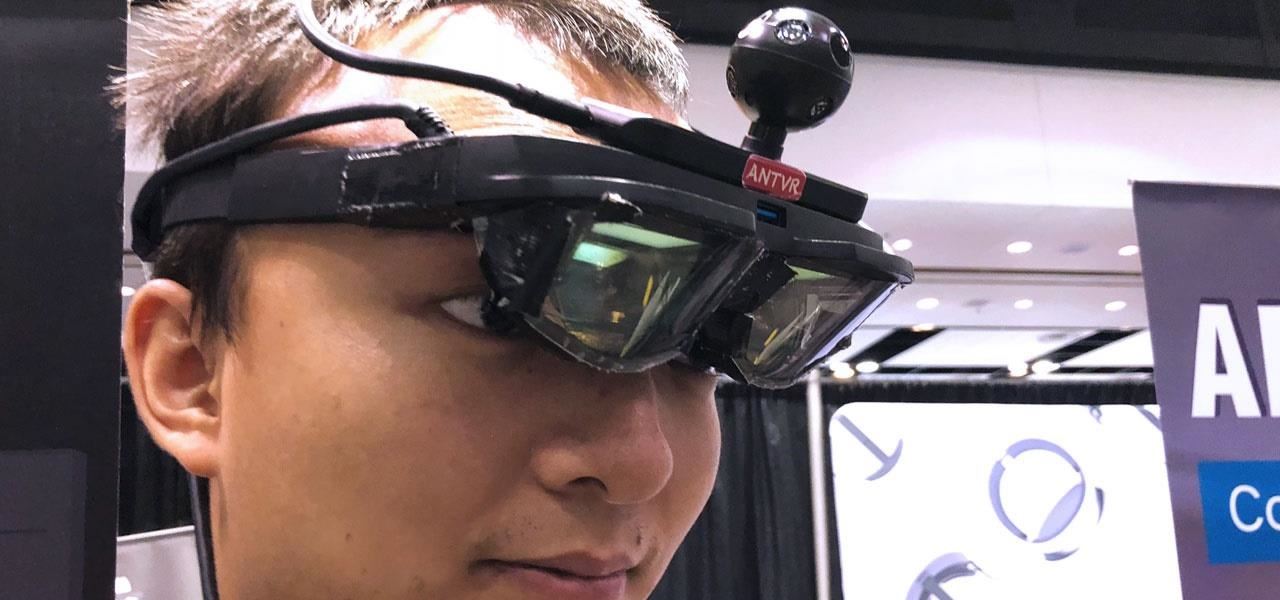
We told you about ANTVR and its Mix headset last month, just as it was launching its Kickstarter campaign to fund the device. Well, it turns out that the campaign was a success. The China-based company blew past its goal of $50,000 and has raised nearly $200,000 as of this writing.
The company plans to sell the device for $649 and intends to ship it to early backers this December.
ThirdEye X1 Smart Glasses
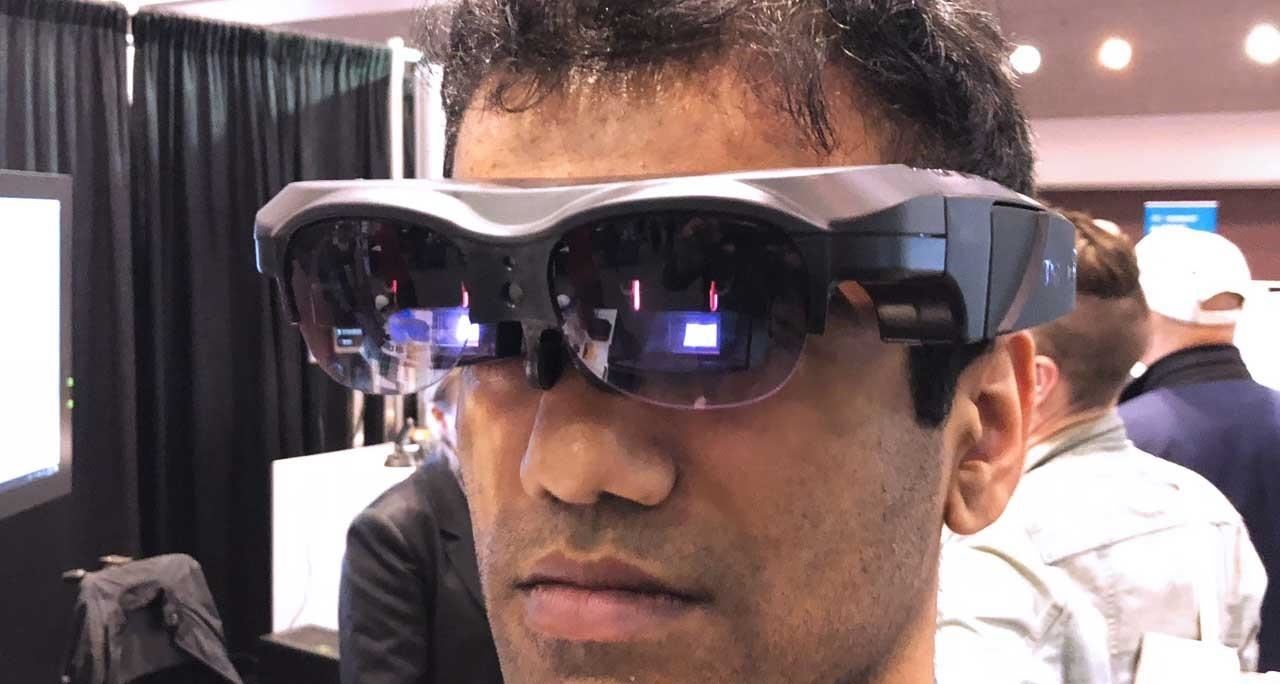
Produced by New Jersey-based ThirdEye Gen, the X1 is aimed at a wide array of customers, from enterprise to educational, to general consumers. Offering a 40-degree field of view at 1280 x 720 resolution, the device features a 13-megapixel camera that can shoot footage at up to 4K resolution. The device doesn't require a tether to a PC, offers a Wi-Fi connection for remote assistance communication, and allows the user to control the interface using head movements that are detected by the device's accelerometer.
The company claims that the X1, which can be outfitted with prescription lenses, gets about eight hours of battery life. We haven't tested it yet, but for $999, it looks like a pretty strong contender versus some of the better-known AR names.
See the full story here: https://next.reality.news/news/8-wildest-augmented-reality-glasses-you-havent-seen-yet-0185268/
Memory aid: Virtual Reality may soon help you cram for a test
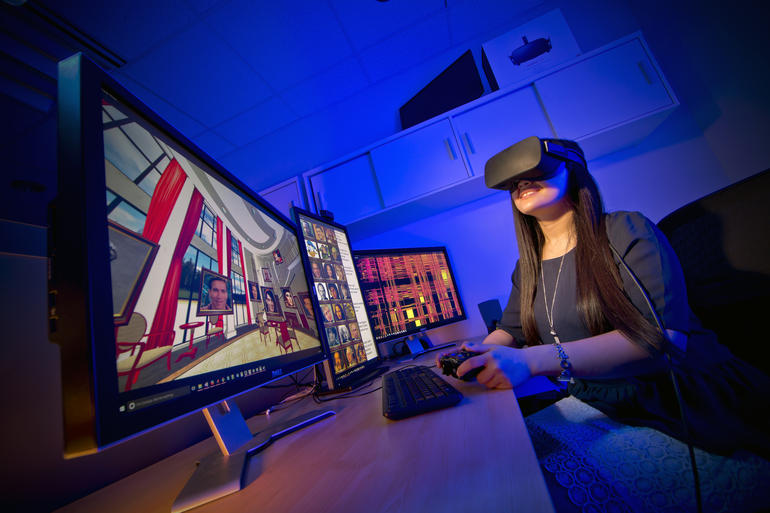 Published in the journal Virtual Reality, the results show that "immersion aids," which permit better spatial awareness than desktop screens, draw on the power of spatial mnemonics to aid memory.
"This data is exciting in that it suggests that immersive environments could offer new pathways for improved outcomes in education and high-proficiency training," Amitabh Varshney, professor of computer science at UMD, said in a university blog.
The researchers administered memory tests to study participants using a classical memory technique called a memory palace, which will be familiar to readers of Moonwalking with Einstein.
As Catherine Plaisant, a senior research scientist and coauthor on the paper, points out, many cognitive psychologists believe we have an embodied mind that fundamentally relies on our perceptions of and interactions with the physical world to form mental structures and process information.
"This leads to the possibility that a spatial virtual memory palace -- experienced in an immersive virtual environment -- could enhance learning and recall by leveraging a person's overall sense of body position, movement, and acceleration," Plaisant explains.
See the full story here: https://www.zdnet.com/article/memory-aid-virtual-reality-may-soon-help-you-cram-for-a-test/
Virtual Reality Preserves Disappearing Land
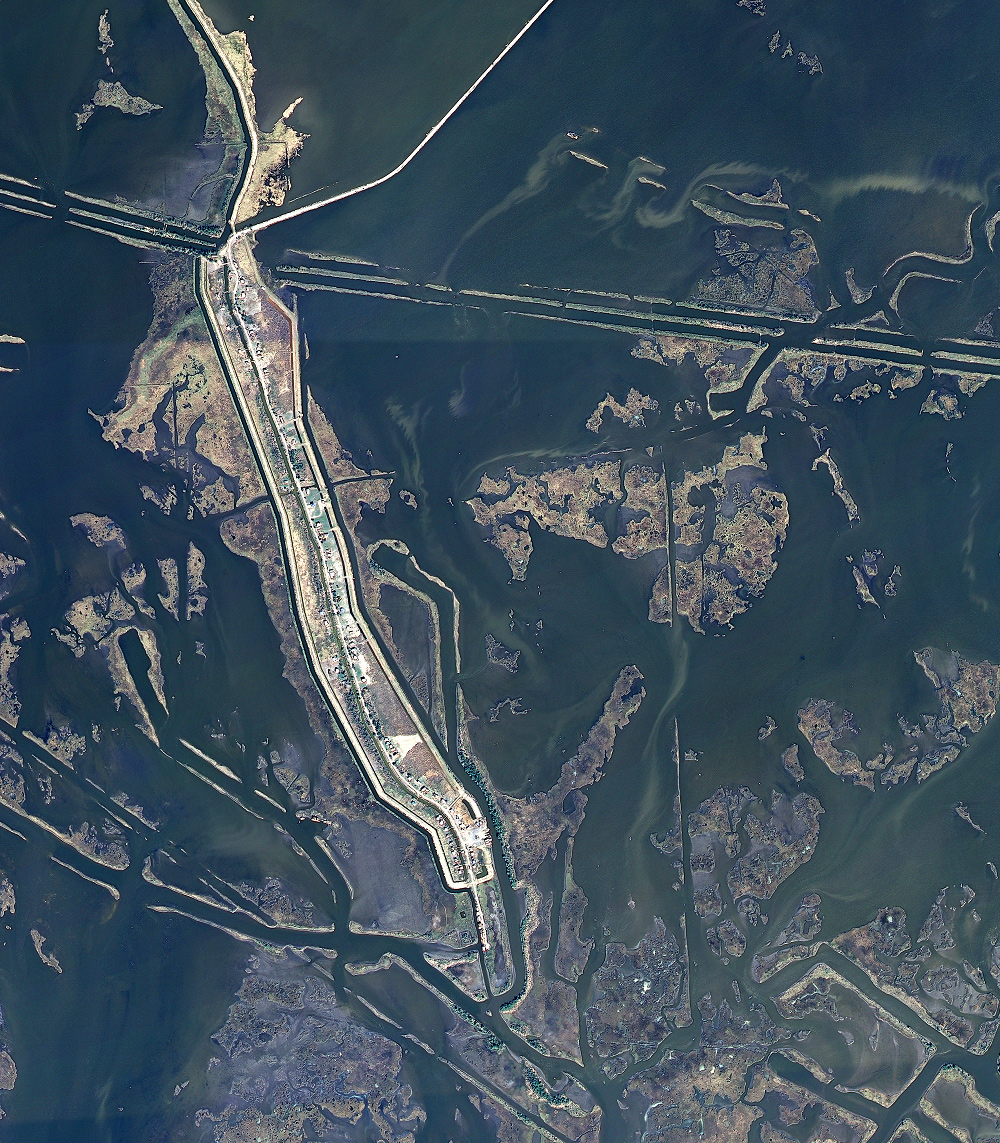 It’s a sunny day in southern Louisiana, and I’m sitting on a porch listening to 91-year-old Wenceslaus Billiot, the oldest member of the Isle de Jean Charles band of the Biloxi-Chitimacha-Choctaw, describe how the island has changed throughout his long life.
“When I was a kid, my daddy and I would go to Montagut in a pirogue to get groceries,” he says, as a breeze stirs the wooden wind chime by my side. “We used to trap [muskrat]. Then when we sold the furs, we’d go make a grocery bill for the summertime.”
There is no trapping on Isle de Jean Charles anymore, and looking out from Billiot’s porch it’s easy to see why. Not even 100 meters away—beyond the protective ring levee that girds what remains of the island—is open water. The wetlands where Billiot and his father once hunted are gone. Since 1955, the island has lost 98 percent of its land to erosion, subsidence, and a rising sea. Soon it will lose most of its inhabitants, too.
Two years ago, the Isle de Jean Charles band received US $48-million from the federal and state governments to relocate the community to a new site about 50 kilometers inland, likely within the next few years. The move made the band the first government-recognized climate refugees in the country.
Albert Naquin, chief of the Isle de Jean Charles band, hopes the project will preserve memories of his community’s culture and connection to the land in a more meaningful way than a conventional historical archive. The virtual reality archive is “going to be a lot easier than reading,” he says, “when you hear it in words from some of the folks."
See the full story here: https://www.hakaimagazine.com/news/virtual-reality-preserves-disappearing-land/