“The world’s highest resolution (18 megapixel, 1443 ppi) OLED-on-glass display was developed. White OLED with color filter structure was used for high-density pixelization, and an n-type LTPS backplane was chosen for higher electron mobility compared to mobile phone displays. A custom high bandwidth driver IC was fabricated. Foveated driving logic for VR and AR applications was implemented.”
As first reported by OLED-info, an advanced copy of the event’s schedule maintains that a talk featuring Google hardware engineer Carlin Vieri will be taking place May 22nd.
The talk is named simply “18 Mpixel 4.3-in. 1443-ppi 120-Hz OLED Display for Wide-Field-of-View High-Acuity Head-Mounted Displays.” Such a display, OLED-Info postulates, could land somewhere around a resolution of 5500 × 3000. If correct, it has a clear advantage over even the highest resolution panels seen in current headsets such as the Samsung Odyssey or the upcoming HTC Vive Pro, both of which pack dual 1440 × 1600 resolution, 3.5 inch AMOLEDs at 90Hz.
We’re hoping to find out more come May.
See the full story here: http://www.virtualrealitypulse.com/edition/daily-google-unity-2018-03-12?open-article-id=7953880&article-title=google-to-feature-high-resolution-vr-oled-display-for-wide-fov-headsets-at-sid-2018&blog-domain=roadtovr.com&blog-title=road-to-vr
The Virtual Reality (VR) Club hosted UC San Diego’s inaugural HackXR, a unique event for aspiring developers, from Feb. 23 to Feb. 25. The three-day hackathon focused solely on extended reality, with workshops and game development centered around virtual, augmented, and mixed realities.
The hackathon had four workshops for participants of all experience levels, including a mandatory “VR Design” workshop to help teams create an extended reality (XR) game. Limited to 100 participants, the event included 19 teams of three to five students and had 10 mentors, 27 volunteers, and 11 sponsors to guide the hackers.
...winners for the four categories—Best Overall Hack, Best Medical Hack, Best Beginner Hack, and Best Multiplayer Hack.
See the full story here: http://triton.news/2018/03/virtual-reality-club-draws-100-students-first-hackathon/
Russian mixed reality supplier HoloGroup has developed a holographic system in collaboration with the Russian branch of global energy giant Enel. Holographic images will be used during the process of dismantling a power line at Nevinnomysk Hydropower Station Armavir, which is due for repair. HoloGroup has developed mixed reality systems for a dozen major companies in various sectors.
Another Russian startup, WayRay, is one of the few local companies to come up with technology suitable for the mass market. Its product, a holographic AR navigation system for vehicles, is similar to systems currently being tested by major global automotive companies.
See the full story here: http://www.computerweekly.com/news/252436646/Russian-augmented-reality-startups-break-into-enterprise-space
This weekend at the Philadelphia Flower Show, over 500 event-goers participated in a new AARP augmented reality (AR) experience. The enhanced version of reality allowed attendees to use a tablet to view and interact with computer images of an animated game aimed at a wall of the AARP Block Party exhibit.
Few older adults have used virtual reality and many are unfamiliar with augmented reality, according to recent research from AARP.
"Augmented reality experiences largely show up in the gaming industry, so it's exciting to see AARP offer this experience to the 50+ community," stated Bill Johnston-Walsh, AARP PA State Director. "Video games are truly ageless. Those of us 50 and older play them for the same reasons everyone else does. They're fun, enhance our digital skills, and can help us prevent social isolation."
AARP donated $5,000 to the William Way LGBT Community Center. William Way was selected because it shatters stereotypes about aging, challenges outdated beliefs and sparks new solutions that help the LGBT community in the Greater Philadelphia region.
See the full story here: https://www.prnewswire.com/news-releases/hundreds-participated-in-augmented-reality-demonstrations-at-philadelphia-flower-show-300612595.html
Sony opened the doors yesterday on the Wow Factory, its name for the wide-ranging exhibit that blends art and technology borne from its experimental, Japan-based Future Lab program.
The core premise is that with a mix of smart sensors that perform depth detection and motion tracking with a high-quality light source, you can create the closest thing we have today to interactive holograms. The projectors create objects out of light that typically exist on a flat plane either in front of the projector or below on a tabletop. You can interact with these virtual objects using your hands because the projector’s software is able to recognize and track your movements. Effectively, Sony has figured out a way to make augmented reality without requiring you wear bulky goggles or goofy smart glasses.
Going one step further, Sony has designed custom demos that make use of real-world objects.
...it’s also a great example of how to take an alternative approach to AR. Something like this is both more accessible and can be experienced collectively,...
See the full story here: https://www.theverge.com/2018/3/11/17105214/sony-augmented-reality-ar-projector-wow-factory-demo-sxsw-2018
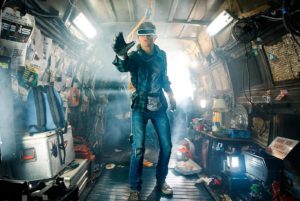 Fans who want the full nostalgia trip, who want to wring every Easter egg out of the experience, will eventually be able to pause the movie and frame-by-frame through it, looking for the flux capacitor on the dashboard, checking the plates, and scanning for extra bonus material. But in the middle of the action, even to people who’ve never seen the Back to the Future movies and aren’t vibing on the connection, the car doesn’t need explaining. It’s just a sleek piece of visual energy, one breathless element among dozens of others. It’s not a citation or a list. It’s an effortless, integrated piece of the action.
That dynamic stretches throughout Ready Player One, scripted by Cline and X-Men: The Last Stand writer Zak Penn, and directed by Spielberg as a whiplash-fast tear through a world-spanning, all-encompassing video game.
But the film improves significantly on the book by prioritizing the story over the signifiers. The hardcore pop-culture crowd that is this movie’s ultimate intended audience will have plenty to pore over and pick apart in this film. But the story moves briskly enough, and with enough giant-sized, screen-friendly excitement that it doesn’t feel like it’s aimed solely and specifically at them.
Cline’s book assumes everyone will know a DeLorean is cool; Spielberg’s film assumes the same thing about a teenage protagonist who loves playing video games.
He’s more a customized audience avatar than a real character, ...
Spielberg’s signature sentiment is operating in full force, as he builds up one highly symbolic confrontation solely for the feelings of triumph and justice it creates, and then has it come to exactly nothing.
All those feelings of love and obsession came through clearly on the page. But on the screen, they’re bigger and better, because they’re so much more intense, and so much closer to the memorable images that turned Cline into an obsessive in the first place.
See the full story here: https://www.theverge.com/2018/3/12/17109960/ready-player-one-movie-review-steven-spielberg-ernest-cline-tye-sheridan-sxsw-2018
The Stream is at the #SXSW conference discussing immersive storytelling and the power of smart cities.
On this episode of The Stream, we speak with:
Sadiq Khan @SadiqKhan
London Mayor
www.sadiq.london
Gabo Arora @gaboarora
Director, Zikr: A Sufi Revival
tomorrowneverknows.co
Laura Hertzfeld @laurahertzfeld
Director, Journalism 360
Nonny de la Pena @ImmersiveJourno
Founder and CEO of Emblematic Group
emblematicgroup.com
See the full story here: http://stream.aljazeera.com/story/201803121243-0025602
 If you were to pick a place to launch an augmented reality startup six years ago, there’s a good chance the remote Australian town of Jabiru — hours out of Darwin — would not have been your first choice.
But that didn’t deter Mikaela Jade from establishing her startup Indigitial in 2012. The goal was to bring augmented and mixed reality to Australia’s Indigenous communities, telling their stories on country through these new and emerging technologies.
Indigital’s products include a line of t-shirts and postcards, emblazoned with Aboriginal art that comes alive when paired with the startup’s mobile application. But the company also creates applications for other businesses and is currently working with Microsoft to tell the story of Namande — the 60,000-year-old figure of the Kakadu national park — using the tech giant’s HoloLens product.
The startup is also working with traditional owners in the community to create holograms of themselves talking about their stories in their own language, and Jade says Indigital’s overarching goal is to constantly push the boundaries of what mixed reality technology can do.
See the full story here: https://www.smartcompany.com.au/startupsmart/news-analysis/mikaela-jade-augmented-reality-startup-indigital-kakadu-national-park/
The Seibu Group has devised two virtual-reality (VR) projects with entirely different purposes. One is to scare the pants off train riders. The other is to ensure that passengers never have to experience such frights.
The group’s Toshimaen amusement park in Tokyo’s Nerima Ward has converted its haunted house into an attraction called “Onryo Haisen VR” (Vengeful spirit, deserted railroad VR).
The VR experience of the ride not only spooks the visitors, but it can also help to train Seibu Railway Co. workers to prevent and deal with rail accidents in real life.
The riders are supposed to report distortions in the shape of the tracks. They can get rid of ghosts and other monsters by shining their headlights on them.
The VR technology allows the company to safely create abnormal circumstances, such as the warped tracks seen in the horror ride.
See the full story here: http://www.asahi.com/ajw/articles/AJ201803110005.html
 Dreamscape Immersive, the virtual reality startup backed by Hollywood’s elite including Steven Spielberg, made a splash last month with its Alien Zoo pop up at Westfield Century City. Alien Zoo, an immersive virtual reality experience, combines the thrill of an epic theme park attraction with cinematic storytelling to create an unforgettable experience for guests. We spoke with Bruce Vaughn, CEO of Dreamscape Immersive about the Alien Zoo and what’s next for the VR industry.
How did the concept for Alien Zoo form?
BRUCE VAUGHN: Alien Zoo was a concept that Walter Parkes and Steven Spielberg considered making as a movie when he ran Dreamworks, but they never did. It came up when we were brainstorming a first Dreamscape title, and we all felt going to an Alien Zoo in VR would be an incredible experience.
Why was it important to make Alien Zoo a shared group experience?
BV: One of the most important qualities of a Dreamscape experience is that it’s a shared experience. I learned from my 25 years as a Disney Imagineer that people want to consume their entertainment together. We are social creatures. We like to go out with friends and family and do amazing things together. Given all the options for entertainment these days, the experience has to be unique and mind blowing.
What’s currently in the works for Dreamscape Immersive after Alien Zoo?
BV: We are taking the learnings from our successful pop up and fine tuning every aspect of our process and product. We’re actively identifying locations for permanent venues. And we have several titles in production and in development. We’re moving fast!
See the full story here: https://la-confidential-magazine.com/bruce-vaughn-on-the-future-of-virtual-reality
 Fans who want the full nostalgia trip, who want to wring every Easter egg out of the experience, will eventually be able to pause the movie and frame-by-frame through it, looking for the flux capacitor on the dashboard, checking the plates, and scanning for extra bonus material. But in the middle of the action, even to people who’ve never seen the Back to the Future movies and aren’t vibing on the connection, the car doesn’t need explaining. It’s just a sleek piece of visual energy, one breathless element among dozens of others. It’s not a citation or a list. It’s an effortless, integrated piece of the action.
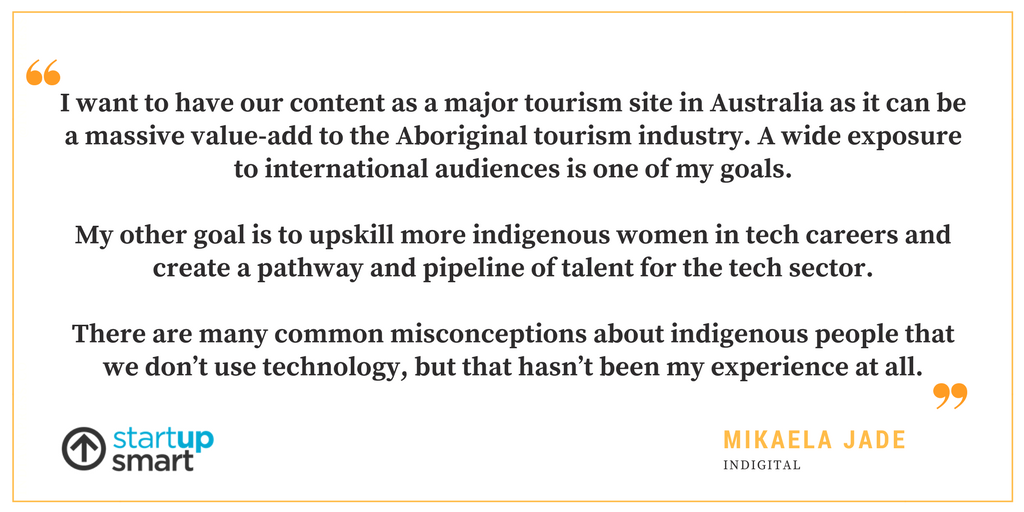 If you were to pick a place to launch an augmented reality startup six years ago, there’s a good chance the remote Australian town of Jabiru — hours out of Darwin — would not have been your first choice.
 Dreamscape Immersive, the virtual reality startup backed by Hollywood’s elite including Steven Spielberg, made a splash last month with its Alien Zoo pop up at Westfield Century City. Alien Zoo, an immersive virtual reality experience, combines the thrill of an epic theme park attraction with cinematic storytelling to create an unforgettable experience for guests. We spoke with Bruce Vaughn, CEO of Dreamscape Immersive about the Alien Zoo and what’s next for the VR industry.