Is virtual reality the future of online pornography?

Kiiroo is just one of many companies whose future success rests on the increasing popularity of virtual reality sex.
Based in Amsterdam, the team launched their business with interactive sex toys for long-distance couples.
But they soon realised their products would be compatible with the new breed of virtual reality porn films.
Their devices enhance virtual reality pornography by adding physical sensation to an already "immersive" visual experience, according to Maurice Op de Beek, the firm's chief technology officer.
Pornographic videos are shot from a first-person perspective. They are then coded so that the images seen on-screen correspond with movements made by the toys.
.....
"If someone just wants to see a girl be naked, there are many, many ways they can do that for free basically," she says.
"What this [cam modelling] offers is human connection and virtual reality exponentially increases that connection."
But Ela acknowledges that the relationship between her and her clients can lack balance.
"I've had a couple of people at this point who will experience my VR chatroom and they start to feel comfortable and safe," she explains.
"Do I feel safe and trust them on the same level that they feel that with me?
"Certainly not. I don't actually know these people, I don't have the same experience they're having. I'm not in their virtual bedrooms with them.
"On that level there's definitely a skewed reciprocity.
Psychosexual and relationship therapist Sarah Calvert says she has grave concerns about the repercussions virtual reality pornography may have on viewers.
"Your self-esteem can have a really big knock if you're in these virtual reality experiences and you're looking down and seeing ripped abs, big penis and then you come back to reality and that's not the case," she explains.
Without pornography, the internet as we know it today, would not exist.
See the full story here: http://www.bbc.co.uk/newsbeat/article/37057814/is-virtual-reality-the-future-of-online-pornography
Will immersive virtual reality be too much for kids and their parents?
 Spoiler: The bunny dies in one tested ending. And in VR, that triggered much stronger feelings than it would have done in a regular movie.

Killing the bunny triggered much stronger feelings than it would have done in a regular movie. You are in the story; you are the bunny’s companion, yet there is nothing you can do to save it. You can see how this must be much harder on children — and adults, for that matter— I cried watching “Pete’s Dragon”! — than a traditional screening, even a 3-D one.
See the full story here: http://www.recode.net/2016/8/18/12537956/virtual-reality--kids-parents-psychological-emotional-immersive
Forget Pokémon GO – these are the augmented reality experiences that’ll soon be invading your life
 [Philip Lelyveld note: this is a nice collection of AR apps for work, sports, vacation, and home.]
Despite augmented reality (AR) being around for many years, Pokémon GO has thrust it into the limelight. The game has been an inescapable force of nature taking the concept of overlaying our everyday lives with digital information and making it mainstream.
Here's how AR will be cropping up in your everyday life.
See the full story here: http://www.mirror.co.uk/tech/forget-pokmon-go-augmented-reality-8659104
Sony Debuts Immersive Video to Promote Movie on Snapchat
 Wahle says the goal was to give viewers the sense of “being in the dark and feeling claustrophobic,” and that “a stranger with super human abilities is coming at you.” He reports that “initial tests show people spend an average of two minutes with the ad,” and that the use of technology in the campaign is “how movies should be marketed in today’s social media age.”
Making the case to use 360-video was a challenge, says Whale, but he believes that, “there is currently a transitioning happening from regular video to 360 video to VR.” “Because Google and Facebook have been doing such a good job of making 360 video and VR a priority, it’s now seeping into mainstream [culture],” he said.
See the full story here: http://www.etcentric.org/sony-debuts-immersive-video-to-promote-movie-on-snapchat/
‘VR Noir’ Is A Great Example Of How Virtual Reality Will Change Television
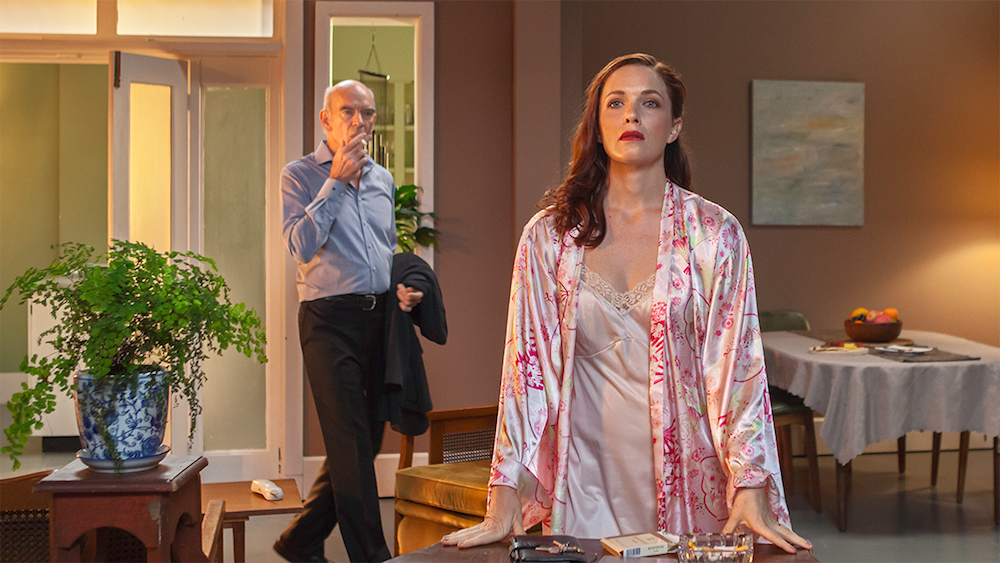 VR Noir is a 360-degree film with interactive elements created by the Australian studio Start VR. The experience hits all the necessary beats of its namesake genre: the rumpled ex-cop P.I., the mysterious femme fatale and an even more mysterious murder to unravel. However, all of these familiar beats seem fresh and innovative in this immersive new medium.
Let’s be clear: if VR Noir was a standard television show it would not be considered that great.
As events unfold in VR Noir, you’re given agency within the narrative. You can choose to ask a client more questions, or simply take a case. You get to take control of a spy camera as you stake out a mark on a rooftop. And above all you get to experience a story as the main character, as opposed to simply watching from the sidelines. In this way, it carries forward the torch that GONE lit before it.
VR Noir is available now to download for free on Android and iOS for Google Cardboard and on the Oculus Store for Samsung Gear VR.
See the full story here: http://uploadvr.com/vr-noir-great-example-virtual-reality-will-change-television/
MIT Media Lab sponsors hackathon pushing limits of VR and AR
 The hackathon theme is consistent with the Media Lab’s purpose: “The MIT Media Lab goes beyond known boundaries and disciplines, encouraging the most unconventional mixing and matching of seemingly disparate research areas. It creates disruptive technologies that happen at the edges.”
Participants from MIT, other top universities, and the VR and AR communities around the United States will form teams to develop innovative software solutions that will unlock the technology’s potential in new categories, some never attempted before.
Up to 400 participants will learn and build new apps during this hackathon using their own, and sponsor-provided, AR and VR platforms. This is the first VR/AR hackathon ever run at this large a scale.
See the full story here: http://www.networkworld.com/article/3109125/events/mit-media-lab-sponsors-hackathon-pushing-limits-of-vr-and-ar.html
THE MAKERS OF THE DEUS EX: MANKIND DIVIDED VIDEO GAME HOST A BIOETHICS CONFERENCE
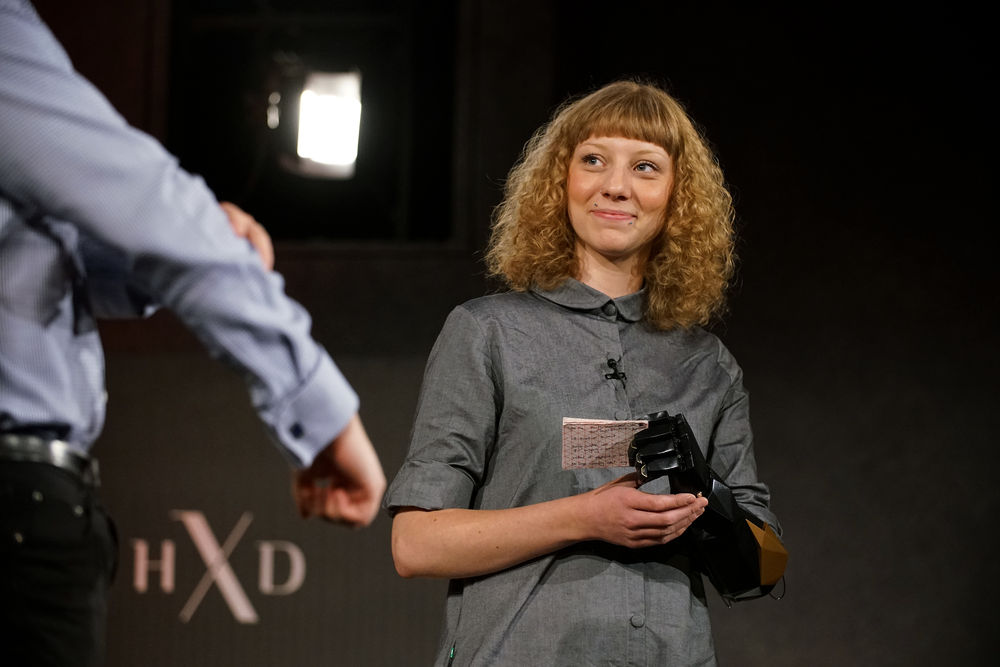
Human X Design Conference, August 3, 2016.
The high points of Human by Design came when Steven Sanchez, who suffered a spinal cord injury, and Cathrine Disney, who was born with a congenital amputation, spoke about how their prosthetics changed their daily lives. Disney described her experience with prosthetic arms as a child. “They're not only offensively ugly in their attempts to mimic human hands, they’re heavy, clunky, and ultimately useless,” she said.
Sanchez and Disney eloquently described how mechanized prosthetics changed theirs. Disney designed herself a new robotic arm with Open Bionicsand Deus Ex. “Instead of being the elephant in the room, all eyes are on us for the right reasons,” she said, describing how the new arm affected her self-esteem.
See the full story here: http://www.popsci.com/augmented-reality-or-augmented-humanity
Synchronized virtual reality heartbeat triggers out-of-body experiences
 [Philip Lelyveld comment: this has huge potential in storytelling (as well as therapies). If you can get a person to identify with an avatar - even if you can't do a scan of every person who accesses your experience - and you transition a heartbeat to the avatar, this could be an amazing tool.]
New research demonstrates that triggering an out-of-body experience (OBE) could be as simple as getting a person to watch a video of themselves with their heartbeat projected onto it. According to the study, it's easy to trick the mind into thinking it belongs to an external body and manipulate a person's self-consciousness by externalizing the body's internal rhythms. The findings could lead to new treatments for people with perceptual disorders such as anorexia and could also help dieters too.
Aspell and Heydrich decided to find out whether a person's bodily self-consciousness could be influenced by visually representing one of its vital inner rhythms – the pulsing heartbeat. They attached 17 participants to electrocardiogram sensors and had them view videos of their bodies through virtual reality goggles so that their body appeared to be two meters (6.5 ft) in front of them.
Participants saw their own heartbeats visually imposed on their virtual doubles in the form of a flashing outline around the body that pulsed in sync. After a couple of minutes, many of the participants reported sensations of being in an entirely different part of the room rather than their physical body and feeling that their "selves" were closer to their virtual doubles.
According to the team, this is the first study that clearly shows how visual signals containing information about the body's internal organs (in this case, the heartbeat) can change their perception of themselves.
The research could help people with distorted views of themselves to connect with their actual physical appearance. "Patients with anorexia seem to identify with a body which is larger than their physical body," Aspell tells us. "We could use this manipulation to help patients with anorexia to identify with their actual physical self."
See the full story here: http://newatlas.com/visualized-heartbeat-out-of-body-experience/28728/?utm_medium=email&utm_source=flipboard
Digital Domain’s New 360 Camera to Capture 250 Hours of Major Sports Footage
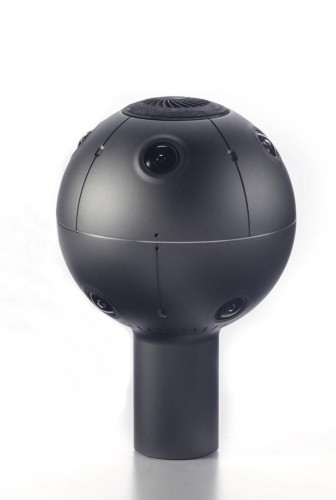 The company have just announced that their recently unveiled Zeus 360 camera is to play a major part in capturing footage at a sporting event in Rio, with Digital Domain claiming they’re filming (and live-streaming) 250 hours of video content, designed to be viewed via virtual reality headsets. DD will be handling the capture and post processing pipeline entirely, even handling the packaging of content to distribution platforms, developing “custom apps for this content to be viewed globally by fans on smartphones, tablets, Gear VR and desktop computers.”
The new device, which bears more than a passing resemblance to Nokia’s own Ozo camera, is apparently capable of footage at a greater than 8k resolution at 10-bit RAW output, capturing a high frame rate of 75 fps. The camera is also capable of seamless 360-degree live-streaming at up to 4k resolution.
See the full story here: http://www.roadtovr.com/digital-domains-new-360-camera-will-capture-250-hours-of-footage/