Virtual reality programs could help paralyzed patients walk again
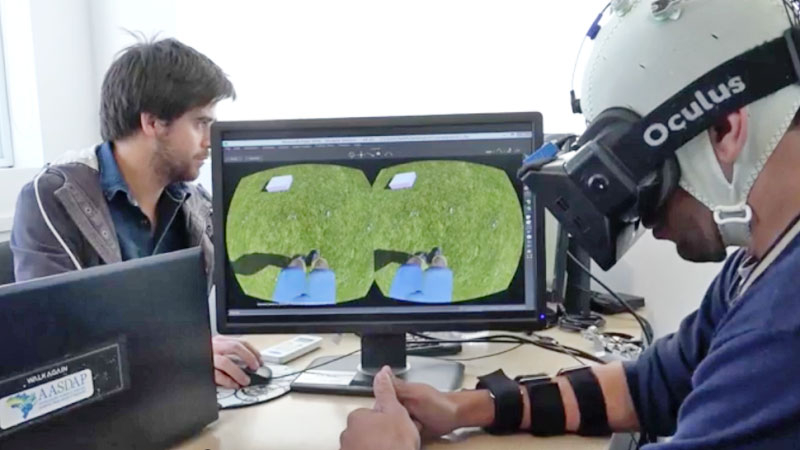 [Philip Lelyveld comment: they use VR to visualize the movement before strapping the subject into the exoskeleton.]
The system and its resulting experiments, conducted by Duke Universityneuroscientist Miguel Nicolelis and his colleagues, was successful in opening up partial restoration of muscle control and sensations in patients's lower limbs. This was possible after the patients were put through an aggressive training regiment with brain-controlled robotics and VR technology.
Virtual reality assisted patients with visualizing the brain-controlled movements and mind-body awareness. With a representation of their own bodies they were able to better make a connection between VR and their physical beings...
Patients regained varying amounts of sensation, ranging from some feeling and muscle control to an astonishing ability to move in a 32-year-old woman who had been paralyzed for 13 years.
See the full story here: https://www.engadget.com/2016/08/12/virtual-reality-paralyzed-patients/
Virtual reality and treadmill training could help prevent falls in older adults
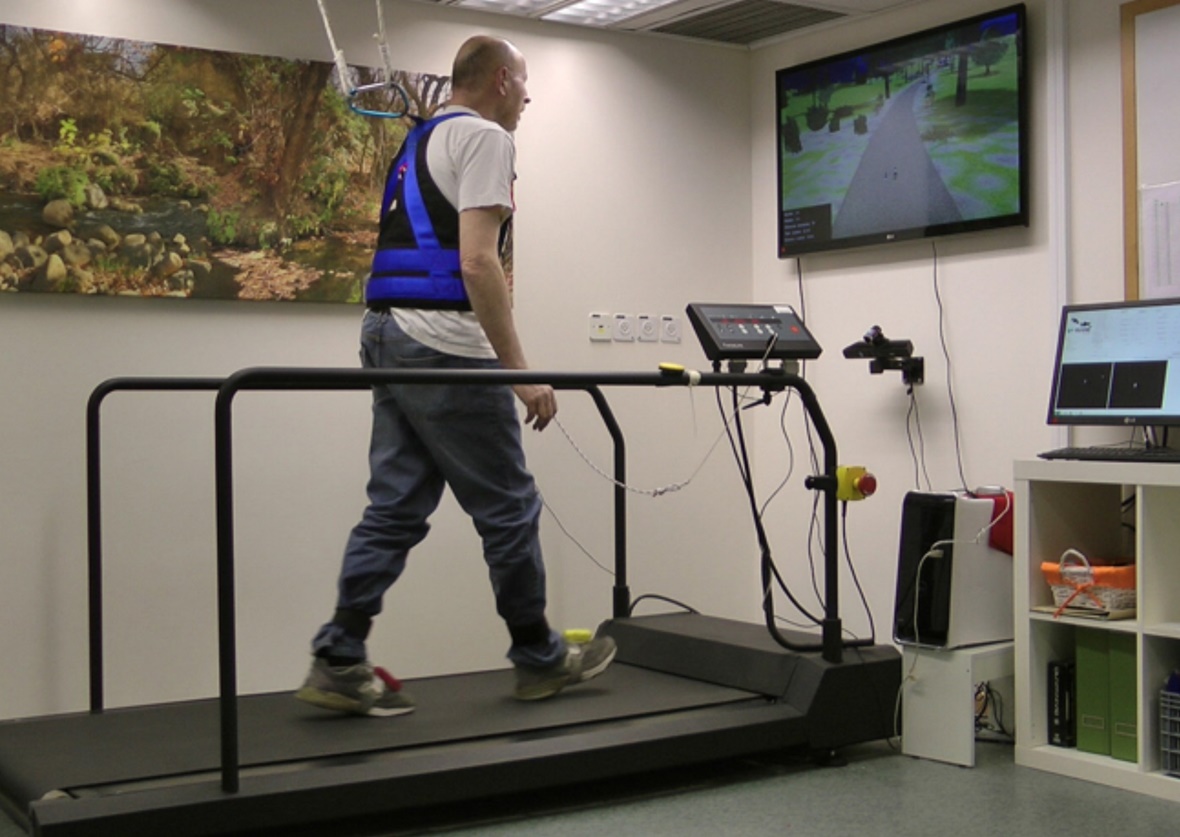
 In this trial, researchers analysed data from 282 participants from five clinical sites in Belgium, Israel, Italy, the Netherlands, and the UK between 2013 and 2015. All participants were aged 60-90, were able to walk at least 5 minutes unassisted, on stable medication, and had reported at least 2 falls in the 6 months before the start of the study. Nearly half of all participants (130) had Parkinson's disease, and some (43) had mild cognitive impairment.
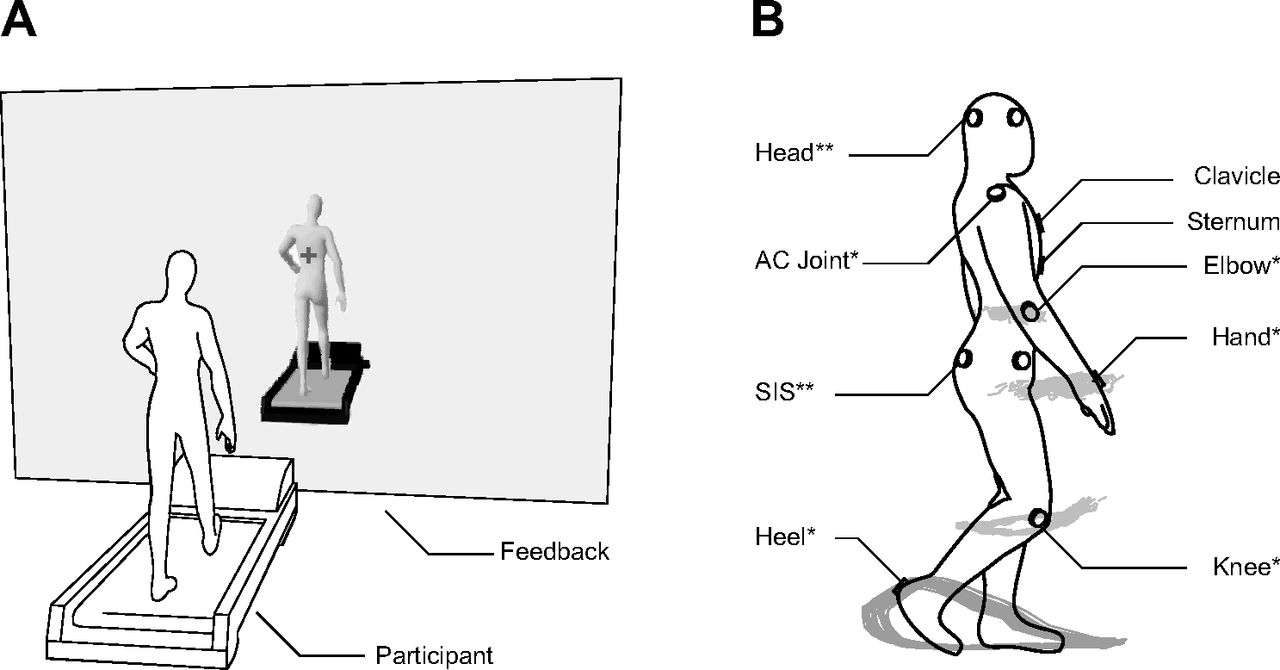
Participants were assigned to treadmill training with virtual reality (146), or treadmill training alone (136). The virtual reality component consisted of a camera that captured the movement of participants' feet and projected it onto a screen in front of the treadmill, so that participants could 'see' their feet walking on the screen in real time. The game-like simulation was designed to reduce the risk of falls in older adults by including real life challenges such as avoiding and stepping over obstacles like puddles or hurdles, and navigating pathways.
During the six months after training, the incidence rate of falls decreased in both groups, but the decrease was only statistically significant (i.e. better than chance) in the treadmill plus virtual reality group (11.9 to 6.0 falls in the virtual reality group -- a 42% reduction; compared to a decrease from 10.7 to 8.3 in the treadmill only group).
"Falls in older people often occur because of tripping and poor obstacle negotiation while walking. Falls often start a vicious cycle, which has many important negative health consequences.
The biggest improvement was seen in participants with Parkinson's disease, and the authors suggest that this could be due to a number of factors, including that they had higher rates of falls at the start of the study, or that virtual reality was able to help improve cognitive and motor skills which are affected in Parkinson's disease. However, although these are interesting findings, the authors warn that the study was not powered to measure differences in between sub-groups, so further research is needed to verify these explanations.
See the full story here: https://www.sciencedaily.com/releases/2016/08/160811190753.htm
Pokémon GO, Augmented Reality and the Future of Gambling
 In the US, for example, the states of Nevada and New Jersey have rewritten their gaming laws to permit “variable payouts,” which will pave way for the advent of video-game-slot hybrids on the casino floor. Previously, anybody playing a gambling machine had to be offered the same chance of winning as everyone else. The advent of variable payouts means that, now, players who have mastered a certain video-game-style bonus round, for example, have a better chance of winning.
See the full story here: https://www.casino.org/blog/pokemon-go-augmented-reality-and-the-future-of-gambling/
World’s First Virtual Reality Camera Satellite Set for 2017
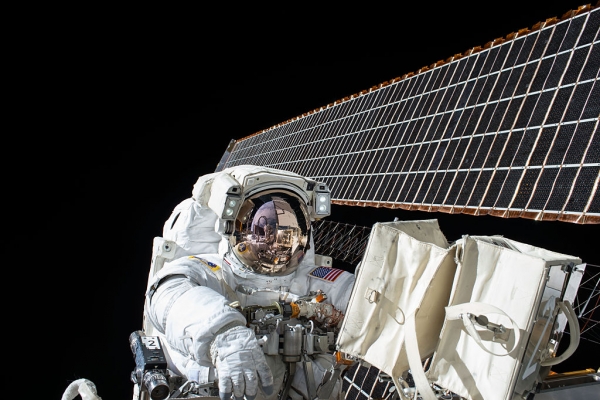 Thanks to a signed a launch agreement, SpaceVR will send a virtual reality satellite to the ISS with the help of a SpaceX Falcon 9 rocket. Along with a commercial laboratory by NanoRacks, SpaceVR will prepare the twin-camera cube satellite, Overview 1, during the SpaceX CRS-12 Mission. It'll be released into the Earth's orbit with NanoRacks' CubeSat Deployer by 2017.
SpaceVR will have full control over the world's first ever virtual reality camera satellite. The company will be taking footage from the cameras and will be stitching it into a 360-degree sphere. The live-stream of the photos is said to be the company's ultimate goal.
See the full story here: http://www.natureworldnews.com/articles/26560/20160810/worlds-first-virtual-reality-camera-satellite-set-2017.htm
How augmented reality paves the way for fully autonomous cars
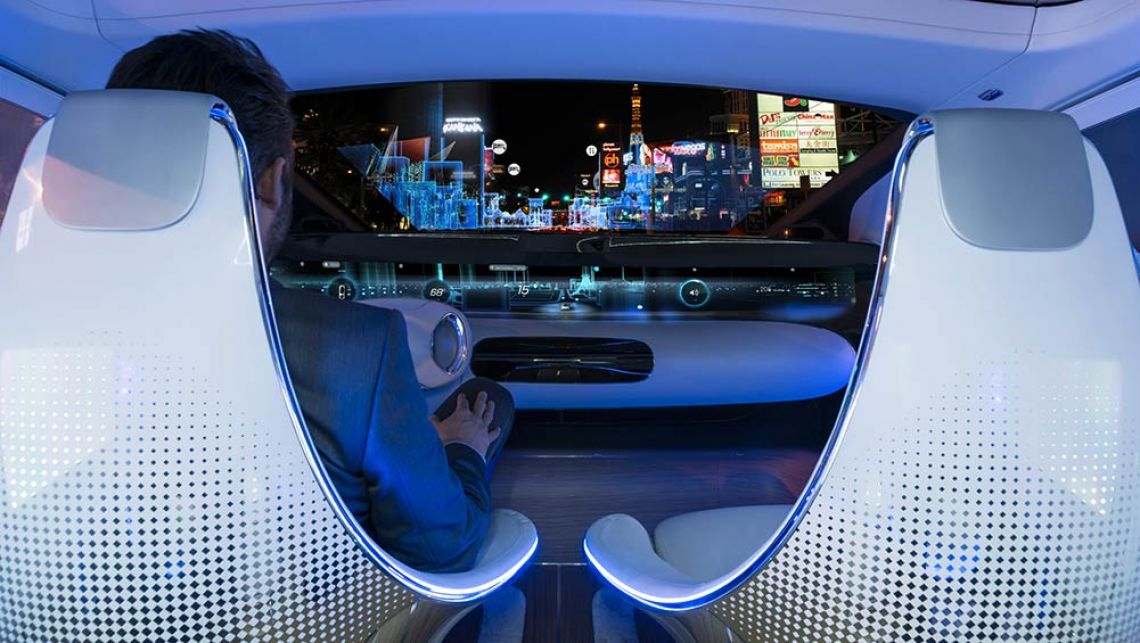 While major brands — Tesla excepted — aren't rushing to promote fully autonomous driving in production vehicles (largely due to legislative and liability issues), they are all rolling out augmented reality.
Mini's "X-ray vision" goggles that let the driver "see through" panels and Jaguar Land Rover's "transparent" windscreen pillars may seem futuristic but they're destined to find their way into your next car well before governments work out how to deal with autonomous travel.
Augmented reality (AR) software can detect and highlight potential obstacles, from inattentive pedestrians to animals near the roadside at night.
Automotive AR isn't just confined to the in-car experience. Mercedes-Benz and Volvohave signed deals with Microsoft to use its "HoloLens" headset to create virtual showrooms, changing interior designs, wheel shapes and exterior colours with the swipe of a hand or touch of a button.
See the full story here: http://www.carsguide.com.au/car-news/how-augmented-reality-paves-the-way-for-fully-autonomous-cars-45210
This man is cycling around the UK in virtual reality using Google Street View
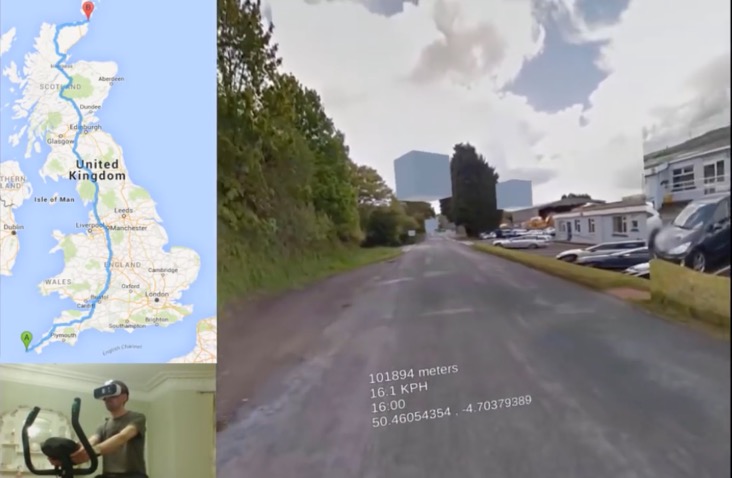 Hooking a Galaxy Gear up to Google Street View and cycling the length of the UK — 1,500 kilometers from Land's End to John o' Groats — all from the comfort of his front room.
Puzey has been documenting his travels on his blog, Cycle VR, updating the site with edited video highlights of every 100 kilometers. He says he's been lengthening the amount of time he dedicates to the journey, and reckons he'll be finished in around 50 days.
"The single biggest problem with the Street View data is the high compression on the depth information," says Puzey, with Google storing a limited number of planes to represent complex scenes. "Some things, like buildings, fit very well to this model and look quite solid, but things like trees and hedges and anything lumpy often just looks a mess.
...nausea can be a problem, especially when he's navigating complex routes — like roundabouts — that have been squashed into only a few layers of depth. "The problem [is that I'm] telling the 'bike' in VR to face in the direction of the path it was moving along," says Puzey. "Then I had a breakthrough and realized if I make it face about 5 meters ahead of where I was it made an enormous improvement."
See the full story here: http://www.theverge.com/2016/8/9/12411262/cycle-vr-google-stree-view-uk