New iFly virtual-reality experience tricks your brain into thinking you’re skydiving
 While it’s not an exact re-creation of the daredevil activity itself, the sensations of the wind blowing against a user’s belly combined with the video that shows one plummeting toward Earth at high speeds might help to temporarily trick the brain into thinking it’s actually happening. A switch of a button could also mimic different types of skydiving — from basic free fall out of a plane, to BASE jumping off a cliff, to gliding through the sky in a wing suit.
“We think some of the biggest innovation possible is combining things that already exist in just a really unique way,” said Gaddis.
See the full story here: http://www.marketwatch.com/story/new-virtual-reality-experience-tricks-your-brain-into-thinking-youre-skydiving-2016-08-09
Symphonies in space: orchestras embrace virtual reality
 [Philip Lelyveld comment: These examples are simple pairings of old media ideas, but the experimentation with classical musicians will lead to new experiences and the evolution of the language of VR.]
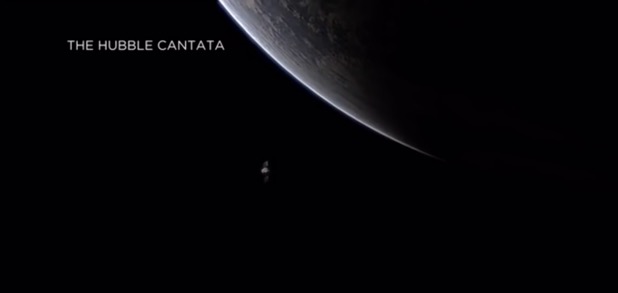
At Brooklyn’s Prospect Park on Saturday, the emerging technology took New Yorkers inside the Orion Nebula, the gaseous cloud of dust and evolving stars some 1,500 light years away. The VR installation was part of the Hubble Cantata, an hour-long composition for orchestra, 100-voice chorus, soloists and narration, by composer Paola Prestini and librettist Royce Vavrek.
Staged at the BRIC Celebrate Brooklyn concert series, the cantata’s climatic moment came in its last five minutes, when audience members were cued to slip their phones into free cardboard VR headsets that were distributed at the gates. As the narrator, astrophysicist Mario Livio, poetically described the life and death of stars, attendees shifted in their seats, craned their necks and even stood to view the three-dimensional renderings of Hubble photographs, directed by Eliza McNitt.
Last year the Adelaide Symphony Orchestra in Australia hired Jumpgate, an Australian VR studio, to create a stage-view, 360-degree performance video of Sibelius’s Finlandia. Created using a rig of 16 GoPro cameras in front of conductor Guy Noble, the video has been distributed through YouTube and Facebook (it can be viewed using a headset or on a desktop computer).
Similar in concept is a 360-degree rehearsal film of Tchaikovsky’s Sixth Symphony created by the Toronto Symphony Orchestra with the Canadian studio VR Cinematic.
Last year the American violinist Tim Fain worked with Jessica Brillhart, a VR film-maker at Google, on the 360-degree short film, Resonance. The vaguely surreal film shows Fain performing an original composition against several backdrops, including a graffiti-tagged empty warehouse, a barnyard and a church, with directional sound guiding the viewer through each new space. Filmed using Jump, a new camera rig intended to create a greater sense of depth, it has drawn over 420,000 views since November.
Matterport secures new investors for its virtual reality 3D mapping tech
 Matterport, a company creating tools to allow 3D spaces to be scanned into virtual reality,
Matterport has raised $56 million to date, including a $30 million Series C in June of last year led by Qualcomm Ventures.
One of the main external-facing metrics for success that the company is sharing are “visits” or views of the scanned 3D models. In August of 2015, Matterport had seen 10 million visits to its properties. Fast forward a year and that number has increased dramatically, the company just announced that it has surpassed 60 million visits to the nearly 270 thousand structures that have been scanned using Matterport’s tech.
The company’s revenues are comprised of both the sales of its $4,500 Matterport Pro 3D Camera and the monthly subscription fees, ranging from $49 to $149 per month which allow users to host their scanned models on the site. The camera is an interesting beast, using a technology called Lidar to blast lasers across a space and capture a full visual scan of the area from that perspective.
See the full story here: https://techcrunch.com/2016/08/09/matterport-secures-new-investors-cash-for-its-virtual-reality-3d-mapping-tech/
Nokia and Disney Just Created a Big, Green, Virtual Reality Dragon
 Nokia said last week that, with the help of digital effects company Weta Digital, it had built a short virtual reality video that lets people fly on the back of Elliot, the lovable dragon from Disney’s DIS 0.05% upcoming Pete’s Dragon remake.
The virtual reality short, called “Pete’s Dragon: Elliot’s Flyover,” was shot with Nokia’s newly released OZO 360-degree camera to capture the mountains, skies, and canyons of New Zealand. A CGI version of Elliot the dragon was spliced into the video to give users a sense that they are riding Elliot like a wild stallion through the skies.
Guido Voltolina, Nokia’s head of presence capture, said in a statement. “Each activation we’ve created with Disney has been unique to each film and we will continue to push innovation in the VR category to create even more immersive experiences to complement Disney films.”
The new VR short-film comes after Nokia and Walt Disney Studios signed a multi-year deal in April for Disney to use Nokia’s OZO cameras and related software for the studio’s films and marketing materials.
See the full story here: http://fortune.com/2016/08/08/nokia-disney-virtual-reality-petes-dragon/
AMD – Virtual reality is coming to your movie theater lobby
 Taylor took the show as an opportunity to introduce another option in the form of a pod called the VenueVR Gateway. Made by Awesome Rocketship, the concept is simple: a station with a motorized platform, haptic feedback, and integrated computer that can be used to power high-end VR gaming, with various configurations allowing sit-down, stand-up, or full room-scale experiences. The hope is that by offering an easy way to deploy pay-per-play VR stations, the industry can piggyback on top of movie theaters and other venues to create a profitable market for virtual reality developers nearly overnight.
...it was easy to see how the idea could catch on, even at the tentative $1-per-minute price point. Imagine a group of friends that go to a theater to see Star Trek Beyond, walk out afterward, and then all sit down at a four-pod cluster to tackle their own mission with Star Trek: Bridge Crew.
See the full story here: http://www.theverge.com/2016/8/9/12405776/virtual-reality-movie-theater-lobby-awesome-rocketship
Osmo – AR for kids
 A shaggy-haired monster as lovable as a teddy bear offers a wave and an encouraging smile that is in no way diminished by the pair of incisors jutting up from his jaw. "Nice to meet you," says the creature, named Mo, who lives in an iPad app called Osmo Monster. "Can you draw me a magic wand?"
So begins a surprisingly intuitive interaction between digital and physical worlds, the complex software operating in the background masked by the childhood delight of free-form play. Draw a magic wand for Mo on a real-life whiteboard placed in front of the iPad and suddenly the exact sketch appears on the screen. One after another, Mo requests drawings of coins, a magic banana, and a favorite toy, incorporating each into his digital home. As music plays, he conducts the "grand finale": an act that features all the drawings as they spin and dance.
Pramod Sharma, cofounder and CEO of Osmo, the startup that designed the app, describes the Osmo Monster experience as a way to give "Walt Disney moments" to kids that have grown up around screens.
Reflective AI - "It’s very hard, iterating on the storytelling side, the computer vision side, and the animation side,"
See the full story here: http://www.fastcompany.com/3062536/the-recommender/pokemon-go-may-be-a-fad-but-augmented-reality-for-kids-is-here-to-stay
Is Pokemon Go Finally Making Augmented Reality Mainstream? Brands like Porsche and State Farm are trying it out
 This week, Porsche is unveiling a new augmented reality experience with a five-page, gatefold ad in Outside magazine featuring a photo of the Swiss Alps. The experience, created by the AR player Blippar, allows Blippar's mobile app users to scan the page to unlock a digital display of the mountain, along with a 360-degree photo of a Porsche 718 Boxster interior. They can even play a game driving the car through the mountainous Gotthard Pass.
"It isn't just a narrative," said Omaid Hiwaizi, Blippar's president of global marketing. "It's an immersive, emotional experience that's memorable in a way that most of the time a written story can't be."
See the full story here: http://www.adweek.com/news/technology/pokemon-go-finally-making-augmented-reality-mainstream-172823
Talking augmented reality at the GeoTech meetup
 Our next foray and case study was a Mars AR experience with a 3D model of planet Mars featuring the Schiaparelli crater. We built it using height data from NASA and with advice from UK Space Agency involved in ExoMars mission. In February this year Christopher Wesson, an OS cartographer, produced a map of the red planet that proved very popular with people from all over the world. Within OS Labs, we had the idea for an educational cartography piece to allow enthusiasts to study the surface of Mars, the depth of craters and the terrain. Vuforia, Blender and Unity were used to create the app which recognises the Mars map as an augmentable target. When this happens a 3D model is snapped onto the real world paper map and is tracked in real time. The next stage is embedding this experience into Gear VR headset.
Another interesting case study in progress is the concept of using AR in hospital navigation by displaying navigation arrows in an AR experience on a real time camera view. The arrows would help you navigate in a turn by turn fashion. This is underpinned by iBeacon technology for indoor positioning. An extension to this would be the concept of smart signs that look like generic symbols but within an AR app, as you hold your mobile device up to them, relevant content to your appointment within the hospital is revealed, including how to get to the relevant clinic and any delay times. This is all tied into your calendar and custom to you as a user.
See the full story here: https://www.ordnancesurvey.co.uk/blog/2016/08/talking-augmented-reality-geotech-meetup/
Virtual Reality Is Becoming the Next Great Storytelling Canvas – Brands use it to strengthen consumer relationships
 In the current state of modern media, where ad blocking and viewability have emerged as major challenges for the ad-buying community, the immersive nature of VR offers some unique advantages. That said, establishing a scalable (and seamless) ad model will be vital in ensuring ongoing investment and exploration. In my view, the most elegant path forward embraces a native marketing sensibility that emphasizes both context and creative. Plus, focusing on native content experiences allows for more organic social engagement.
For brands, the temptation to explore the creative boundaries of this immersive technology will be more than challenging to resist. And while "empathy" has emerged as the new "authentic" in content marketing circles, the fundamentals remain the same: Respect your audience, deliver tangible value and clearly establish your editorial authority to best preserve the long-term vitality and integrity of the canvas.
See the full story here: http://www.adweek.com/news/advertising-branding/virtual-reality-becoming-next-great-storytelling-canvas-172797