Experts Discuss Copyright, Licensing at RightsTech AI Summit
By Phil Lelyveld
February 12, 2024
The RightsTech AI Summit at Digital Entertainment World 2024 covered a range of technical and legal issues over the course of seven panels with a focus on generative AI, copyright and licensing. The event, held at UCLA, featured speakers from areas including entertainment, data management, legal and academia. Among the key takeaways: fair use is expected to become a defense in AI cases, data used to train AI will likely become a legal issue in regards to licensing agreements, we may soon need copyright law that protects an artist’s style, Big Tech lobbying efforts are becoming a concern, and states are outpacing Washington on AI regulation.
UC Berkeley Professor of Law Pamela Samuelson expects fair use to be a major defense in the 16 generative AI cases currently before U.S. courts that she is following. Most are related to using publicly-accessible scraped content in training data without the IP owners’ permission.
In most of these cases, Samuelson does not think the IP owners will be able to convince the court that they will experience actual harm or face a meaningful chance of harm through the unlicensed use of openly available content from the web for AI training purposes.

She said this is analogous to the Google books case, in which Google scanned libraries of protected books without permission. The court agreed that Google simply analyzed the text and did not reproduce the books themselves.
Samuelson does, however, feel that The New York Times has a strong case against OpenAI, since NYT has a marketplace for licensing their content already established. Samuelson noted that after the AI is trained another dataset could be used for the released AI product instead of the training data set. Because none of the unlicensed data in the training data set would be present in the released product, she claims that no harm would have been done.
During the following panel, Microsoft Responsible AI Product Lead Sneha Deo made the point that copyright law covers specific works but does not protect an artist’s style. Artists work to create their own unique style, public persona and identity. There should be some way to protect style, since that has become the artist’s core value proposition in both the intellectual and monetary marketplace.
In the Update on AI Regulation and Legislation segment, Sophie Goossens, partner at Reed Smith LLP, noted that states are moving faster than the federal government on a number of aspects of AI regulation. California may lead the nation in this area.
Amy Isbell, SVP of public policy and government relations for Universal Music Group noted that, in the last year, AI companies have flooded DC with money and lobbyists. At the recent hearing with social media platform heads, legislators complained to them about their overwhelming lobbying effort on Capitol Hill.
Both the EU AI Act and President Biden’s Executive Order on AI call for labeling output that contains AI-generated “synthetic” content. Isbell noted that musicians have been using drum machines for decades. When does content become synthetic? she asked. The U.S. Patent and Trademark Office’s current view is that the portion of a submission that contains AI-generated content is not protectable by copyright. How synthetic content is defined will directly impact the IP landscape.
The Copyrighting Generative AI panel spent a good deal of time discussing the Rose Enigma case. The author of the graphic novel “Rose Enigma” wrote the text, produced prompts that instructed an AI to create complementary graphics, and then refined the prompts and made hand-drawn modifications to the graphics.
The artist’s lawyers claim that her process demonstrates that she exercised creative control over the final work even if an AI was involved. Panelist Josh Love, partner at Reed Smith LLP, made the point that if the Patent Office denies the author’s copyright claim, then by default the Office is placing the art into the public domain where platforms can monetize it without compensating the artist. They hope the case, which is pending, will provide clarifying education to the Patent Office.
Other interesting points were made during the day:
- Michael Grecco, founder of The American Society for Collective Rights Licensing said that by placing content in a blockchain before releasing it not only will provenance be maintained, but there will be clear documentation of original ownership if someone else tries to claim authorship.
- Lori Fena, co-founder of Personal Digital Spaces, proposed using an AI “similarity search” approach to track down infringing content.
- Josh Love said creatives want the three C’s: Consent, Control and Compensation.
- Sneha Deo described her work with the Montreal AI Ethics Institute, an international non-profit equipping citizens concerned about artificial intelligence and its impact on society to take action.
See the original post here: https://www.etcentric.org/experts-discuss-copyright-licensing-at-rightstech-ai-summit/
Nvidia CEO Huang says countries must build sovereign AI infrastructure
Nvidia (NVDA.O), opens new tab CEO Jensen Huang said on Monday that every country needs to have its own artificial intelligence infrastructure in order to take advantage of the economic potential while protecting its own culture.
"You cannot allow that to be done by other people," Huang said at the World Government Summit in Dubai. ...
See the full story here: https://www.reuters.com/technology/nvidia-ceo-huang-says-countries-must-build-sovereign-ai-infrastructure-2024-02-12/

Disney to Partner With Artificial Intelligence, ‘Emotional Control’ Coming Soon to Streaming Service
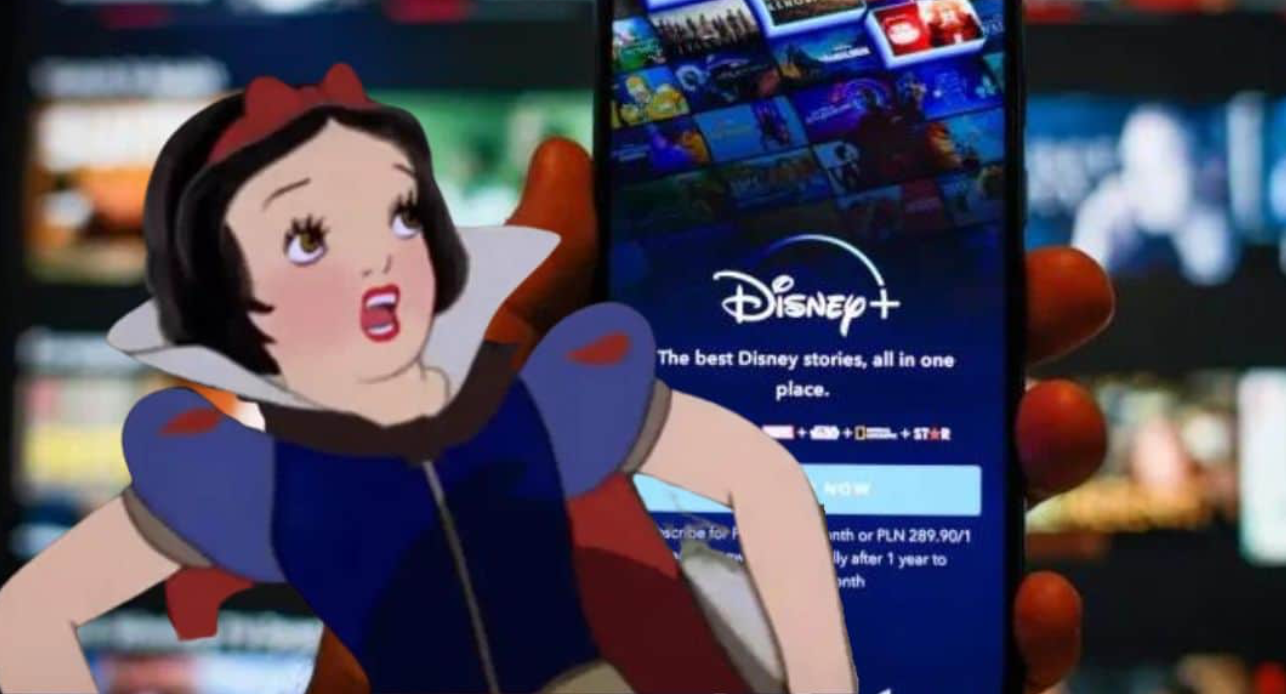
... The Walt Disney Company uses artificial intelligence to create a new advertising tool called “Disney’s Magic Words.” This tool lets brands customize their commercials to match the mood of specific scenes in movies or TV shows on Disney+ and Hulu. Disney can identify content, brands, images, and moods by analyzing scenes using AI and machine learning creating metadata tags. Brands can use these tags to personalize their messages to fit the scene or mood.
Geoffrey Calabrese, Omnicom Media Group’s chief investment officer, explained that this approach moves away from targeting broad demographics and instead focuses on specific audience emotions. Omnicom is one of six global advertising companies participating in an early test of this tool. ...
See the full story here; https://insidethemagic.net/2024/02/disney-streaming-service-artificial-intelligence-emotional-ads-emd1/
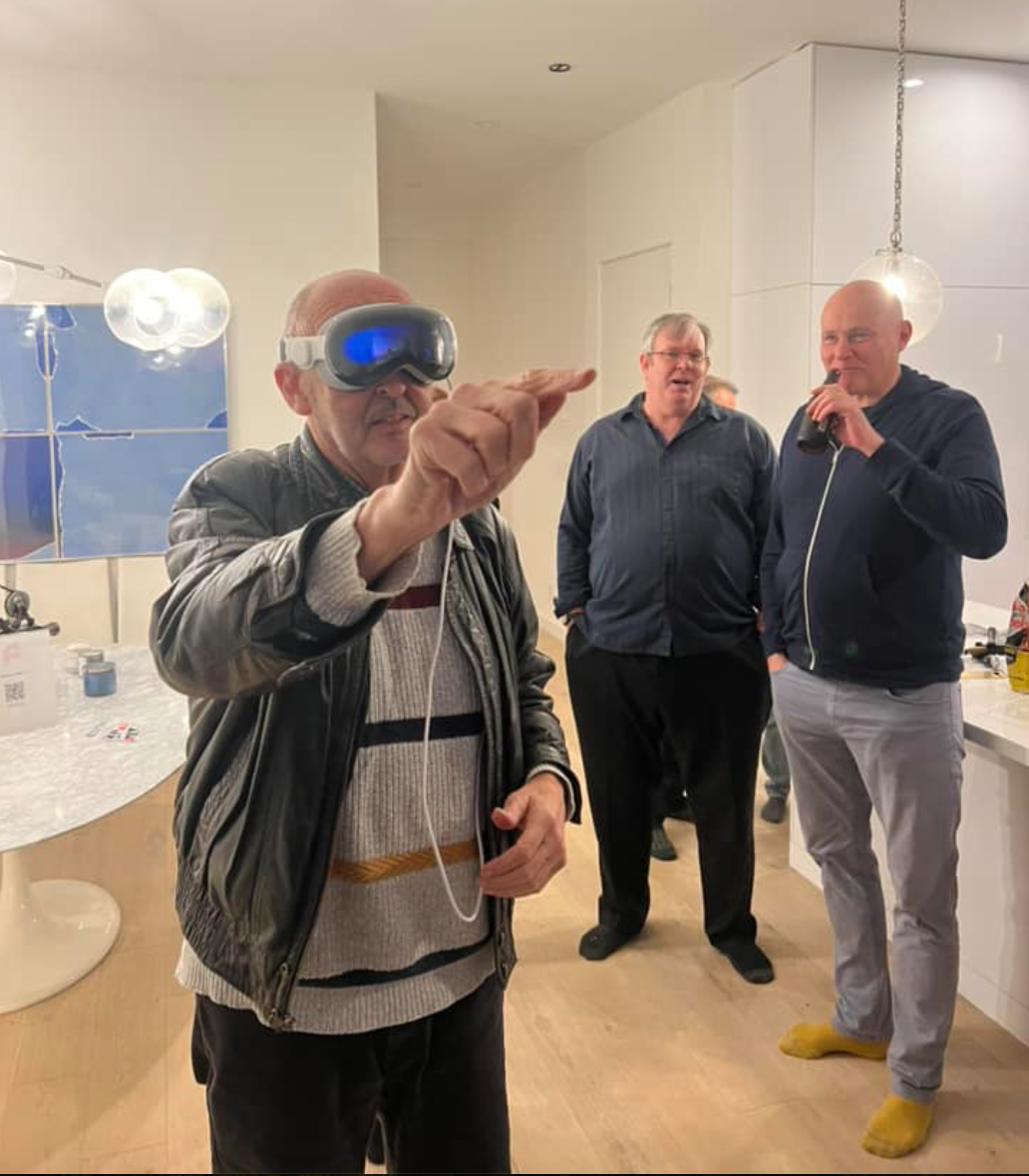
Hainan Airlines is handing out Rokid AR glasses for in-flight entertainment
- Hainan Airlines this week started handing out Rokid’s augmented reality glasses on a few routes for in-flight entertainment, the tech startup announced Thursday.
- Rokid claimed it’s the first time AR glasses — whose tech allows digital images to be imposed over the real world — have been used at scale on flights.
- Apple’s Vision Pro virtual reality headset, which isn’t available in China yet, comes with a motion-stabilizing “travel mode” for use on airplanes.
See the full story here: https://www.cnbc.com/2024/02/08/hainan-airlines-hands-out-rokid-ar-glasses-for-in-flight-entertainment.html

Huawei researchers say giving AI a Body is the next step
... But the Huawei team’s paper essentially argues that large language models, such as OpenAI’s ChatGPT and Google’s Gemini, can’t understand the real world because they don’t live in it.
Embodied artificial intelligence
In order for AI agents to truly interact with the real world, claim the researchers, models will need to be housed in some form of embodiment capable of perception, action, memory, and learning. ...
See the full story here: https://cointelegraph.com/news/huawei-researchers-artificial-intelligence-ai-body-next-fundamental-step-human-level

AR glasses with multimodal AI nets funding from Pokémon Go creator
... Today, Singapore-based Brilliant Labs announced its new product, Frame, a pair of lightweight AR glasses powered by a multimodal AI assistant called Noa. The glasses have captured the attention and investment of John Hanke, CEO of Niantic, theaugmented reality platform behind games like Pokemon Go. ...
In a video demo seen by TechCrunch, one of Brilliant Labs’ founders asked Noa through voice for a self-introduction. After about three seconds, the agent generated and projected an answer in text onto the lenses.
In addition to voice commands, Noa is capable of visual processing, image generation and translation, thanks to the handful of AI models it has integrated: conversational search engine Perplexity AI; Stability AI’s text-to-image model Stable Diffusion; OpenAI’s latest text generation model GPT4; and the speech recognition system Whisper. Frame’s lenses have a resolution of 640 x 400 for displaying videos and photos. ...
Brilliant Labs’ Bluetooth-enabled devices rely on a smartphone to access the various AI models today. Eventually, though, the founders want to do away with the phone host and embed lightweight machine-learning models directly into the glasses. ...
Frame will be available for pre-order starting today and will retail at $349, the same as Monocle’s price tag. The devices will begin shipping in April. ...
See the full story here: https://techcrunch.com/2024/02/08/ar-glasses-with-multimodal-ai-attracts-funding-from-pokemon-go-founder