America’s Greatest Inventor
 [Philip Lelyveld note; Bill Gates Blogs!]
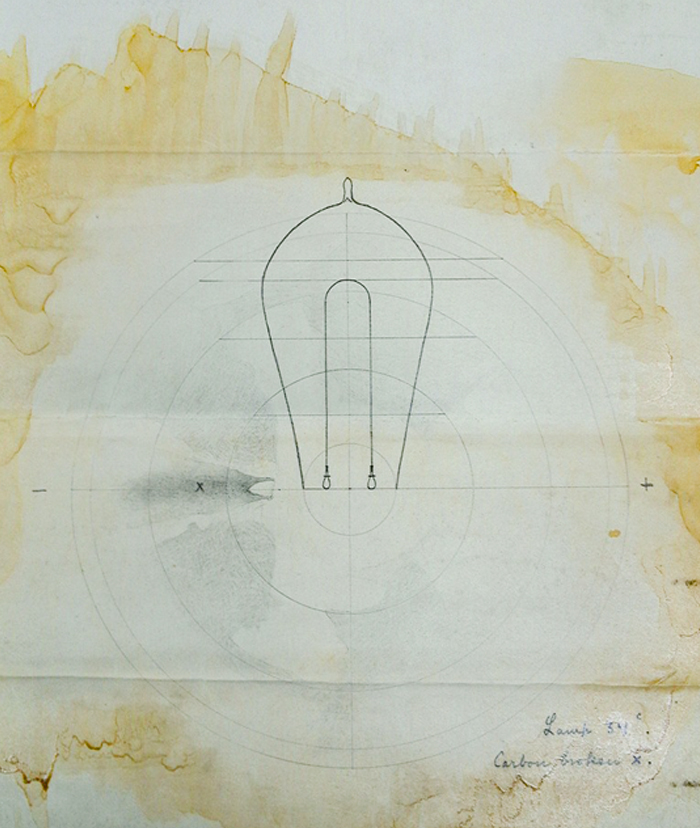
Obviously, Edison’s inventions were revolutionary. But as this book makes clear, the way he worked was also crucial for his success. For example, Edison consciously built on ideas from predecessors as well as contemporaries. And just as important, he assembled a team of people—engineers, chemists, mathematicians, and machinists—that he trusted and empowered to carry out his ideas. Names like Batchelor and Kruesi may not be famous today, but without their contributions, Edison might not be either.
Second, Edison was a very practical person. He learned early on that it wasn’t enough to simply come up with great ideas in a vacuum; he had to invent things that people wanted. That meant understanding the market, designing products that met his customers’ needs, convincing his investors to support his ideas, and then promoting them. Edison didn’t invent the light bulb; he invented the light bulb that worked, and the one that sold.
Finally, Edison recognized that inventions rarely come in a single flash of inspiration. You set a goal, measure progress using data, see what’s working—and what isn’t working—adjust your plan, and try again. This process can be very frustrating because it means running into a lot of dead ends. But each dead end tells you something useful. As Edison famously said, “I have not failed 10,000 times. I’ve successfully found 10,000 ways that will not work.”
See the full story here: http://www.thegatesnotes.com/Personal/Americas-Greatest-Inventor?curator=MediaREDEF
So Far, Smart Watches Are Pretty Dumb
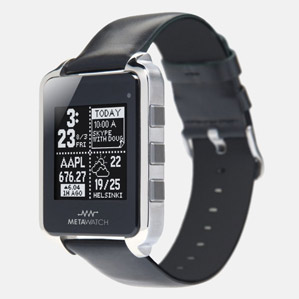 In theory, smart watches offer a smoother, more natural way of checking information than pulling out a smartphone. The act of glancing at your watch is a commonly accepted social custom, and it’s intriguing that an old form factor could come back to prominence. It’s just that now we want to see more at a glance than simply the time.
Unfortunately, the first smart watches are too much like the Graves watch: complicated in a way that makes them more curiosities than helpful tools. Their manufacturers, trying to please as many people as possible, have turned them into Swiss Army knives—neat at first, but not really fantastic at anything, and ultimately destined to be ignored or replaced by a simpler, sharper blade.
Amaze project aims to take 3D printing ‘into metal age’
Tungsten alloy components that can withstand temperatures of 3,000C were unveiled at Amaze's launch on Tuesday at London's Science Museum.
At such extreme temperatures they can survive inside nuclear fusion reactors and on the nozzles of rockets.
"We want to build the best quality metal products ever made. Objects you can't possibly manufacture any other way," said David Jarvis, Esa's head of new materials and energy research.


- Computer-aided design software determines shape of 3D model using cross-sections
- Laser etches the shape of cross-section into metal powder and heats it so it solidifies and creates a solid layer
- More powder is spread to create the next layer and so on until the 3D object is created
- By leaving one non-solid layer in between, interlocking structures can be created
See the full story here: http://www.bbc.co.uk/news/science-environment-24528306
castAR: the most versatile AR & VR system
 What is castAR?

castAR is a projected augmented reality system that displays holographic-like 3D projections right in front of you. Star Wars: Episode IV – A New Hope sparked our imaginations of what might be possible in the future by showing R2-D2 and Chewbacca playing a holographic 3D chess-style game. It has taken nearly 35 years since the film was released for this technological dream to come to reality, but with castAR, that reality can be yours.
castAR includes a very fast and highly precise tracking solution, allowing you to change your experience by holding your 3D world in place while you are free to move around in it.
See the source video here: http://www.kickstarter.com/projects/technicalillusions/castar-the-most-versatile-ar-and-vr-system
The Big Business of Big Hits: How Blockbusters Conquered Movies, TV, and Music
 How come so many movies are sequels, adaptations and reboots? Why do music studios spend so much on just a handful of superstar artists? And since when did TV shows become so lush and sophisticated?
These sound like scattered questions for an entertainment guru, not an economist, but Anita Elberse, a professor at Harvard Business School, is both. And her great new book, Blockbusters, explains that the four questions share one answer. The blockbuster strategy—betting more and more money on fewer and fewer titles—has taken over the entertainment world.
Read the full story here: http://www.theatlantic.com/business/archive/2013/10/the-big-business-of-big-hits-how-blockbusters-conquered-movies-tv-and-music/280298/
3D Cinema Firm Looks to Russia to Boost Fading Business
Beverly Hills-based RealD announced Thursday that it had struck a deal with Russia’s Cinema Park to equip up to 200 of the chain’s screens with 3D technology, the Los Angeles Timesreported.
Meanwhile, under deals agreed earlier this year, RealD is already in the process of installing more than 300 3D screens in cinemas owned by rival Russian cinema chains Karo Film and Kinomax according to The Hollywood Reporter.
RealD is also bringing its “LUXE” large screens, a rival to the popular IMAX format to Russia, with plans to open the first for Cinema Park in St. Petersburg this winter, with a further 10 slated for auditoriums owned by Karo Film, The Hollywood Reporter added.
RealD’s Russian deals come at a time of difficulty for the company, which produces the world’s most widely used 3D cinema technology. Shares in the firm have fallen 40 percent this year as moviegoers seem to be losing their taste for 3D, the LA Times reported Thursday.
See the full story here: http://en.ria.ru/russia/20131011/184078574/3D-Cinema-Firm-Looks-to-Russia-to-Boost-Fading-Business.html
High Speed 4K/3D/Ethernet HDMI 1.4 Cable – 3
[Philip Lelyveld comment: its nice that they are selling cables that have the bandwidth to carry the full signal to the sets that they are selling.]

See the full post here: http://store.sony.com/high-speed-4k-3d-ethernet-hdmi-1.4-cable-3-zid27-DLCHJ9/cat-27-catid-All-TV-AV-Cables