philip lelyveld The world of entertainment technology

22Aug/13Off

Zefr helps content creators reach their hidden audience

By Philip Lelyveld

I spent an hour with Richard Radden, cofounder of Zefr (www.zefr.com, formerly MovieClips), a Venice, CA company that is “connecting fans and franchises for the good of all.”

MovieClips was cofounded by Rich Radden and Zack James about 3 years ago.  MovieClips developed proprietary technology that allowed them to identify content on YouTube even if the video was distorted before uploading.  They were able to license clips from studios and networks by making the case that, rather than taking down illegal content, they could flag it, help YouTube place appropriate ads against it, and send revenue back to the studios and networks.

Over time they added metadata to the clips and developed a UI so that the clips could be easily searched.  As they were doing this, Rich, Zack, and their 30-person team discovered that there was a population of ‘superfans – people who created and uploaded content about the Studio and Network content – that was up to 10 times the size of the population that viewed the content on the authorized site.

In August, 2012, MovieClips changed its name to Zefr and pivoted to focus on helping movie studios, sports, TV, and music videos collect and monetize fan and professional postings on YouTube. Their clients include Warner Bros, Universal, UMG, Paramount, Columbia, Lionsgate, MGM, Sony Music, NASCAR, Miramax, The Weinstein Company, Dick Clark Productions, and SNL.

As they expanded into monitoring other types of content, they found that the same ‘superfan’ relationship applied to branded content; fans of a brand would make and upload content about the brand at a much higher rate than the number of people who interacted directly with the brand’s official online presence.  Zefr started marketing their customer relationship management services to brands.  Brand clients now include Audi, Canon, Mars, and T-Mobile.

Zefr is developing a new suite of SAS (Software As a Service) tools that will move them closer towards being able to help any type of content or brand to reach their creator-fan community.  Rich showed me a prototype of a system that will allow any company to identify and communicate – on a massive one-to-one basis - with this larger population of fans.  The software can also use YouTube data and proprietary Zefr applications to development extensive metric tools.  It can compare the activities of the fans of their clients to the activities of their clients’ competitors, so that the client can interact more effectively with the entire population of potential customers.  For example, they can determine which brand ‘owns’ a keyword in the unofficial culture within a superfan community.

With a staff that now tops 230 people, Zefr has taken over the warehouse off Abbott Kinney Blvd. in Venice that was previously the art studio of Ed Ruscha.  The staff is composed on software developers, data scientists, and metadata entry personnel.  Zefr is able to hire the low-pay metadata entry people from a large pool of local talent, rather than outsourcing overseas, by offering them a wide range of workplace perks.  Aside from the usual basketball court, dog-friendly environment, and free food, they offer a hip location, a full health plan, monthly movies, and all-staff field/party trips.  If a metadata entry person stays for a full year, Zefr management works to move him/her into a higher skilled, higher pay position.

I’ve asked Rich to let me know when they launch their SAS product so we can see its full range of capabilities.  If the final product can produce all of the metrics that Rich demonstrated, and maintainthe well designed graphic interface that I saw, then this tool could be very useful to the ETC member’s efforts to market more effectively to Millennials.


21Aug/13Off

Kickstarter Campaign Beats Google to Password Jewelry
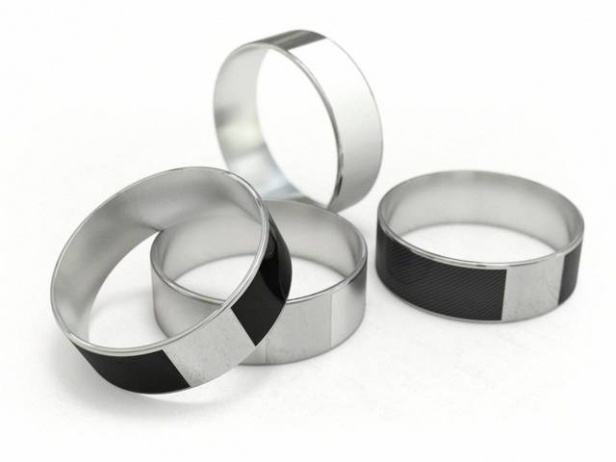
nfcringThat company’s product is called the NFC Ring, and the Kickstarter campaign ended yesterday, raising just under £241,000 (almost $380 million). The ring has contactless, or RFID, technology built in and can be used to automatically unlock an NFC-capable phone when a person picks it up, or to operate other RFID devices such as door locks. One side of the ring stores “personal” data such as passwords, the other is intended for “public” data such as contact information. Pricing hasn’t been released for the ring, but getting the male size required a $43 donation to the Kickstarter campaign.

See the full story here: http://www.technologyreview.com/view/518526/kickstarter-campaign-beats-google-to-password-jewelry/?utm_campaign=newsletters&utm_source=newsletter-daily-all&utm_medium=email&utm_content=20130821

21Aug/13Off

Maker Studios Buys Blip, and a Home Outside of YouTube

pewdiepie-380x280Maker Studios, one of the biggest YouTube networks, is buying Blip, a video maker and distributor.

Blip officials informed their staff of the deal this morning, and it is expected to close in early September.

The most important takeaway, for now, is that the deal gives Maker a home outside of YouTube for its content.

Meanwhile, Maker, which has raised $44 million to date, including a $36 million round led by Time Warner last year, may get another cash infusion from investors in the coming months.

See the full story here: http://allthingsd.com/20130821/maker-studios-buys-blip-and-a-home-outside-of-youtube/?curator=MediaREDEF

9Aug/13Off

ALGORITHMS: NEW CONTENT CREATORS ARE REDEFINING FAIR USE

Algorithms are acting more like content creators rather than an index of online information. If a users searches for a topic, facts and images that Google scrapes from websites fall under fair use.

“What if the researchers at these companies could improve their bots enough for the algorithms to make intelligent decisions about fair use,” questions Wired. “If their systems can organize the Web and drive cars, surely they are capable of shouldering some of the responsibility for making smart decisions about fair use.”

See the full story here: http://www.etcentric.org/algorithms-new-content-creators-are-redefining-fair-use/

9Aug/13Off

Vidcon 2013: What this year says about what’s happening on YouTube

photo-2"I sat in on one session, “How Much Am I Worth: Understanding YouTube Monetization and Determining Your Channel’s Value,” which was presented by YouTube partner product manager Andy Stack.

And thanks to Stack, I got a thorough education on what YouTube creators need to know about specific advertising terms like CPM and RPM, and what creators should be paying attention to in their interactions with the platform and advertisers."

Territories are emerging

Last year, YouTube talent companies like Fullscreen and Maker Studios were definitely a presence, but in the ensuing twelve months these companies have grown much larger and more established. It’s early to say, but there’s a new air of competition emerging. A year from now, we may see some real fences spring up.

Read the full story here: http://gigaom.com/2013/08/06/vidcon-2013-what-this-year-says-about-whats-happening-on-youtube/?utm_source=General+Users&utm_campaign=3ea5281b79-c%3Amed+d%3A08-09&utm_medium=email&utm_term=0_1dd83065c6-3ea5281b79-99147229

9Aug/13Off

RealD Records Loss Amid Sliding Popularity of 3D Movies

Was4227037"Moviegoers were more selective than expected regarding the films they chose to experience in 3D," said CEO Michael Lewis.

In spite of hits like Iron Man 3, Star Trek Into Darkness and Man of Steel, 3D movie company RealD on Wednesday posted a quarterly loss and declining revenue.

See the full story here: http://www.hollywoodreporter.com/news/reald-records-loss-sliding-popularity-601962

Filed under: 3D articles Comments Off
9Aug/13Off

MakerBot takes 3D printing nationwide via Microsoft

makerbot_610x255[Philip Lelyveld comment: the quote below pretty much sums it up.  Stratasys and 3D Systems are rapidly becoming the go-to 3D printer companies with their deals with UPS and their aggressive acquisition strategies.]

"MakerBot experience" in-store demos come to 18 Microsoft store locations as both companies hope to spark a 3D printing revolution.

See the full story here: http://news.cnet.com/8301-17938_105-57597415-1/makerbot-takes-3d-printing-nationwide-via-microsoft/

Filed under: 3D articles Comments Off
7Aug/13Off

The Personal Television Revolution Is Horrifying — And Brilliant
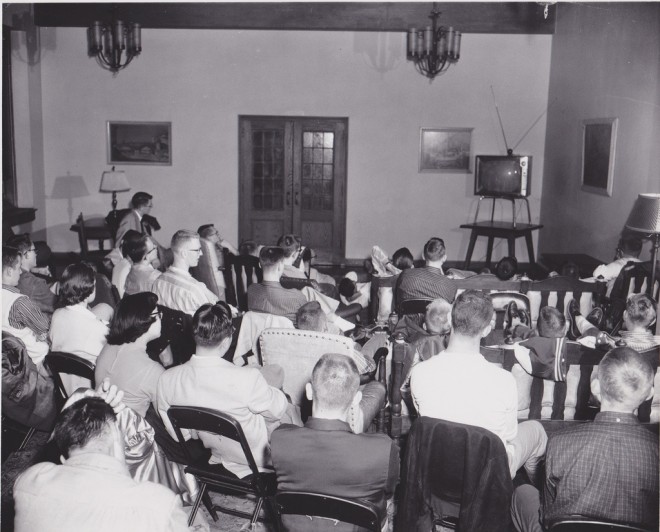
ymca-tv-660x532It’s right and healthy that members of a family or other group indulge their own preferences. But the balance between individualism and communalism seems off, particularly in households saturated with mobile devices and digital media (which these days is a huge chunk of them).

I thought — hoped, really — that I was worrying too much about new technology, so I called Patricia Greenfield, Distinguished Professor of Psychology at the University of California, Los Angeles. I asked: Do tech-savvy people in healthy relationships (like, say, me) really need to worry that customized media and mobile devices will undermine our connections with others?

“I think you should worry,” Greenfield told me.

As techniques to distribute and personalize television proliferate, then, expect to see a parallel rise in coping mechanisms. The systems we create to replace the emotional effects of communal television should be at least as interesting as the technology that disrupted family TV in the first place.

Read the full story here: http://www.wired.com/business/2013/08/personal-television-horror/?utm_source=feedburner&utm_medium=feed&utm_campaign=Feed%3A+wiredbusinessblog+%28Wired%3A+Blog+-+Wired+Business%29&curator=MediaREDEF

7Aug/13Off

Yabazam tops 1 million 3D TV streams

[Philip Lelyveld comment: a small but meaningful number.]

DDD Group plc (aim:DDD) (otcqx:DDDGY), the 3D solutions company, today announced that its Yabazam 3D video streaming service has delivered over one million 3D movie trailers to Samsung and LG 3D TV viewers since November 2012.

The Yabazam 3D app is a free download for Samsung and LG 3D TVs, which account for 64% of the 3D TV market. It streams free 3D movie trailers and offers over 80 titles for viewing with a monthly subscription in the US and on a per title rental basis in 16 additional countries. Earlier this month it launched in the Google Play store for Android(TM) 3D tablets.

Launched in 2009 as the first online portal to offer high definition 3D movies for PC users, Yabazam was designed to overcome the lack of 3D content available to viewers and the lack of distribution available to 3D content creators. Since 2012 the app has been downloaded 440,000 times and now exceeds 2,000 user sessions per day.

See the full story here: http://www.marketwatch.com/story/yabazam-tops-1-million-3d-tv-streams-2013-08-07

Filed under: 3D articles Comments Off
6Aug/13Off

The short story of Longreads, according to founder Mark Armstrong

“The experience of reading online is getting easier—thanks to phones, tablets and “save for later”—and social recommendation is making it easier to find stories from both large and small publishers,” Armstrong said. “The question now, of course, is who pays for them.” He says that the Longreads Membership is “also a way to pay writers and publishers for their work.” And we should expect to hear more about this in coming months.

Read the full story here: http://gigaom.com/2013/08/05/the-short-story-of-longreads-according-to-founder-mark-armstrong/?utm_source=General+Users&utm_campaign=d59660dff9-c%3Amed+d%3A08-06&utm_medium=email&utm_term=0_1dd83065c6-d59660dff9-99147229