[Philip Lelyveld comment: this article is NOT about 3D, but illustrates one possible future for content and revenue generation]
Last night at the New York Tech Meetup, Kieran demoed Folio, platform for designers, illustrators, developers and creators to market and sell their digital content. Currently, supported file types include just about anything you can create in Photoshop or Illustrator such as PSD, EPS, AI, JPG, PNG, TIFF, PDF. In the future, the marketplace will open up to all digital assets including 3D models, motion graphics, audio content, photography, financial models, MS Word Templates, drum beats, WAV files, audio loops and even snippets of code. ...
Folio’s platform operates like an app store for digital goods with the simplicity of Dropbox, giving every creative professional the ability to sell their digital assets in minutes. Using a simple menu bar application, the creative can just drag and drop the file, add a descriptive tag, set a price, upload and it’s instantly for sale on the Folio network and shareable with a unique URL to Facebook and Twitter. For those looking to buy assets, it’s just as simple. To monetize, Folio takes 30% of each transaction, which is equivalent to Apple’s iTunes model.
Folio’s platform is curated to maintain quality control by a community of approved moderators who are paid a fixed percentage of the price of the file. To protect against copyright infringement, Folio complies with MPAA rules to remove content immediately if wasn’t posted by the original person, and anybody who uses or buys copyrighted content will be issued a refund. As a rule, users of the platform are told they must have creative copyright of their content in order to upload. ...
The average American watched around five hours of video a day in the last three months of 2011; 98 percent—on a traditional TV set.
“Although this ratio is less than it was just a few years ago, and continues to change, the fact remains that Americans are not turning off,” Nielsen’s latest cross-platform report says. ...more than 8 million homes acquired an HDTV set in the last year, bringing the total number of households with an HDTV set to 80.2 million. Nielsen said the numbers indicate TV remains the dominant platform for watching video content. Traditional live and time-shifted viewing accounted for nearly 34 hours a week (out of 35) in the fourth quarter of 2011.
The way content is delivered, however, is changing. Nielsen found that two-thirds of game consoles in homes are now connected to the Internet, creating a new content delivery “conduit” for TV sets. It said more than half of Netflix users watch on their TVs through a game console or other streaming device. ...
The report said that around 33.5 million mobile phone users now watch video on the devices—up nearly 36 percent from 4Q10. However, the time spent doing so remains modest: just 8 minutes a week. Online viewing accounted for around 30 minutes a week.
Broadcast-only homes declined from 11.1 million in 4Q10 to 11 million in 4Q11. Wired cable homes fell by nearly 3 million to 60.5 million. Satellite held steady, while telcoTV homes grew from 7.3 million to 8.5 million. Broadcast-only homes with broadband grew from 4.5 million to 5.1 million.
...I doubt Apple will chase the big flat-screen market dominated by the likes of Samsung (005930) and LG (066570). Those sets are already Cupertino-thin and entrenched. Instead, Apple will sell small screens in a unique format, likely with a pure glass bezel or, if the technology permits, an entirely transparent screen—and seek to fill your entire home with secondary television/video devices. This is a relatively easy bet. Here are six reasons why.
First, big televisions are already beautiful, and an infrequent purchase decision. ...
Second, Apple’s real play will be content sales, not TV hardware profits. ...
Third, consumers want to watch video everywhere while multitasking. ..
Fourth, the television user experience still stinks. ...
Fifth, Steve Jobs loved glass. ...
Sixth, Apple could sell the things cheap. ...
Apple also has patented haptic (“touch”) technology that would embed a grid of sensors into gloves and clothing to create the sensation of movement. ...
WITH $400,000 RAISED ALREADY, YET ANOTHER PRODUCT CREATES A COMPANY OVERNIGHT.
...
It’s a clip-on iPad keyboard with a milled aluminum chassis and integrated speaker that ostensibly converts the iPad into a MacBook. ...
Apprently there is some room in the market for that premium keyboard. In a week, Brydge raised over $400,000, promising units at an introductory price of $150 (about the same cost as a refurbished Kindle Fire). ...
Distance learners rejoice! Harvard University and MIT jointly announced their new non-profit edX online learning initiative in Cambridge earlier today, which aims to both enhance on-campus teaching and make courses from both schools available to people around the world for free.
“This is the single biggest change in education since the printing press,” said Anant Agarwal, newly-installed president of edX. Despite both schools chipping in $30 million a piece (not to mention a chunk of their respective staffs), edX is an independent entity with Agarwal reporting to the organization’s own board.
Beyond just offering Harvard and MIT courses to scores of avid learners worldwide, the two schools plan to build up the open-source MITx platform which itself was only announced at the end of last year. The goal is to make the platform available other to institutions as well, so they too can jump in and offer their own content. It’s still early days for the platform though, so no additional partners have been announced just yet.
Still, MITx provides quite the framework to begin with. Rather than just providing videos of lectures and scanned class handouts, MITx takes things a step further further with “embedded quizzes, immediate feedback, student-ranked questions and answers, online laboratories and student-paced learning.” Access to these online courses will be free to anyone with an Internet connection, though the issue of monetization quickly came up during the event’s Q&A period.
“The drive is not to make money,” said MIT Provost Rafael Reif. “That said, we intend to find a way to support those activities. There are several approaches we are considering, and we don’t want this project to become a drain on the budgets of MIT or Harvard.”
EdX president/professor Agarwal noted that in the prototype class MITx class he taught, students who passed the course received a free certificate to commemorate their achievement. That should soon change though, as a FAQ posted to MITNews points out that the two schools are considering charging a “nominal fee” for those certificates when a student proves their mastery of a subject.
AllThingsD reports that the first slew of EdX courses will go live this fall, but it seems as though Harvard may be looking to start a little sooner than that. The Boston Globe reports that Harvard is considering launching their first EdX courses this summer, with classes in computer science, social science, and the humanities expected to round out that first online term.
Agarwal went on to say that the more online educators there were, the better off the world would be, and there’s little question at this point that edtech space will continue picking up steam. Online education startup Coursera announced just weeks ago that their own distance learning platform would soon play host to courses from Princeton, Stanford, UPenn, and the University of Michigan. Meanwhile, StraighterLine also recently announced that they raised $10 million in funding for their plan to offer general requirement courses online (and on the cheap).
[Philip Lelyveld comment: Nanoco is mass producing quantum dots, using no heavy metals, for manufacturers in the UK and Japan.]
Nanoco Group PLC and its operating subsidiary Nanoco Technologies Ltd partner major R&D and blue-chip industrial organisations in the development of applications incorporating semiconductor nanoparticles, “quantum dots”.
Nanoco Technologies is unique in the nanomaterials market as a company that manufacture large quantities of quantum dots. Our molecular seeding process for the bespoke manufacture of these nanoparticles on a commercial scale is protected by worldwide patents.
Nanoco Technologies is the only manufacturer currently able to supply production quantities of these nanoparticles which do not use a regulated heavy metal. We are the only manufacturer able to respond to orders for large quantities of bespoke quantum dots, and we are leading the way in customising the functionalisation of quantum dots enabling chemical linkage for biological and other specific uses.
The bulk manufacture of quantum dots provides our partners with the platform to develop a wide variety of next-generation products, particularly in application areas such as display technology, lighting, solar cells and biological imaging.
Nanoco Technologies’ research and manufacturing headquarters was established in Manchester (UK) in 2001. The company currently operates facilities in the UK and Japan.
... I know, of course, what an engineer would explain: “vision” technology often requires a host of algorithms that enable a machine or computer to detect, classify, and track objects. Meanwhile, “video” involves software and hardware primarily designed to process video by filtering, pre- and post-processing, encoding and decoding (for the purpose of transmission, broadcasting or packaging), and ultimately displaying good moving pictures on a screen. ...
Recent technology advancements allow a system’s ability to “see” much more effectively. Further, embedded vision will be ubiquitous. “Vision” can go into cars, game consoles, smartphones, homes, street cameras, the Mars Rover —you name it.
As Tannenbaum put it, computer vision is all about “recognizing” an object (and its action), and “interpreting” it.
Computer vision, however, is a relatively new field. Tannenbaum said that textbooks and conferences built around computer vision have only begun popping up in the last 10 years. ...
“Machine vision is about seeing things under a controlled environment.” Computer vision is about applying vision under real-world conditions. ...
“Real-world scenes are complex.” It involves variable lighting conditions, background clutter, partially hidden objects, unknown scene depth and differences in object scale, location, and orientation. The list goes on. As a result, computer vision requires far more diversified detection algorithms and more complex computation. ...
Walmart’s cloud-based disc-to-digital transfer program enjoyed good news during its first week, adding current and catalog titles from DreamWorks Animation and earning high praise from analysts.
Meanwhile, in a result right out of the “He Likes it! Hey, Mikey” cereal commercial from the ’70s, BTIG Research analyst Richard Greenfield test-drove Walmart’s disc-to-digital service — which launched April 16 in 3,500 stores — and said the experience “exceeded” expectations.
“Overall I think it is going to be a pretty successful service, once all the stores get on board,” Drawbaugh said. “For one, Blu-ray bundles with digital copies typically cost more than $2 more than those without. Two, being able to upgrade a DVD to HD for $5 is a good deal compared to throwing it away and buying the Blu-ray — although I wish DVD to Blu-ray offers were expanded.”
The centerpiece of the Dolby booth at NAB is a large screen autostereo display prototype jointly developed with Philips. It is the best autostereo display that I have seen to date. The large 4K screen produces the 3D effect via a lenticular overlay and proprietary software. According the Dr. Joop Talstra of Philips, the set takes a normal 2-view feed from a Blu-ray or other source and both interpolates and extrapolates in real time to create 28 views spanning the full 180 degrees in front of the screen. As I moved sideways across stereo pair boundaries the expected distortion was much less than that of other displays I have seen. They did not demo 2D content, but because the lenticular overly is not removable or neutralizable, it will produce a less-than full HD 2D image. Content from Hugo, Captain America, and a Red Bull snow skiing video was used for demo material. High quality Dolby audio reproduction complemented the video.
The Dolby/Philips autostereo technology was also demonstrated on tablet-size and cellphone displays. One of these smaller displays had an active liquid crystal lenticular overlay, so the lens could be neutralized for displaying 2D content. The 3D effect was also adjustable on that device.
There is only one large prototype display unit, and it is being shipped back to the lab after NAB. No shipping dates for any of these units were announced. I was told to expect the smaller screens to be out on the market first, because they are easier to manufacture. Also, the liquid crystal active autostereo overlay makes them more useful for general purpose display situations.
 [Philip Lelyveld comment: this article is NOT about 3D, but illustrates one possible future for content and revenue generation]
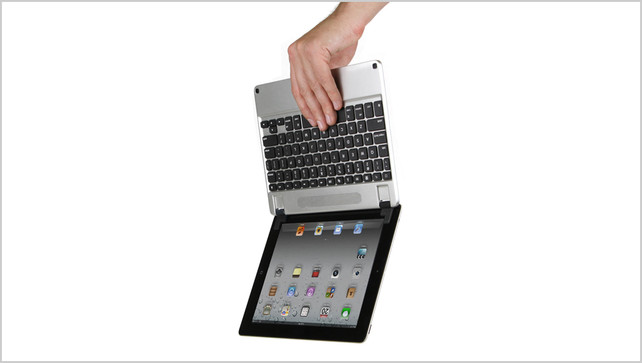 WITH $400,000 RAISED ALREADY, YET ANOTHER PRODUCT CREATES A COMPANY OVERNIGHT.