Deepfakes for all: Uncensored AI art model prompts ethics questions
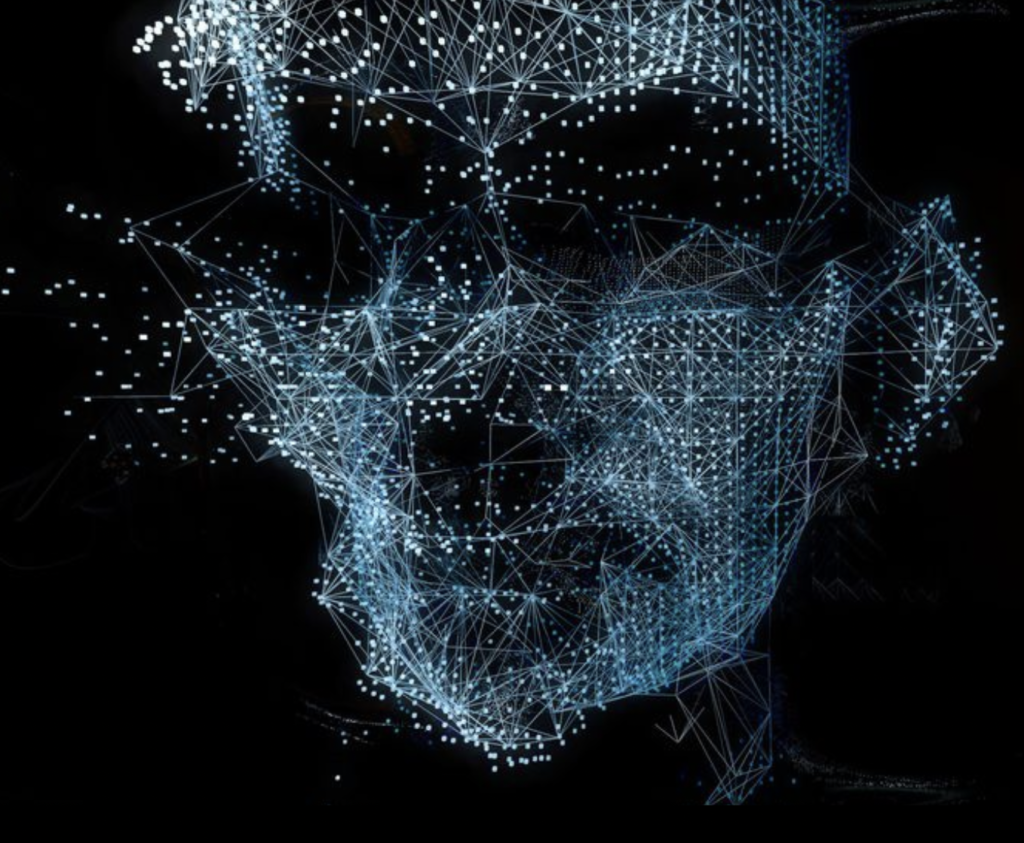
A new open source AI image generator capable of producing realistic pictures from any text prompt has seen stunningly swift uptake in its first week. Stability AI’s Stable Diffusion, high fidelity but capable of being run on off-the-shelf consumer hardware, is now in use by art generator services like Artbreeder, Pixelz.ai and more. But the model’s unfiltered nature means not all the use has been completely above board. ...
Emad Mostaque, the CEO of Stability AI, called it “unfortunate” that the model leaked on 4chan and stressed that the company was working with “leading ethicists and technologies” on safety and other mechanisms around responsible release. One of these mechanisms is an adjustable AI tool, Safety Classifier, included in the overall Stable Diffusion software package that attempts to detect and block offensive or undesirable images.
However, Safety Classifier — while on by default — can be disabled. ...
Montreal AI Ethics Institute principal researcher Abhishek Gupta shares this view. “We really need to think about the lifecycle of the AI system which includes post-deployment use and monitoring, and think about how we can envision controls that can minimize harms even in worst-case scenarios,” he said. ...
But Stable Diffusion represents a newer generation of systems that can create incredibly — if not perfectly — convincing fake images with minimal work by the user. It’s also easy to install, requiring no more than a few setup files and a graphics card costing several hundred dollars on the high end. Work is underway on even more efficient versions of the system that can run on an M1 MacBook. ...
See the full story here: https://techcrunch.com/2022/08/24/deepfakes-for-all-uncensored-ai-art-model-prompts-ethics-questions/?fbclid=IwAR3-K_Ug3CMHyVizuSD9vPayIQNrd9jF4O4ECEAUM542t8WHPniCB9MKVpc

Hour One Debuts Synthetic Video News With Virtual Human News Anchors
... Virtual human startup Hour One has introduced a new tool to create synthetic news reports with AI anchors from a text script. The News feature generates three-dimensional videos with the setting and virtual news anchor chosen from a catalog or created by the user from their own recordings. ...
“News and media companies around the world understand the value of creating more video content, but filming live news anchors in a studio environment requires a lot of time and investment,” Hour One Head of Strategy Natalie Monbiot said. “For news stations and media publishers, access to virtual anchors and studios removes these obstacles, and unlocks endless new possibilities, including localization of news content and 24-hour newscasting.”
See the full story here: https://voicebot.ai/2022/08/24/hour-one-debuts-synthetic-video-news-with-virtual-human-news-anchors/
We Need to Talk About How Good A.I. Is Getting
We’ve seen a few efforts to close the gap — Stanford’s Institute for Human-Centered Artificial Intelligence recently held a three-day “A.I. boot camp” for congressional staff members, for example — but we need more politicians and regulators to take an interest in the technology. (And I don’t mean that they need to start stoking fears of an A.I. apocalypse, Andrew Yang-style. Even reading a book like Brian Christian’s “The Alignment Problem” or understanding a few basic details about how a model like GPT-3 works would represent enormous progress.)
Otherwise, we could end up with a repeat of what happened with social media companies after the 2016 election — a collision of Silicon Valley power and Washington ignorance, which resulted in nothing but gridlock and testy hearings.
Second, big tech companies investing billions in A.I. development — the Googles, Metas and OpenAIs of the world — need to do a better job of explaining what they’re working on, without sugarcoating or soft-pedaling the risks. Right now, many of the biggest A.I. models are developed behind closed doors, using private data sets and tested only by internal teams. When information about them is made public, it’s often either watered down by corporate P.R. or buried in inscrutable scientific papers.
Downplaying A.I. risks to avoid backlash may be a smart short-term strategy, but tech companies won’t survive long term if they’re seen as having a hidden A.I. agenda that’s at odds with the public interest. And if these companies won’t open up voluntarily, A.I. engineers should go around their bosses and talk directly to policymakers and journalists themselves.
Third, the news media needs to do a better job of explaining A.I. progress to nonexperts. Too often, journalists — and I admit I’ve been a guilty party here — rely on outdated sci-fi shorthand to translate what’s happening in A.I. to a general audience. We sometimes compare large language models to Skynet and HAL 9000, and flatten promising machine learning breakthroughs to panicky “The robots are coming!” headlines that we think will resonate with readers. Occasionally, we betray our ignorance by illustrating articles about software-based A.I. models with photos of hardware-based factory robots — an error that is as inexplicable as slapping a photo of a BMW on a story about bicycles.
See the full story here: https://www.nytimes.com/2022/08/24/technology/ai-technology-progress.html
The outgoing White House AI director explains the policy challenges ahead
... As its first director, Parker oversaw the creation of a national AI R&D strategic plan, a national AI research institute, and an AI portal to help researchers apply for funding. and conducted research in ways to measure and evaluate AI.
She is now returning to her role in academia as the director of AI initiatives at the University of Tennessee, Knoxville. ...
The National AI Initiative covers so much territory: R&D, governance aspects of the use of AI, education and workforce training, international collaboration, and the use of AI within the federal government. ...
One area of clear commonality is understanding AI implications and the need for regulation through the lens of risk. Taking a sector-based approach of evaluating risk is something that we at a high level agree on. The National Institute of Standards and Technology (NIST) is making important contributions in this space, in the development of the AI risk management framework. ...
See the full story here; https://www.technologyreview.com/2022/08/23/1058412/white-house-ai-director-challenges/

Capitol Records drops ‘offensive’ AI rapper FN Meka after outcry over racial stereotyping
A major record label has dropped an AI rapper and offered its “deepest apologies to the Black community”, after the virtual creation was criticised for perpetuating racist stereotypes by using the N-word in a song and being portrayed being beaten by a police officer.
FN Meka, an AI rapper given the appearance of a Black male cyborg, was created in 2019 by Anthony Martini and Brandon Le, the cofounders of Factory New, which billed itself as a “first of its kind, next-generation music company, specialising in virtual beings.”
FN Meka’s songs are performed by a human – an anonymous Black man, according to Martini – but the music and lyrics are generated by an AI that analyses popular music.
Capitol Records announced it had signed FN Meka just 10 days ago, billing the rapper as “the world’s first AR [augmented reality] artist to sign with a major label”. ...
FN Meka has more than 500,000 monthly Spotify subscribers and more than 1bn views on its TikTok account, where Factory New sells NFTs and posts computer-generated videos of FN Meka’s lifestyle, including Bugatti jets, helicopters and a Rolls Royce custom-fit with a Hibachi grill. Its Instagram account, which has more than 220,000 followers, has been made private.
Hours before Capitol’s statement, Industry Blackout, a Black activist group fighting for equity in the music business, released a statement addressed to Capitol calling FN Meka “offensive” and “a direct insult to the Black community and our culture. An amalgamation of gross stereotypes, appropriative mannerisms that derive from Black artists, complete with slurs infused in lyrics.” ...
See the full story here: https://www.theguardian.com/music/2022/aug/24/major-record-label-drops-offensive-ai-rapper-after-outcry-over-racial-stereotyping?fbclid=IwAR04jyEELv56oSRVREgY092OZ1sWbwFPjQHVoypKyjjV2QiGjQaMPn83B7U

Can an AI-led Danish party usher in an age of algorithmic politics?
...
Launched in May, Det Syntetiske Parti (The Synthetic Party), which aims to be “the last new party in Denmark”, is breaking ground by deriving its policies entirely using AI.
Designed and programmed by the artistic collective Computer Lars in partnership with the tech nonprofit MindFuture Foundation, the algorithmic party hopes to stand in the country’s next general election in June 2023, with the intention of targeting the 20 percent of Danes that did not vote in the previous 2019 election. ...
The public can interact with the party’s AI on the messaging platform Discord via chatbots, where people can meet the figurehead Leader Lars, the party secretary Computer Lars, and the chatbot incarnation of all the party’s members. ...
See the full story here: https://www.trtworld.com/magazine/can-an-ai-led-danish-party-usher-in-an-age-of-algorithmic-politics-60008

An AI transforms Disney villains into flesh and blood people and Lady Tremaine is so real it’s scary
... With the Disney villains as protagonists, the artist Hidreley Diao has used Artificial Intelligence to transform them into flesh and blood people and show what they would look like in real life. Below we show you the result and, for you to compare, an image of its animation counterpart. Warning: Lady Tremainethe stepmother of CinderellaIt’s so real it’s scary. ...
See the full story here: https://www.khabarnonstop.com/an-ai-transforms-disney-villains-into-flesh-and-blood-people-and-lady-tremaine-is-so-real-its-scary/

De Beers weaves Miao embroidery into jewellery
International diamond jeweller De Beers has decided to revive one of China’s intangible cultural heritages by launching a program dedicated to Miao embroidery in Guizhou, a landlocked province in Southwestern China, the birthplace of this artistic tradition and the ethnic minority Miao who are masters of this woven handiwork which involves unique and complex stitches.
With a mission to combine the oriental craftsmanship with contemporary fashion that the brand is synonymous with, De Beers is inviting China’s famed Miao embroidery master Liu Zhenghua together with 30 female embroiderers from local villages to co-create a butterfly-themed jewellery pouch. While the butterfly has been De Beers’ signature design, the insect is also regarded as sacred by the locals, therefore, creating a strong link between the brand and the local culture.
In the meantime, the initiative also sheds a light on the issue of women’s rights in rural regions, which hasn’t received as much attention compared to China’s developed cities. By having women embroiderers at the centre of this long-term program, De Beers also brings training opportunities to local young women to help them modernise the traditional technique. Also, the brand will directly place orders with them, creating a stable source of income for participants and allowing them to be more financially independent while continuing their family responsibility. ...
To further spur consumer interest, De Beers is also introducing an interactive experience event of Miao embroidery, where the public can cut their teeth on this cultural heritage by making a tailored bag with customised letters whilst following the guidance from experienced embroidered. ...
See the full story here: https://daoinsights.com/news/de-beers-weaves-miao-embroidery-into-jewellery/

How digital people could improve access to healthcare / Soul Machines and Auckland Bioengineering institute (ABI) get $4M grant
Researchers at the Auckland Bioengineering institute (ABI) have received over $4 million in MBIE funding to investigate how ‘digital people’ could be used in healthcare, by monitoring people’s health and providing support in the management of their conditions.
ABI researchers are recipients of MBIE’s new Catalyst Strategic with Soul Machines fund, set up in in 2021 for internationally connected research projects to explore the potential of AI in healthcare. …
Professor Merryn Tawhai, deputy director of the ABI, will use the funding to lead an international consortium to explore how Soul Machines’ digital people could be used to support the management of Type 2 diabetes and cardiovascular disease (CVD). ...
See the full story here: https://www.nzdoctor.co.nz/article/undoctored/how-digital-people-could-improve-access-healthcare?fbclid=IwAR1iqMTTU5d1bzXDzHVeohZ3dlCqqqeiCTrTyFMxsTofvHpBg05xighUPTU
Ford High-Resolution Headlights Provide a New Kind of Augmented Reality
Ford’s new augmented reality high-resolution headlight technology is demonstrating its ability to project information for drivers directly onto the road ahead. The lights can show symbols for highway signs and driving conditions without drawing the driver’s eyes from the road.
The system can show information about changes in weather, such as falling snow, slippery conditions, and ice on the road. Connecting the lights to the navigation system would let them project arrows for turns onto the road surface. And when squeezing through a narrow gap, as when parking, the lights could project an image of the car’s width, indicating whether or not it will fit through. ...
Ford isn’t discussing the specific technology employed, but Chinese researchers published their study of this technology [High-Resolution Pixel LED Headlamps: Functional Requirement Analysis and Research Progress] in the Multidisciplinary Digital Publishing Institute journal and concluded that micro-LED technology is the best choice for high-resolution pixel headlamps. ...
The legality of having cars’ lights do this is something to be sorted out with government regulators while Ford continues to develop the technology, so for now it is only a prototype system in testing. ...
See the full story here: https://www.designnews.com/automotive-engineering/ford-high-resolution-headlights-provide-new-kind-augmented-reality

Pages
- About Philip Lelyveld
- Mark and Addie Lelyveld Biographies
- Presentations and articles
- Trustworthy AI – A Market-Driven approach
- Tufts Alumni Bio