Van Eyck Was A Precursor Of Augmented Reality
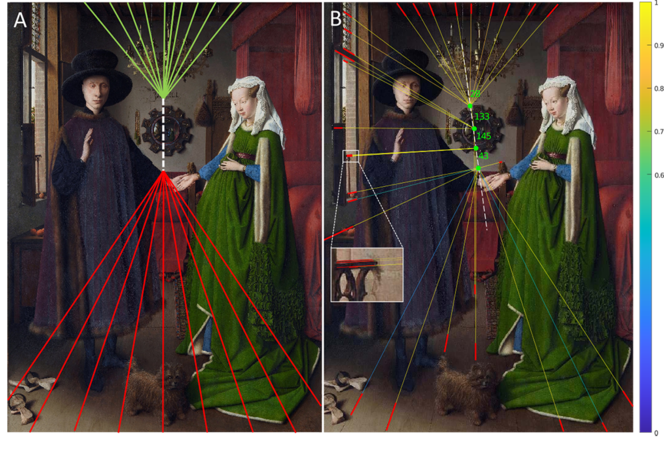
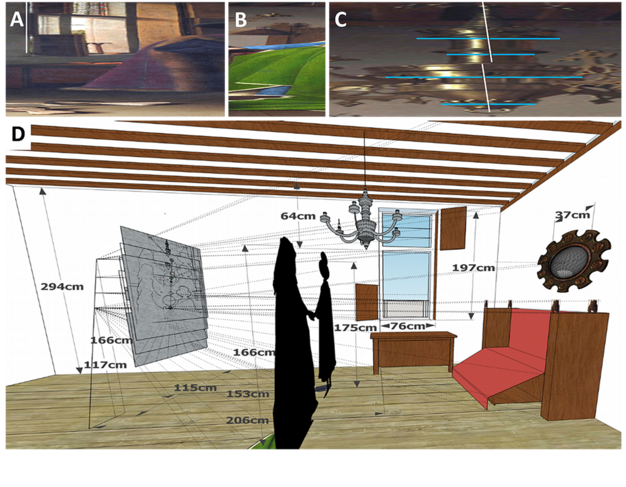
Using digital technology, a researcher has unravelled the secrets of the use of perspective by the Flemish painter Jan Van Eyck, a technique previously believed to be specific to the Italian Renaissance artists.
The history of lines is anything but linear. The importance of proportions and depth in artistic representation has fluctuated widely from one century and culture to the next. During the Renaissance, the geometric precision of perspective became an essential feature of painting and fresco work, not to mention sculpture and architecture.
While Brunelleschi was already using a wooden panel with an eyehole by about 1420, Van Eyck nonetheless remains one of the pioneers in the use of optical systems to depict perspective and take human stereoscopic vision into account. This approach can be considered a forerunner of augmented reality, and would be simplified 70 years later by Leonardo da Vinci.
See the full story here: https://scienceblog.com/525184/van-eyck-was-a-precursor-of-augmented-reality/
Newhouse Professor Wins Facebook Reality Labs Research Grant to Study Impacts of Augmented and Virtual Reality
Makana Chock, David J. Levidow Professor of Communications in the Newhouse School, has been awarded a $75,000 research grant from Facebook Reality Labs to explore the impacts of augmented and virtual reality (AR/VR) on bystander privacy.
Chock will work with Se Jung Kim, a doctoral student in Newhouse’s mass communications program. They will focus on two countries with disparate cultural norms—the U.S. and South Korea—to examine the impact of cultural differences on privacy concerns and ultimately inform the design of AR/VR technology.
Chock developed her proposal, “AR/VR recording: Cultural differences in perceptions of bystander privacy,” in response to Facebook’s request for proposals on responsible innovation in AR/VR: “Consider Everyone.”
Chock says the “ubiquitous and covert nature” of AR/VR recording poses the threat of serious privacy violations as bystanders are captured without permission. At the same time, different societies often have different concepts of bystander privacy, and those differences are reflected in the way image recording is regulated.
The three-part study will begin with an online survey conducted in both countries to assess potential differences in bystanders’ privacy perceptions and concerns and identify additional concerns of targeted immigrant groups. The team will then conduct a series of in-depth interviews with a subset of survey participants to provide additional qualitative data about cultural differences in bystander privacy concerns. Finally, they will facilitate a series of focus groups comprised of U.S. and South Korean users in a multi-user social VR environment in order to determine if the cultural differences seen in “real world” public spaces also apply in social VR spaces.
See the full story here: https://news.syr.edu/blog/2021/09/03/newhouse-professor-wins-facebook-reality-labs-research-grant-to-study-impacts-of-augmented-and-virtual-reality/

What’s it like to really live in a virtual world?
There are, in fact, several metaverses out there. These are virtual worlds such as Decentraland, Cryptovoxels, and The Sandbox. Accessed through VR (virtual reality) headsets, these platforms are made not only for exploring but for spending money and making a living.
Rowell discovered the NFT (non-fungible tokens or unique digital artefacts verified by blockchain technology) art scene early this year and was soon putting her work on platforms like Open Sea, which she says is great for beginners, and Foundation, which is invite-only.
Rowell submitted a piece of art to imnotArt, a gallery that also has space in both Cryptovoxels and real-world Chicago.
Visit
This writer paid a visit to the imnotArt gallery on Cryptovoxels. It’s located in the popular Vibes neighbourhood on the corner of Popular Avenue and Ideal Close. A good place to invest? Only if you have a bulging digital wallet. No 3 Truthful Gardens, for example, is prime real estate but it will set you back 5.5 Ethereum or $18,336.62.
“To understand the economics of the metaverse you need to begin by understanding why people would want to spend their time in these virtual spaces. The Celts didn’t arrive in Ireland and think ‘we’d love an art gallery here’. It’s better to figure out what would make people enjoy being in these worlds and build an economy around that,” reflects Dowling.
But one needs to be cautious of a money-first mindset: ...
“If you visit the Decentraland homepage the first thing you see is messaging all about their currency, Manna. But when you visit, say, the tourist website for Barbados the selling point isn’t ‘come for our currency, the Barbados dollar’.”
Metaverse
He suspects that Gen Z will be more willing to spend time and money in the metaverse given that they are growing up with Minecraft, Roblox and Fortnite, all of which The Sandbox has elements. Investing in these items and experiences in these worlds might seem like a frippery to many adults but not to a younger generation.
“Our vision is that we deliver the types of spaces needed for specific tasks rather than pushing people towards spending all their time in VR spaces,” he adds.
“I don’t think we should get caught up too much in the concept of the metaverse and what it means for the future. We’re more concerned with what value our tech can offer right now, today,” says Cosgrove.
See the full story here: https://www.irishtimes.com/business/innovation/what-s-it-like-to-really-live-in-a-virtual-world-1.4660958

China-based online entertainment platform iQIYI launches new ‘QIYU 3’ Virtual Reality headset
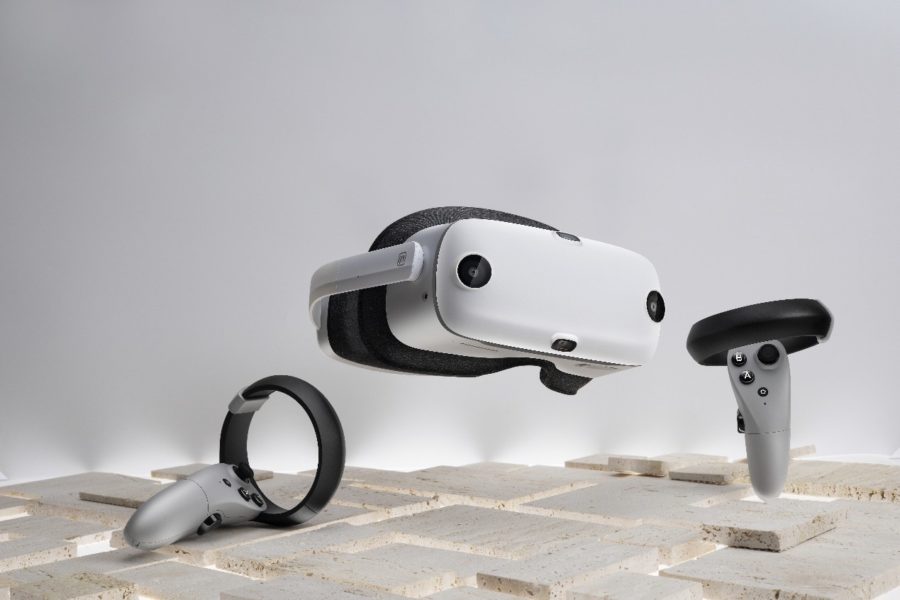
September 1, 2021 – iQIYI Inc., a China-based online entertainment and video service, has recently launched its latest flagship virtual reality (VR) headset, the ‘QIYU 3’, as the company looks to further strengthen its premium VR digital entertainment ecosystem. The launch marks yet another China-based company potentially looking to take a bite out of Facebook’s share of the standalone VR device market, with even the name of iQIYI’s new headset (QIYU 3 or 奇遇3 in Chinese, which translates to ‘Adventure 3’) striking a resemblance to Oculus’ Quest brand.
As the company’s flagship VR product, features of the QIYU 3 headset include:
- A dual-screen design that consists of two RGB LCDs, giving the device a resolution of 4320*2160 and true 4K+ level in native resolution. The refresh rate can also reach 90Hz with the support of two built-in display driver chips, according to iQIYI;
- Powered by Qualcomm Technologies’ Snapdragon XR2 platform, which is designed exclusively for VR / AR;
- 8GB DDR4 RAM;
- A proprietary Q-Light-powered 6DoF interactive system that enables head-hand 6DoF spatial positioning and a millimeter-level positioning precision for controllers;
- QIYU 3 is supported by continuous pupillary distance adjustment technology with an indication precision of up to 1mm. The pupillary distance can be adjusted from 58mm to 72mm;
- QIYU 3 also features iQUT future cinema, which the company states “provides users with a 2,000-inch screen, equivalent to the size of 20 80-inch TVs.”
- QIYU 3 will also be able to offer a wide range of the latest films and TV shows by tapping into iQIYI’s massive content library. Furthermore, iQIYI will provide QIYU 3 with 4K 3D movies and 8K videos at 60fps with a bitrate of 13M, according to the company.
See the full story here: https://www.auganix.org/china-based-online-entertainment-platform-iqiyi-launches-new-qiyu-3-virtual-reality-headset/
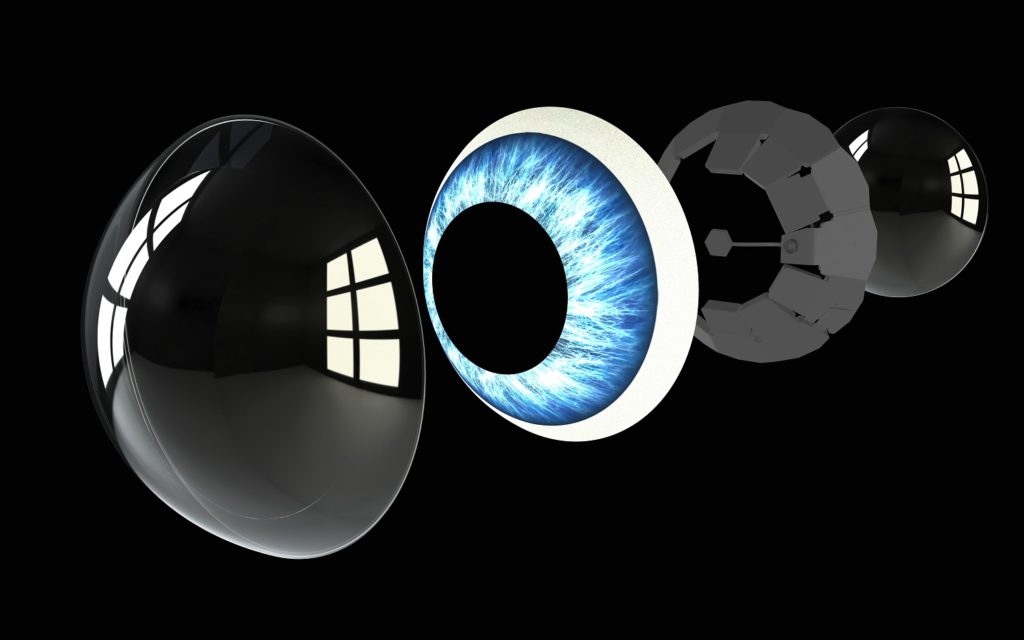
Vision of the Future: AR Smart Contact Lenses
Smart contact lenses with built-in augmented reality (AR) displays to provide information without the need for other screens could soon become a feature of daily life. US-based Mojo Vision, whose aim is to offer “invisible computing,” has teamed up with Japanese contact lens manufacturer Menicon Co to develop the product.
“At the heart of Mojo Lens is the smallest and densest dynamic display ever built. Our 14KPPI display is a microLED array about the size of a grain of sand that projects text, photos and video content onto your retina.”
“When you take your pair of lenses out at night, you’ll recharge and clean them in their case overnight, so they are ready to wear the next day. We believe that someday all eyewear will become smart and that the people that choose contact lenses today will want the benefits of a product like Mojo Lens.”
See the full story here: https://emag.medicalexpo.com/vision-of-the-future-ar-smart-contact-lenses/
How Netflix Creates Immersive Experiences with Exceptional Design and UX
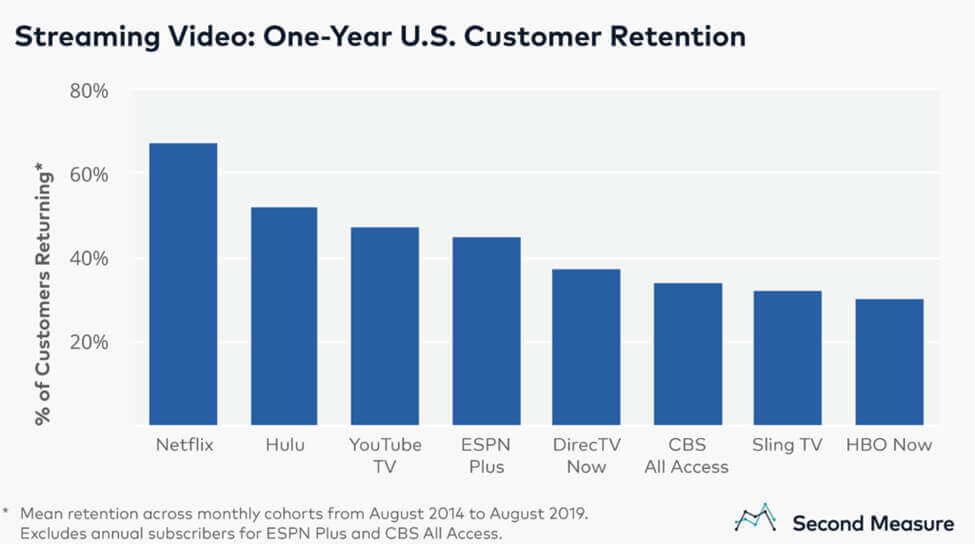
[PhilNote: this is really about how Netflix attracts and retains customers, not "immersive experiences."]
Netflix UX lesson #1
- Simplify the user interface. Make your CTA prominent and clear and state your most important benefits next to relevant images.
- Specify the number of steps to complete the signup to increase expectancy and boost motivation. Implement user testing to ensure your UX has minimal barriers to conversion.
- Overcome obstacles by addressing common questions in an FAQ section before your final CTA.
- Emphasize personalization wherever you can. Netflix has taken pains to tailor the experience to users’ expectations.
Netflix UX lesson #2:
- Another nod to simplification—streamline your onboarding and login screen. Include only the most necessary buttons and copy, and where possible, exchange text for universally understood symbols.
- Give your users the ability to customize their experience. You may already have opportunities to do this in your settings, such as setting language or notification preferences.
- Let users know about this or walk them through the preference set up in the onboarding stage.
Netflix UX lesson #3:
- Give your high-value content pride of place. Feature it prominently, give it a badge, promote it with video, or find another way to help it stand out among the crowd.
- Continually add value to your platform. Netflix does this through its original content.
- If possible, tailor your high-value content to each segment. Netflix does this through the algorithm’s selection of content and their thumbnail design.
Netflix UX lesson #4:
- Give users the opportunity to choose. Let them personalize their experience and give them as many options as you can allow.
- Make cancellation painless, but offer opportunities for users to change their minds. Netflix does this by offering to keep in touch via email (and then showing users what they’re missing regularly throughout the month).
- Remind users to return to the platform repeatedly through an engaging email marketing strategy.
See the full story here: https://www.business2community.com/customer-experience/how-netflix-creates-immersive-experiences-with-exceptional-design-and-ux-02428429https://www.business2community.com/customer-experience/how-netflix-creates-immersive-experiences-with-exceptional-design-and-ux-02428429