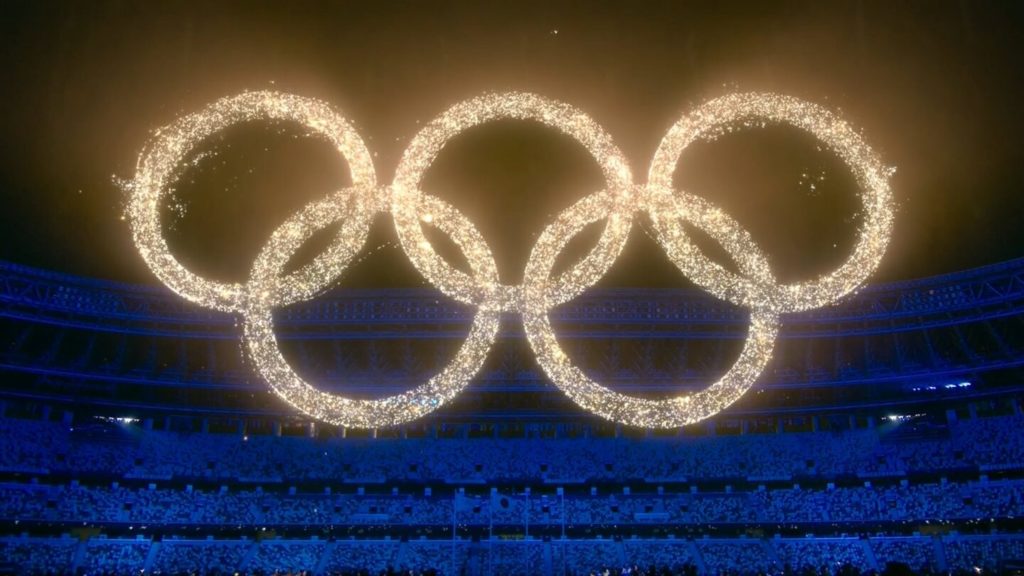
Watch this cool special effects sequence wrap up the 2020 Games
The light show was designed by Moment Factory, a Montreal-based entertainment agency that through its work aims to “inspire a sense of collective wonder and connection.” We think it achieved just that with its remarkable digital light show that helped to close the Games.
But what will have looked to many like an astonishing sequence powered by LED-laden drones was in fact the result of made-for-TV special effects that no one in the stadium will have seen.
How Advances In Technology And Science Could Impact The Dating And Matchmaking Industry
PhilNote: The author of this article is the Co-Founder at Ambiance Matchmaking, an exclusive matchmaking service for conscious leaders, creatives, and entrepreneurs.
Block Chain: The biggest issue ... a lack of trust and transparency. ...Companies such as Hicky and Viola have both implemented blockchain to increase transparency by requiring users to validate their identity via face and voice recognition, which is then fully encrypted and stored into the blockchain.
Artificial Intelligence: ...Coffee Meets Bagel, Hinge, Tinder and Badoo all now use AI and machine learning in their apps to find relevant matches for users.
Taking it one step further, AI could also act as a digital matchmaker, arranging meetings in real life and providing feedback and coaching. ...
Augmented Reality: ...Flirtar’s vision is allowing people to connect in real life almost instantly by literally putting matches right in front of them using geolocation.
DNA Matchmaking: ...DNA Romance is a dating app that matches partners based on the information hidden in their DNA to forecast romantic chemistry. ... Based on the “sweaty T-shirt experiment” conducted by Claus Wedekind in 1995, Dr. Tim Sexton built the app on the basis that partners with opposite immune system genes (MHC genes) have much higher romantic chemistry than those with similar genes. ...
See the full story here: https://www.forbes.com/sites/forbesbusinesscouncil/2021/08/04/how-advances-in-technology-and-science-could-impact-the-dating-and-matchmaking-industry/?sh=2fe538bd66ac

Why is ‘metaverse’ the hottest tech buzzword? Apple has something to do with it
“Metaverse” may sound like some hackneyed term from a William Gibson novel, but Facebook Inc. Chief Executive Mark Zuckerberg sounded serious last week about its potential to transform the company he co-founded — and the internet itself.
“I wanted to discuss this now so that you can see the future that we’re working toward and how our major initiatives across the company are going to map to that,” Zuckerberg said on a conference call with analysts following Facebook’s FB, 1.98% second-quarter earnings report. “What is the metaverse? It’s a virtual environment where you can be present with people in digital spaces. You can kind of think of this as an embodied internet that you’re inside of rather than just looking at.”
See the full story here: https://www.marketwatch.com/story/why-is-metaverse-the-hottest-tech-buzzword-apple-has-something-to-do-with-it-11627998184
Artificial Intelligence, Machine Learning, and Automation Transforming the Film Industry
PhilNote: nothing new here, but a nice one-paragraph summary of a number of entertainment tech trends.
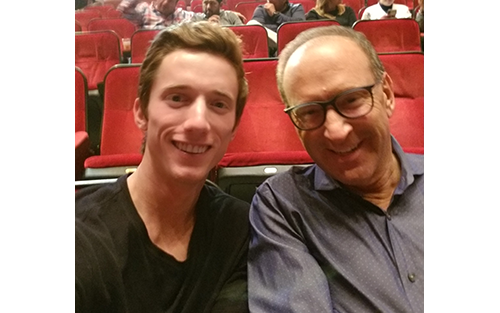
Recently the Manufacturing Media Consortium and its founder, TR Cutler (TRC) set up a new division examining the role of manufacturing and technology in the entertainment industry. .... What follows is an interview of Jacob Kyle Young (JKY) actor and founder of Post Modern Entertainment.
See the full story here: https://www.automation.com/en-us/articles/august-2021/artificial-intelligence-machine-learning-film
ganit goldstein creates an interactive embroidery piece with VR applications
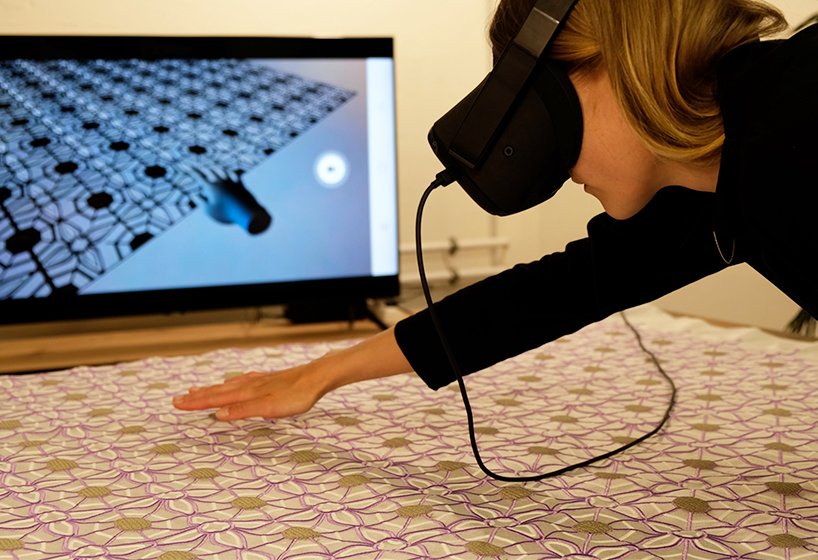
...what if textiles could respond to body movements? this is the question that led ganit goldstein to create an interactive embroidery piece as part of her MA at the royal college of art in london. titled ‘rhythm of matter’, the project explores the role of physical materials in a digital space through a flower-patterned fabric with embedded electronics and virtual reality applications.
...goldstein worked closely with the R&D team of saurer to produce the large piece of fabric. they worked together with special yarns that can change the fabric properties with a light system integrated into the design. the result consists of a flower pattern that reacts to hand movements using a virtual reality application designed on top of the physical fabric.
...the VR application reads the movement of the physical hands when the hands approaching the physical fabric, where the change appears with an interactive movement of the virtual fabrics. this system, a cycle of day and night, communicates movement, color and sound through physical hand gestures and a light system....
See the full story here: https://www.designboom.com/design/ganit-goldstein-interactive-embroidery-piece-with-vr-applications-08-01-2021/
DeepMind’s Vibrant New Virtual World Trains Flexible AI With Endless Play
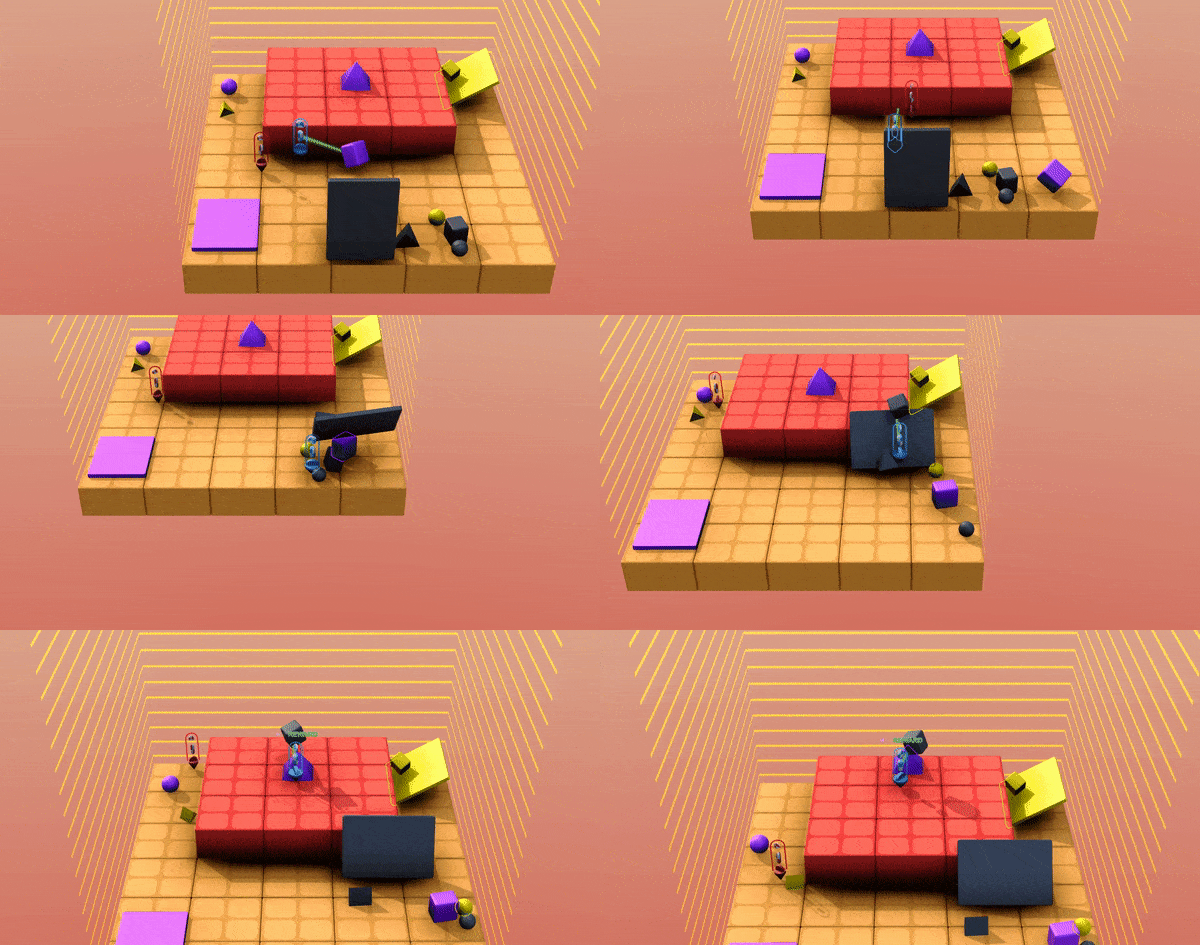
...The game-managing AI keeps an eye on what the game-playing algorithms are learning and automatically generates new worlds, games, and tasks to continuously confront them with new experiences.
The team said some veteran algorithms faced 3.4 million unique tasks while playing around 700,000 games in 4,000 XLand worlds. But most notably, they developed a general skillset not related to any one game, but useful in all of them.
...By presenting deep reinforcement learning algorithms with an open-ended, always-shifting world to learn from, DeepMind says their algorithms are beginning to demonstrate “zero-shot” learning at new never-before-seen tasks. That is, they don’t need retraining to perform novel tasks at a decent level—sight-unseen.
...But if XLand is a proof-of-concept, their findings may suggest increasingly sophisticated worlds will give birth to increasingly sophisticated algorithms.
...Some believe deep learning will hit a wall and have to pair up with other approaches, like symbolic AI. But three of the field’s pioneers—Geoffrey Hinton, Yoshua Bengio, and Yann LeCun—recently co-wrote a paperarguing the opposite. They acknowledge deep learning’s shortcomings, including its lack of flexibility and inefficiency, but believe it will overcome its challenges without resorting to other disciplines.
See the full story here: https://singularityhub.com/2021/08/01/deepminds-vibrant-new-virtual-world-trains-flexible-ai-with-endless-play
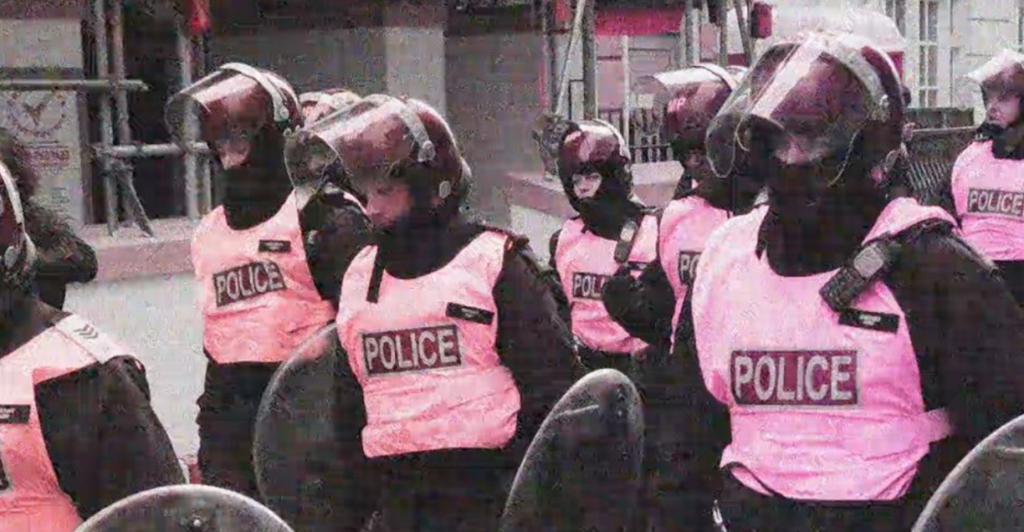
England riots 10 years on: arrested protestors find a voice in augmented reality work
A new augmented reality piece by the Ghanaian-UK artist and filmmaker Baff Akoto will revisit the England riots of 2011—one of Britain’s most unsettling and violent recent historical events—which erupted across several English cities following the shooting of Mark Duggan in Tottenham, North London.
The shooting of 29-year-old Duggan on 4 August a decade ago, and the subsequent handling of the incident by police, sparked some of the biggest riots in modern English history, resulting in five deaths and more than 3,000 arrests over the course of five days (6-10 August).
Akoto’s AR work, Up:Rise (from 6 August), can be accessed by scanning QR codes on posters placed in London, Liverpool, Bristol, Manchester and Birmingham. The piece includes archive footage and testimonies from those who participated in the riots nationwide including people who were arrested and convicted.
See the full story here: https://www.theartnewspaper.com/news/artist-brings-uk-riots-of-2011-to-city-streets-today-via-an-augmented-reality-work