OPENAI’S GPT-3 IS POWERING THESE INDUSTRIES WITH UNIQUE ABILITIES
1. Viable – helps companies understand insights from customer feedback by presenting it in easy-to-understand summaries. With GPT-3 echnology, viable can identify themes, emotions, and sentiments from surveys, help in reviewing live chat logs, and more. It pulls insights from all these modes of customer-company communications and gives precise information in seconds....
2. Fable Studio – is creating a new style of interactive stories using GPT-3 which can give life to virtual beings....
3. Algolia – utilizes OpenAI’s GPT-3 in its search functionality. ...
See the full story here: https://www.analyticsinsight.net/openais-gpt-3-is-powering-these-industries-with-unique-abilities/

FTC warns it could crack down on biased AI
If those tools are applied in areas like housing or employment, falsely advertised as unbiased, or trained on data that is gathered deceptively, the agency says it could intervene.
“In a rush to embrace new technology, be careful not to overpromise what your algorithm can deliver,” writes FTC attorney Elisa Jillson — particularly when promising decisions that don’t reflect racial or gender bias. “The result may be deception, discrimination — and an FTC law enforcement action.”
As Protocol points out, FTC chair Rebecca Slaughter recently called algorithm-based bias “an economic justice issue.”
See the full story here: https://sportsgrindentertainment.com/ftc-warns-it-could-crack-down-on-biased-ai/

Ikea bets on ‘Apple Glass’ by investing in augmented reality apps
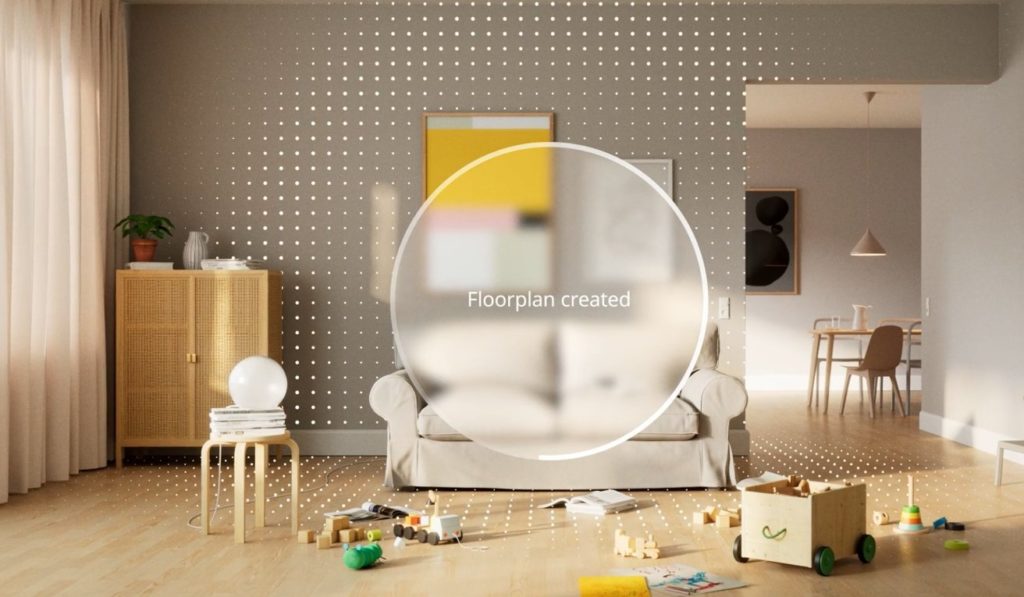
The app, currently available only in TestFlight, relies on the LiDAR sensors in an iPhone. It allows users to capture complete 3D room plans — including windows and doors — and enables you to place select Ikea items into your room. Not only can you add furniture, but you can change your wall colors, place decorations and art, and export your design to share with others.
This is undoubtedly a boon to companies like Ikea, as it was discovered that customers who use AR tools were 11 times more likely to make a purchase. On average, customers who purchase items after viewing them in AR are 22% less likely to return them.
See the full story here: https://appleinsider.com/articles/21/04/20/ikea-bets-on-apple-glass-by-investing-in-augmented-reality-apps
Insights: Gen Z’s Social Media, Game Habits Pushing Entertainment In New Directions
...watching TV shows and movies at home is just not that big a deal. In fact, among a list of entertainment options, film and TV watching was fourth for Gen Z. For other generations, it’s always been No. 1.
“It’s the first generation where we’ve seen this,” Westcott said. “Gaming is much more important than other forms of entertainment. When they’re on social media, they’re using it as a gateway to music and gaming. They’re using those social-media platforms as access to other content.”
...it’s important to remember what’s helping drive the popularity of many games, from first-person shooters to casual mobile titles: their social components.
“The vast majority are connected with their friends while playing games,” Westcott said. “They use gaming as a social connection while playing.”
More problematically, half of Gen Z respondents said they get news and current events through their social media channels. Given the challenges social media companies have faced with disinformation, gaslighting, and similar issues, that’s not…useful.
In yet another warning sign for social media companies, a strong majority think the platforms are responsible for what’s published on their platforms.
See the full story here: https://www.tubefilter.com/2021/04/20/insights-gen-zs-social-media-game-habits-pushing-entertainment-in-new-directions/

Amazon is opening a hair salon to test new tech and products
Amazon's latest venture into physical stores comes with a twist, and maybe a blow dry. The retail giant on Tuesday announced the launch of Amazon Salon.
The experimental salon is located in London and will offer hair care and styling services. It'll also serve as a place for Amazon to trial new technologies like "augmented reality (AR) hair consultations to point-and-learn technology," the company said in a blog post. There will be Fire tabletsat each styling station, and customers will be able to buy products from Amazon's UK store by scanning a QR code on the shelf.
See the full story here: https://www.cnet.com/news/amazon-is-opening-a-hair-salon-to-test-new-tech-and-products/

California Institute of the Arts Creates Virtual Reality Game TO REMEMBER A FRIEND
The new game To Remember a Friend will have a series of live streams of the beta playthroughs on Twitch as part of the CalArts School of Theater, Beyond the Stage festival on May 6th at 5 & 8 pm, May 7th at 6 pm, and May 8th at 2 & 5 pm (all times PST). The streams will be hosted by the creative team with special guest players, and the audience will have the opportunity to help choose the narrative direction through chat.
Game Description: The year is 2040. A young woman named Jane Watson has been murdered in her apartment. No one knows what happened... but you plan to find out. You play as Whitlock, a rookie detective undergoing an experimental consciousness transfer procedure in exchange with the comatose sole witness to the murder. In this virtual reality narrative adventure game, you must work to uncover what really happened to Jane Watson, but just remember that memory is fluid, and those around you all have an agenda...
"We wanted to create a VR experience around False Memory where the user would have to navigate a narrative space that was always changing. They would have to question the reality they've been placed into and try to uncover which memories are real to uncover the truth." - Kathleen Fox (Creative Director)
After the beta release, the game will be available for download from the team directly at www.torememberafriend.com and other platforms.
See the full story here: https://www.broadwayworld.com/los-angeles/article/California-Institute-of-the-Arts-Creates-Virtual-Reality-Game-TO-REMEMBER-A-FRIEND-20210419

THIS ANIMAL-SHAPED AUTONOMOUS RACING BIKE OF THE FUTURE FEARS NO G-FORCES!
[PhilNote: the modern equivalent of slot car racing with no human involvement at all.]
The Armadillo by Christian Grajewski is a motorcycle concept that’s envisioned in the Moto Ai X Championship – sometime in the future – for high octane racing to thrill the online fans or crowds at the autodromes. The idea’s uniqueness culminated from the fact that the designer imagines the bike to be the character with an arm, legs, body, and head. To be fair, it indeed looks like some creature, ready to wake from its slumber – boiling to chase down any prey on its two wheels. Since the ride is fully autonomous, the seating position has been done away with – giving it a definitive creature-like shape.
See the full story here: https://www.yankodesign.com/2021/04/18/this-animal-shaped-autonomous-racing-bike-of-the-future-fears-no-g-forces/

The ‘metaverse’ bet: crypto-rich investors snap up virtual real estate
"The current Cambrian explosion of NFTs that you see is all about acquisition – people want to buy up NFTs, gobble as many of them as they can," said Anand Venkateswaran, aka Twobadour, who runs the Metapurse fund with Metakovan.
"But it's just the tip of the iceberg. The real explosion will happen when they're able to ... experience these NFTs as they were intended. If it's a plot of virtual land, you ought to move around in it, have an immersive experience in it."
In what will be one of the biggest names to join the party, videogame maker Atari (ATAR.PA) told Reuters it planned to launch its own blockchain-based virtual world and would soon announce details.
A PLOT OF VIRTUAL LAND: $500K+
The NFT frenzy has heightened interest in blockchain-based online environments. The best known are Decentraland, Cryptovoxels, Somnium Space and The Sandbox, where virtual real estate prices are hitting new highs.
Decentraland has seen more than $50 million in total sales, including land, avatars, usernames and wearables like virtual outfits. A patch of land measuring 41,216 virtual square metres sold for $572,000 on April 11, which the platform said was a record.
...
"I expect that there'll be a crypto winter in the next couple of months, the whole NFT boom will explode and then all the value will absolutely collapse," said Ben Nolan, founder of the virtual world Cryptovoxels.
...
See the full story here: https://www.reuters.com/business/metaverse-bet-crypto-rich-investors-snap-up-virtual-real-estate-2021-04-19/