Restored Ghent Altarpiece returns to Saint Bavo’s Cathedral with a temperature-controlled case and AR headsets
One of the masterpieces of European Medieval art, the Adoration of the Mystic Lamb altarpiece by the brothers Jan and Hubert Van Eyck, is being unveiled today in its new home in the Cathedral of Saint Bavo in Ghent, for which it was created in 1432.
All the interpretation has been moved to a new visitor centre in the crypt, where visitors will learn of its creation, the complex allegorical scenes and its later history, through augmented reality headsets, before moving up into the main cathedral to see the real thing.
See the full story here: https://www.theartnewspaper.com/news/ghent-altarpiece-unveiled

Gimmick watch: Augmented reality ice cream has arrived
Chin Chin, Soho’s cutting-edge ice-cream scientists, ...
Chin Chin’s special Easter pudding is a (checks notes) Augmented Reality Sundae. Let's start with the food: it’s a spring/summer bunny sundae. The dessert is fully vegan, featuring a rabbit made of milk jelly, perched on a coconut-and-rose ice cream, all plonked on a bed of edible chocolate-and-matcha clay. The non-food bit: once you’ve procured one of these bad boys, whip out your phone, slap on the special filter and behold! Computer-generated flowers sprout from the plate like magic. As the poet Jay Kay almost once said: this dessert... it’s virtual insanity!
See the full story here: https://www.timeout.com/london/news/gimmick-watch-augmented-reality-ice-cream-has-arrived-032521

Research says 29% of US adults used Augmented Reality
29% of consumers have used mobile augmented reality (AR). More importantly, they are using it often with 59% of mobile AR users engaging at least weekly and 78% at least monthly. This is a telling indication of mobile AR’s potential, given that active use is a key mobile app success factor. It is also tied closely to revenue metrics.
The top mobile AR app category today is gaming, followed by social.
“Gaming and social are typically where new consumer technologies germinate,” said Mike Boland, Chief Analyst of ARtillery Intelligence. “But history tells us that sustained value will develop around utilities that solve everyday problems. This is boosted during a pandemic when eCommerce has inflected and AR can add a valuable dimension to remote shopping.”
See the full story here: https://www.enterprisetimes.co.uk/2021/03/26/research-says-29-of-us-adults-used-augmented-reality/

Part of Downtown L.A. is turning into a projection art playground for one night only
For one night only, LUMINEX: Dialogues of Light will turn five blocks of Downtown L.A. into a walkable exhibition of digital artwork. Curated by the NOW Art Foundation, the April 10 event features site-specific works from seven artists, including Refik Anadol, who designed the Walt Disney Concert Hall’s centennial celebration projections, and the Art Department, the anonymous collective behind the short-lived Griffith Park Teahouse and 2019’s surreal dandelion factory.
see the full story here, including locations https://www.timeout.com/los-angeles/news/part-of-downtown-l-a-is-turning-into-a-projection-art-playground-for-one-night-only-032521

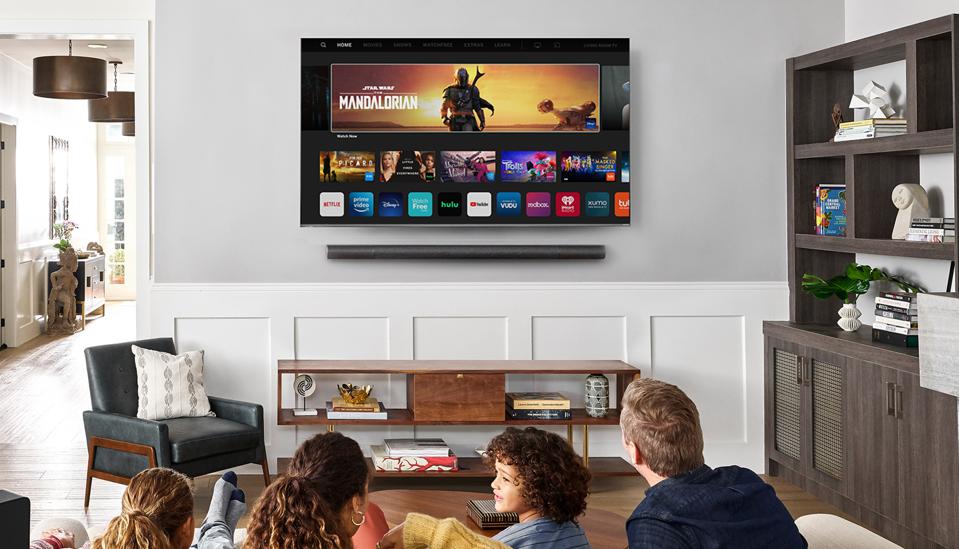
Connected-TV Maker VIZIO Goes Public Leveraging Hot Streaming-Video Sector
U.S.-based Connected TV maker VIZIO went public today on the New York Stock Exchange, touting its combined hardware and software offering as a way to leverage the red-hot streaming-video space.
The Irvine, Calif.-based company offered 12.3 million shares at $21 each, according to a statement.
“VIZIO has developed a complete ecosystem: We make both TVs and the software that runs those TVs, plus soundbars that connect the audio experiences,” Wang said. ‘Owning and operating multiple sides of the TV business allows us to move faster, experiment more, monetize differently, and develop a deeper relationship directly with VIZIO owners.”
The company is betting on the growing popularity of connected TVs, which enjoyed particularly strong uptake during the worst of the pandemic as cord-cutting from traditional pay-TV bundles increased and locked-down families began looking for new entertainment options beyond the traditional pay-TV bundle. A raft of high-profile new streaming services also has benefitted from the shift, especially on connected TVs.
See the full story here: https://www.forbes.com/sites/dbloom/2021/03/25/connected-tv-maker-vizio-goes-public-leveraging-hot-streaming-video-sector/?sh=1441acb452c2&fbclid=IwAR0vooD8nmttU0dxizOHwnEuBbd3FBL1gFsMymk8nx0DaUV8qwcwOWJfKr4
When MMA Meets The Virtual World
Virtual Fighting Championship
The concept is exciting: using compatible VR gear, such as HTC Vive Pro, Oculus Rift or Windows Mixed Reality, you can learn your command buttons – jab, cross, hook, uppercut, overhand and backfist. Then you select your character, practice setup and combos, and choose a game mode from VFC Academy, PVP and single player, and start to work up a sweat while playing.
The game aims to use a minimal button approach to virtual reality design, and all actions are triggered by your physical motions. The developers claim that every real-world fighting and martial art move and attack is recognized in the game. Every movement and offensive technique is measured according to its velocity, distance of travel, area of impact, combinational effect to arrive at precise damage done, providing the most sophisticated physical data to the player.
Reviews have been mixed thus far on Steam among those that have taken part in demo modes, but the development team insists the final version will be far more polished and exciting.
MMA Virtual Betting
Fight fans can take part in exciting MMA virtual betting by visiting Unikrn, which initially found fame as a pioneer in the esports sector. The site includes a virtual MMA section, which allows you to enjoy live betting on simulated fights as they unfold.
Streaming in Virtual Reality
The idea has spread across the MMA scene, and ONE Championship started releasing select bouts in VR during the coronavirus lockdown last year. The MMA promotion has now signed a global partnership deal with Facebook to ensure its 25 million-strong social media community can enjoy VR streaming on a regular basis. Rebel FC is also getting involved.
UFC Fan Tokens
UFC is getting involved in the blockchain revolution via a partnership with Chiliz, a blockchain-based fintech firm. The agreement allows you to vote on surveys and polls, and receive UFC fan tokens as a reward. You can collect these tokens, buy them, trade them, or hunt for them in an augmented reality experience similar to Pokemon GO.
The tokens can then be exchanged for “once-in-a-lifetime experiences”, such as getting closer to the biggest UFC stars.
See the full story here: https://mymmanews.com/when-mma-meets-the-virtual-world/

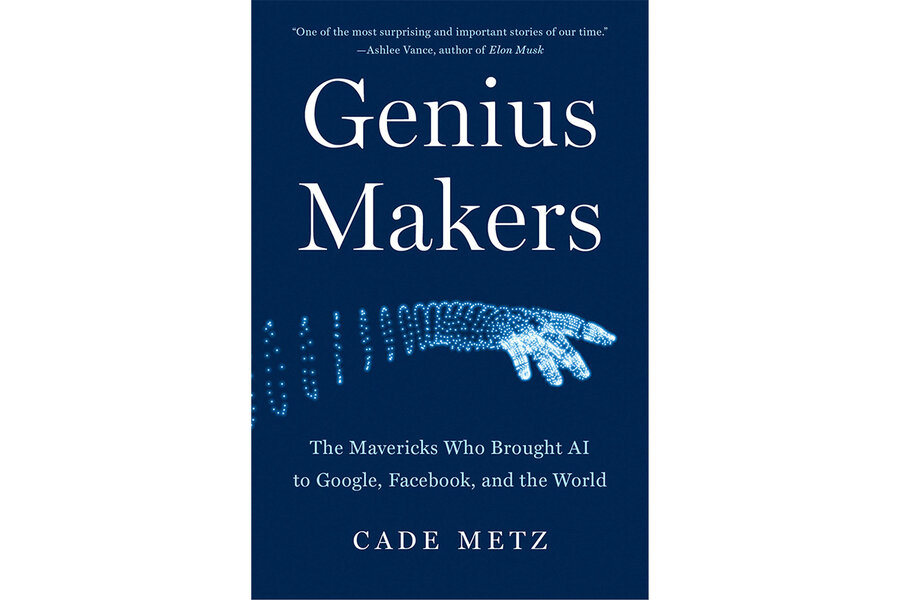
Machines that learn: The origin story of artificial intelligence
Metz shares the origins of AI in 1958, when a Cornell professor successfully taught a computer to learn. The machine was as wide as a kitchen refrigerator, and was fed cards marked with small squares on either the left or right sides. After reading about 50 of them, it began to correctly identify which cards were which – thanks to programming based on the human brain.
Overhyped expectations exceeded the technology of the era, and the study of so-called neural networks capable of replicating human intelligence remained largely fallow in subsequent decades. Even so, by 1991 the technology had advanced to a point that a machine could learn to identify connections on a family tree or drive a Chevy from Pittsburgh to Erie, Pennsylvania.
As interest in AI waxed and waned, early progress in the field came from just a handful of scientists. Metz focuses on Geoffrey Hinton, a British-born Canadian scientist who sold his startup to Google and subsequently won the Turing Award – the Nobel Prize of computing.
The potential is immense. So are the risks, and Metz touches on some of the pitfalls that have already emerged.
For the most part, though, Metz focuses less on the ethics of AI – and its potentially troubling future applications – than he does on how researchers got to the present moment.
See the full story here: https://www.csmonitor.com/Books/Book-Reviews/2021/0323/Machines-that-learn-The-origin-story-of-artificial-intelligence
Niantic announces partnership with Nintendo on new augmented reality ‘Pikmin’ title
Nearly five years after the launch of Pokémon Go, Niantic announcedMonday that they are partnering with Nintendo to co-develop a new title based on the company’s Pikmin franchise.
“The app will include gameplay activities to encourage walking and make walking more delightful,” a press release from Niantic reads.
Pokémon Go has fallen out of headlines but has continued to deliver massive sums to the San Francisco gaming company, eclipsing $1 billion in revenue in 2020. In recent years, Nintendo has sought to build out their presence on mobile gaming platforms with a number of titles playing on some of their biggest franchises, but none of them have reached Pokémon Go’s level of success.
See the full story here: https://techcrunch.com/2021/03/22/niantic-announces-partnership-with-nintendo-on-new-augmented-reality-pikmin-title/