CHRIS SPENCER TALKS ABOUT USING COMEDY AND VIRTUAL-REALITY IN TIMES OF CRISIS
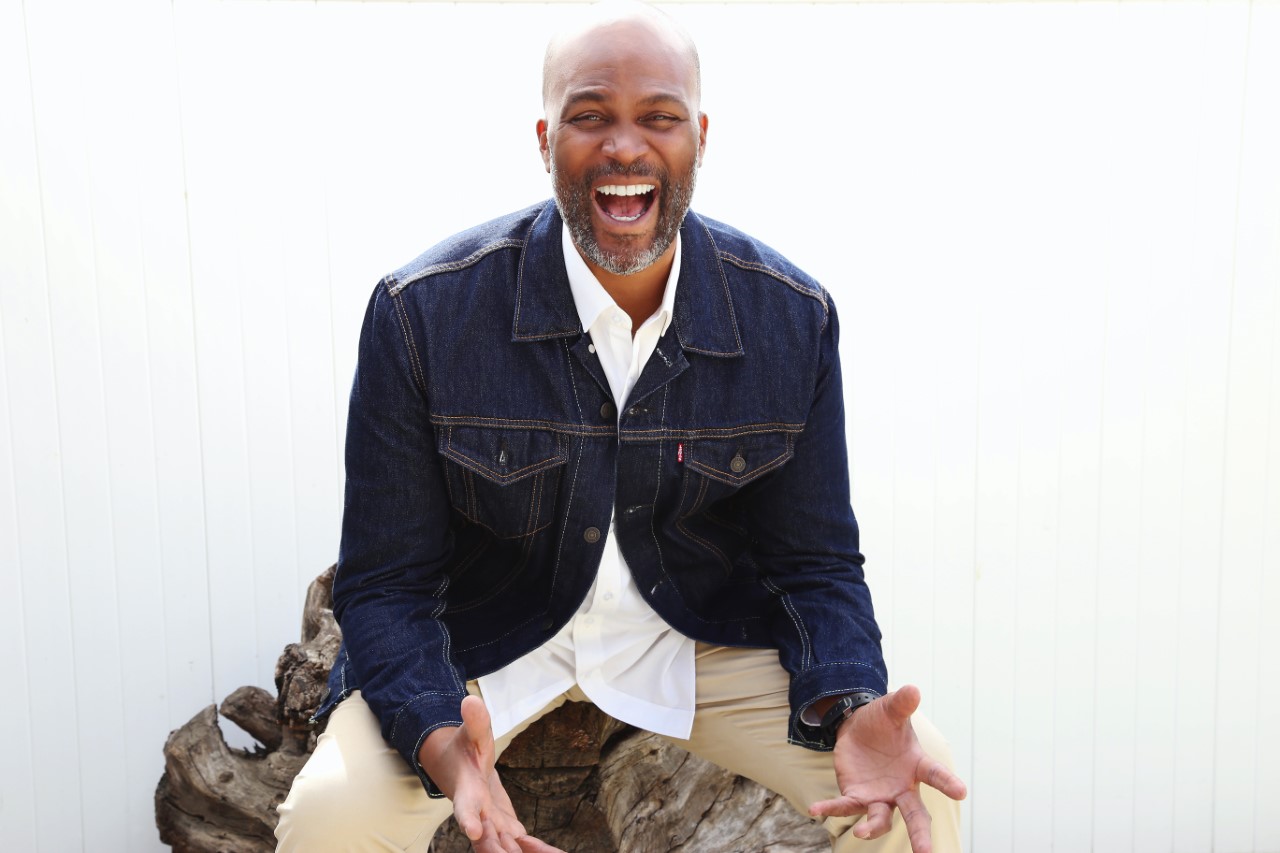 To give the world much-needed comic relief in this time of crisis, D.L. Hughley, one of the original Kings of Comedy, tapped three fellow comedians for a new comedy series with an innovative twist. Hugely, Chris Spencer, Ryan Davis, and Bo Dacious teamed up with Ceek to produce a virtual reality series called “The Laugh Experience,” which marks the first-ever virtual reality comedy special.
During an interview on BLACK ENTERPRISE’s The New Norm With Selena Hill, Spencer opened up about “The Laugh Experience,” his life in quarantine, and new-age comedy. “It’s some futuristic stuff. I’m very excited to be a part of it,” he said.
In addition, Spencer talked about why many people are just now getting hip to VR platforms like CEEK, which launched in 2015 by Mary Spio, a rocket scientist born in Ghana.
See the full story here: https://www.blackenterprise.com/chris-spencer-talks-about-using-comedy-and-virtual-reality-in-times-of-crisis/
TikTok is coming after Snapchat with a new augmented reality ad format
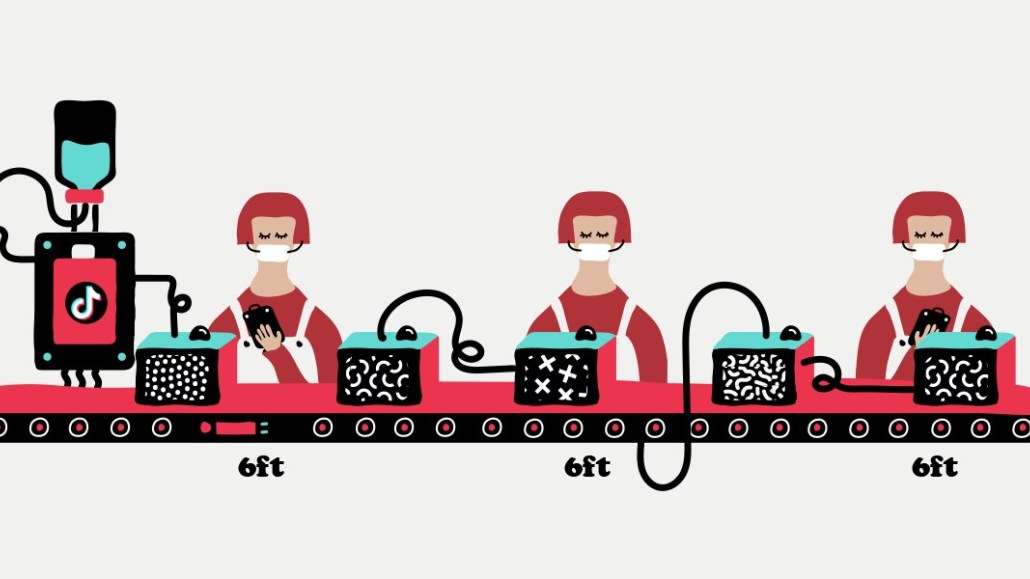 TikTok is readying the launch of a new augmented reality ad format as the popular video app continues to rapidly ramp up its ad product development to bring itself in line with the likes of Instagram and Snapchat.
The “AR brand effect” ad will allow TikTok users to add interactive visual effects from advertisers to their TikTok videos that interact with the physical environment around them, according to people familiar with the plans. A car could zoom the length of the kitchen table, or the creator could interact with an advertiser’s mascot as it bounces around the room, for example.
The ads will be clickable and feature music that plays as the user shoots their video. The exact name of the ad product may change when it launches. The global rollout is due at some point in the third quarter of this year with unknown pricing.
...TikTok has been quickly following the advertising roadmap laid out before it by other social platforms. Meanwhile its user growth is soaring. The TikTok app and its Chinese version, Douyin, topped 2 billion downloads on the Apple App Store and Google Play Store in March, according to measurement firm SensorTower.
See the full story here: https://digiday.com/media/tiktok-is-coming-after-snapchat-with-a-new-augmented-reality-ad-format/
VIOSO Brings World’s Largest Dome Projection to the 2020 Super Bowl
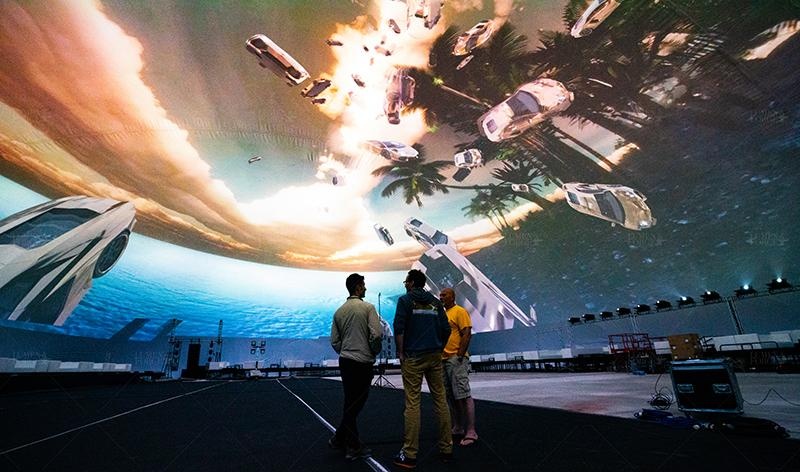 System design consultant Lumen & Forge was chosen by Broadwell Airdomes USA, on behalf of show organiser AG Entertainment, to help create an unforgettable experience for the over 60,000 people in attendance.
With the assistance of German projection specialist VIOSO, Lumen & Forge installed an immense dome measuring 68.58m wide by 53m high (225ft by 175ft), making it the largest projection ever made inside this kind of structure.
While many industry standard projection domes have a hemispherical shape, the one implemented for this project boasted a uniquely oval, or ‘pill’, shape. Created by Broadwell Airdomes USA, the colossal size of structure was decided due to the use of the dome, which would host concerts and parties within: The pill shape would also allow for a higher capacity of visitors, while creating optimal placement for the 24 Digital Projection M-Vision Laser 18K projectors installed inside, in order to project the content on the inside without any interference or view restriction.
After designing the dome in a 3D space, the teams were able to develop content that was placed into VR for testing. Using this method, the 16x9 content was modified to perfectly fit the shape of the dome, altering the calibrations to fit the lens of the camera.
Singaporean women are using virtual reality to fight back against sexual harassment
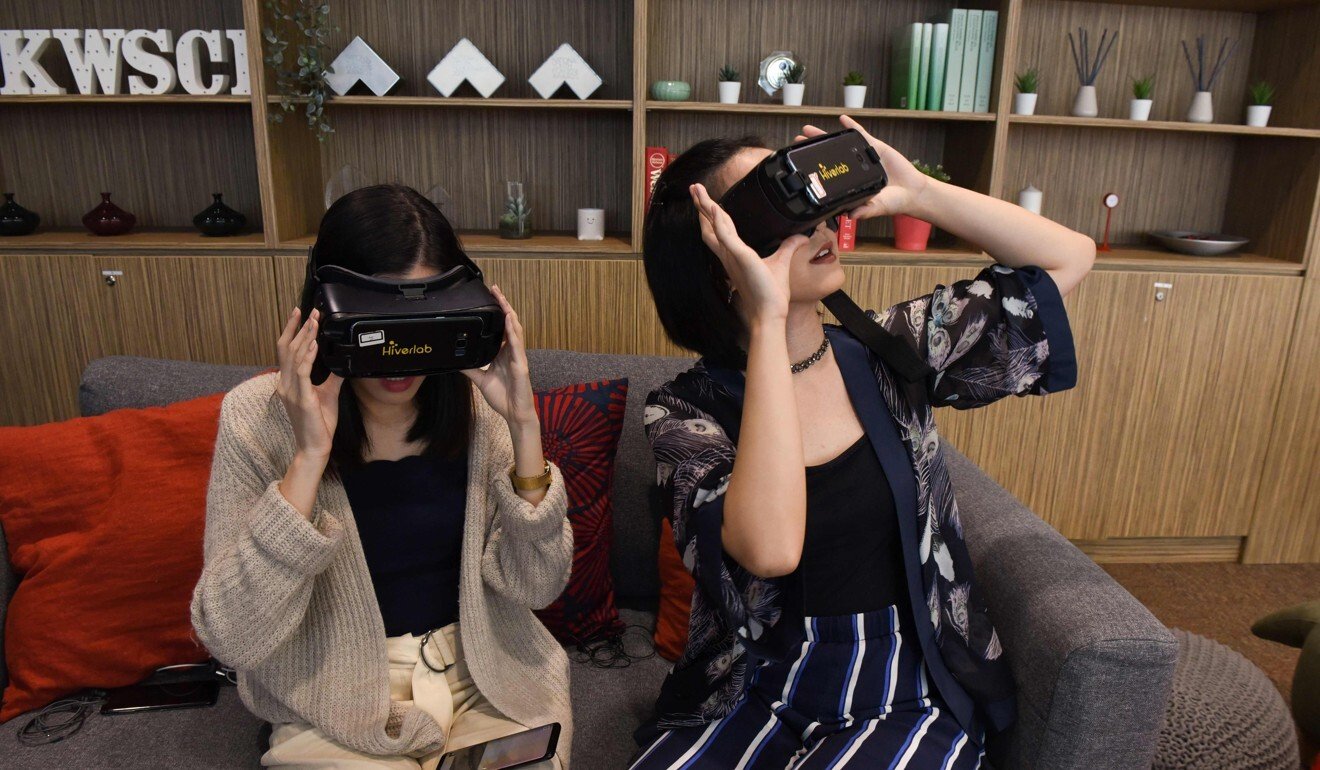 Girl, Talk was created by four women – Danelia Chim, Seow Yun Rong, Heather Seet and Dawn Kwan – at Nanyang Technological University (NTU), who felt that while #MeToo had raised awareness there was little to “equip survivors” on how best to respond in different situations.
“Even if you’re caught in a physically vulnerable situation, being able to evaluate your situation and make choices about how you behave and react can be incredibly empowering,” the group say on their website.
The VR simulation features five scenarios based on real experiences. They enlisted male friends to act out the scenarios and filmed them.
It was partly inspired by the work of psychologists at a US university, who developed a VR programme to tackle sexual harassment after finding that young women had a stronger reaction to virtual scenarios than conventional role play.
See the full story here: https://www.scmp.com/news/asia/southeast-asia/article/3083210/singaporean-women-are-using-virtual-reality-fight-back
How China’s Tech Giants Charged Ahead When Coronavirus Shut Down Cinemas
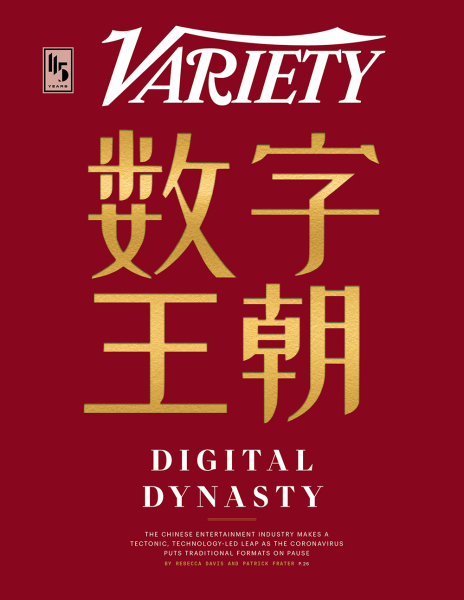 And then, in the three days between Jan. 25-27, a whopping 600 million people tuned into digital giant Bytedance’s various video platforms to watch, for free, the only new blockbuster they’d have access to for months: director Xu Zheng’s family comedy “Lost in Russia.” For the first time, people across the country were watching a big, theatrical tentpole premiere on their phones.
It was an unexpected cap to the most tumultuous week in Chinese box office history. Expectations of record-breaking numbers vanished as the virus spread, leading to mass refunds and cinema closures. It also offered a peek at how the coronavirus is catalyzing a tectonic shift in Chinese entertainment away from conventional models and toward digital ones.
very year, it celebrates “Ali Day” with huge, staff-wide festivities on the date of Taobao’s founding to honor the tenacity of employees who worked from home.
Despite coronavirus slowdowns, Alibaba last month unveiled a further $28 billion investment into cloud computing, while Tencent has just this year bought control of gamer Funcom and game streamer Huya, and taken a 10% stake in Universal Music. The tech stocks have seen a quick, V-shaped recovery, while those of traditional film players such as Huayi Brothers and China Film Group have languished.
One company poised to gain momentum from COVID-19 is “Lost in Russia” buyer Bytedance, the world’s largest unlisted tech unicorn, and the only company other than Apple to have more than 100 million subscribers both within and outside China. Though layoffs are the norm for many firms as the Chinese economy struggles to regain momentum, Bytedance is on a global hiring spree. It plans to add 40,000 more to its workforce this year, which would give it a staff equal to Alibaba’s and far above Tencent’s.
“Nearly all cinemas on Earth are closed right now, and we don’t know when they’ll reopen,” he says. “We needed revenue flow now — and BAT [Baidu, Alibaba and Tencent, China’s equivalent of the FAANGs] are hungry for content.”
“If it weren’t for the internet, the whole entertainment sector would have completely collapsed” amid prolonged physical shutdowns.
How Apple reinvented the cursor for iPad
 I spoke to Apple SVP Craig Federighi about its development and some of the choices by the teams at Apple that made it.
The iPad cursor takes on the shape of a small circle, a normalized version of the way that the screen’s touch sensors read the tip of your finger.
It was designed from the ground up as a touch-first experience.
The idea of variable cursor velocity is pushed further here too. When you’re close to an object on the screen, it changes its rate of travel to get where you want to go quicker, but it does it contextually, rather than linearly, the way that macOS or Windows does.
The cursor even disappears when you stop moving it, much as the pressure of your finger disappears when you remove it from the screen. And in some cases the cursor possesses the element itself, becoming the button and casting a light ethereal glow around it.
These are, in design parlance, affordances.
I went over my experiences with the Smart Keyboard Folio in my review of the new iPad Pro here, and the Magic Keyboard here, but suffice to say that the new design is incredible for heavy typists. And, of course, it brings along a world class trackpad for the ride.
A couple of truths to guide the process:
- The iPad is touch first.
- iPad is the most versatile computer that Apple makes.
“When we were first thinking about the cursor, we needed it to reflect the natural and easy experience of using your finger when high precision isn’t necessary, like when accessing an icon on the home screen, but it also needed to scale very naturally into high precision tasks like editing text,” says Federighi.
“So we came up with a circle that elegantly transforms to accomplish the task at hand. For example, it morphs to become the focus around a button, or to hop over to another button, or it morphs into something more precise when that makes sense, like the I-beam for text selection.“
The new iPad cursor is a product of what came before, but it’s blending, rather than layering, that makes it successful in practice. The blending of the product team’s learnings across Apple TV, Mac and iPad. The blending of touch, mouse and touchpad modalities. And, of course, the blending of a desire to make something new and creative and the constraint that it also had to feel familiar and useful right out of the box. It’s a speciality that Apple, when it is at its best, continues to hold central to its development philosophy.
See the full story here: https://techcrunch.com/2020/05/06/how-apple-reinvented-the-cursor-for-ipad/
Virtual Reality Concert In Helsinki Attracts Over 1 Million Spectators
 A virtual reality concert in Helsinki has attracted over one million spectators, as the coronavirus thwarted Finland’s usual May Day celebrations this year. Headlined by Finnish rap group JVG, the virtual gig saw a total of 12% of Finland’s population tune in, while almost 150,000 viewers went so far as to create virtual avatars for themselves.
...If nothing else, it clearly demonstrates how public demand for virtual reality experiences is growing, and may likely remain even after the coronavirus pandemic ends.
See the full story here: https://www.forbes.com/sites/simonchandler/2020/05/05/virtual-reality-concert-in-helsinki-attracts-over-1-million-spectators/#3c52ddaa1281
Players of China’s most popular game are training Tencent’s AI
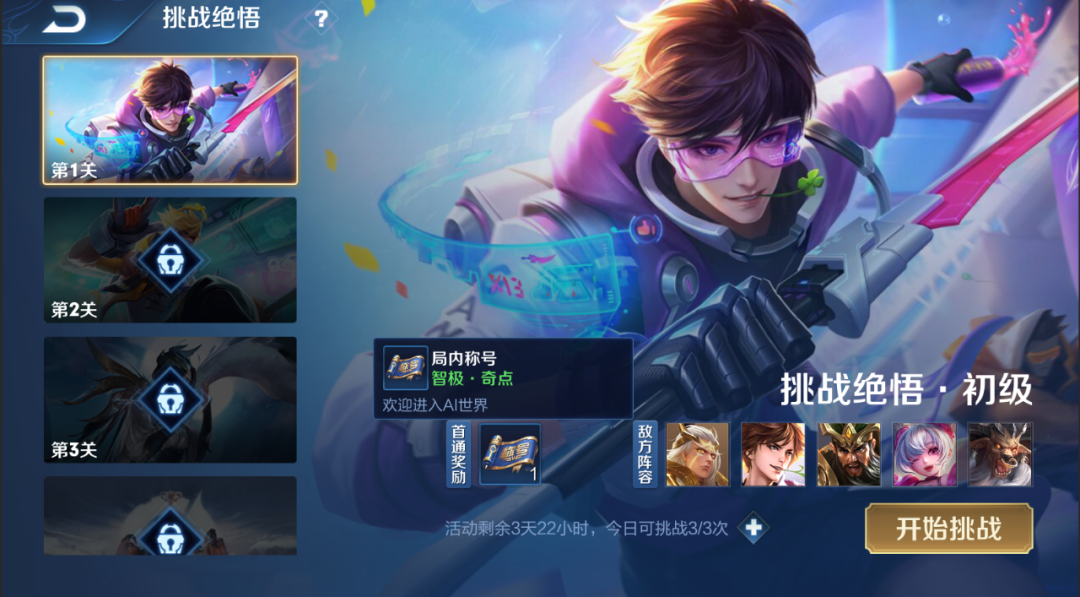
 Honor of Kings is pitting players against an AI program named after the Monkey King in the name of science
It’s been three years since Google’s AlphaGo ...
Honor of Kings is a multiplayer online battle arena (MOBA) mobile game inspired by League of Legends. The fantasy role playing game, known internationally as Arena of Valor, has 70 million daily active users. It also has an AI player called Wukong, known in Chinese as Jiewu, and gamers in China got a chance to test their abilities against it during the first four days of May.
Developed by the Tencent AI Lab, Wukong is an AI program seeking to use games to improve its learning capabilities and make them more human-like.
...Tencent, the world’s largest gaming company, believes that complex games can be a key step to achieving one of the ultimate AI goals: Artificial general intelligence (AGI).
See the full story here: https://www.abacusnews.com/games/coronavirus-game-hidden-political-messages-gets-blocked-china/article/3081764