Virtual Reality: OSU study shows how to reduce physical risk
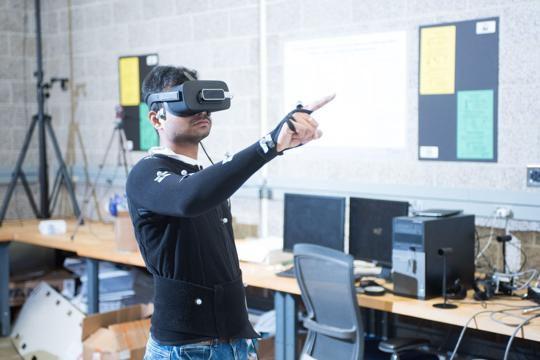 “There are no standards and guidelines for virtual and augmented reality interactions,” OSU’S College of Public Health and Human Sciences researcher Jay Kim said. “We wanted to evaluate the effects of the target distances, locations and sizes so we can better design these interfaces to reduce the risk for potential musculoskeletal injuries.”
Virtual reality users wear a headset and engage in full-body, three-dimensional movements – unlike conventional computer users, where a desk or the arms of a chair offer some level of support for the hands and arms.
Researchers repeated the tests with the visuals placed at eye level, 15 degrees above eye level, 15 degrees below eye level and 30 degrees below eye level.
Regardless of the angle, extending the arm straight out causes shoulder discomfort in as little as three minutes, Kim said. With prolonged use, as VR often requires, this may lead to major health problems like gorilla arm syndrome and rotator cuff injuries.
The goal of the study was to establish a baseline of optimal object placement and angles, so VR developers going forward can design games and programs that minimize user discomfort.
“Based on this study, we recommend that objects that are being interacted with more often should be closer to the body,” Kim said. “And objects should be located at eye level, rather than up and down.”
The study was published in Applied Ergonomics with Northern Illinois University co-authors Sai Akhil Penumudi, Veera Aneesh Kuppam and Jaejin Hwang.
See the full story here: https://www.thechronicleonline.com/news/virtual-reality-osu-study-shows-how-to-reduce-physical-risk/article_7eb242e2-3722-11ea-aadc-076b4a3b112d.html
CES: What Mattered to Hollywood
 SAG-AFTRA and AFL-CIO Address Deepfakes, De-Aging
Deepfakes, artificial intelligence, de-aging technology and their impact on actors and the workforce was discussed and debated at SAG-AFTRA and AFL-CIO’s 2nd annual Labor Innovation and Technology Summit, held on the opening day of CES.
“Our work is being dramatically changed by technology,” said SAG-AFTRA president Gabrielle Carteris in her opening remarks. “But of all the people talking about it, who is really looking out for the working people?”
Topics included the advantages and potential pitfalls of new technology. This included discussion of how an actor's likeness can be exploited from unauthorized Deepfakes (relatedly, last week Facebook revealed plans to prohibit Deepfakes on its services). Meanwhile, Duncan Crabtree-Ireland, SAG-AFTRA COO and general counsel, urged members to contact the union if they are going to be scanned for a motion picture to better understand their contractual rights.
DGA, ASC Back "Filmmaker Mode" TVs as Rollout Begins
A rollout of a “Filmmaker Mode” setting on a range of 2020 television models from most major set makers is slated to begin this spring, and the first supported TVs were previewed at CES. Meanwhile the DGA, the ASC, the International Cinematographers Guild and Martin Scorsese’s The Film Foundation all endorsed this setting as their preferred method of viewing in the home.
At CES, UHDA announced that Samsung, Philips/TP Vision and Kaleidescape have joined the effort and will offer Filmmaker Mode-enabled products this year. Additionally, LG, Panasonic and Vizio — the trio of set makers that previously expressed their intent to support Filmmaker Mode — revealed supported 2020 TV models.
Quibi Makes Its CES Debut, Previews Turnstyle Feature
The duo showed off a new feature called Turnstyle that allows users to move their phones between vertical and horizontal orientation without interrupting the viewing experience. Behind the scenes, Turnstyle requires filmmakers to deliver two versions of their project — one oriented for a vertical screen, the other for a horizontal screen — that are then “stitched” together. The result: No matter what way viewers hold their phones, they are seeing the framing and edit that the filmmaker intended.
"NextGen TV" Launches With New Mobile, 4K Capabilities
The Internet Protocol-based NextGen TV system — developed by the Advanced Television Systems Committee and also known as ATSC 3.0 — is a voluntary upgrade from the country’s free, over-the-air HDTV broadcasting system (meaning this doesn’t affect cable, satellite or streaming services).
The new system includes the ability to receive an over-the-air TV signal on a cellphone or tablet without using a cellular service or a data plan. That will include TV series, news, live sports — everything you currently get on your television.
National Association of Broadcasters president and CEO Gordon Smith reported that he anticipates a rollout of NextGen TV services in roughly 60 U.S. markets in 2020.
See the full story here: https://www.hollywoodreporter.com/behind-screen/ces-what-mattered-hollywood-1268752
Who owns your visual identity in Augmented Reality?
 Recognition
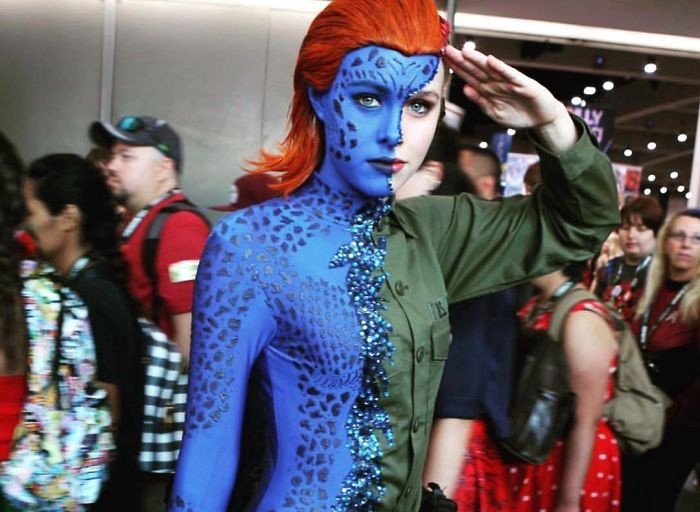
If everyone sees a different version of everyone else, how do you socialize when you are in the same space? You see one person, they see another.
Complements
You can’t compliment a person on their look or clothing choices, because you are the one making a choice. You could always say “I like the way I made you look today :)”, but that would be creepy…
See the full story here: https://medium.com/swlh/who-owns-your-visual-identity-in-augmented-reality-e6d82c739b7b
How clothes will REALLY look on you

 Brand uses real women from size 6-22 to model its dresses - and claims ASOS' 'see my fit' augmented reality tool gives 'false expectations'
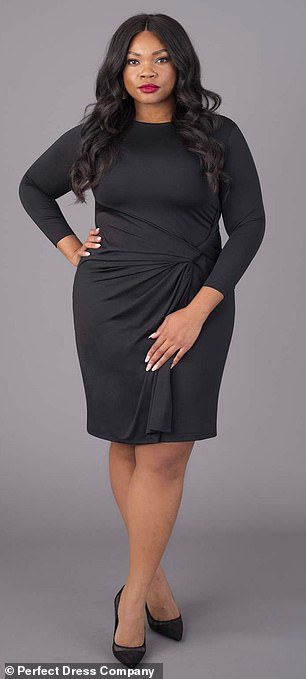

- Perfect Dress Company allows shoppers to see each item on different models
- Women across eight different sizes - from a UK 8 to a UK 22 - model each dress
- The approach gives shoppers a realistic idea of how each style will look on them
See the full story here: https://www.dailymail.co.uk/femail/article-7899403/British-brand-reveals-clothes-REALLY-look-different-dress-sizes.html
The future of augmented reality might be in your ear ( next gen hearing aids)
Hearing aids for all
Hearing aids have long been flesh-colored devices worn in the whiskery ears of old people. Not cool. The Olive Smart Ear is small and Apple-white. You set it up via an app-driven hearing test to tune the device to the quirks of your personal hearing. After that, the device essentially EQs the world to your ears while also offering variable amplification taken from the traditional hearing aid playbook.

Olive
The Nuheara IQBuds2 Max also tune themselves to your ears using an app-based version of the NAL-NL2 test procedure used by audiologists to improve speech intelligibility and smooth out differences in loudness around you. Directional microphones and an algorithm called SINC (Speech in Noise Control) also help create what Nuheara describes as listening "focus", not unlike the way your eyes can focus on some objects to the exclusion of others.
See the full story here: https://www.cnet.com/news/if-you-think-your-airpods-pro-are-smart-wait-till-you-see-these-hearables/
Bigscreen Announces New Lineup Of Space-Themed Movies Heading To VR Theaters
 It was back in December when social VR platform Bigscreen announced a groundbreaking new partnership with Paramount Pictures that would bring blockbuster 2D and 3D films to their VR theater experience. Within the first month, thousands of users jumped into VR to watch flicks like Indiana Jones and the Kingdom of the Crystal Skull, World War Z in 3D, and Minority Report with fellow moviegoers from all over the globe.
The first month was a big success with ticket sales surpassing Bigscreen’s internal expectations. The company didn’t release what those internal expectations were, but we do know that movie fans paid between $3.99 and $4.99 for each virtual movie ticket; 77% of those ticket sales being for 3D films.
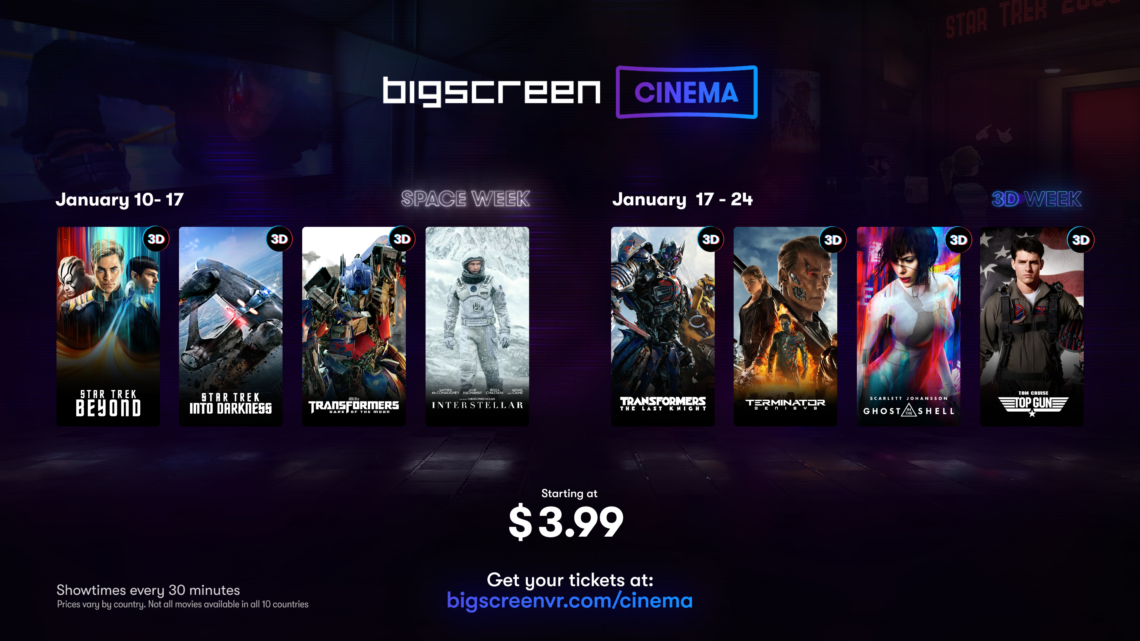
Running between January 10th and January 17th, Bigscreen’s “Space Week” introduces a handful of blockbuster sci-fi pictures to the lineup. This includes Star Trek: Beyond 3D, Interstellar, Star Trek: Into Darkness 3D, and Transformers Dark of the Moon 3D; showtimes run every 30 minutes like clockwork. Following Space Week, Top Gun, Terminator Genisys, Transformers the Last Night, and Ghost in the Shell will join Bigscreen’s virtual lineup.
The sense of presence was so strong it shocked me. I honestly felt it was really her physically sitting next to me.”
You can also throw popcorn, soda, and tomatoes at the screen or at your friends, which could be really cool if Bigscreen ever hosts a screening of Rocky Horror Picture Show.
Researchers Can Make AI Forget You (not quite yet)
 Because not much has been written about efficient data deletion, the Stanford authors first aimed to define the problem and describe four design principles that would help ameliorate it. The first principle is “linearity”: Simple AI models that just add and multiply numbers, avoiding so-called nonlinear mathematical functions, are easier to partially unravel. The second is “laziness,” in which heavy computation is delayed until predictions need to be made. The third is “modularity”: If possible, train a model in separable chunks and then combine the results. The fourth is “quantization,” or making averages lock onto nearby discrete values so removing one contributing number is unlikely to shift the average.
Certain AI methods aim to anonymize records, but there are reasons one might want AI to forget individual data points besides privacy, Guan says. Some people might not want to contribute to the profits of a disliked company—at least without profiting from their own data themselves. Or scientists might discover problems with data points post-training. (For instance, hackers can “poison” a dataset by inserting false records.) In both cases, efficient data deletion would be valuable.
“We certainly don’t have a full solution,” Guan says. “But we thought it would be very useful to define the problem. Hopefully people can start designing algorithms with data protection in mind.”
See the full story here: https://spectrum.ieee.org/tech-talk/computing/software/researchers-can-make-ai-forget-you
Does the naked body belong on Facebook? It’s complicated
 “Instagram really is the magazine of the world right now. And if artists are being censored on Instagram it's really dangerous for freedom of speech and openness when it comes to the body and art,” said Spencer Tunick, a photographer known internationally for his shoots assembling masses of nude people.
Facebook's monitoring systems do a better job with nudity than with hate speech, extremism and misinformation. After all, a butt is a butt and a nipple is a nipple. But deciding when a nipple is art, porn or protest gets murky even when humans are doing the deciding. Teaching AI software about human sexual desire is a whole other ballgame.
From its start as a college photo directory and social network, Facebook banned nudity. Over the years, as Facebook's audience grew bigger and more diverse, the ban loosened. The company instituted exceptions for breastfeeding women, for images of post-mastectomy scars. Birthing videos are now allowed, as are photos of post gender reassignment surgery.
See the full story here: https://www.dailyfreeman.com/lifestyle/does-the-naked-body-belong-on-facebook-it-s-complicated/article_1ba2960b-e8f2-5ead-a0b5-b055a2d88b78.html