Scale AI and its 22-year-old CEO lock down $100 million to label Silicon Valley’s data
 The “human insight” can help minimize labeling bias and give customers data that is more precise and more accurate, though, as with just about all AI startups, the hope is that these insights will gradually usher in a future where reliance on these humans-in-the-loop will be lessened. In the meantime, Scale sits atop an army of contractors that might hold the key to bulking up Silicon Valley’s machine learning intelligence.
“AI companies will come and go as they compete to find the most effective applications of machine learning. Scale AI will last over time because it provides core infrastructure to the most important players in the space,” Founders Fund partner and former Trump advisor Peter Thiel said in a statement.
See the full story here: https://techcrunch.com/2019/08/05/scale-ai-and-its-22-year-old-ceo-lock-down-100-million-to-help-label-silicon-valleys-data/
RIP mobile virtual reality: Samsung drops Gear VR support in Galaxy Note 10
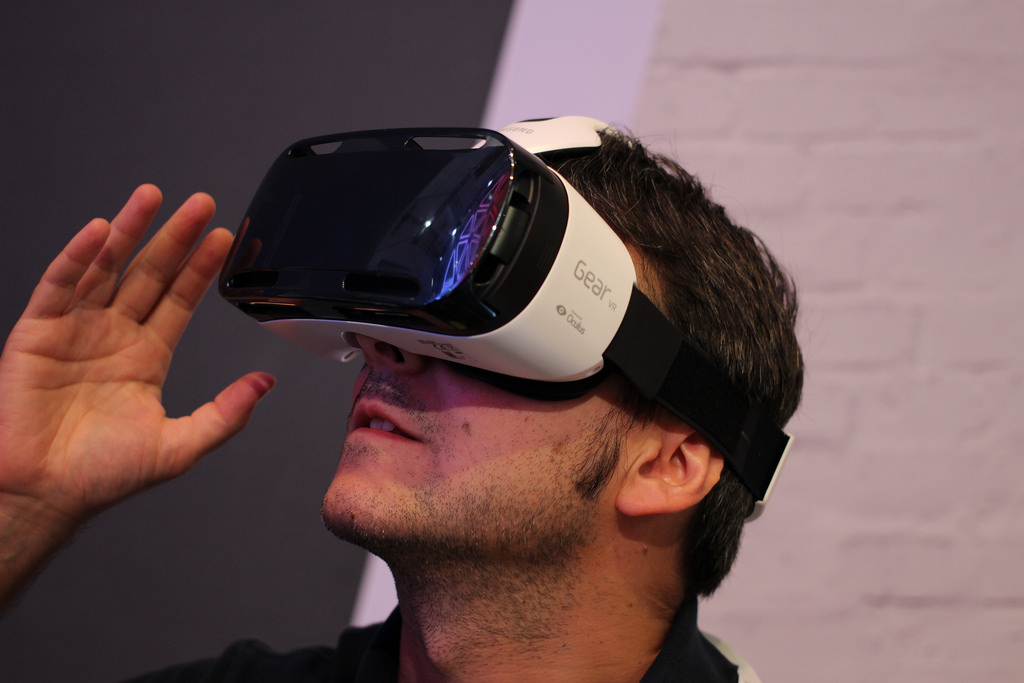 Mobile virtual reality, meant to be the next big thing only a handful of years ago, continues to die a slow death, as Samsung Electronics Co. Ltd. Thursday confirmed that its new Galaxy Note 10 and Galaxy 10 Plus will not work with its Gear VR headset.
The Samsung Gear VR was launched with much fanfare in November 2015 with support from Oculus, the Facebook Inc.-owned virtual reality headset and software maker. The device allowed Samsung users to place supported smartphones within the headset to create a virtual reality experience without the need to purchase a dedicated headset and an expensive PC to support it.
The decline and slow death of mobile VR isn’t a Samsung story alone. Google LLC, which arguably created mobile VR with its Cardboard product, has not only dropped support for VR in its latest phones but also seemingly abandoned its Daydream VR platform as well.
The broader VR market has fared much better. As companies such as Oculus and HTC Corp. continue to launch new headsets, the most generous thing you could say about VR is that it has a devoted niche audience. It’s not even especially arguable in 2019 to say that the promises surrounding the second coming of VR in the mid-2010s — two decades after the first one — has failed to live up to its hype.
See the full story here: https://siliconangle.com/2019/08/08/rip-mobile-virtual-reality-samsung-drops-gear-vr-support-galaxy-note-10/
Kim Nevelsteen wants to bridge different virtual worlds to create the Metaverse
 Tens of Millions of people already play Minecraft. If I can just capture a small percentage of those people and let them inter-connect, perhaps a Minecraft Metaverse will exist. Getting a second world to inter-connect with the Minecraft Metaverse might still be a hurdle, but it should be easier thereafter. The aim would be that even worlds that are closed would want to open up at least partially, because either users request it, it generates traffic or that if they don’t, they become obsolete.
Instead of building a platform or new world, what I am offering is glue to inter-connect existing worlds. A question that is more relevant is if there will be worlds that actively avoid connecting e.g., perhaps Mineplex doesn’t like me linking to them and attempts to ban such a link.
If a Metaverse evolves into existence, should companies adopt it and can it be profitable? Apply this question to the Internet and the answer is clear. Even for Desktop, I can’t imagine it being confined to just 2D for many more years.
UCLA Surgical Training Study Shows VR Beats Traditional Training by 130%
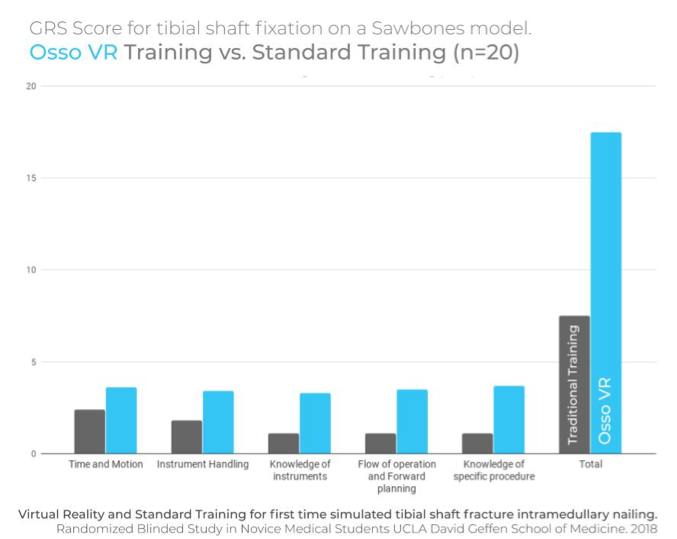 Conducted at the David Geffen School of Medicine at the University of California Los Angeles, a study titled Randomized, Controlled Trial of a Virtual Reality Tool to Teach Surgical Technique for Tibial Shaft Fracture Intramedullary Nailing examines the efficacy of VR surgical training for a specific procedure and set of equipment.
20 participants were randomly assigned into two groups of 10; one group would train with the Osso VR software using a VR headset and motion controllers, while the other group would follow traditional training with surgical technique guides.
After their training, participants conducted the procedure on an artificial training bone and their performance was filmed. A surgeon evaluator then ranked the performance of each participant across five categories of proficiency: Time and Motion, Instrument Handling, Knowledge of Instruments, Flow of Operation and Forward Planning, and Knowledge of Specific Procedure. The ‘blind’ evaluator didn’t know the training method of any of the participants.
The study found that the VR group performed significantly better in the surgical procedure across all categories, scoring 130% higher than those who trained with traditional methods. In addition to the proficiency measure, a procedure-specific checklist found that those in the VR group completed 38% more steps correctly and completed the procedure 20% faster.
Finland is winning the war on fake news. What it’s learned may be crucial to Western democracy
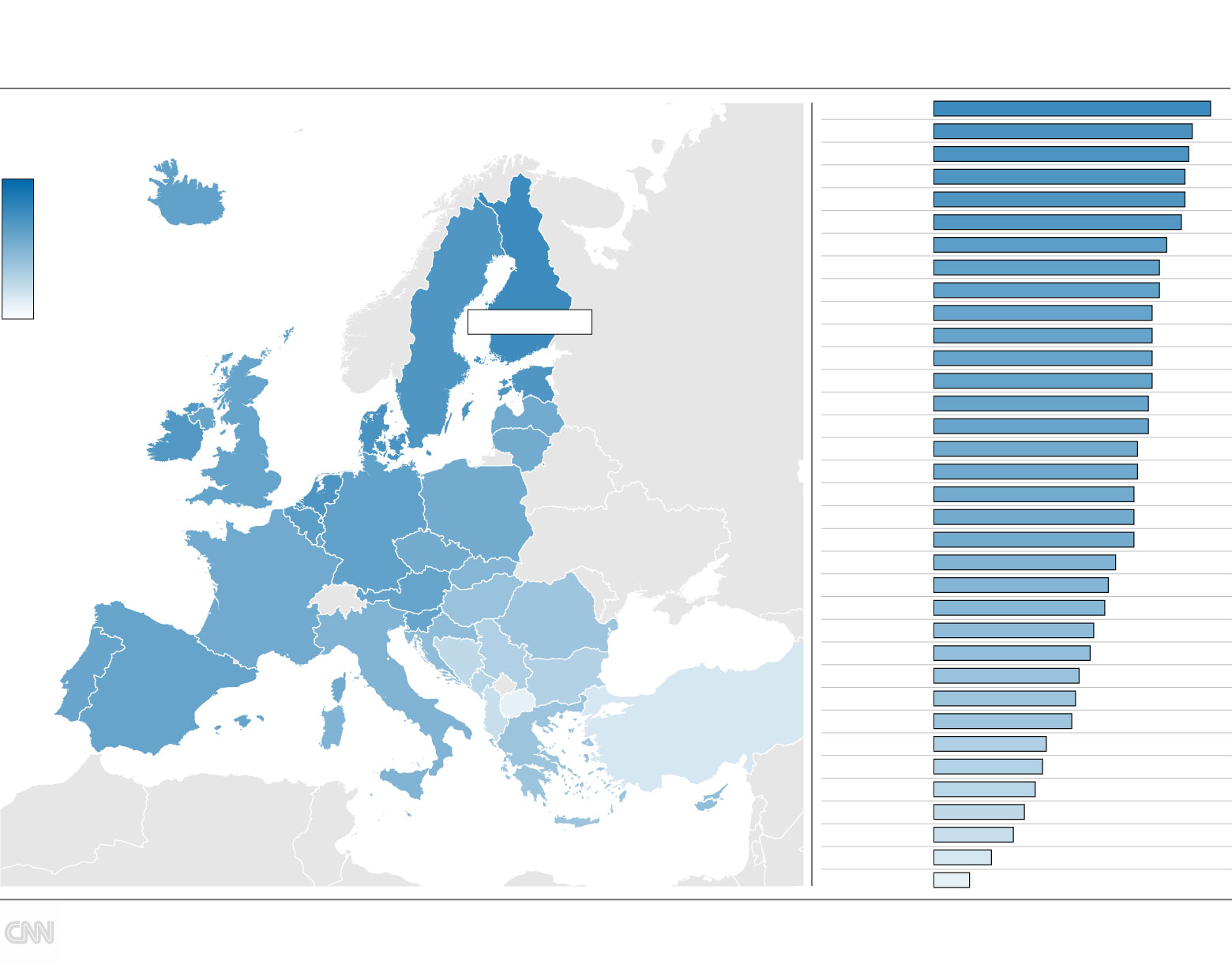
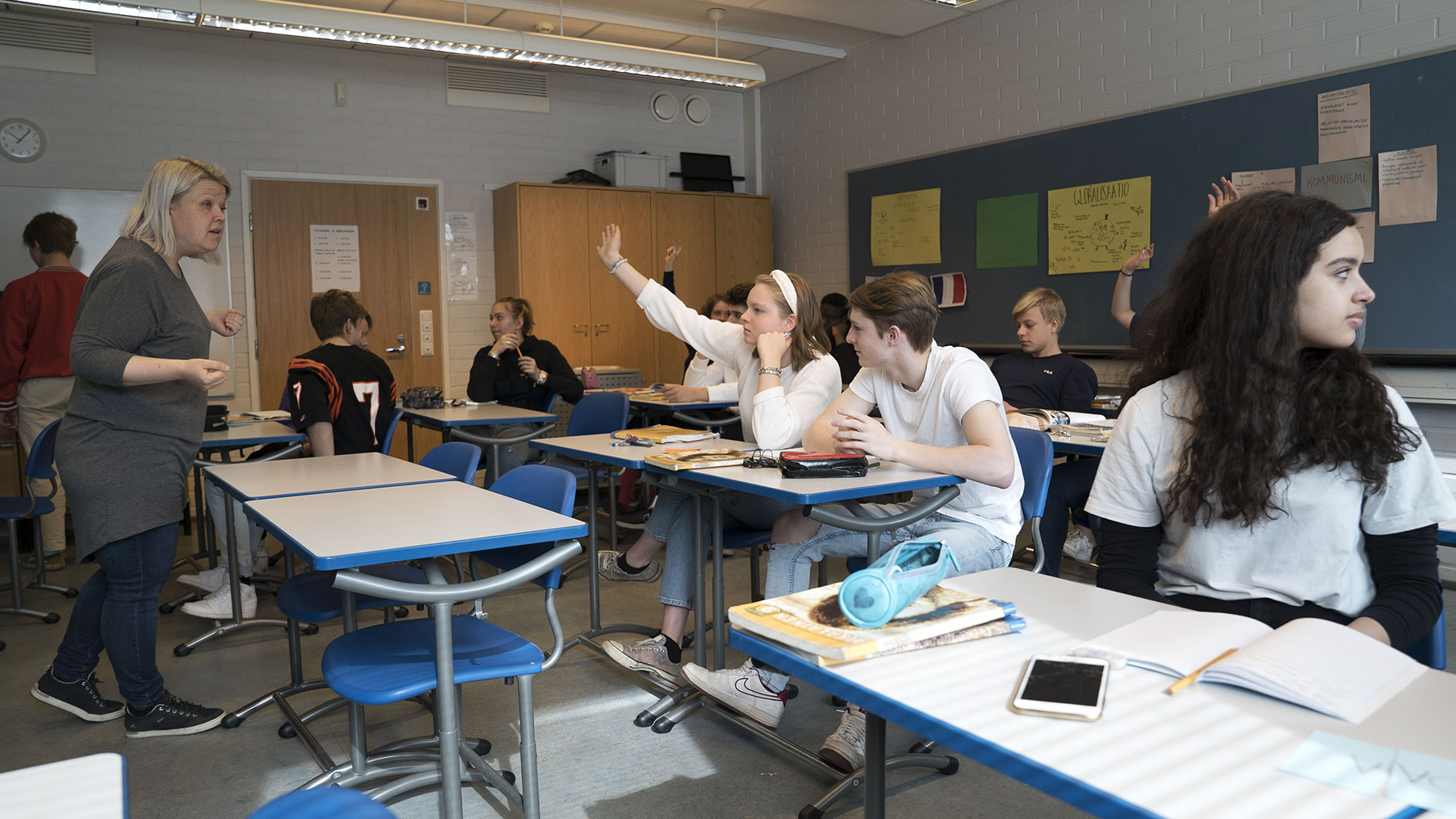 Her class is the embodiment of Finland’s critical thinking curriculum, which was revised in 2016 to prioritize the skills students need to spot the sort of disinformation that has clouded recent election campaigns in the US and across Europe.
“What we want our students to do is … before they like or share in the social media they think twice – who has written this? Where has it been published? Can I find the same information from another source?” Kari Kivinen, director of Helsinki French-Finnish School and former secretary-general of the European Schools, told CNN.
The ‘superpower’ of being Finnish
It may be difficult to export democracy, but it is easy to import experts, which is precisely what Finland did in 2016 to combat what it saw as a rise in disinformation emanating from accounts linked to its neighbor to the east.
Polluting the internet?
But some argue that simply teaching media literacy and critical thinking isn’t enough — more must be done on the part of social media companies to stop the spread of disinformation.
“Facebook, Twitter, Google/YouTube … who are enablers of Russian trolls … they really should be regulated,” said Jessikka Aro, a journalist with Finland’s public broadcaster YLE, who has faced a barrage of abuse for her work investigating Russian interference, long before it was linked to the 2016 US elections.
A never-ending game
Perhaps the biggest sign that Finland is winning the war on fake news is the fact that other countries are seeking to copy its blueprint. Representatives from a slew of EU states, along with Singapore, have come to learn from Finland’s approach to the problem.
Robot, heal thyself: scientists develop self-repairing machines
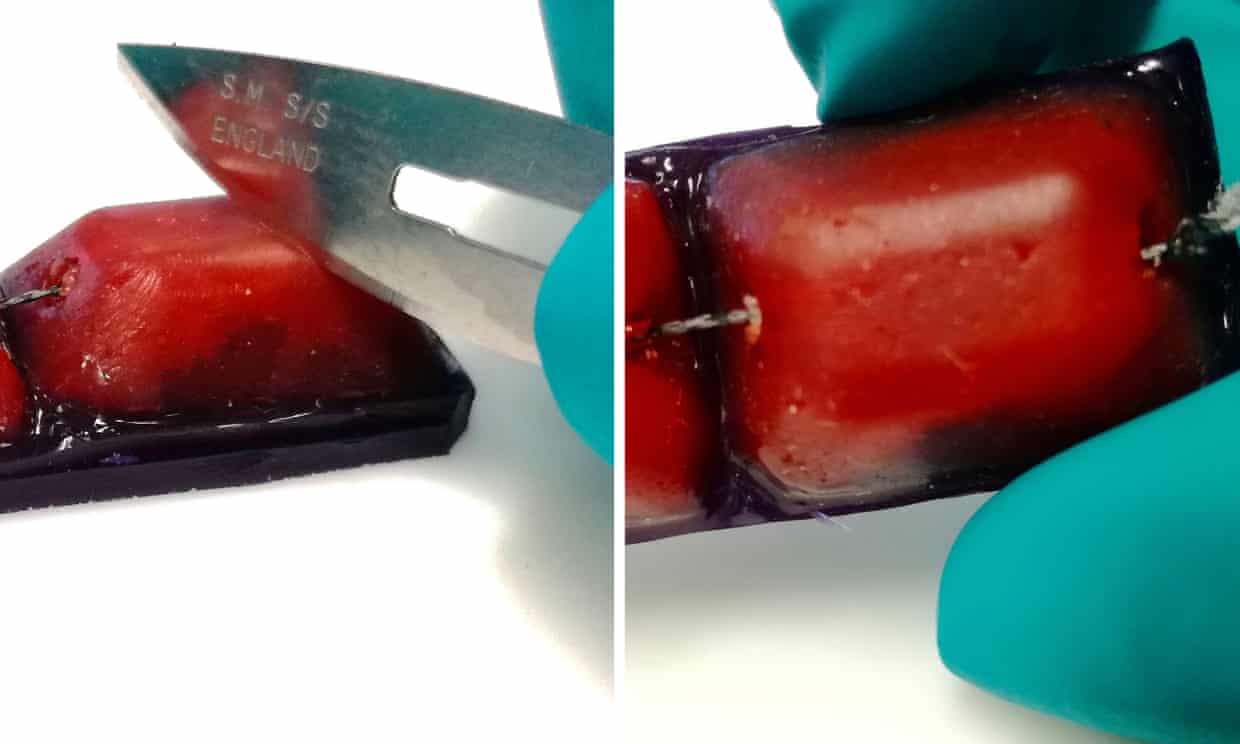
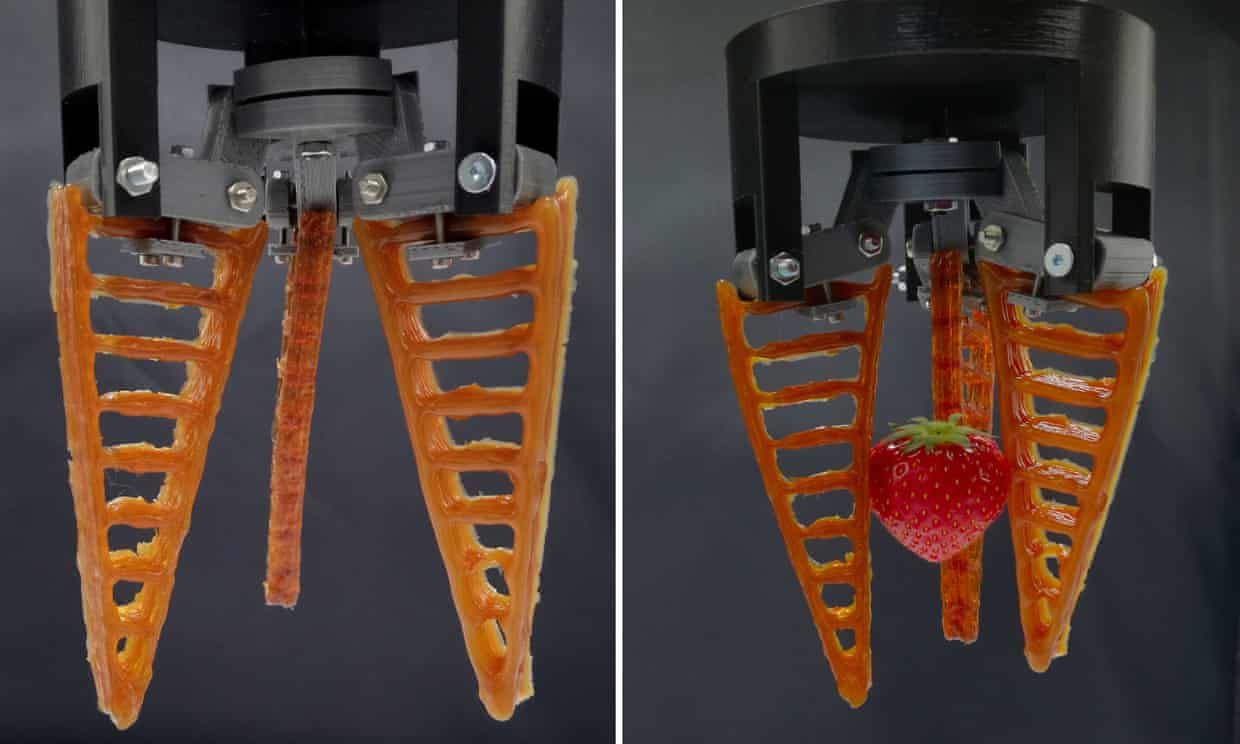 But being gentle and soft enough to avoid damaging fruit or flesh has made the robots prone to damage and left them largely impractical for use in the real world – until now.
A European commission-funded project, led by scientists at the Free University of Brussels and the University of Cambridge, aims to create “self-healing” robots that can feel pain, or sense damage, before swiftly patching themselves up without human intervention.
The researchers have already successfully developed polymers that can heal themselves by creating new bonds after about 40 minutes.
The next step will be to embed sensor fibres in the polymer which can detect where the damage is located.
“With this research we want to continue and, above all, ensure that robots that are used in our working environment are safer, but also more sustainable. Due to the self-repair mechanism of this new kind of robots, complex, costly repairs may be a thing of the past.”
China’s path to AI domination has a problem: it’s losing talent to the US
 Superpower dreams: China has worked hard to become a leading AI powerhouse. However, a new analysis from MacroPolo, a Chicago-based think tank focused on China’s economic growth, shows that despite the country’s success in cultivating domestic talent, it has struggled with retention.
The findings: The report analyzed papers accepted to NeurIPS, one of the most prestigious international AI conferences, and found a nearly tenfold increase in the number of authors who did their undergraduate studies in China since 2009. However, roughly three-quarters of the Chinese authors in the study currently work outside China, and 85% of those work in the US, either at tech giants or universities.
Why it matters: Among the four major inputs into a country’s AI ecosystem—talent, data, capital, and hardware—the first has the greatest impact. China’s government is aware of the brain-drain problem and is urgently trying to address it.
See the full story here: https://www.technologyreview.com/f/614092/china-ai-domination-losing-talent-to-us/?
The National Museum of World Writing Tells its Stories Through Architecture
 The 16,424 sqm proposal for the National Museum of World Writing (NMWW) intends to create a mediation space which links “people to people, people to museum, and museum to the site, just as how writing & pages have bridged together the past, present, and future”.
The project is located in Incheon-si, South Korea, on the edge of a land between the central park and the condensed cityscape. The visual and spatial contradictions between the park’s horizontal landscape and monolithic verticality of buildings inspired the architects to develop a structure that merges both characteristics together.
Upon entering the museum, the visitor finds himself/herself standing in a grand hall deep within the museum’s curved walls, as though he/she has physically entered the journey of writing. Along the curved walls of the indoor exhibition space, sequential scenarios are printed, each with its own narrative.