Rampage Room Plans August Opening, Adds Virtual Reality Arcade
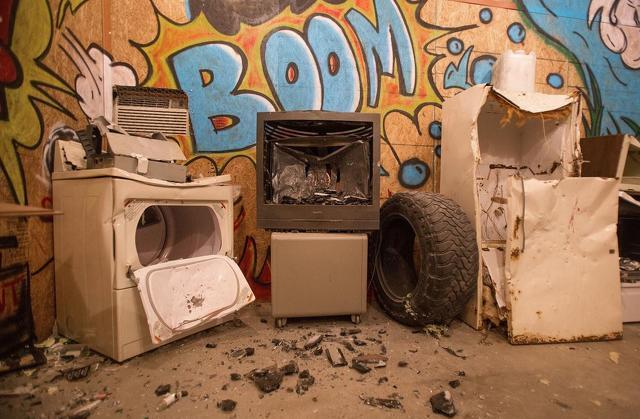 Break rooms are becoming increasingly popular across the country as a fun way to relieve tension and stress. At Rampage Room, customers 18 and older can book one of a variety of packages, priced for length of time and number of items. After putting on the provided protective gear, patrons choose a tool of destruction such as a baseball bat or sledgehammer then let loose on items of their choosing, from glasses and plates to printers and televisions to garden gnomes.
See the full story here: https://onwardstate.com/2019/06/19/rampage-room-plans-august-opening-adds-virtual-reality-arcade/
Stanford Research Study – Does greater immersion in virtual reality lead to a better experience?
 "The Effects of Immersion and Real-World Distractions on Virtual Social Interactions" was coauthored by Jeremy Bailenson, Catherine Oh, and Fernanda Herrera, Stanford University, CA. The researchers designed a study in which participants interacted with a virtual agent in either an immersive or non-immersive virtual environment with three levels of real-world distractions: no distractions; passive exposure to the sound of a ringing cell phone; actively answering a ringing cell phone. Whereas increased immersion had a positive effect on feeling present in the virtual reality interaction, it had a negative effect on recognition and recall.
"This very important study highlights again the critical need to understand the role of realism during the VR experience. The clarity of the latest PlayStation characters, for example, or those seen in recently released movies and video clips begs the question of whether the uncanny valley has been overcome," says Editor-in-Chief Brenda K. Wiederhold, Ph.D., MBA, BCB, BCN, Interactive Media Institute, San Diego, California and Virtual Reality Medical Institute, Brussels, Belgium. "Despite over 20 years of research, we still do not fully understand how levels of realism can differentially affect human perception and the underlying psychological milieu. Many VR clinicians have shown that in certain cases, less granular or admittedly more cartoonish avatars and graphics produce better clinical outcomes. On the other hand, in certain types of surgical training, realistic VR is both justified and necessary. There remain many unanswered issues and a lack of good objective measures for our feeling of presence, and this paper plays a crucial role in furthering our knowledge."
See the full story here: https://phys.org/news/2019-06-greater-immersion-virtual-reality.html
Snapchat Showcases Its Creative Chops at Cannes Lion with Marker Tracking & Landmarker AR Lens

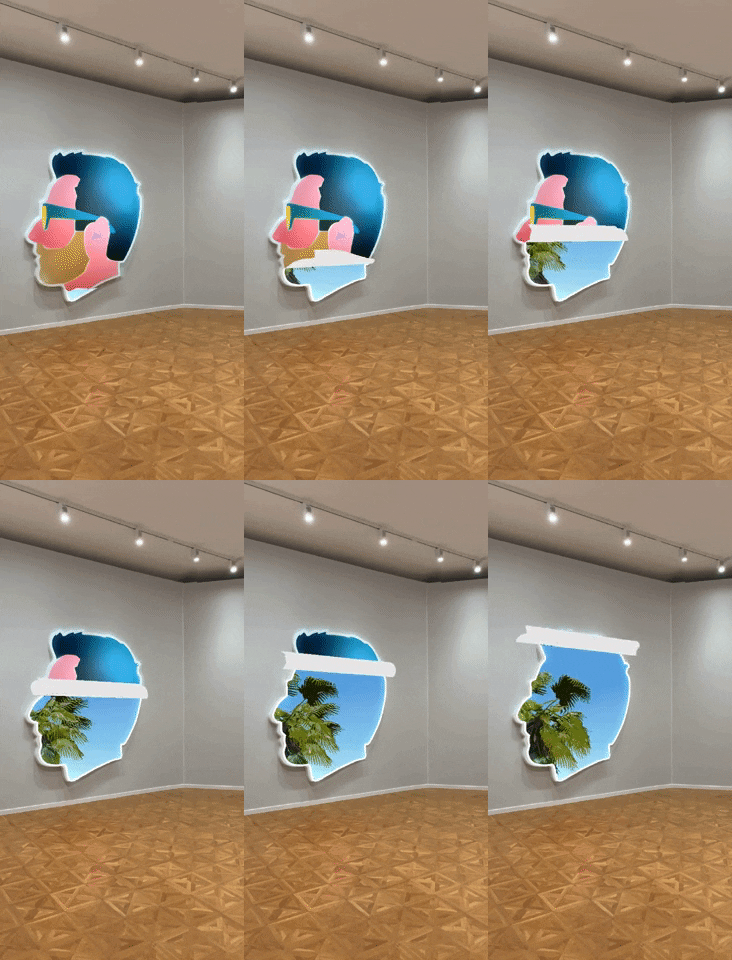 On Monday, Snap did just that by opening an augmented reality exhibit at the La Malmaison art gallery featuring the digital creations of innovative Los Angeles-based artist Alex Israel.
Inside the La Malmaison, Snap and Israel have installed five "Snap-Portraits" that are brought to life via Snapchat's Marker Tracking. Influenced by Israel's passion for his hometown, the portraits host virtual palm trees, pelicans, and a gym, among other experiences.
Snapchat's financial fortunes are reliant on the advertising industry, so events like Cannes Lions are critical to ensuring that account executives and creative teams continue to look to Snapchat to promote their brands.
Tech Firms and Investors Develop AI Ethics, Best Practices
 “I see explainability as a core component of having an ethical guardrail around AI,” said managing partner Andreas Roell, who added that he wants every entity to also have a “designated AI ethics officer.”
A tech accelerator run by Innovation Works in Pittsburgh “introduced a voluntary ethics component to its 27-week program for startups, in collaboration with Carnegie Mellon University,” and all 12 companies in the program participated.
Kozyrkov believes the four principles of teaching human students can apply to safe and effective AI: think about what you want to teach your students; incorporate relevant and diverse perspectives; create well-crafted tests; and build safety nets for when something goes wrong. “It’s time for us to focus on machine teaching, not just machine learning,” she said.
See the full story here: http://www.etcentric.org/tech-firms-and-investors-develop-ai-ethics-best-practices/
and the original source here: https://venturebeat.com/2019/06/14/googles-chief-decision-scientist-humans-can-fix-ais-shortcomings/
AIs should be legally liable for their mistakes soon
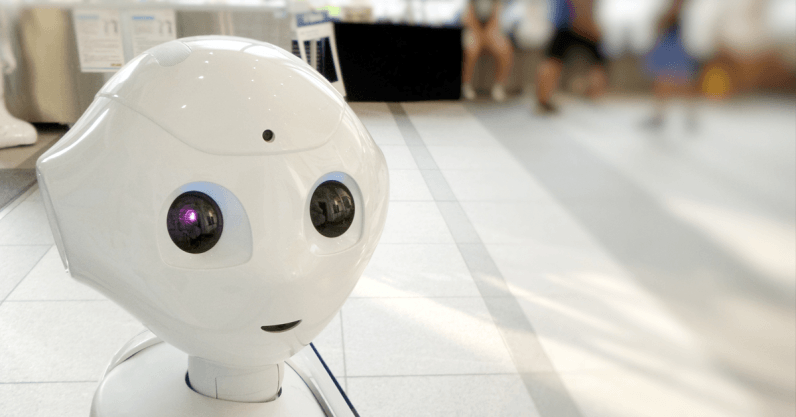 Frears explains that, in the past, the driver was the only insured party in an automobile scenario, but with AI input into the driving process, it now needs to be established just who or what had the deciding influence over the accident.
“If it’s a product fault, a consumer has the right to expect the product he or she buys from a manufacturer will be roadworthy and safe, so that switches the liability back to the manufacturer. But, otherwise, the insurers will now pay out irrespective of whether or not the driver is insured,” Frears says.
“It’s blurred the line completely, and turned on its head where the insurance actually lies – it’s no longer the driver who’s the insured party in a motor scenario, and I think that’s going to inform how the liability for AI generally will work.”
Insurance following the software involved in an accident is a key provision laid out in the Automated and Electric Vehicles Act. The key factor is whether the driver has engaged the traditional manual controls before the accident – and determining this will be a crucial part of an insurer’s investigation.
“Causation, intent and responsibility get increasingly difficult to untangle when AI is involved.”
“Digital health deploying AI in disease recognition, genetic testing, virtual nursing, surgical robots – these all introduce the risks of mismanaged care owing to AI errors and the lack of human oversight.”
See the full story here: https://thenextweb.com/syndication/2019/06/17/ais-should-be-legally-liable-for-their-mistakes-soon/?utm_campaign=the_download.unpaid.engagement&utm_source=hs_email&utm_medium=email&utm_content=73784454&_hsenc=p2ANqtz-_ffMLruxZJrW2oQa19JW4dkeqvXzQW51MLigWMLvux6v7LxbcX3H1msiEFWdq9tB5UsV3lWBB-tmDrZi_-ILNzmSb-2w&_hsmi=73784454
Magic Leap accuses Nreal founder of stealing AR glasses tech for China
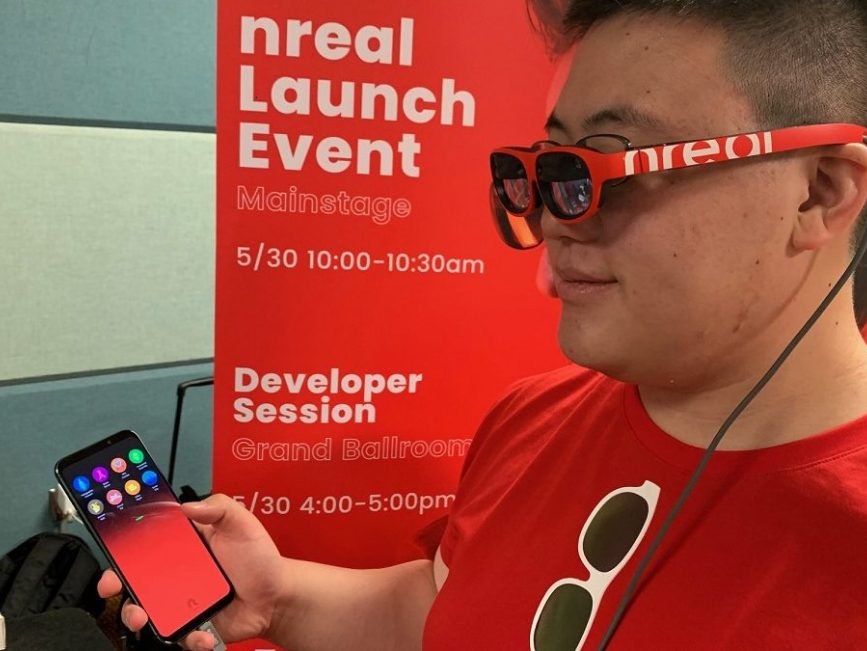 As noted by Bloomberg, Magic Leap filed a federal lawsuit yesterday against Chi Xu and Nreal, suggesting that Xu used part of his 13-month employment with Magic Leap to pilfer secrets for a competing business in China. Magic Leap, of course, spent years teasing its development of a cutting-edge augmented reality headset before finally releasing Magic Leap One last year.
The original report notes that Nreal was started in Beijing, China as Hangzhou Tairuo Technology, and Bloomberg suggests that it’s yet another example of intellectual property theft from a U.S. company by a Chinese one. While that may be true, it’s also worth noting that large companies sometimes levy shaky accusations of IP theft against former employees to extract financial concessions from their subsequent startups, with settlements and judgments varying based on a variety of factors.
See the full story here: https://venturebeat.com/2019/06/18/magic-leap-accuses-nreal-founder-of-stealing-ar-glasses-tech-for-china/
Exclusive: Behind the scenes with Childish Gambino as he creates his psychedelic new AR app
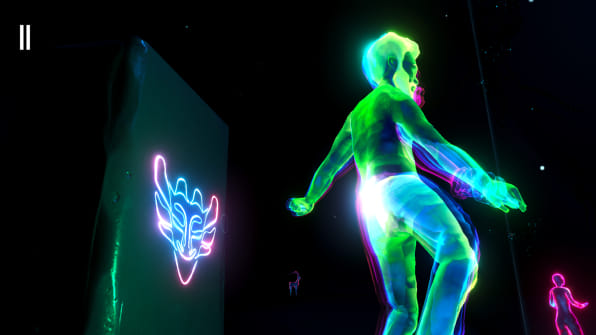 The Pharos AR app actually doesn’t enable a lot of interaction between the digital content and the real world content. It does contain some interactive features—you can tap on the glyphs in the cave to activate them, for example. But the slow blending of the real world around you (as seen through the phone camera) into the world of the cave is compelling. It feels more like the gradual onset of a hallucinatory drug as opposed to the immediate occlusion and immersion you get when entering a VR experience.
Pharos AR was designed by the creative agency MediaMonks with direction from Childish Gambino and his creative management team using Unity’s 3D engine. The movements of the human dancers in the cave derive from the movements of humans wearing motion capture (mo-cap) suites. The data collected from the sensors on the suits are then fed into the Unity engine where they’re used to animate the avatars. The people at Unity pitched in with technical assistance.
See the full story here: https://www.fastcompany.com/90363068/how-and-why-childish-gambino-made-an-augmented-reality-app
The Mona Lisa Will Emerge From Behind Its Bullet-Proof Glass in the Louvre’s First-Ever Virtual Reality Experience
 Visitors to the Leonardo exhibition will don a VR headset and enter a virtual space where they can step behind the famous painting’s protective glass and interact with it. The experience, which is the result of a partnership with the company HTC VIVE Arts, promises to shed light on details of the famous masterwork that are hidden from the naked eye, and to offer more information about the mysterious sitter, whose identity has been the subject of debate among historians for centuries.
The exhibition, which is organized by the Louvre’s Vincent Delieuvin and Louis Frank, is one of the most high-profile events marking the 500th anniversary of the artist and scientist’s death in France.
Can’t make it to the Louvre in Paris? You will be able to experience the VR element of the much-anticipated exhibition at home if you own a headset. It will be available through HTC’s digital subscription service, VIVEPORT, as well as other VR platforms.
“Leonardo da Vinci” runs October 24, 2019 through February 24, 2020 at the Musée du Louvre, Paris.
See the full story here: https://news.artnet.com/art-world/louvre-leonardo-da-vinci-virtual-reality-1575859
The Labor Movement Comes to Virtual Reality: Unionizing Digital Media
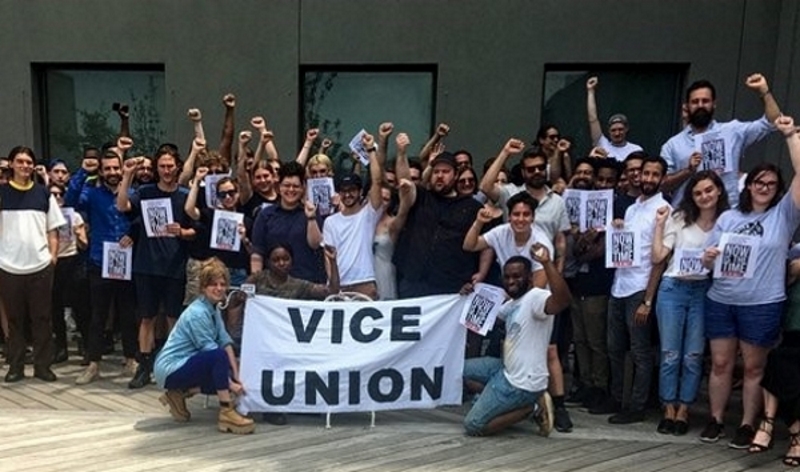 The union, as Kelly says above, is a place where the workers can build a community that is for their own benefit, not for their bosses’ exploitation. In media, McRobert says, that has meant a real sense of ownership over the union. They show up, they put in the work, they are willing to challenge the old ways of doing business that do not make sense to them, and at the end of it, they come out with something strong and valuable.
To Kelly and Jones, both, the most important thing has been to watch their coworkers under- stand that their work has value and that value is being captured by someone else who benefits from their time on Twitter and their weekends on the clock. Asked for final words, Jones simply says, “Journalists are workers and workers need a union.”
See the full story here: https://truthout.org/articles/the-labor-movement-comes-to-virtual-reality-unionizing-digital-media/