Disney-Backed VR Startup Tyffon Raises $7.8 Million
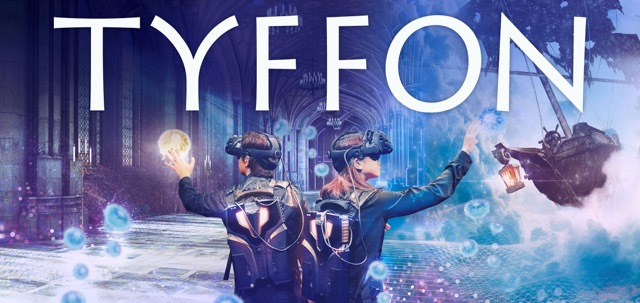 Disney-backed immersive media startup Tyffon has raised a new $7.8 million Series A round of funding. The company wants to use the new cash infusion for an international expansion that includes the opening of a Santa Monica, Calif.-based virtual reality (VR) center.
Content-wise, Tyffon has thus far primarily focused on horror- and fantasy-themed free-roam VR. One of its three current attractions is “Corridor,” which is being described as a mixed reality horror experience. Another is “Tarot VR,” a kind of anthology of fantasy scenes in VR.
Fukazawa said that the company wanted to continue to work on horror-themed content. “At the same time, we will also develop kids/family-oriented original content, which also will be featured in our Tyffonium venues in the coming months,” he said.
The company currently has 35 employees, and offices in both Santa Monica and Tokyo.
See the full story here: https://variety.com/2019/digital/news/disney-backed-vr-startup-tyffon-raises-7-8-million-exclusive-1203218904/
Microsoft Debuts Project to Adopt Blockchain for Digital IDs
Last year, Microsoft described the idea of a “self-sovereign digital identity,” and has now introduced a project that would shift login credentials to blockchain. With this model, users — not Microsoft — would be responsible for their own digital identities and the portable credentials would, in principle, allow access to numerous applications. Advocates of blockchain champion the concept as more private, preventing anyone from following the user’s activity on the Internet and limiting the opportunity for hacks.
 Wired reports that Microsoft’s idea could “potentially scale to billions of users.” The company is currently “developing open source protocols and standards with the World Wide Web Consortium and the Decentralized Identity Foundation, whose members include Aetna, IBM, and Mastercard.” Notably missing from that team is Facebook, which is also “exploring blockchain technology.”
To overcome this obstacle, Microsoft is planning to use a solution it dubs ION, which is a “layer-two” solution “that stores and accesses your data away from the blockchain, using InterPlanetary File System (IPFS).” The company says ION can “potentially scale to allow tens of thousands of operations per second,” compared to 10 or less with Bitcoin.
“For a digital ID to work everywhere online, it needs buy-in from all the places that currently covet your login,” it says. “Ideally, it would work across different blockchains, so competing ID systems don’t arise.”
See the full story here: http://www.etcentric.org/microsoft-debuts-project-to-adopt-blockchain-for-digital-ids/
Blood & Truth’s Development Is On A Scale VR Hasn’t Yet Seen
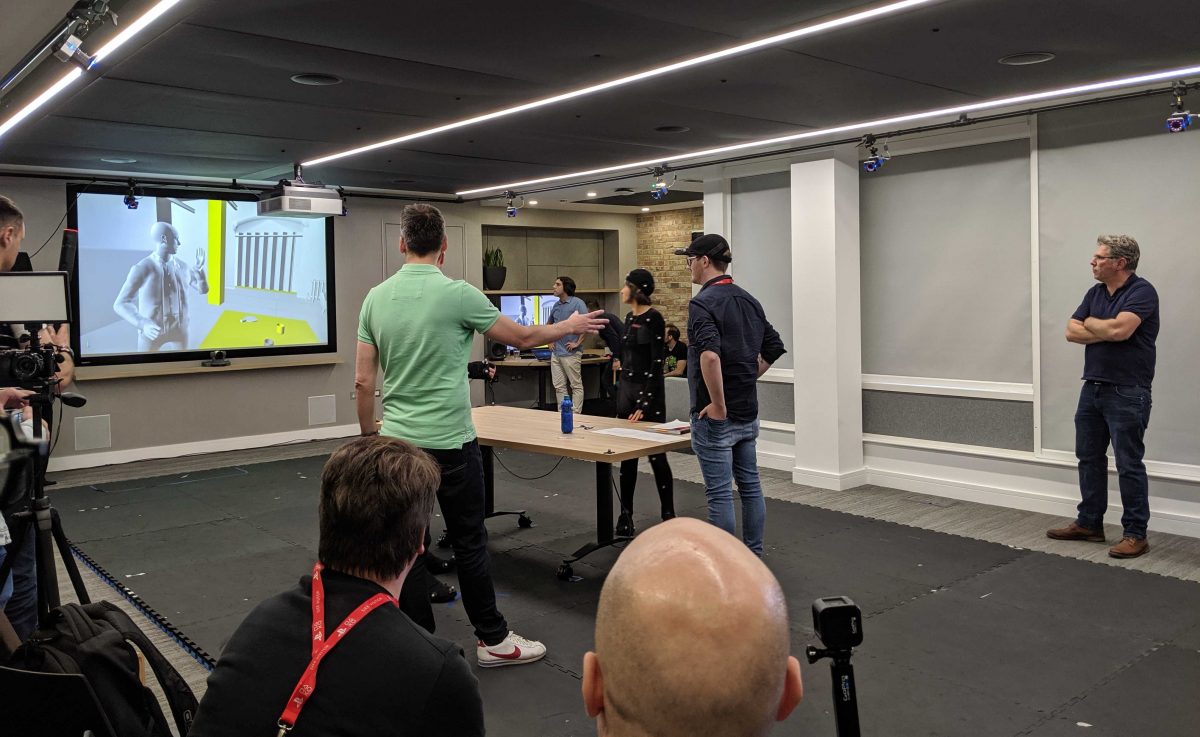 My tour of Sony’s London Studio, on the other hand, lasted roughly about three hours. It spanned three floors of the team’s central-London offices. And that’s not mentioning the extensive demo room and interview access I was provided in Sony Interactive Entertainment’s European offices next door. Oh, and I could have had all the tea I’d ever dreamed of, had I so desired.
Suffice to say, Sony London is not your average VR development studio.
“There’s what we call intensity fatigue,” he says. “It’s just like, when you’re in the middle of a fire fight, it just gets so crazy and tense that you actually need to break up the game. Pacing within VR and certainly within Blood & Truth is something that we’ve found super critical. It’s not just one long gun fight. You’ve got to break it up it…the interactions, the drama, the exploring the environment. There’s a lot of subtlety to getting that right.”
That’s what I’ll be on the lookout for when the game launches at the end of this month.
Blood and Truth is out on PSVR on May 27th. We’ll have a full review closer to then.
Sony Licenses ‘Advanced Haptics Patent Portfolio’ For ‘VR Controllers’
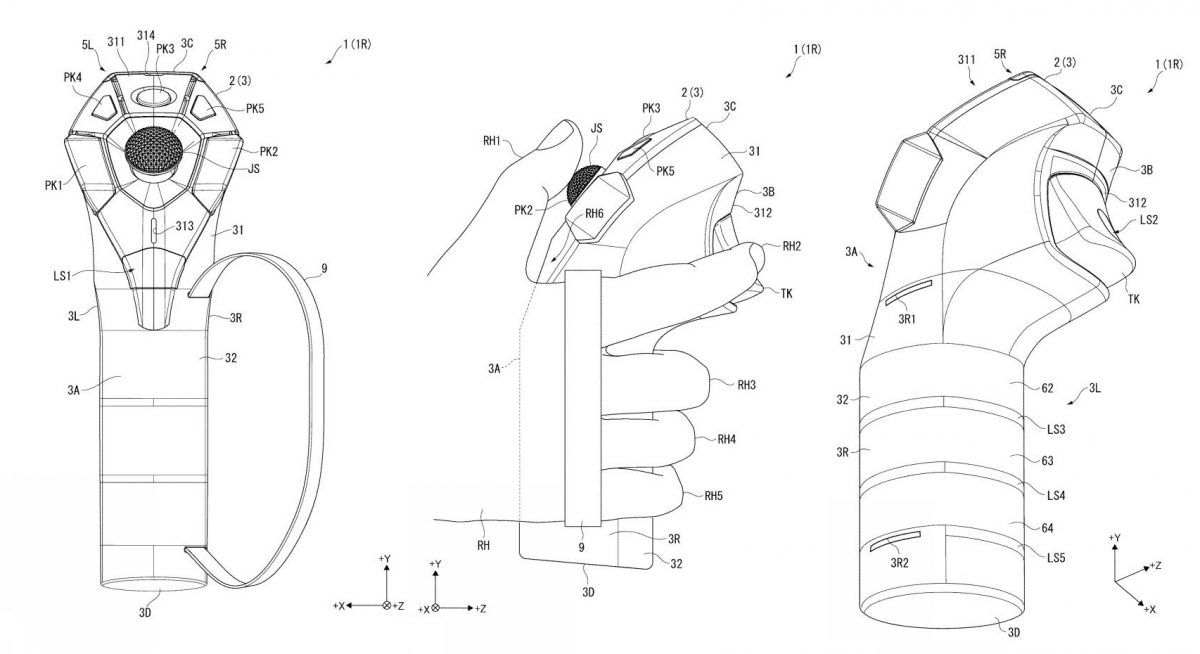 Immersion Corp stated that such technology could be used to simulate “sensations of pushing, pulling, grasping, and pulsing”, while Sony more vaguely simply stated that it “enhances the sense of presence and immersion.”
Immersion Corp doesn’t actually manufacture the hardware for haptic feedback. The company certifies suitable hardware and licenses its software and more than 3500 issued or pending patents to companies wanting to add haptics to their products.
See the full story here: https://uploadvr.com/sony-haptic-patents-acquisition/
Yes, Quora still exists, and it’s now worth $2 billion
 The company has been very slow to monetize its user base, which Quora says is 300 million unique people a month, and several investors tell Recode that they passed on the deal because of that poor track record of actually making money.
The company told some prospective investors that it did about $20 million in 2018 revenue, which makes a $2 billion valuation a pretty enormous 100x multiple of its prior year’s revenue.
Over time, it evolved into a more organized Yahoo Answers, a classier Reddit, an opinionated Wikipedia. It became especially popular in elite tech circles — as a precursor to their “thought leadership” on self-publishing platforms like Medium — which definitely didn’t hurt its valuation, judged by Silicon Valley investors to be $900 million five years later.
But the reason why investors are betting on what, at first blush, could appear to be a meaningless pile of content, is that Quora, if successful, is a powerful avenue to reach 300 million information-seeking people a month. It is especially popular in India, where over 20 percent of its visitors come from, according to Alexa data.
But despite some challenges with some investors, Quora CEO Adam D’Angelo shouldn’t be wanting for money. He himself is quite rich from his years as Facebook’s first chief technology officer, so wealthy that he in fact put $20 million of his own money into the company’s Series B round of financing.
See the full story here: https://www.vox.com/recode/2019/5/16/18627157/quora-value-billion-question-answer
‘Knitting Is Coding’ and Yarn Is Programmable in This Physics Lab
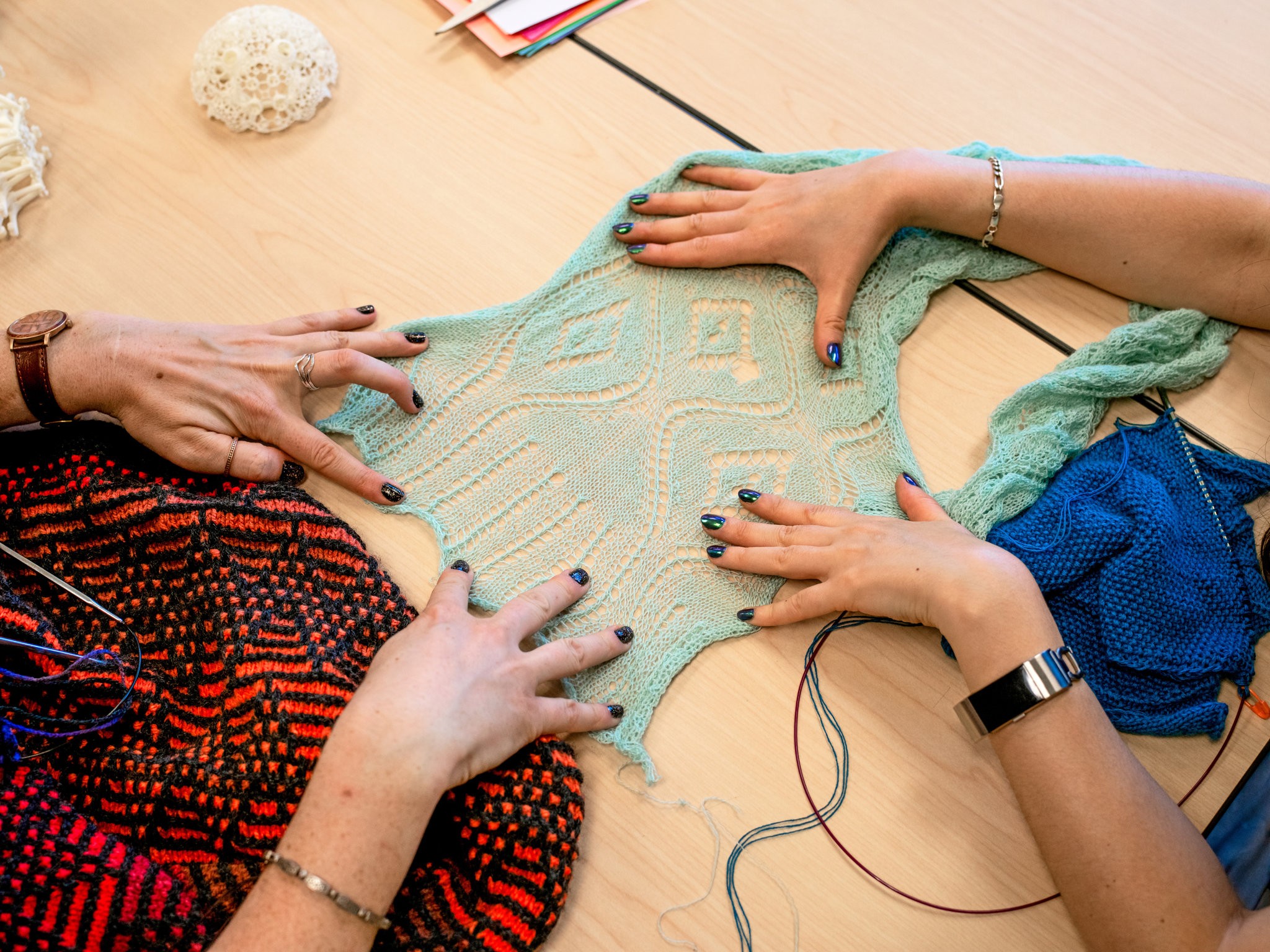 For Dr. Matsumoto, knitting is more than a handicraft hobby with health benefits. She is embarking on a five-year project, “What a Tangled Web We Weave,” funded by the National Science Foundation, to investigate the mathematics and mechanics of “the ancient technology known as knitting.”
Some of the oldest examples date to the 11th century B.C.E. in Egypt. But despite generations of practical and experiential knowledge, the physical and mathematical properties of knitted fabric rarely are studied in a way that produces predictive models about how such fabrics behave.
Dr. Matsumoto argues that “knitting is coding” and that yarn is a programmable material. The potential dividends of her research range from wearable electronics to tissue scaffolding.
During the happy-hour meetup, she knitted a swatch illustrating a plastic surgery technique called Z-plasty. The swatch was for a talk she would deliver at 8 a.m. on Wednesday morning called “Twisted Topological Tangles.” Scores of physicists turned up, despite a competing parallel session on “The Extreme Mechanics of Balloons.”
Knitted fabric is also a metamaterial. A length of yarn is all but inelastic, but when configured in slipknots — in patterns of knits and purls — varying degrees of elasticity emerge.
“Just based on these two stitches, these two fundamental units, we can make a whole series of fabrics, and each of these fabrics has remarkably different elastic properties,” Dr. Matsumoto told the audience.
See the full story here: https://www.nytimes.com/2019/05/17/science/math-physics-knitting-matsumoto.html
HOW ONE LAB BUILDS VERY FILM-LIKE SMARTPHONE PHOTO FILTERS


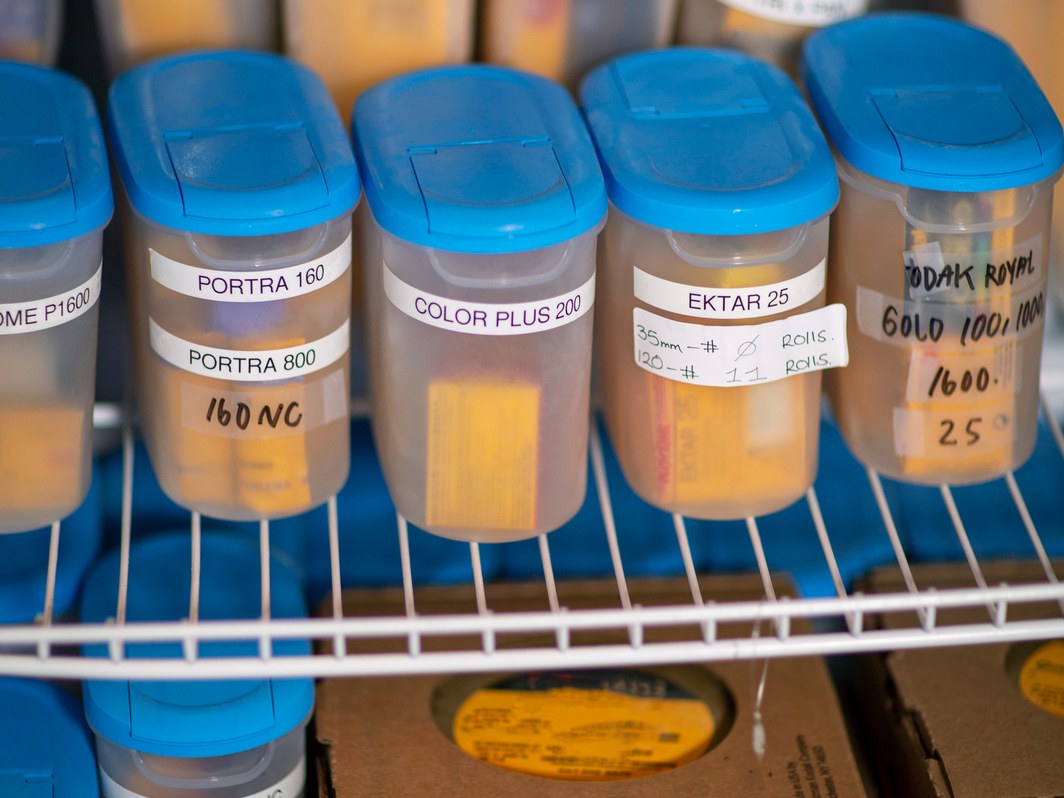 It all starts with a freezer in the company's Oakland lab. That fridge-sized box—which sits amongst the office's industrial wood desks, couches, and whiteboards—contains hundreds of rolls of film, much of it hard to find and all of it capable of capturing images in a way no other film, or smartphone, can. The Fujifilm Superia 1600 is great for shooting vibrant colors in a mix of lighting conditions, but it's been discontinued. The Agfa Ultra 50 is also rare—so rare that Hodges had to fork over $500 to get his stash on eBay. "They claimed it was the most colorful, saturated negative film ever made, and I think that might be true," he says.
See the full story here: https://www.wired.com/story/vsco-film-photo-filters/