Ultra-Precise Location Tech, Augmented Reality Are Transforming the Images We See
 While GPS technology revolutionized how people navigate the world, its successor - ultra-precise location technology - will enable them to create a 3D-image of a single location, opening the door for new business possibilities, including painting a town red through augmented reality.
One such company, Humatics, has developed some of the most competitive examples of the technology by combining its own proprietary hardware and software with data analytics, which the firm uses to create indoor 3D replications of a given environment.
“Where GPS places us within the natural world, micro-location places us within the built environment,” the company explains on its website. “Unlike GPS, it works in cities, indoors, and underground. Rather than depending on a single, global coordinate frame, micro-location creates a multitude of small, local but highly precise coordinate frames, tied together by software and networks.”
Another start-up, Scape Technologies, combines GPS technology with multiple camera images to pinpoint a specific location and map it in 3D in less than 5 seconds.
See the full story here: https://it.toolbox.com/article/ultra-precise-location-tech-augmented-reality-are-transforming-the-images-we-see
Randal Kleiser Releases Virtual Reality Series ‘Defrost’
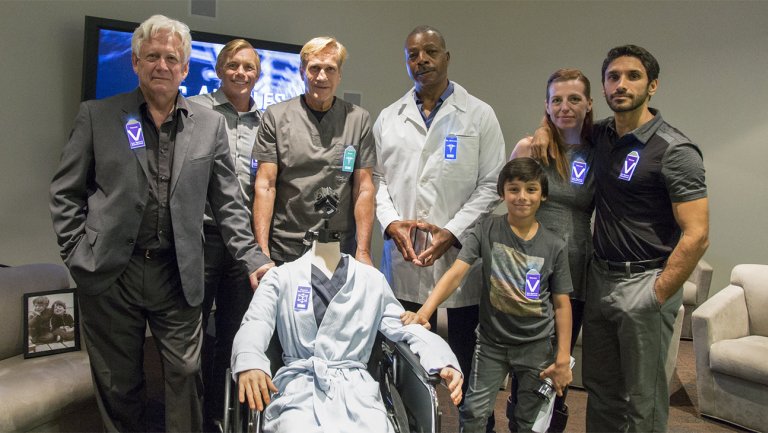 Director Randal Kleiser's experimental 12-episode virtual reality series Defrost was released today for download or streaming on select VR headsets, including Oculus Go, Oculus Rift, Mi VR and Pico VR.
It's a self-financed project made with stereoscopic 3D and 3D spatial sound. Tech-savvy writer-director Kleiser (Grease) debuted the pilot in 2015 and then produced a complete series. Episodes were previewed at events such as Sundance, Cannes and Comic-Con. Kleiser produced the series with Tanna Frederick.
The episodes, about five minutes each, are told through the eyes of Joan Garrison, a woman who wakes up in 2045 after being cryogenically frozen for 30 years and is reunited with her family. The cast includes Harry Hamlin, Carl Weathers, Veronica Cartwright, Christopher Atkins, Bruce Davidson and Frederick.
See the full story here: https://www.hollywoodreporter.com/behind-screen/randal-kleiser-releases-virtual-reality-series-defrost-1204769
Baidu’s Facemoji Keyboard Brings Sanrio Anime Characters to Life via Augmented Reality
 Sanrio, the global lifestyle brand best known for pop culture icon Hello Kitty, and Baidu, Inc. (BIDU), the leading Chinese-language internet search provider, have partnered to bring the immensely popular Aggretsuko™ and Gudetama™ characters to millions of users via augmented reality on Baidu’s Facemoji Keyboard app. This marks the first partnership between Sanrio and Baidu, and signifies a joint effort to bring Sanrio’s beloved characters to fans in the United States in a fun, engaging way.
Facemoji Keyboard users can access the Aggretsuko AR Emoji free for the first three months, then for $3.99 per download. The Gudetama AR Emoji will also be available for purchase at $3.99.
See the full story here: https://finance.yahoo.com/news/baidu-facemoji-keyboard-brings-sanrio-130000686.html
Fable’s Neil Gaiman VR Experience ‘Wolves in the Walls’ Gets Sequel at Tribeca
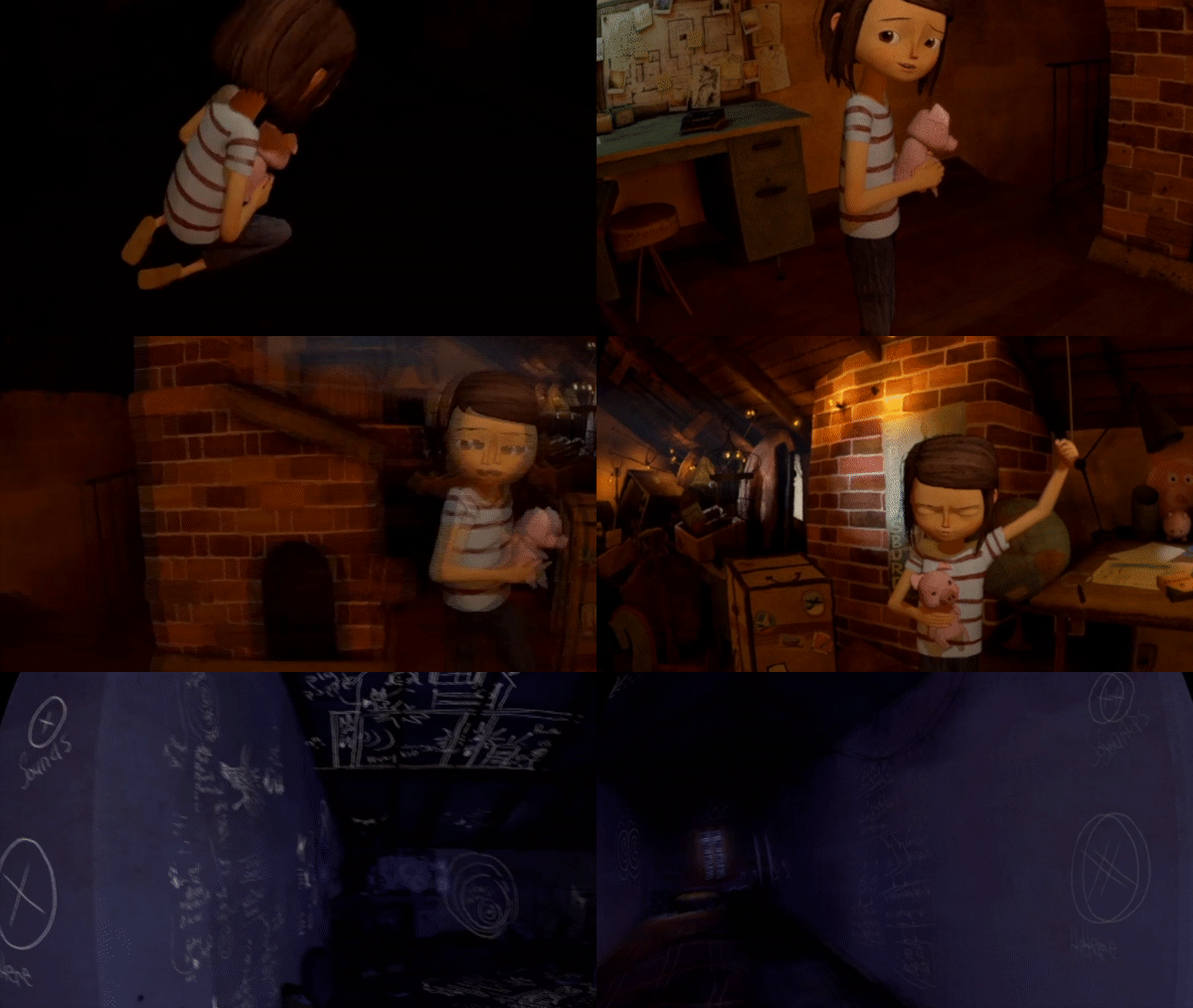 San Francisco-based immersive entertainment startup Fable is premiering the second part of “Wolves in the Walls,” a VR experience based on the Neil Gaiman children’s book by the same name, at the Tribeca Film Festival this week. “Wolves in the Walls: It’s All Over” effortlessly connects to the existing story, and immerses viewers in the world of an imaginative 8-year-old.
“Wolves in the Walls,” of which a first part premiered at Sundance in 2018, is the story of Lucy, an 8-year-old girl who is convinced that there are wolves living in the walls of her family home. She hears their noises, she fears their presence — but no one else in her family believes her.
“Wolves in the Walls: It’s all Over” also continues to play with interactivity, which includes the manipulation of objects. At one point, viewers get to take a canning jar to listen to the sounds in the walls. In another instance, we help Lucy and her Mom to fill jars with jam — an overwhelming process that some involves strange, one-of-a-kind automated machinery. And then there is “Wolf Slayer,” the in-experience video game played by Lucy’s brother, which we get to play along with for a little while.
“Wolves” parts 1 and 2 run a total of 20 minutes together, and Billington said that he was expecting part 3 to add another 20 minutes to the story. To make the piece interactive, the team had to produce an extra 20 minutes of material that viewers may or may not see, based on the choices they make during the story.
“We call it a twigging narrative,” he joked, adding: “We see choice and interactivity slightly differently.” Shamash explained that the focus was on the main character of Lucy, and her decisions, as opposed to decisions that viewers may make for her. “This is her quest, her journey,” she said.
“we create moments” as a mission statement during its first offsite meeting after spinning out of Facebook.
Some of these moments may be stories, others may be just small interactions with virtual characters, he suggested.
Key to both those future plans and a story like “Wolves in the Walls: It’s all over” is the ability to create emotional connections with characters, argued Shamash. That’s because a virtual beings like Lucy, be it in stories or other contexts, becomes more believable when you feel for them. Said Shamash: “It should have its own soul.”
See the full story here: https://variety.com/2019/digital/news/wolves-walls-tribeca-1203197492/
Sony creates colossal 16K screen in Japan
 [PhilNote: actually there is no limit to how large the screen can be!]
One expert said it would likely take decades for 16K tech to filter down to consumer products.
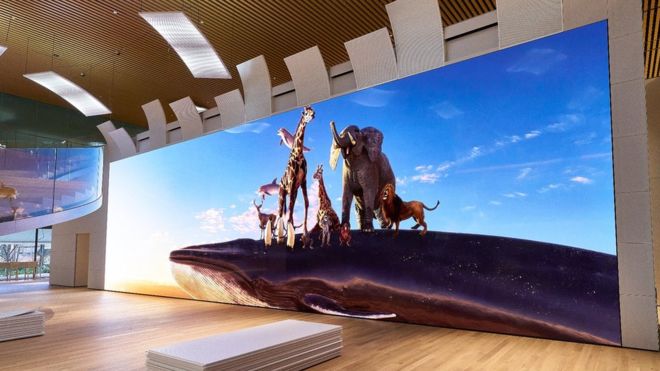
The 63ft by 17ft (19.2m by 5.4m) screen is currently being installed at a new research centre that has been built for the Japanese cosmetics group Shiseido in the city of Yokohama, south of Tokyo. It is so large it will stretch between the first and second floors.
Sony had previously designed a separate 16K display that went on show at Tokyo's Haneda Airport in 2014, but that looked like it was made up of dozens of smaller screens rather than presenting a single seamless picture.
The new "super-size" installation has in fact been created out of several modular panels, but because they do not have bezels they can be fitted together without any visible gaps to create the impression of being a single screen.
Since little 16K footage exists elsewhere, the firm has produced its own film for Shiseido showing life-size animal wildlife.
It has not disclosed the method involved, but has previously achieved what is known as "quad ultra-high definition" footage by using a method called demosaicing.
See the full story here: https://www.bbc.com/news/technology-47867038
Dreamlike VR Experience ‘The Key’ Set To Debut At Tribeca Film Fest
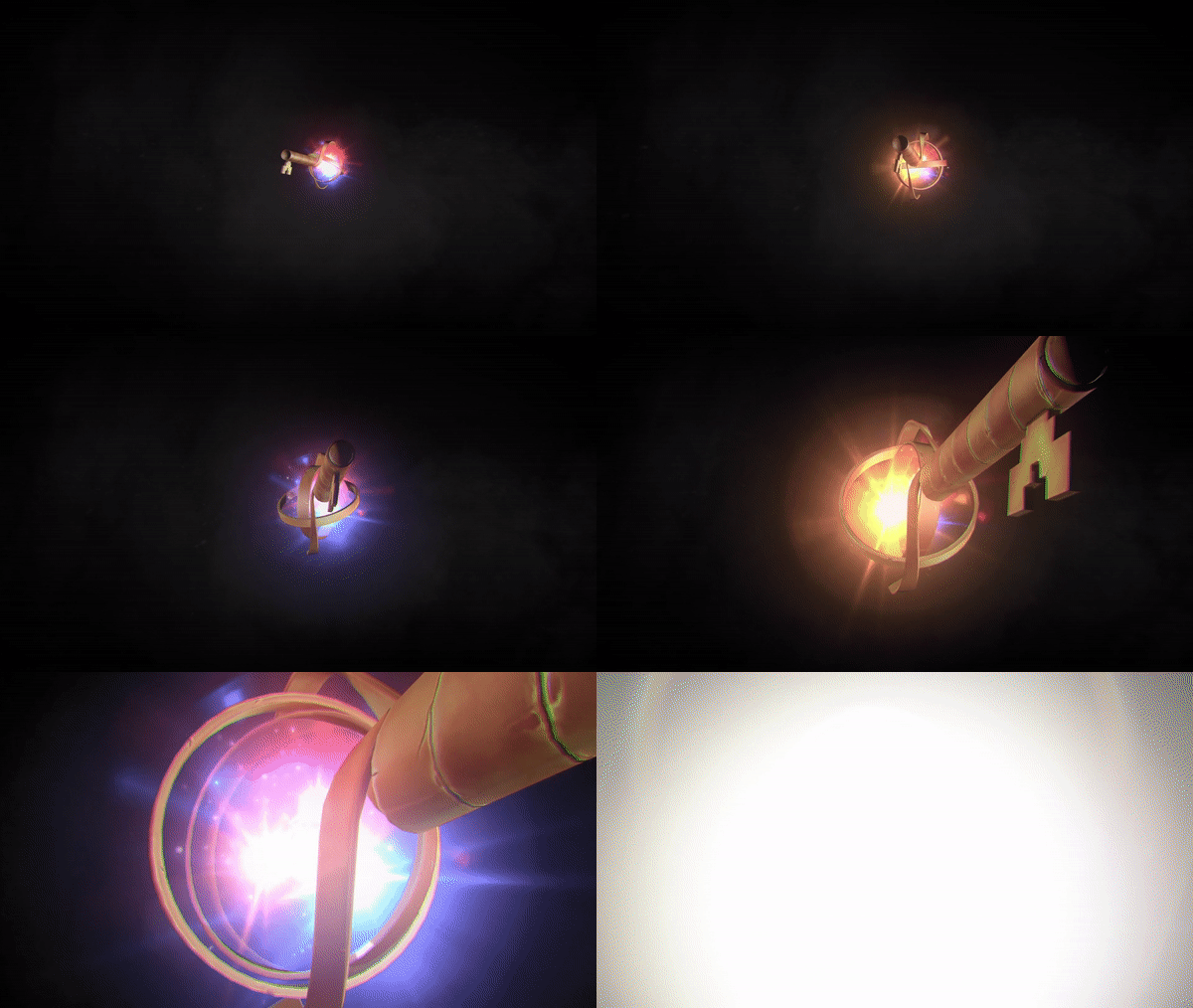 The Key is an astonishing room-scale interactive VR journey that will have you making incredibly difficult and delicate decisions under intense pressure. As you put on your VR headset, you’re taken on a journey straight into the heart of darkness. Each step inside the virtual world is filled with twists and turns that will inch you closer to unraveling who Anna is, her mysterious past, and the significance of the cryptic key that she dreams about each night.
You’ll follow Anna as she guides you through multiple worlds to face a variety of challenging moments, each path immersing you further into the experience.
Lucid Dreams Productions director Celine Tricart and producer Gloria Bradbury partnered with the Oculus VR for Good Creators Lab, to push storytelling in a compelling new direction.
The Simple Guide to Four Major VR Headsets Launching This Spring
Oculus Quest
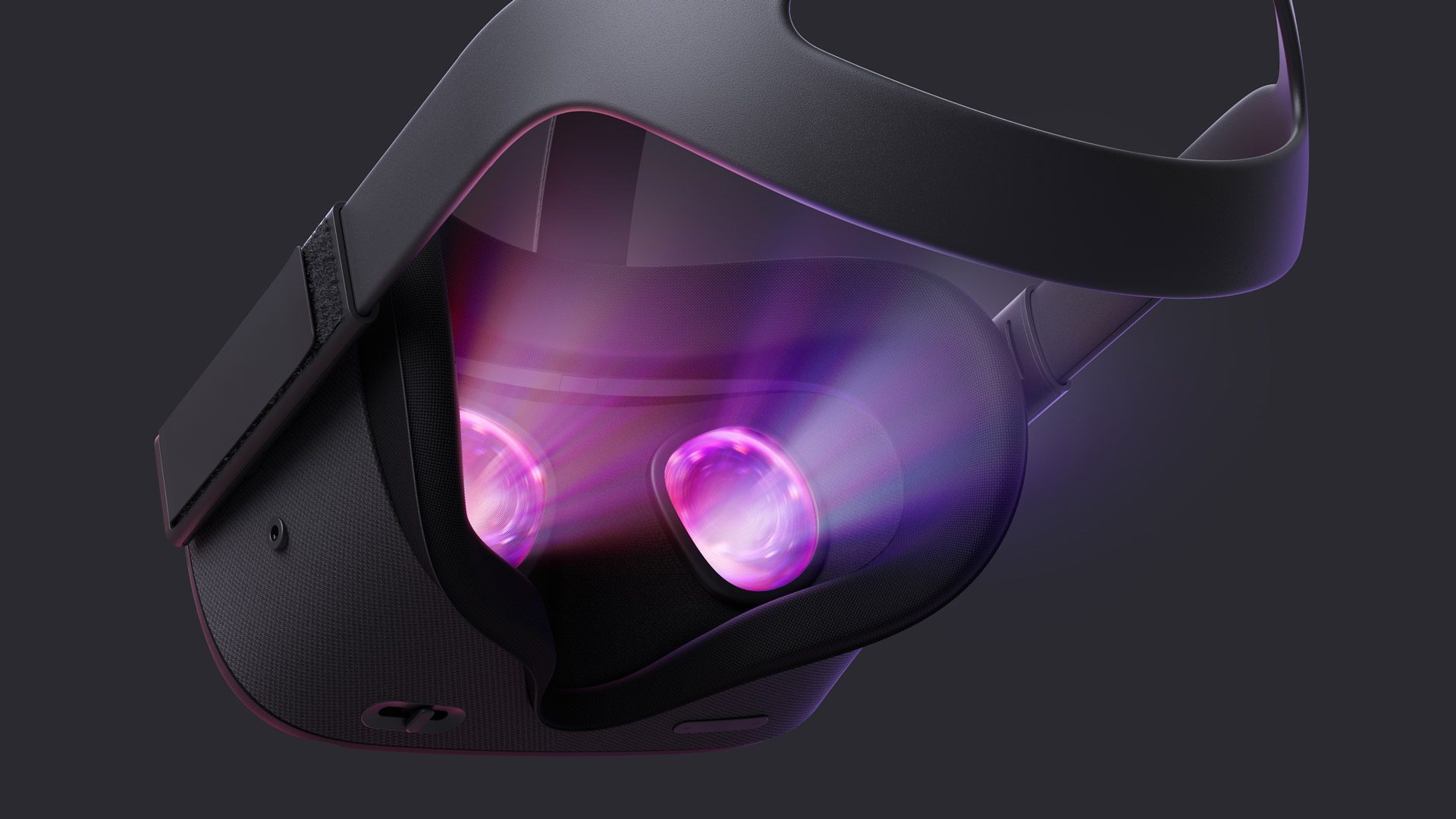
Quest is Oculus’ first standalone VR headset that includes 6DOF tracking on the headset and controllers.
Because it doesn’t have the power of a beefy PC, you can expect graphics to have a decidedly ‘mobile’ feel, but nevertheless it’s very possible to get lost in VR on Quest, even if the graphics are far from what you’d see on a PC VR headset.
Who is it For?
Quest is made for gaming, and most apt for the VR user who isn’t willing to invest in a gaming PC that has enough power to run a PC VR headset. Quest can only run Quest-specific content available on the Oculus Store (Oculus Rift and Oculus Go also have their own separate content libraries).
Oculus has confirmed that Quest will cost $400.
Oculus Rift S
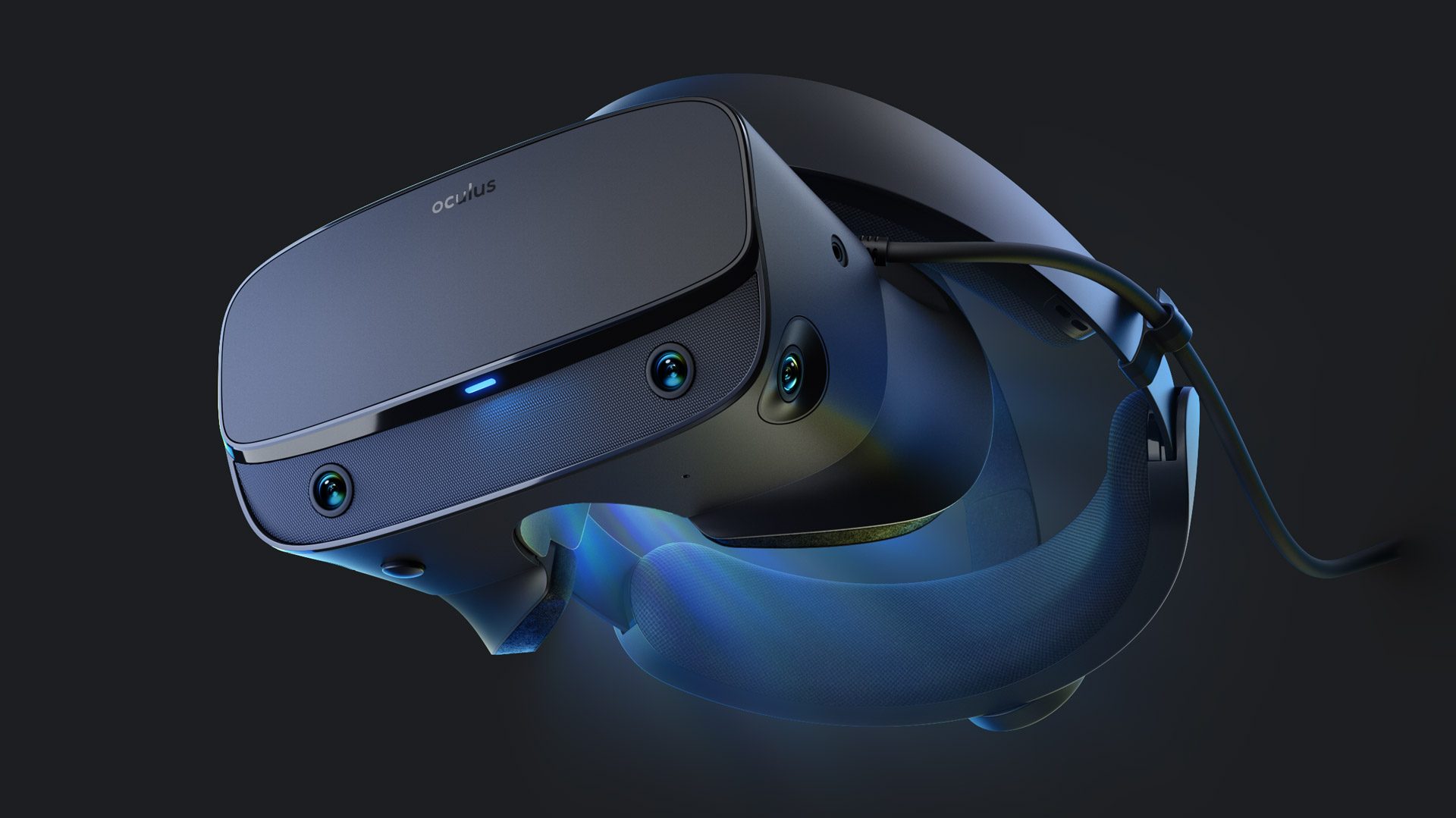
What is it?
Rift S is Oculus’ second PC VR headset, and the company is positioning it as an easier to use version of Rift—with a few upgrades.
Another upgrade over the original Rift S is a new display with a higher resolution that will make graphics sharper and reduce the ‘screen door effect’ (the unlit spaces between pixels), which will make for a step up in clarity.
Oculus has confirmed that Rift S will cost $400.
HP Reverb
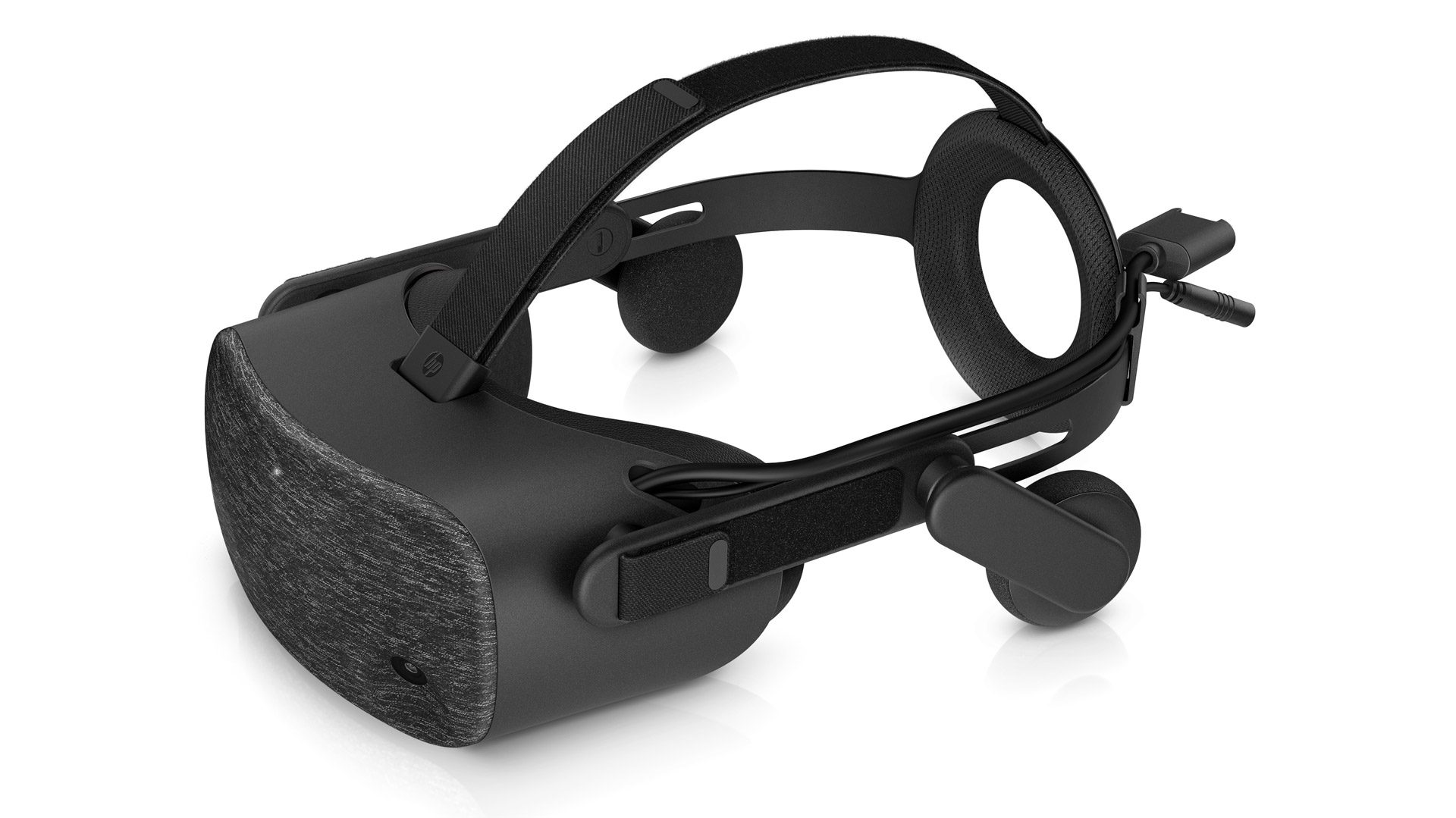
What is it?
HP’s Reverb headset is the company’s second PC VR headset which runs Microsoft’s ‘Windows Mixed Reality’ platform, and can also play SteamVR content through an official plugin. Like Rift S, Reverb uses on-board tracking and doesn’t rely on external sensors for tracking.
The biggest upgrades that Reverb brings to the table are an all new design which offers on-ear headphones, as well as new displays which offer a big jump in resolution compared to pretty much any other headset on the horizon.
HP has confirmed that Reverb will cost $600 for the consumer edition and $650 for a professional edition for enterprise use.
Valve Index

What is it?
Although Valve contributed significant R&D to the HTC Vive, the company’s upcoming Index will be the first PC VR headset made and sold by Valve. Though only limited information is available so far, it seems that Valve is positioning Index as a flagship headset for SteamVR, and it’s thought that the company could announce a least one first-party game to launch with the headset, but we’ll have to wait and see. The headset will launch with the ‘Knuckles’ controllers which Valve has had in the works for many years now (though they plan to call them ‘Valve Index controllers’ moving forward).
What You Need to Know about Collecting Virtual-Reality Art
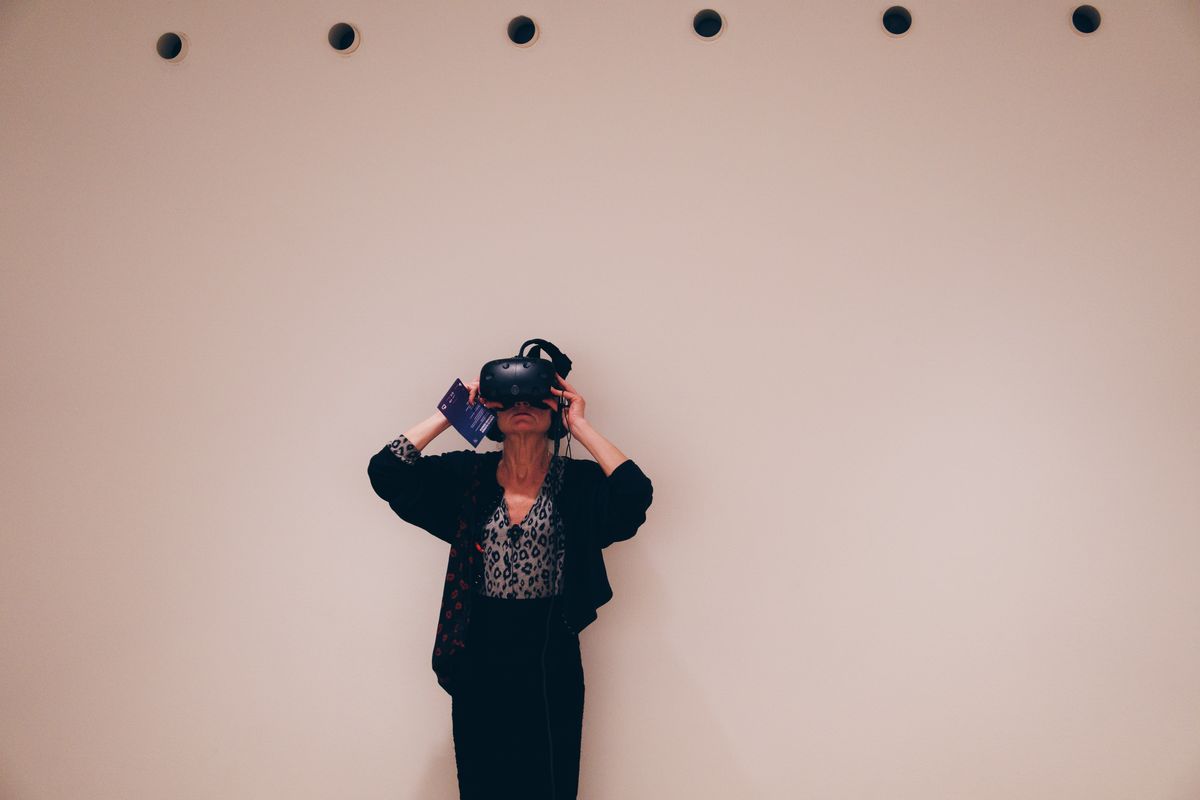
Processed with VSCO with hb1 preset
Rethink the art world’s scarcity economy
“Obsolescence can be interesting”
Conservation as a conversation
Don’t always privilege spectacle
You don’t need to be tech-savvy to love VR
...as the field develops, collectors may want to address other considerations: What can VR accomplish that is unique to this medium? And does that always have to mean flashy, astounding, or visceral interactions? Birnbaum pointed to a work in development that will be unveiled as part of “Electric,” his exhibition at Frieze New York. Undertaken with the mixed-media painter, it’s a VR exploration of Hilma af Klint’s tropes and motifs. “It shows that VR can be used in places where one doesn’t expect it,” he said. “That VR is not only sensational. This will be very subtle—and I hope, not boring. It’s going to be challenging and interesting.”
See the full story here: https://www.artsy.net/article/artsy-editorial-collecting-virtual-reality-art
Are shared experiences the future of virtual reality?
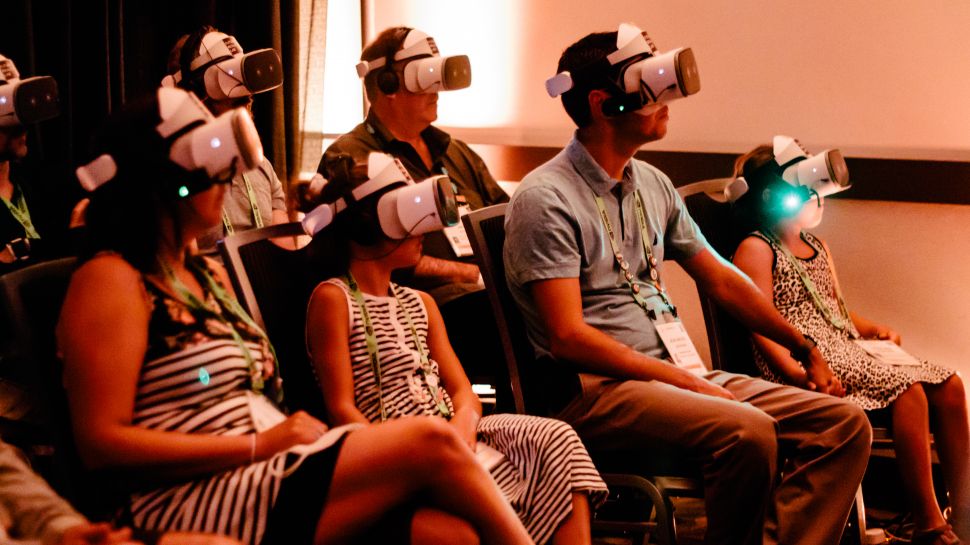 Parallux creates the technology that allows VR headsets to be linked together, but it also creates content like Cave from scratch. Although the audience at Tribeca will be limited to 16 people, Cave was initially made for 30 at a time.
"That presented incredible challenges, because it's the first time you're not focusing the attention towards one person," explains chief creative officer Kris Layng. "So you have to take into account that every single person needs to have a good view of the action."
"I think audiences have a real desire for these more immersive experiences," he says. "Movie theatre attendance is on the decline. I think there needs to be something that's going to jolt things [...] People want to go out, and they want more and more and more. And they want to step into the world of their favorite IP – step into the Marvel universe, step into Star Wars – and it just opens up a whole new world, I think."
"Instead of Cave, which is intended for 30 people at a time and six minutes long," says Zetter, "our new piece is going to be 20 minutes long, intended for 50 people at a time. And this is going to be an origin story of Frankenstein from the perspective of a young Mary Shelley, who was 18 years old when she wrote it, off of a bet with Lord Byron over who could write the scariest ghost story. We’re really excited about that, and are working on finishing up for later this year.
See the full story here: https://www.techradar.com/news/are-shared-experiences-the-future-of-virtual-reality