Scope AR Snags $9.7 Million to Expand Its Enterprise Augmented Reality Platform
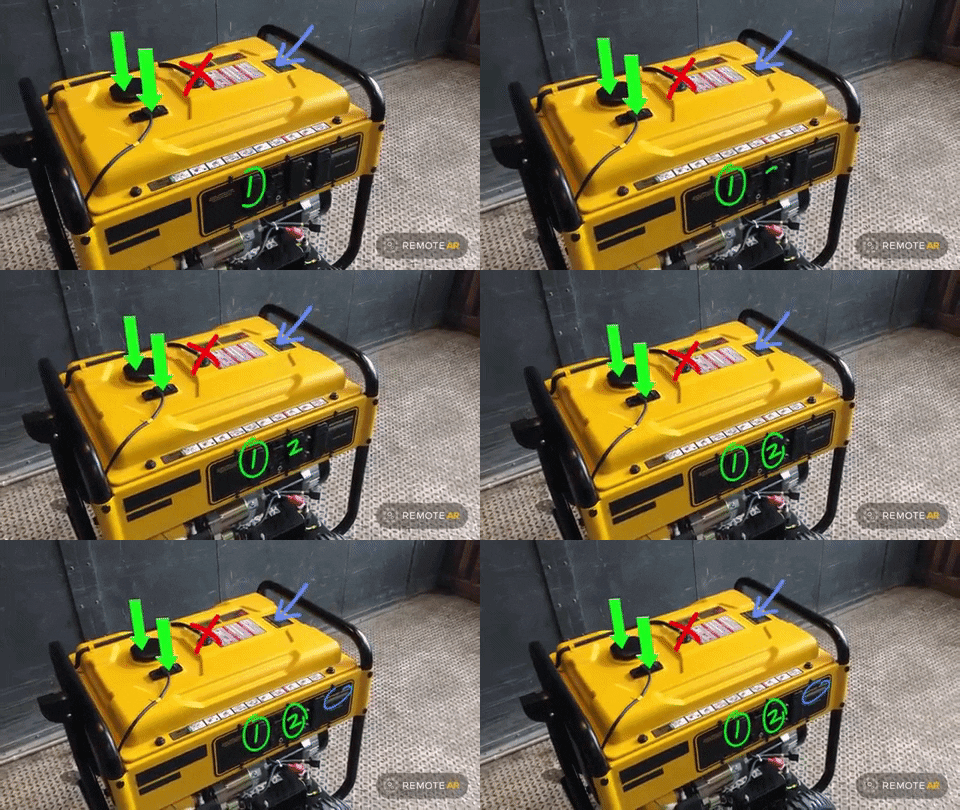 The funding will enable the company to extend the reach of its enterprise AR products, such as hands-free workflow guidance platform WorkLink and AR telepresence solution Remote AR, for mobile devices and AR headsets like HoloLens.
See the full story here: https://next.reality.news/news/scope-ar-snags-9-7-million-expand-its-enterprise-augmented-reality-platform-0194812/
GDC 2019: Unity “investing heavily” in augmented reality tech
 Unity is investing heavily into both virtual and augmented reality as it looks to enable developers utilising the tech both in and out of the games industry.
Unity has already been used to develop AR games such as Niantic’s Pokemon Go and Ludia’s Jurassic World Alive.
But it wants to become a key partner for even more developers as it seeks to become a leader in the emerging technologies.
"A lot of opportunities"
As part of that mission, Unity has developed the AR Foundation, a toolset that lets creators build apps for both ARKit and ARCore through one platform. But it has a number of other tools powering AR development.
Unity, of course, wants to position itself right at the centre of AR’s growth.
“In general Unity is looking outside of gaming and we want to be there to enable these new platforms and new industries,” says Miller.
He adds that in the near future, he expects AR will work through mobile phones and on specialised headsets. But in future, he expects to see more head-mounted technology.
See the full story here: https://www.pocketgamer.biz/interview/70263/gdc-2019-unitys-augmented-reality-plans-were-investing-heavily/
This Guy Spent an Entire Week in a VR Headset. Here’s How It Went Down
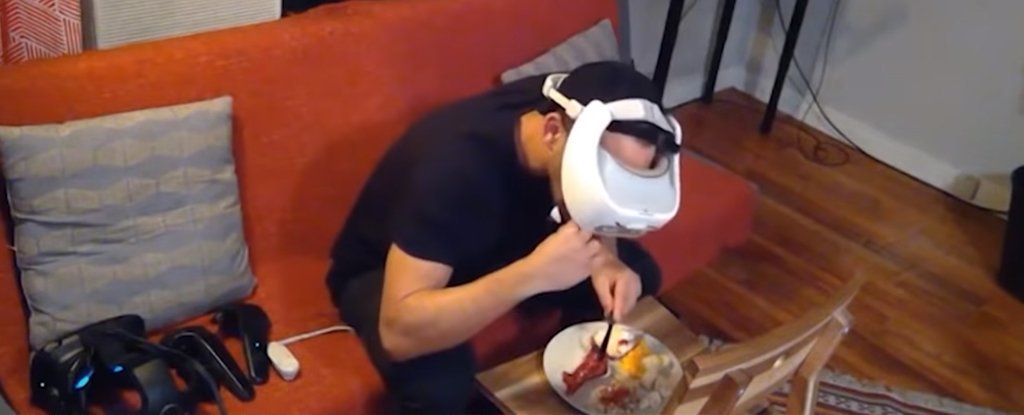 "This is quite possibly the dumbest thing I've ever done, but welcome to a week in the future," he said in a video about the experiment.
Wilmot worked, ate and exercised inside virtual reality. Sleeping in the headset turned out to be "more comfortable" than Wilmot anticipated, though his eyes burned a bit.
"If one is feeling stressed, they can load into a natural environment for ten minutes and relax," he said in the video.
See the full story here: https://www.sciencealert.com/this-is-what-happens-when-you-spend-a-whole-week-in-vr
Filament Games turns robotics into virtual reality
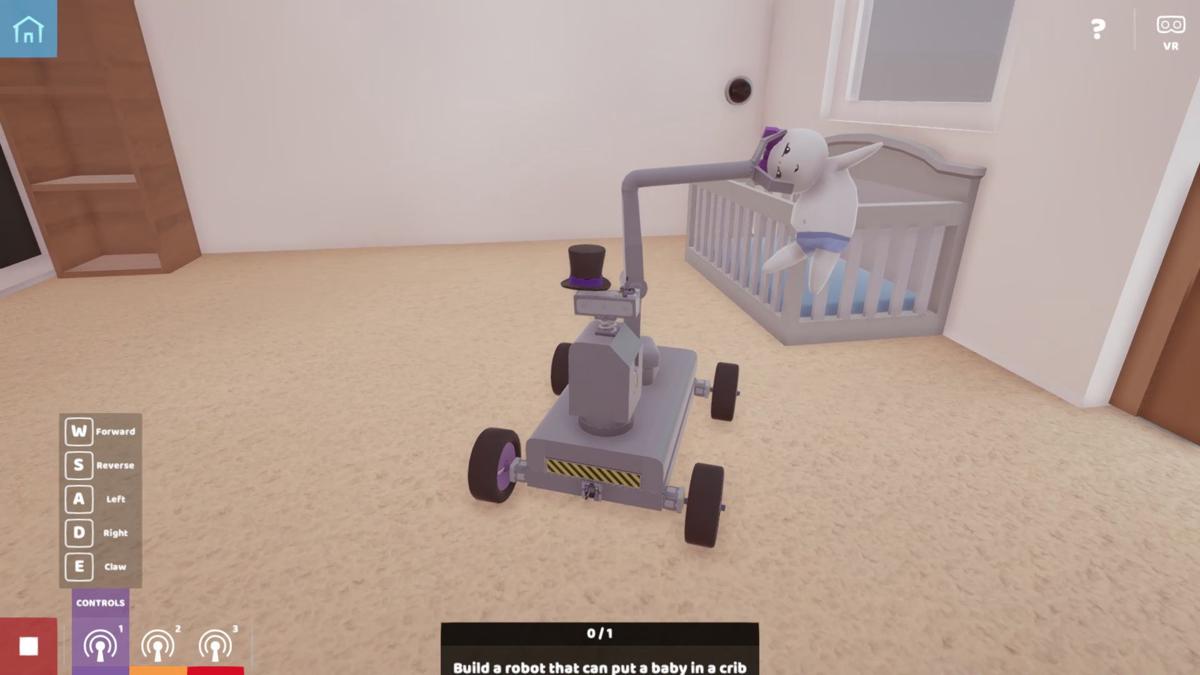 Robotics can be cool — and understandable — even if you’re not an engineer.
And if you learn how to control robots, you could beat the odds of having a robot take over your job some day.
That’s one of the messages of RoboCo, a project by Madison educational games development company Filament Games that’s drawing nearly $1 million in grants from the National Science Foundation (NSF).
It’s not meant to replace the physical act of piecing parts together and wiring circuitry but instead, to present an entrée to the concept of robotics.
Filament received a $225,000 grant to build a prototype in VR format and was recently notified the company has qualified for a phase 2, $750,000 grant to complete the project.
See the full story here: https://madison.com/wsj/business/filament-games-turns-robotics-into-virtual-reality/article_71ff90e6-8be8-5be0-9ca3-058990c46692.html
Khronos Releases OpenXR 0.90 Provisional Specification for High-Performance Access to AR and VR Platforms and Devices
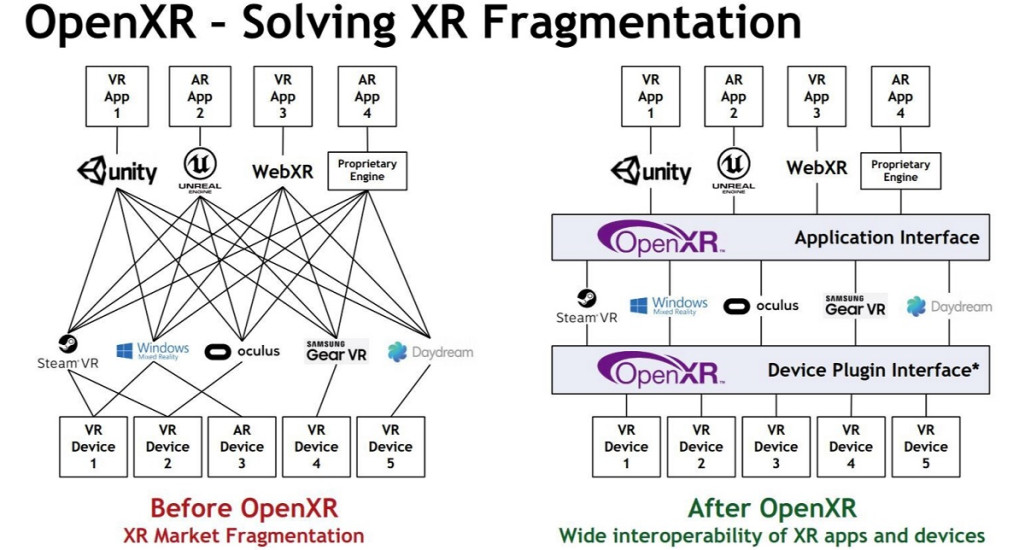
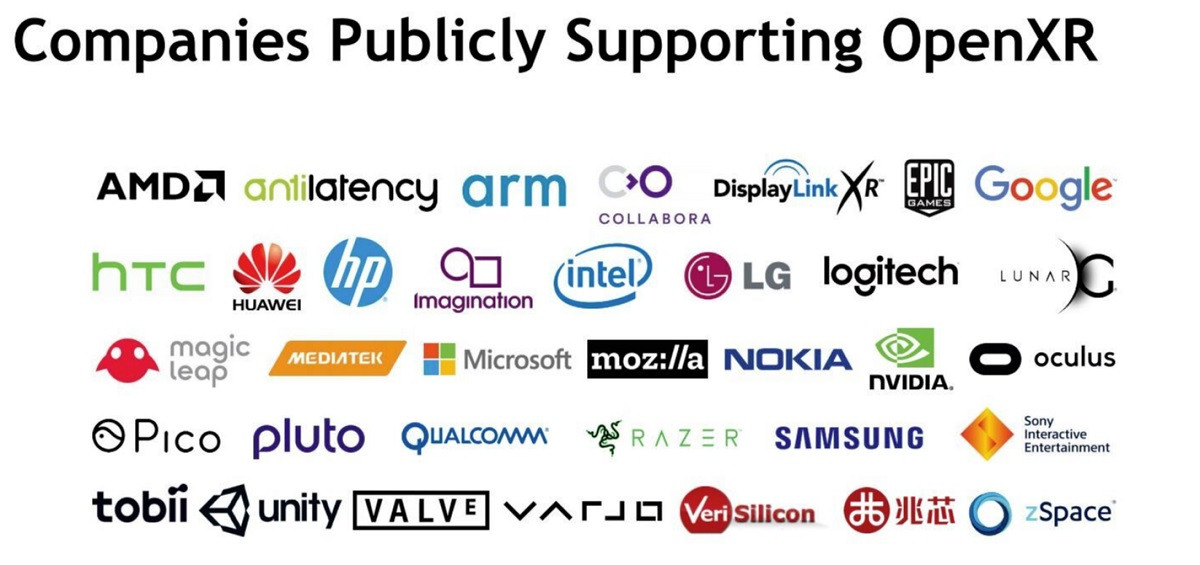 The OpenXR 0.90 provisional release specifies a cross-platform Application Programming Interface (API) enabling XR hardware platform vendors to expose the functionality of their runtime systems. By accessing a common set of objects and functions corresponding to application lifecycle, rendering, tracking, frame timing, and input, which are frustratingly different across existing vendor-specific APIs, software developers can run their applications across multiple XR systems with minimal porting effort—significantly reducing industry fragmentation.
Many of these implementations are becoming available for developers to evaluate including the ‘Monado’ OpenXR open source implementation from Collabora and the OpenXR runtime for Windows Mixed Reality headsets from Microsoft shipping today. Additionally, the Unreal Engine from Epic plans to continue to support OpenXR.
The group has a wide array of supporters from across the hardware, software, and game industries. Among the supporters are Intel, Advanced Micro Devices, Nvidia, Microsoft, HTC, Samsung, Qualcomm, Valve, Oculus, Google, Unity, and others.
Notably absent is Apple.
See the full story here: https://www.apnews.com/Business%20Wire/80b803e294c74c3fa3ca9e0af2c869ef
‘East of the Rockies’: Reliving Japanese-Canadian internment
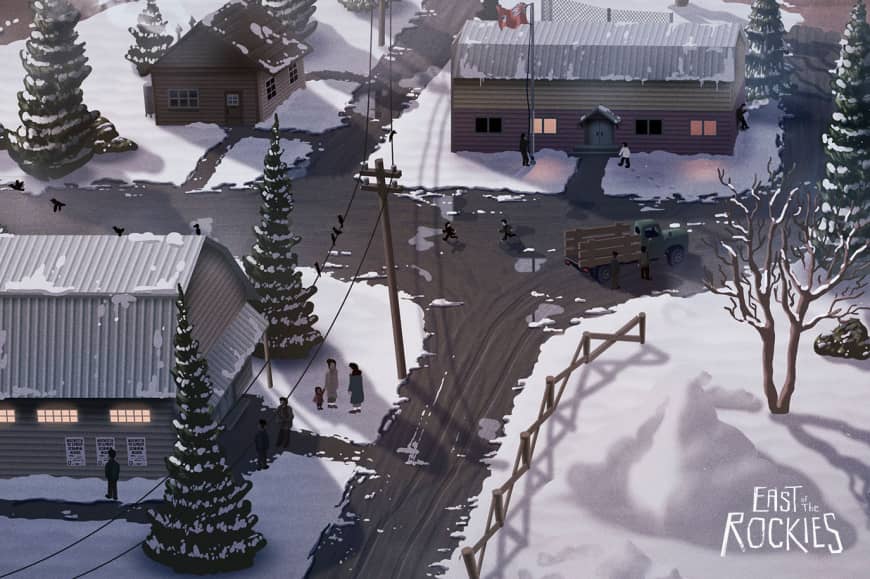 It is July 4, 1942, months after the attack on Pearl Harbor. A 17-year-old girl named Yuki and her family leave their home in Vancouver for the last time.
Like thousands of other Japanese-Canadians, they are forced inland by the Canadian government under the War Measures Act to internment camps in eastern British Columbia.
This depiction of a dark chapter in Canadian history is the subject of “East of the Rockies,” an interactive, augmented reality storytelling app launched on March 1.
Yuki is a second-generation Japanese-Canadian girl, and her story — a 50-minute journey through memories and words — is narrated by her granddaughter Anne, who reads Yuki’s diaries in the present day. The characters are fictional, but the history is behind the tale is true.
“It’s not a novel, it’s not a documentary,” says Kogawa, pointing out that using an app for the story has both strong and weak points. “But it’s a presentation of a piece of history and I hope that it will be helpful.”
See the full story here: https://www.japantimes.co.jp/life/2019/03/17/digital/east-rockies-reliving-japanese-canadian-internment/#.XI63Uy2ZMnU