DP Curtis Clark on Technology’s Future, Receiving Academy’s John A. Bonner Medal
 What are some of the council's initiatives?
High dynamic range — HDR, meaning a wider range between the blackest blacks and whitest whites in an image — and looking at display devices that will need to be sophisticated enough to handle that. We're looking at the difference between professional reference monitors and consumer monitors so we can narrow the gap in terms of what consumer monitors are able to reproduce to maintain the integrity of the filmmaker's creative look.
With an eye toward making recommendations to manufacturers?
Yes, that's in the works with UHD Alliance and DCI [studio consortium Digital Cinema Initiatives].
You're also examining developing LED cinema screens.
We've been doing testing with two manufacturers who are dealing with it at the moment, very actively for cinema — Samsung and Sony.
What are your findings so far?
We're still looking into it, but I can certainly tell you that it is immensely encouraging. It's very effective [in displaying HDR].
From a technology standpoint, what is the biggest challenge facing cinematographers?
It's HDR.
See the full story here: https://www.hollywoodreporter.com/news/dp-curtis-clark-receiving-academys-john-a-bonner-medal-1182440
Google’s AI White Paper Calls for Self-Regulation, Not Laws
 Experts outside Google call the paper a “positive but still preliminary step toward engaging with the challenges AI may pose to society.” At Oxford University, Internet Institute researcher Sandra Wachter said Google’s white paper “shows the company attempting to talk more specifically, but doesn’t go very far.” “With explanations, I don’t want to see a code of conduct, I want to see hard laws, because it’s a human rights issue,” she said.
See the full story here: http://www.etcentric.org/googles-ai-white-paper-calls-for-self-regulation-not-laws/
and here: https://www.wired.com/story/google-says-wants-rules-ai-kinda-sorta/
Routine use of AR for industry 4.0 or digital twins

Fraunhofer IGD, Darmstadt
The latest versions of instant3Dhub and VisionLib can now be used to run cloud-based augmented reality applications (»software as a service«). This eliminates the need for time-consuming and often manual CAD data reduction, allowing the full potential of the native data to be utilized. Researchers at Fraunhofer IGD have made it possible to routinely use augmented reality for industry 4.0 or digital twins.
(Darmstadt) Two fundamental technologies from the Fraunhofer Institute for Computer Graphics Research IGD will soon go hand in hand. Through the integration of the interactive 3D visualization platform instant3Dhub and the AR tracking technology VisionLib, it will be possible for the first time to run AR applications in a »software as a service« infrastructure in order to run computer-intensive algorithms in the cloud. The CAD data remains exclusively in the company’s infrastructure while only the data relevant to the current visualization is transmitted to mobile devices (e.g., smartphones, data glasses) in real time.
See the full story here: https://www.igd.fraunhofer.de/en/press/news/routine-use-ar-industry-40-or-digital-twins
Departure of HoloLens Inventor Raises Questions about Future of Apple’s AR/VR Headset Project
 Avi Bar-Zeev, the co-inventor of Microsoft’s HoloLens and a pioneer in AR and VR technologies, left Apple last month, according to a new report by Variety. Bar-Zeev confirmed his departure, saying that he left his full-time position at Apple in January, but that he “had the best exit one can imagine” and “has only nice things to say about Apple.” He also declined to speak on any specific product plans, noting only that he plans to continue consulting in augmented reality technologies while “noodling” on the next big thing.
After leaving Disney, Bar-Zeev founded KeyHole, which was later acquired by Google to underpin its Google Maps and Google Earth projects.
See the full story here: https://www.idropnews.com/news/departure-of-hololens-inventor-raises-questions-about-future-of-apples-ar-vr-headset-project/95815/
How do we build an augmented and virtual reality business plan?
 I usually start with three considerations as a set of first principles for design. When creating an experience for a human, you need to contemplate the following:
- Agency. What can the user do? What can't they do? How do you make this evident -- i.e., train them to navigate/interact? Why are you giving them this agency -- or why are you not giving them this agency?
- Attention. What does the user need to see/hear/feel? When do they need to experience it? How will it be presented, and why are you using that mode of getting their attention? Often, people build their augmented and virtual reality business plan, design an immersive environment, and then use tricks to lead the users where they want them to go. This can be problematic, as AR/VR is typically supposed to offer agency -- see No. 1. So why are you leading them around by the nose -- or ear? If you want them to experience things in some order or particular manner, maybe a traditional flat screen-based, linear experience is a better choice. At this point, many AR/VR experiences are done in AR/VR just because it is viewed as cool and cutting edge rather than effective.
- Affiliation. Who is the user? What is their relationship to the environment? How is that relationship made obvious? Can the user influence what is happening or are they a voyeur? Why should they care about what is happening around them? Are you trying to sell them something, train them or entertain them?
See the full story here: https://internetofthingsagenda.techtarget.com/answer/How-do-we-build-an-augmented-and-virtual-reality-business-plan
Warby Parker uses augmented reality to allow customers to virtually try-on glasses
 Online glasses and sunglasses retailer, Warby Parker, has launched a new “virtual try-on” feature that allows customers to preview glasses using augmented reality (AR).
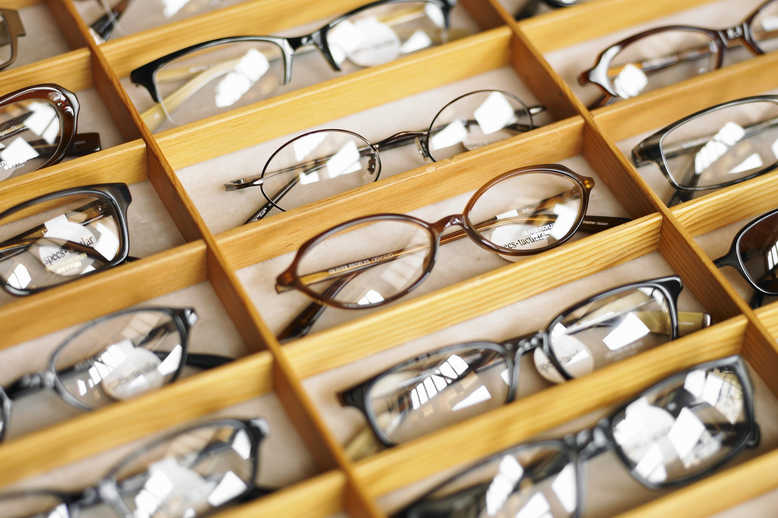
The New York City-based firm said that its "placement algorithm mimics the real-life process of placing a pair of frames on your face, taking into account how your unique facial features interact with the frame”.
This means that the glasses will stay fixed in place if you tilt your head and will even show the way the light filters through a pair of acetate frames, for example.
Warby Parker is a direct-to-consumer eyeglass brand which allows customers to try on glasses at home. Customers can choose five frames from Warby Parker's website and the company posts them for free, allowing customers to wear the loaned glasses briefly before committing to a purchase.
King Children, a startup that makes custom eyewear, also uses Apple's TrueDepth technology to let customers preview a pair of glasses and take fit measurements to personalize things like the lens height and width, the nose bridge, and the nose pad position. Each pair of glasses sells for $125, a price similar to Warby Parker's frames. San Francisco-based brand Topology also uses the measurements from the TrueDepth camera to deliver custom eyewear.
See the full story here: https://www.wired.com/story/warby-parker-augmented-reality-app/
Cher from Clueless’s iconic computerised wardrobe could soon become a reality
 By using images from your social media it is believed that the mirror will be able to give you an exact depiction of what you will look like in a garment, as well as developing an algorithm for what you are likely to look for.
“The combination of free delivery and returns, and no fitting software being good enough has previously prevented a breakthrough in this area, but Amazon is probably one of a few companies that has the data and resources to succeed," says Gustav Gisseldahl, founder of influencer driven commerce platform APPRL. “However, when it comes to suggesting clothing based on image recognition, your calendar and other products in your home, I think consumers will prefer inspiration from influencers and magazines for a few more years.”
See the full story here: https://www.harpersbazaar.com/uk/fashion/fashion-news/a26128356/amazon-cher-clueless-ar-wardrobe/
UX design: It takes a village
 It’s not UX/UI. UX is a much broader discipline than UI,” said Jason Wong, research VP at Gartner. “UI looks at how the user interacts with a given application. UX includes user research, content, performance and back-end so you need a team to help execute that.”
Beyond graphics, UX designers and testers must contemplate conversational interfaces, immersive experiences, and the IoT.
“It’s not just about graphics, it’s about tones,” said Wong. “We’ve seen companies hire copywriters from the movies and TV to help script responses for chatbots and hone what that voice response should sound like in terms of a voice interaction. Very complex things like that are still emerging which UX is still trying to grasp because they’re so new and they’re constantly changing.”
Instead, they think about the tasks they want to accomplish. For example, noisy airports aren’t the best settings for phone calls or voice interfaces, so an individual might choose to check a credit card balance using a smartphone or laptop. However, while driving, the same person might call the credit card company and check her balance using an interactive voice response (IVR) system.
An emerging role is the UX architect, who considers the digital landscape beyond the UI level, such as performance requirements and the services that will be necessary to deliver experiences across multiple touch points.
See the full story here: https://sdtimes.com/softwaredev/ux-design-it-takes-a-village/