Explainer: What is a quantum computer?
A quantum computer harnesses some of the almost-mystical phenomena of quantum mechanics to deliver huge leaps forward in processing power. Quantum machines promise to outstrip even the most capable of today’s—and tomorrow’s—supercomputers.
They won’t wipe out conventional computers, though. Using a classical machine will still be the easiest and most economical solution for tackling most problems. But quantum computers promise to power exciting advances in various fields, from materials science to pharmaceuticals research. Companies are already experimenting with them to develop things like lighter and more powerful batteries for electric cars, and to help create novel drugs.
What is superposition?

Qubits can represent numerous possible combinations of 1 and 0 at the same time. This ability to simultaneously be in multiple states is called superposition. To put qubits into superposition, researchers manipulate them using precision lasers or microwave beams.
Thanks to this counterintuitive phenomenon, a quantum computer with several qubits in superposition can crunch through a vast number of potential outcomes simultaneously. The final result of a calculation emerges only once the qubits are measured, which immediately causes their quantum state to “collapse” to either 1 or 0.
What is entanglement?

Researchers can generate pairs of qubits that are “entangled,” which means the two members of a pair exist in a single quantum state. Changing the state of one of the qubits will instantaneously change the state of the other one in a predictable way. This happens even if they are separated by very long distances.
Nobody really knows quite how or why entanglement works. It even baffled Einstein, who famously described it as “spooky action at a distance.” But it’s key to the power of quantum computers. In a conventional computer, doubling the number of bits doubles its processing power. But thanks to entanglement, adding extra qubits to a quantum machine produces an exponential increase in its number-crunching ability.
What is decoherence?

The interaction of qubits with their environment in ways that cause their quantum behavior to decay and ultimately disappear is called decoherence.
What is quantum supremacy?

It’s the point at which a quantum computer can complete a mathematical calculation that is demonstrably beyond the reach of even the most powerful supercomputer.
Criterion Collection’s Classic Movie Streaming Service Sets April Launch Date
 Movie buffs left out in the cold by FilmStruck’s demise will soon get a new streaming service stocked with over 1,000 classic and contemporary art-house films this spring: The Criterion Collection announced that the Criterion Channel will launch April 8 in the U.S. and Canada.
The Criterion Channel will be regularly priced at $10.99 per month or $99.99 for an annual subscription. Customers who sign up now as charter subscribers will receive a special discounted rate of $9.99 per month or $89.99 per year — pricing the company says will be locked in “for as long as you stay active” — as well as a 30-day free trial.
The Criterion Channel (criterionchannel.com) will be available on computers, Roku, Amazon Fire TV, Apple TV, iOS, and Android devices.
Criterion didn’t reveal specific titles that will be available on Criterion Channel but said the subscription VOD service will include access to Criterion’s entire streaming library of more than 1,000 classic and contemporary films from around the world.
See the full story here: https://variety.com/2019/digital/news/criterion-channel-launch-date-1203124497/
With concerts and coursework, Thomas Dolby explores the sound of virtual reality
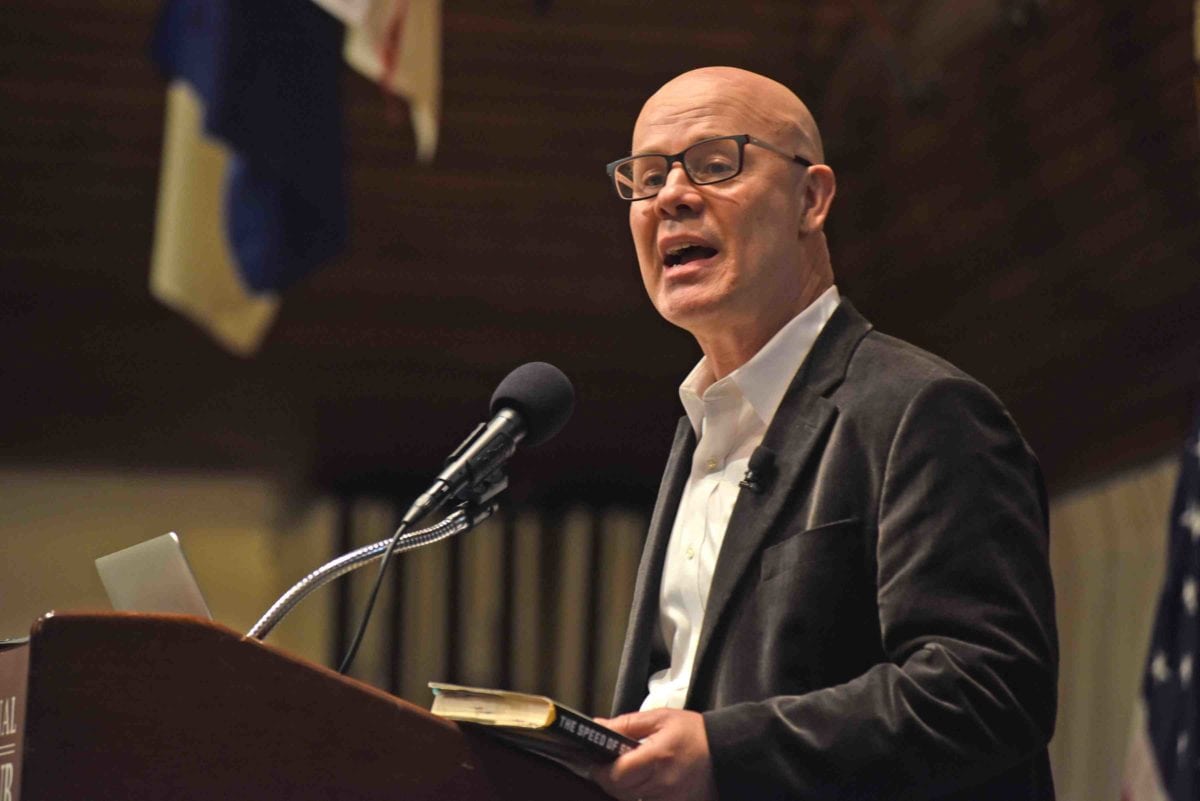 In another look toward the future, Dolby is also training a new generation of composers working across sound and technology as a professor at Johns Hopkins University in Baltimore. The Peabody Institute’s four-year Music for New Media program enrolled its first class in the fall of 2018. Starting with skills with roots in the legacy of scoring films, the coursework then transitions into composing for non-linear environments where decisions change and environments shift in real-time.
See the full story here: https://technical.ly/baltimore/2019/01/30/thomas-dolby-sees-a-new-generation-of-virtual-reality/
Augmented reality to grow into trillion dollar industry, Sundance panel hears
 Schilowitz said once users reached the point where the image resolution and AR device were so effective that users forgot what they were doing, ethics would come into play. “You’re building a digital reality in an office space, in a living room or in a new kind of space that creates this kind of simulation behavior,” he said, adding that the bigger the play, the more amazing the experience. “But it’s also terrifying if you don’t know what you’re getting into.”
Asking how the form could impact spatial storytelling, moderator and experiential journalist Kent Bye turned to Alice Wroe, a creative designer at Magic Leap who worked on Mica, the company’s human digital assistant that appears when users wear a special pair of glasses....
Artist and director Peter Flaherty of Flaherty Pictures emphasised that kinematics, or motion through space in an emotional narrative context, was highly critical to his work. Flaherty’s Sundance exhibition The Dial (pictured) is a drama that calls for a certain level of empathy for the characters as the user moves through space and chooses a narrative path in a story that is not simply binary.
Third person content becomes amplified in the AR space, superseding virtual reality (VR), said Ryan Horrigan, the co-founder and CEO of Artie, an AI/AR company that creates a platform for avatars. Horrigan said this type of content allowed more freedom for users. “First person is very hard. When you have to contextualise yourself as a character, you then have to have the roles of being in that scene and having the laws of that world.”
The panel also addressed rules and ethical standards, which may not be widespread yet, but need to evolve. Horrigan cautioned that while his fellow panellists probably do know what they were in for when they explored AR, casual users might not.
He explained that for those who have not yet tried an AR device, it would be hard to anticipate the resulting pressure or emotion – and therein lay the danger. Horrigan added he had yet to see any sort of preamble or rating system cautioning the user in cases where content was graphic or sexual in nature, which was also cause for concern.
See the full story here: https://www.screendaily.com/news/augmented-reality-to-grow-into-trillion-dollar-industry-sundance-panel-hears/5136311.article
Annie Awards Check Into Virtual Reality With Inaugural Prize
 The Annie Awards, recognizing a need to celebrate all the animated content being made these days in virtual reality, has created a category this year to honor that work.
Until now, VR content had to create a 2D version and, in some cases, play in theaters, in order to become eligible for awards recognition, which can be a time-consuming and costly process. So ASIFA-Hollywood, the organization behind the Annies, set up a VR lab at the Burbank HQ so that judges could view the content as it was meant to be seen.
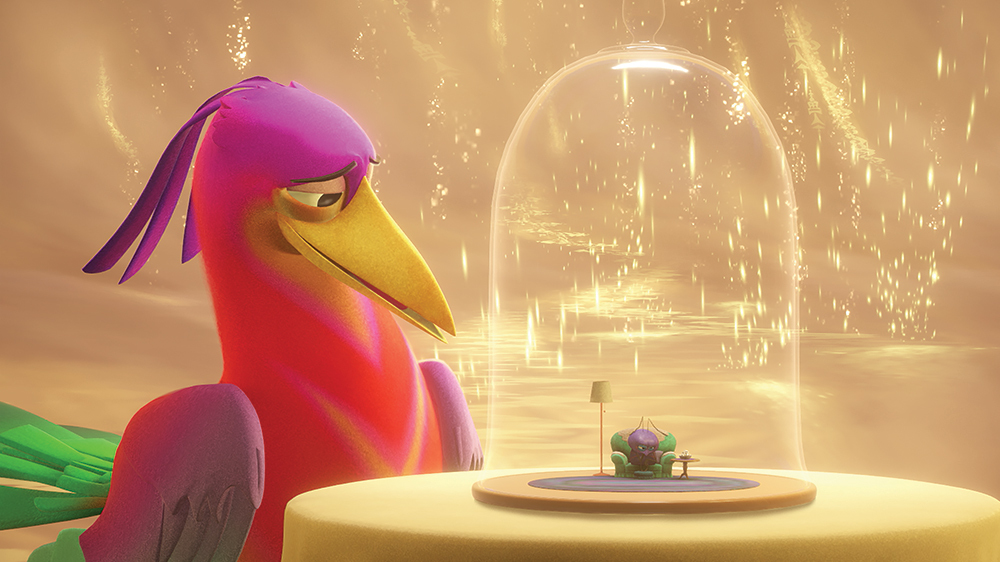
The inaugural Annie nominees for VR production are Google Spotlight Stories’ “Age of Sail,” directed by John Kahrs; Sundance 2018 selection “BattleScar,” directed by Nico Casavecchia and Martin Allais; Baobab Studios’ “Crow: The Legend,” directed by Eric Darnell, pictured above; Filmakademie Baden-Württemberg’s “MindPalace,” directed by Carl Krause and Dominik Stockhausen; and Polyarc’s “Moss,” which is a VR game.
The Annies will be presented Feb. 2 at UCLA’s Royce Hall at 7 p.m. For the entire nomination list, see annieawards.org.
See the full story here: https://variety.com/2019/film/spotlight/annie-awards-check-into-virtual-reality-with-inaugural-prize-1203114890/
Indoor virtual reality theme park seeks Philly-area site
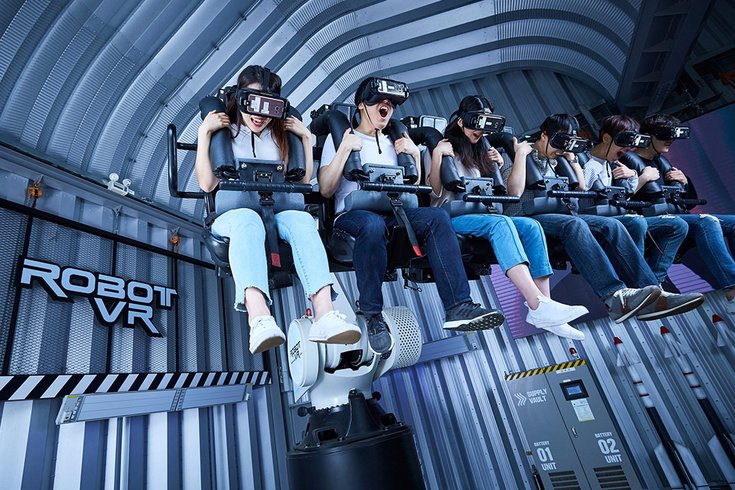
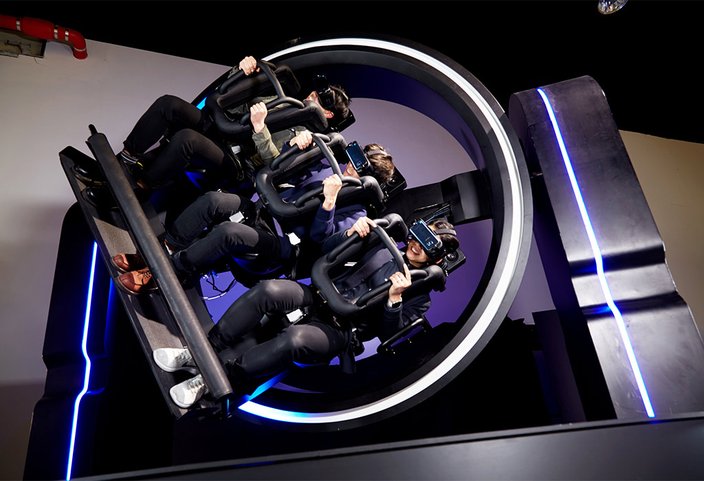 With a modular format, the VR theme parks can offer experiences ranging from a Junior Zone that allows young children to discover, learn and explore through virtual and physical spaces, to a Sports Zone where all ages can learn, practice and hone skills in football, baseball, clay pigeon shooting and other sports, to an Arcade Zone featuring immersive and interactive arcade games, the company said.
Legend Heroes has hired retail leasing specialist R.J. Brunelli & Co. of northern New Jersey as its exclusive nationwide real estate broker for its entry into the U.S. market.
Brunelli is scouting vacant anchor and sub-anchor spaces at regional malls as the preferred locations, as well as freestanding or strip center big-boxes.
Other possible venues include warehouse/flex buildings in close proximity to major malls or entertainment complexes.
Building requirements call for 30,000- to 40,000-square-foot spaces with a minimum ceiling height of 16-feet overall, with 40 percent of the space at least 32-feet high for rides, noted Julie T. Fox, Brunelli's manager of new tenant representation. Preferred locations should have five million people within 30 miles, with a one-hour maximum driving distance, Fox said.
See the full story here: https://www.phillyvoice.com/indoor-virtual-reality-theme-park-seeks-philly-area-site/