CES 2019: Augmented reality smart glasses include Amazon Alexa and other apps
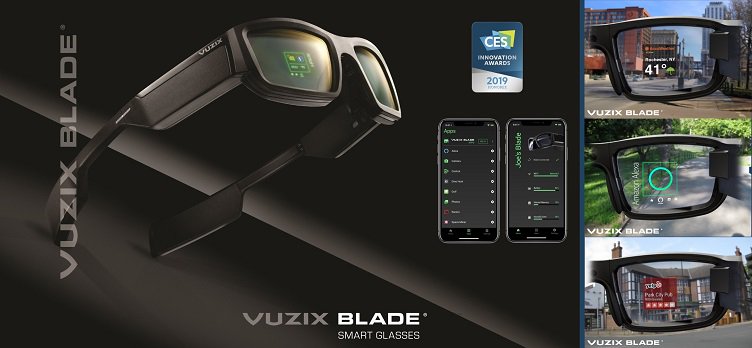 Vuzix has introduced an augmented reality wearable in the form of smart glasses — with waveguide optics and color display — in a traditional eyewear form factor.
The Blade AR smart glasses include an HD camera to let users see, recognize, respond and record the outside world. The smart glasses allow users to see alerts and information in a visual overlay that pops into their field of vision.
The Android-based smart glasses support a cloud-based service platform to enable a number of apps and software to be ported to the device including Yelp and AccuWeather. Vuzix is also working with Amazon to finish integration of Alexa for voice-activated commands.
The company said the smart glasses allow users to make appointments, dinner reservations, get directions or find destinations all in the visual overlay. The Blade companion app for smartphones manages notifications and alerts that are sent to the smart glasses, including email, messages and navigation as well as media player control. The app also allows for photo and video sharing to social media platforms.
Vuzix is gearing up its proprietary app store in 2019 to include entertainment apps such as karaoke, language translation, sheet music scrolling and more. Games for the smart glasses are also coming, including augmented reality "Dino Hunter," golf, a racing game and space mining.
See the full story here: https://electronics360.globalspec.com/article/13356/ces-2019-augmented-reality-smart-glasses-include-amazon-alexa-and-other-apps
Mimesys Brings Its Version of Augmented Reality Video Calling to Magic Leap via Intel RealSense
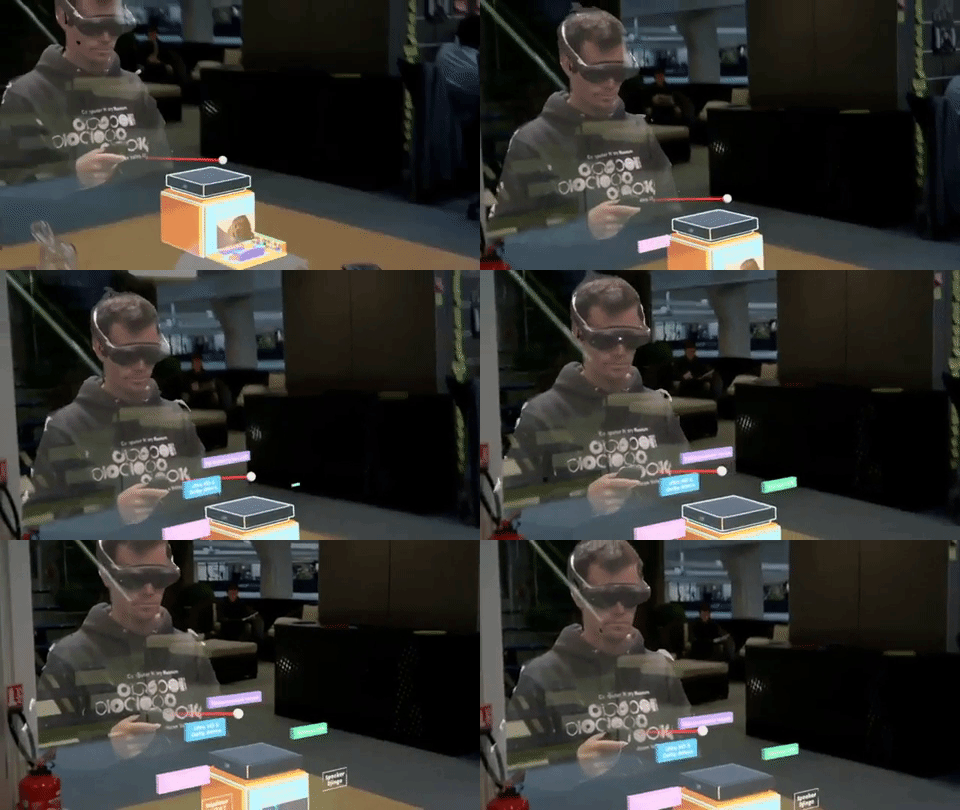
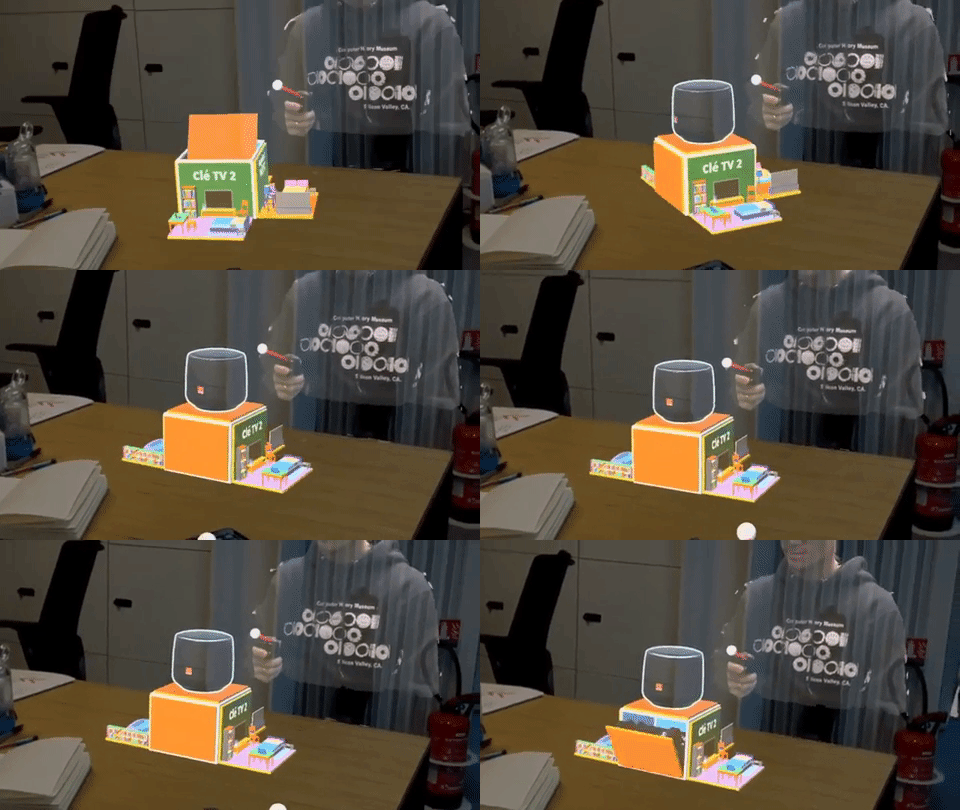 The release of Avatar Chat for Magic Leap One and Spatial for HoloLens during the fourth quarter of 2018 appeared to revolutionize video calling via augmented reality.
But a new startup called Mimesys, which is showing off its software at CES this week in Las Vegas, has upped the ante with a hardware and software solution for real-time holographic video calls that will be available to enterprise businesses in 2019.
Instead of representing users with avatars, the RealSense cameras and Intel-powered laptops capture participants on video and transmit the footage in real time for display via the spatial computing capabilities of the Magic Leap One. Participants can also interact with 3D content simultaneously, with their interactions combined with their holographic video.
The futuristic experience stands as another proof point behind the need to upgrade mobile networks to 5G connectivity, which would provide the high bandwidth and low latency needed to enable real-time AR communications reminiscent of Star Wars holograms.
See the full story with video here: https://magic-leap.reality.news/news/mimesys-brings-its-version-augmented-reality-video-calling-magic-leap-via-intel-realsense-0192377/
CBS’ Super Bowl plans include multiple 8K cameras, augmented reality graphics, seven hours of pre-game coverage
 For the first time ever on any network at a live sporting event, CBS’ Super Bowl LIII virtual plan includes the use of a live, wireless handheld camera showing augmented reality graphics and up-close camera tracking on the field. This will allow the camera to get closer to these virtual graphics in a way that gives viewers different perspectives and angles including never –before-seen field level views of these graphics.
CBS will utilize four cameras (including the SkyCam) with live augmented reality graphics, plus an additional 10 cameras with trackable first-down-line technology. In all, 14 cameras creating virtual graphic elements that are completely manufactured will seamlessly blend in to the real environment of the broadcast.
For the first time ever on any network in the United States, CBS will use multiple 8K cameras with a unique, highly-constructed engineering solution to provide viewers with even more dramatic close-up views of the action from the endzone including possible game changing plays along the goal lines and end lines.
Beyond that, they’ll feature 16 4K cameras, 28 pylon cameras and 50-plus total end zone cameras, and plenty of super slo motion cameras. That’s a whole lot. And while using these super-high-resolution cameras may not make much of an impact for the average viewer (there are plenty of people who don’t have 4K TVs, let alone 8K), those who do have flashy new TVs should get a fair bit out of this.
See the full story here: https://awfulannouncing.com/cbs/cbs-super-bowl-plans-8k-augmented-reality-pregame.html
Interesting AR and VR Tech Found Around the Edges of CES
Among the sea of copycat and incrementally-improved AR and VR headsets being shown at CES, a few stood out because they either executed the potential of existing technology particularly well or they are developing a tech that could help advance the industry. We had the opportunity to check out a wide range of compelling products including MAD Gaze’s Vader AR glasses, the Pimax 8K Series HMD, the Vision optical engine by Lumus, ThirdEye’s hardened AR glasses for industrial and other uses, PinMR tech from LetinAR, the XTAL HMD from VRgineers, and Viewpointsystem’s lightweight tethered eyeglass frame.
The following overview provides a few details regarding the standouts that ETC’s Phil Lelyveld, George Gerba, Erick Moen and Kaitlyn Chu found while walking the smaller booths on the CES show floors.
MAD Gaze looks like another Chinese knock-off company, and they very well may be, but their Vader AR glasses were very impressive under the demo conditions of CES. The glasses only feature 720p, 30 fps with a 3-hour battery life, but they have a 45-degree FOV and a responsive hand and finger gesture control interface. Removable moderately-tinted sunglass lenses over the AR lenses produce bright AR images with good blacks. The Vader glasses are available now at $769 MSRP.

The Pimax 8K Series HMD displays 80 fps/eye and has a 200-degree FOV. I watched and episode of “theBlu” and was impressed with how clear and bright the image was. The 8K headset alone without controllers is $899. (See more details on the Pimax Kickstarter page.)

Lumus, an Israeli company that develops AR lens systems components, showed its OE Vision optical engine and newest reflective waveguide display, which generates a 1080p image with 7,000 nits brightness. Lumus claims the component will cost “10s of dollars” when manufactured in large volumes. Quanta Computer, a Taiwanese company that manufactures Apple watches, will be producing AR glasses with the Lumus lens by the end of 2019.
ThirdEye showed hardened AR glasses for industrial use that weigh only 6 ounces. They have a 45-degree FOV, 13MP forward facing camera, and “user friendly” APIs for UI and application development. The X Series smart glasses will be available in Q2 2019 for $1,650.

LetinAR is working to perfect an alternative to waveguide and reflected image approaches to AR lenses. Their patented PinMR technology applies the “Pinhole Effect” to tiny mirrors that are embedded within the lens. Each mirror reflects light from a microdisplay into your eye. When you hold the lens, you’ll see it has a visible pinhole patterns. When you wear the lens it has a semi-holographic effect, which they describe as ‘lightfield’ technology, but it also has a visible screen door effect. LetinAR’s tech is still very much a lab project, but it could yield interesting results.
The XTAL HMD from VRgineers is a large form-factor but lightweight 5K VR HMD that touts automatic IPD adjustments and built-in Leap Motion trackers to track your hand and finger motions. It is currently being used primarily by the European auto industry (clients include BMW, VW, Porsche) for visualizing new model design. McLaren is using the XTAL to train race car drivers. VRgineers is marketing this $5,800 HMD to businesses rather than consumers.

Viewpointsystem is showing a lightweight but tethered eyeglass frame than synchronizes and overlays the capture of eye movement capture of the image being looked at in a 360 environment in near real-time. Noninvasive eye trackers in the bridge of the glasses capture eye position. A forward-facing 13MP 60 fps camera captures the world being viewed, while sensors in the frame capture 6 DOF movement.

The glasses are light because they are tethered and all the processing is being done in the connected computer. Use cases include focus group data for interactive 360 immersive design projects because you can see in near real-time what the person is looking at, and LBE where an action is triggered when enough people look at an object. The company is working on capturing pupil dilation and micromovement data to capture emotion data, but they did not want to speculate on when that would be ready.
See the original post here: http://www.etcentric.org/interesting-ar-and-vr-tech-found-around-the-edges-of-ces/
AI Firm Shows Multilingual Translator That Fits in Your Pocket
The iFLYTEK Translator 2.0 is a handheld spoken language translator developed with Chinese AI technology and training. The size of a mobile phone, it can translate between any two of 63 languages and is trained in a number of “professional vocabularies.” The device touts a 5-hour battery life, and at $450, would be a useful and affordable business and personal tool. This Chinese tech also raises some interesting privacy and geopolitical issues. In addition to the upgraded Translator 2.0, the company also announced its iFLYREC Series voice-to-text products, AI Note for recording and transcription, and iFLYOS voice-interaction system at CES.
Once you select the two languages you want to translate between, you only deal with a single toggle button on the face of the device. Translation is sequential; you toggle the button one way and speak into the device, within seconds the device will speak the translation, you hand the device to the other person and they repeat the process by toggling the button the other way.

How good is it? I daisy-chained two devices; one set for English-to-Chinese and the other Chinese-to-English. “Hello, it is nice to meet you” returned “Hello, it is nice to meet you.”
However, “CES is a very confusing convention” returned “CES is a very confusing routine.” It isn’t perfect, but it is very good.
The international version of Translator 2.0, which can translate between any two of the 63 languages, will be available in Q2 or Q3. The Chinese version, which only translates between Chinese and the other 62 languages, is available now on Amazon for $429. Both Chinese and international versions of the device can do English-Chinese translation offline. All other translations require processing in the cloud.
There have been a number of news stories recently about iFLYTEK and China’s push to dominate AI by 2030. Many discuss the huge investments companies in China as well as the Chinese government are making in AI, including education, data gathering for AI training, and product development.
Others speculate that the Chinese government intends to build the iFLYTEK AI and related AIs into their telecom infrastructure so they can monitor voice and text conversations in all languages in near real time.
Chinese translation products are already available worldwide. I have not yet seen a news story that has researched the data privacy and security aspects of these translation resources. However, this is an emerging market with a number of other companies, including non-Chinese companies, offering products with similar features.
For those in Las Vegas for CES, iFLYTEK can be found at LVCC South 26025.
See the original post here: http://www.etcentric.org/ai-firm-shows-multilingual-translator-that-fits-in-your-pocket/?fbclid=IwAR1IWkoJvokpuDjNukbIEtbFFB5iGVW8woyWpEZ_hcwZT4PHsbwDevubTNA
In VR boys learn best when the teacher is a drone – girls learn better from virtual Marie
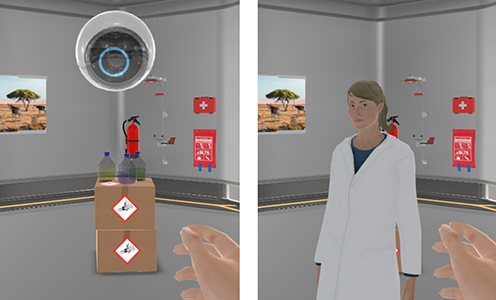 The teacher is just as important in a virtual learning environment as in a normal classroom, but a new study shows that boys and girls differ greatly in terms of how they learn best: Boys learn best when their virtual teacher comes in the form of a drone, while girls get more knowledge from VR-teaching when they are taught by a young, female researcher-type named Marie.
Our studies show that VR-learning where students train certain skills via simulations can be more effective than regular classroom teaching or learning via computers, and that it motivates and engages students more and heighten their self-efficacy. However, we need more information on when and how teaching via VR-simulations is an advantage, so we can steer clear of thoughtless investments in technology just for the sake of investing in technology without any real benefits in terms of better learning, he says.
Guido Makransky is especially interested in the pedagogical factors of VR-learning. In previous studies he has tested hundreds of high school and university student’s cognitive and emotional learning processes using electroencephalography (EEG) and by registering their sweat-responses (GSR), eye-tracking and facial expressions.
A virtual rolemodel
Since 2014 Makransky has documented in various studies that VR-learning in certain situations is more engaging and can lead to better learning outcomes compared to traditional methods. Furthermore, his latest research shows that girls and boys learning differs greatly depending on the form and appearance of the virtual teacher, the so called pedagogical agent.
In a study with 66 7th and 8th -grade students (half boys, half girls) at a Danish science talent school, Makransky and colleagues found that the girls learned most in the VR-simulations, when the VR-teacher there was a young, female researcher named Marie, whereas the boys learned more, while being instructed by a flying robot in the form of a drone.
See the full story here: https://psychology.ku.dk/news/virtual-reality-research/
I got to experience Disney’s in-car virtual reality concept at CES 2019. Here’s what it’s like.
 Audi calls it a "futuristic concept." and for its part Disney has no plans to bring such a product to market. But Disney says it is always exploring new ways and platforms to tell stories.
I got in the backseat, donned an Oculus Rift VR headset, put a remote control in my hand and off the driver went.
The car itself zigged and zagged around the course of the speed track, and that added to the sensation of zooming through outer space. "If the car drives through a right turn, the spaceship in the experience does the same," notes Audi. Whether mom and dad can re-create the experience on the freeway and through town is another story.
See the full story here: https://www.usatoday.com/story/tech/talkingtech/2019/01/07/took-ride-disneys-virtual-reality-concept-car/2500837002/
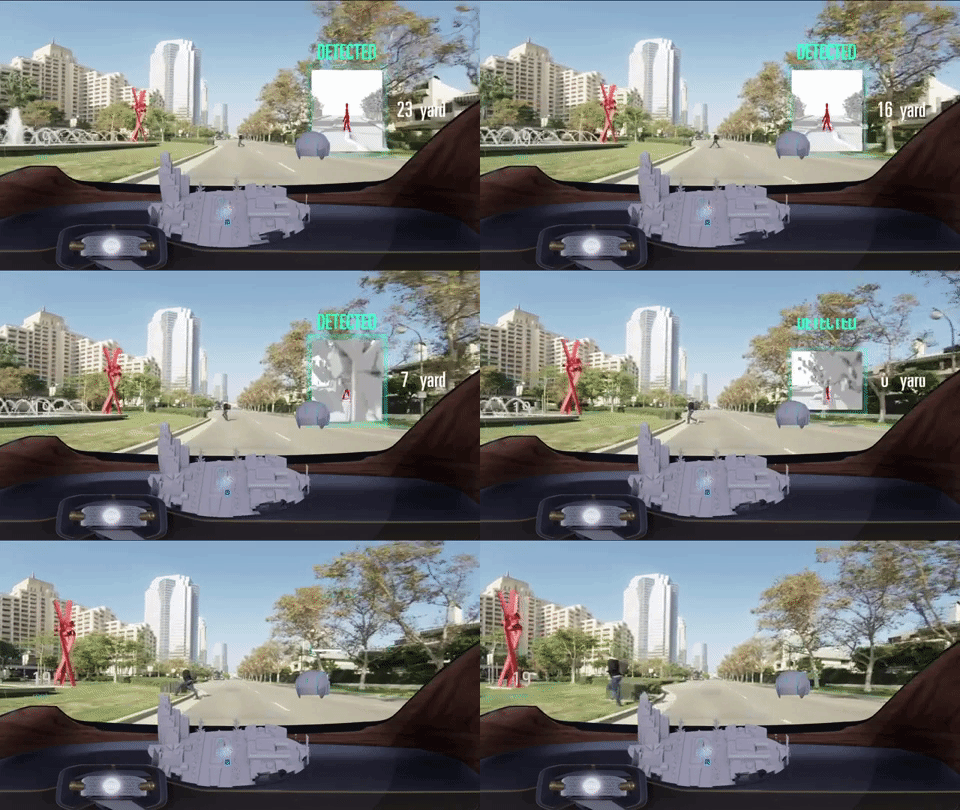
Nissan Augmented Reality Concept Assists Drivers in Detecting Unseen Obstacles
At CES 2019, which officially kicks off this week, Nissan will present its in-car augmented reality concept, dubbed Invisible-to-Visible (I2V), via an interactive 3D experience at its booth in the North Hall of the Las Vegas Convention Center.
See the full story here: https://augmented.reality.news/news/nissan-augmented-reality-concept-assists-drivers-detecting-unseen-obstacles-0192291/