Arca’s Path PSVR review: A relaxing virtual reality game that anybody can play
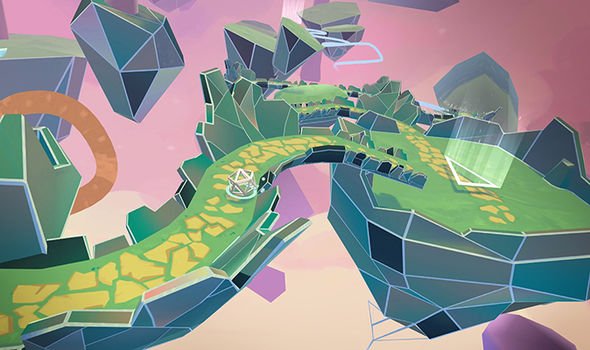 From motion sickness to calibration calamities, most people would agree that virtual reality has its fair share of problems.
By stripping things back to the very basics, Arca's Path bypasses many of the common issues associated with virtual reality.
With not a single controller in sight - everything is controlled by your head - Arca's Path is an elegant experience that's highly tranquil.
It all begins when your character is drawn into a beautiful and mysterious new world that's positively drowning in colour.
The lead character is represented by a ball, and it's up to you to guide this ball through the labyrinth and eventually break free.
It's kind of like a narrative-driven Super Monkey Ball, only instead of tilting the game world, you have direct control over your character. Just look at where you want to go, and the ball will follow.
See the full story here: https://www.express.co.uk/entertainment/gaming/1056545/Arcas-path-playstation-vr-PSVR-review
How Virtual Reality Is Helping To Empower Women
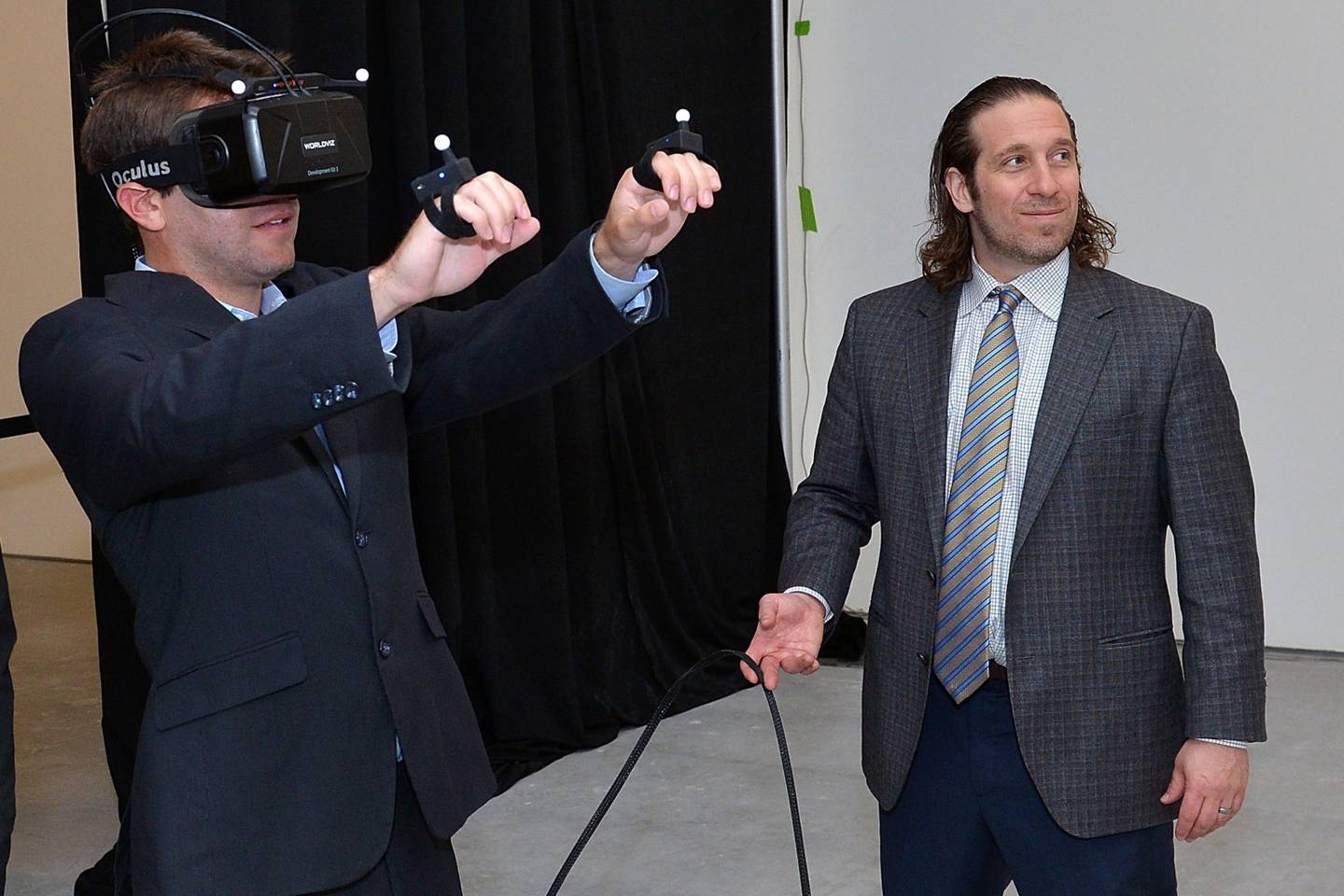 Not just the domain of gamers and geeks, VR is now being pioneered as a tool to help women in a host of different ways, from educating workplaces about sexual harassment, to exploring the heights of female desire, and even managing the pain of childbirth.
See the full story here: https://www.vogue.co.uk/article/how-virtual-reality-is-helping-to-empower-women
How VR Is Being Used to Help Children With Learning Disabilities, Autism
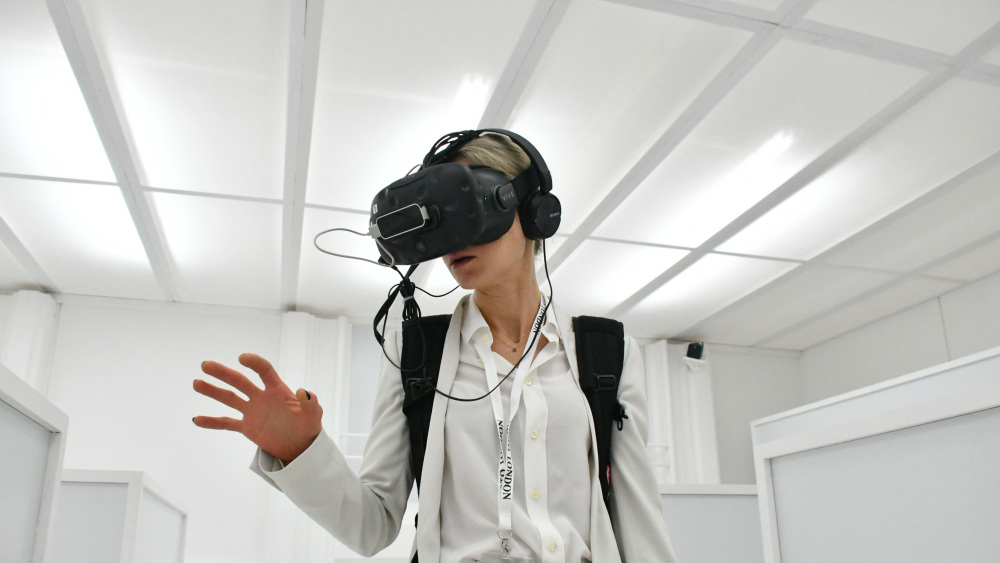
Mandatory Credit: Photo by Nils Jorgensen/REX/Shutterstock (8823238aw)
Mat Collishaw. Thresholds, at Photo London
Photo London press preview, London, UK - 17 May 2017
Photo London third edition press preview, which showcases 88 galleries from 17 countries, at Somerset House, London
The United States Department of Education is betting on virtual reality to help students with high-functioning autism and learning disabilities in schools across the country. This month the Office of Special Education and Programs announced its investment of $2.5 million toward a new program that will use VR to nurture social skills in students with disabilities – an extension on earlier funding for versions of the program designed for desktop and tablets in 2011.
The project is called VOISS: Virtual Reality Opportunities to Implement Social Skills, and is developed by researchers at the University of Kansas’ Center for Research on Learningand Department of Special Education – a collective of academics and Ph.D.s who are treading the waters that intersect virtual reality and education. In addition to students and teachers participating in the project, KU researchers will work in collaboration with educational leaders at the Ohio Center on Autism and Low Incidence Disabilities and a team of computer scientists at Western Illinois University.
See the full story here: https://variety.com/2018/digital/features/voiss-interview-vr-hmd-1203086576/
Rio’s Museum of Astronomy Launches Virtual Reality Exhibition
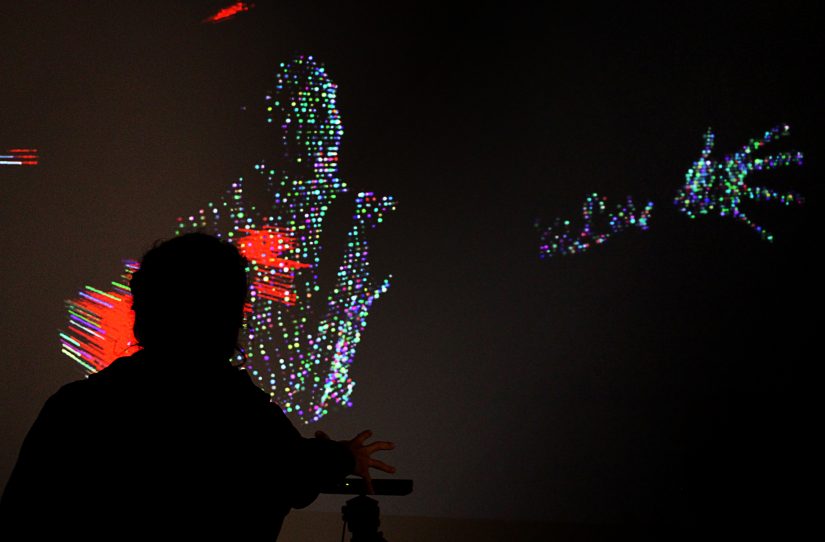 Combining the expertise of MAST and the design department at PUC-Rio, this new show will feature exhibits developed during an interdisciplinary study carried out by students from the ‘Design em Mídia Digital’ (Design in Digital Media) course at the university. The curators of the exhibition are Marcelo Pereira, Assistant Coordinator of Academic Technology at PUC-Rio, and João de Sá Bonelli, Deputy Coordinator of Digital Media at the university.
There are a total of eight featured exhibits, including ‘Zéfiro’ by Luciana Frazão dos Santos, which aims to improve the quality of air in urban centers by raising citizens’ awareness of this problem and possible solutions.
Another exhibit, ‘Monora,’ is designed by Ana Beatriz Lemos and is a virtual reality experience that simulates some of the symptoms that people with anxiety disorders suffer from.
There is also ‘Interregno,’ an installation created by Felipe Salazar that creates an environment of transition between layers of real and virtual spaces, allowing participants to see new connections between our bodies and the digital universe.
A further featured piece is LAR – ‘Livro em Realidade Aumentada’ (Book in Augmented Reality) an interactive experience by Caterina Brasil, which shows how technology can be used to augment the traditional practice of reading by overlapping content that amplifies the original material.
See the full story here: https://riotimesonline.com/brazil-news/rio-entertainment/rios-museum-of-astronomy-launches-virtual-reality-exhibition/
NBA’s New Chinese Broadcast Deal With Migu Will Include Virtual Reality

SHANGHAI, CHINA - OCTOBER 08: Jimmy Butler #23 of the Minnesota Timberwolves in action against Stephen Curry #30 of the Golden State Warriors during the game between the Minnesota Timberwolves and the Golden State Warriors as part of 2017 NBA Global Games China at Mercedes-Benz Arena on October 8, 2017 in Shanghai, China. (Photo by Zhong Zhi/Getty Images)
The NBA announced a multi-platform broadcast and marketing partnership with Migu, an entertainment subsidiary of the state-owned China Mobile Communications Corporation. The multi-year agreement will deliver NBA content across mainland China, Hong Kong, and Macau via Migu and China Mobile’s family of media brands.
The deal marks Migu’s first official partnership with a North American sports league. Migu will provide fans in mainland China with daily NBA game highlights, behind-the-scenes videos, original programming content, and classic NBA games. Migu and the NBA will also collaborate to integrate 4K resolution and virtual reality into the fan viewing experience as part of the partnership.
See the full story here: https://www.sporttechie.com/nba-chinese-broadcast-deal-migu-includes-virtual-reality/
Gartner: Immersive Augmented Reality is Coming to the Enterprise
 “Within three years, enterprises will be doing mixed media,” said Bittman. “These immersive technologies are lighting a fire of generational change. There’s a very real consumerization of IT. It’s starting in the home, but we believe these investments will grow into enterprise environments.”
See the full story here: https://datacenterfrontier.com/gartner-immersive-augmented-reality-is-coming-to-the-enterprise/
CES: The Next Wave of Immersive Media Tech and Markets
Since the widespread consumer adoption of VR that many analysts forecast a few years ago has not occurred, we are seeing many VR companies pivot into business applications. Businesses can afford the expense of high-end VR equipment and specialized applications, and they can determine an ROI for the experiences.
We also expect to see VR growth in eSports — not just in VR game play, but in immersive experiences for eSports immersive eStadiums where the Twitch crowd will be able to see multiple statistics and point-of-view screens while watching the players or they will be able to watch professional teams play from inside the game world.
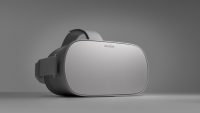
As the prices for untethered, consumer VR headsets continue to decline, and as their features improve (inside-out tracking, spatial audio — for example: Oculus Go), we expect consumers to begin to view them as acceptably priced, limited-use devices that will deliver a specific experience or two, just like any specialized computer/game console peripheral device.
Most of the growth in mass market awareness will come from location-based entertainment in the next year. LBE gives consumers the chance to have an experience without the cost of buying and the hassle of setting up the equipment. The LBE global build-out is currently exploding for VR; with everything from VR installations within existing LBE sites (Dave & Buster’s), to arcades of off-the-shelf experiences (“mom-and-pop” operations), to unique and creative LBEs that incorporate social media, food services, and other elements (Two Bit Circus), to dedicated walk-around mixed reality experience spaces (The VOID, Spaces, Dreamscape, Zero Latency, VRcade).
Lessons learned in these installations will filter down to consumer VR products in the future. Those lessons may also help drive the technical standards and interoperability that will support mass market adoption.

We expect augmented reality to emphasize innovation in the next year. North-brand AR glasses, for example, have a very limited feature set, but are important because they demonstrate that AR glasses could look like normal glasses (pictured above). Expect to see more glasses like the North models to come out. They will have less than the full AR feature set of Hololens or Magic Leap, but they will meet enough consumer expectations and have enough fashion cache to be interesting to early adopters.
We also expect someone to market a soft wearable black-out hood for the glasses (for example: clip-on sunglasses meets airline sleep mask) that will turn them into VR glasses. Do not expect mass market prices for these fashionable AR glasses any time soon.
As with VR, AR is proving to be very useful and cost effective in high-end niche business and professional applications (remote expert advisor, medical surgery overlays) as well as low-end consumer experiences (phone-based AR measurement and placement of home décor — for example: the IKEA app).
User experience (UX) and user interface (UI) designers will explore new ways to be more intuitive and contextually consistent for all forms of immersive media. Beyond refining the handheld game controller, we expect advances in input and output technology and language related to all of the human senses — especially eye tracking, voice/sound, hand/body gestures, haptic feedback, and brain/computer interface.
The creative application tools and the object libraries for both VR and AR are becoming more drag-and-drop. As with media types that have come before (paint, printing press, video), this democratization of the medium’s tools means that as the technology gets out of the way of the creative process truly talented people will find new ways to make themselves and their work stand out.
We expect world-building environments to play an increasingly important role in adoption of both VR and AR. We have already seen meet-ups, live concerts, classes, eSports events, and other activities inside constructed worlds (High Fidelity).
As the technology underpinning immersive media improves (low latency, higher resolution, uncanny valley solutions), and the UX/UI becomes more natural, the technology will move into the background and the usefulness of this new media type will become apparent. Communities will migrate their social media, productivity tools, and other activities to immersive media as awareness grows.
Hanging over all of this are questions related to the ethics and social impact of this technology. Who owns the data that is collected in order to provide a personalized experience? What backchannel and user information should be collected? Should there be different guidelines if the data is processed within the consumer device versus uploaded to the cloud for processing? Do the scope of the click license and the definition of informed consent need to be re-examined? These issues will be the focus of much debate in the coming year, and will contribute to the direction of product development and business practices related to immersive media and other fields for the foreseeable future.
CES 2019 has a zone for AR/VR and Gaming (LVCC South Hall 1), hospitality suites for key players (ARIA Las Vegas), and sessions related to immersive media that we will be reporting on from the show in January.
VR veterans found Artie augmented reality avatar company

 The migration of virtual reality veterans to augmented reality continues. A new AR startup dubbed Artie is coming out of stealth mode today in Los Angeles with the aim of giving you artificial intelligence companions in your own home.
Armando Kirwin and Ryan Horrigan started the company to use artificial intelligence and augmented reality to build “emotionally intelligent avatars” as virtual companions for people. Those avatars would be visible anywhere that you can take your smartphone or AR gear, Horrigan said in an interview.
The company’s software will enable content creators to bring virtual characters to life with its proprietary Wonderfriend Engine, which makes it easy to create avatar-to-consumer interactions that are lifelike and highly engaging. Kirwin said the company is working with major entertainment companies to get access to familiar characters from famous brands.
“Our ambitions is to unlock the world of intellectual property you are already familiar with,” said Kirwin, in an interview with VentureBeat. “You can bring them into your home and have compelling experiences with them.”
Horrigan said that the team has 10 people, and it is hiring people with skills in AI, AR, and computer vision. One of the goals is to create avatars who are more believable because they can be inserted in the real world in places like your own home. The team has been working for more than a year.
See the full story here: https://venturebeat.com/2018/12/06/vr-veterans-found-artie-augmented-reality-avatar-company/