20th Century Fox, Google Use AI to Analyze Movie Trailers
 Researchers at 20th Century Fox published a paper to reveal how they are using artificial intelligence to analyze movie trailers. Published last month, the paper described Merlin, the code name for machine vision systems examining trailers frame by frame and labeling the objects and events. Then this data is compared to data from other trailers, with the idea that trailers with similar labels will attract similar kinds of people. Movie studios already cull similar data via interviews and questionnaires.
The Verge reports that the researchers added that, “understanding detailed audience composition is important for movie studios that invest in stories of uncertain commercial [appeal].”
The goal with using AI is to break down the audience into “micro segments.”
See the full story here: http://www.etcentric.org/20th-century-fox-google-use-ai-to-analyze-movie-trailers/
How Owlchemy’s new virtual reality game turns vacationing into another job robots take from humans
- "Vacation Simulator" — a follow up to the lab's hit game, "Job Simulator" — is set in the year 2060.
- The premise involves robots (the same ones who stole most of humanity's jobs in "Job Simulator") doing some research, and discovering that when people were not working, they would take vacations.
 See the full story here: https://www.cnbc.com/2018/11/02/google-owlchemys-simulator-turns-vacation-into-spectating.html
Virtual Reality is Transforming into a Niche Sub-Industry
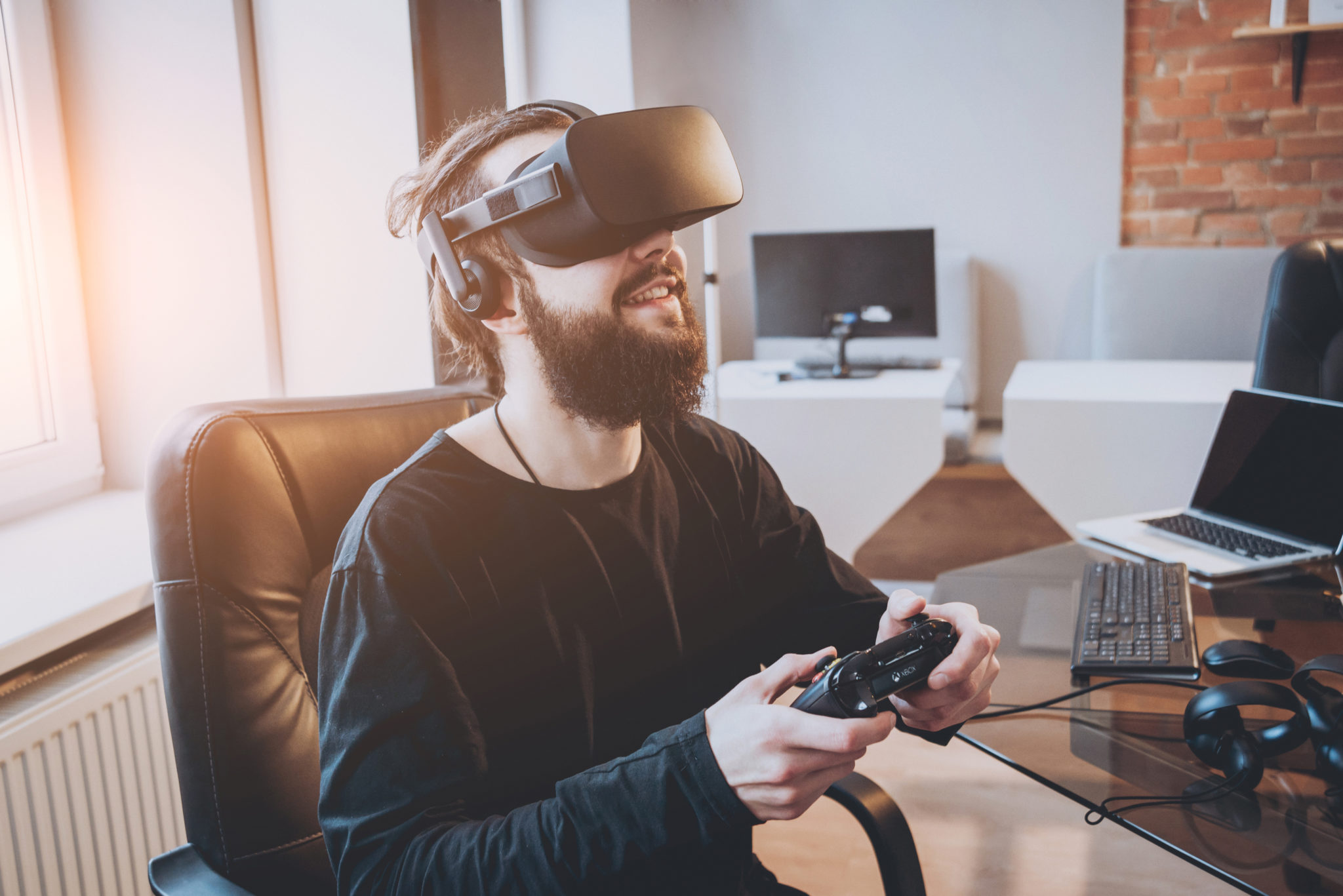 Earlier this year, research firm IDC reported that shipments of VR and augmented reality (AR) headsets plunged 30.5 percent between the first quarters of 2017 and 2018. Enthusiastic early adopters snatched up their Oculus Rifts and HTC Vives, but that didn’t ignite a broader market. Perhaps that’s why Facebook has decided to drive down the price of headsets.
For the moment, virtual reality is very much a niche (and still gaming-focused) product. Those developers and other tech pros who thought that VR would quickly spread to the enterprise and other contexts might be disappointed. But those who love and create games might still see VR as an opportunity, albeit one that might prove hard to monetize.
See the full story here: https://insights.dice.com/2018/11/04/virtual-reality-transforming-niche-sub-industry/
Scientists hail quantum computing breakthrough
 To solve the issue of “environmental noise”, the team have worked with theoretical scientist Dr Florian Mintert and colleagues from Imperial College London to make use of quantum physics and microwave technology – similar to that used in mobile phones – to help insulate the new computers.
Prof Hensinger, head of the Ion Quantum Technology Group at the University of Sussex – which last year unveiled the first blueprint for a large-scale quantum computer – said: “With this advance we have made another practical step towards constructing quantum computers that can host millions of qubits.
Prof Hensinger’s group is now using the new technique as they put the final touches to a powerful quantum computer prototype that is currently in their laboratory at the University of Sussex.
He added: “It’s now time to translate academic achievements into the construction of practical machines.
ABC News Is Using AR to Deliver One-of-a-Kind Election Night Viewing Experience
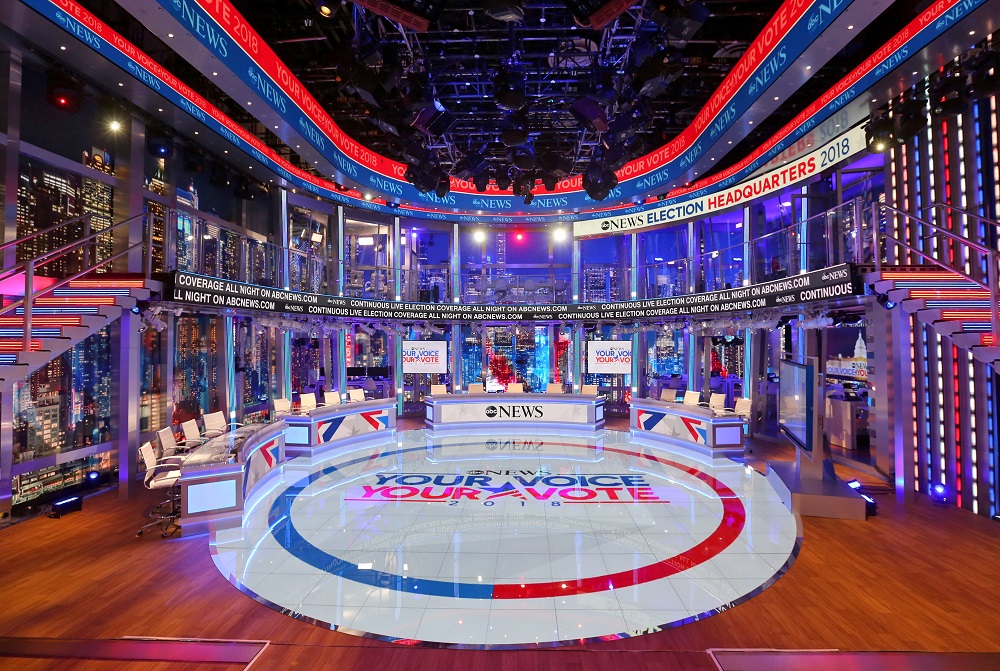
ABC NEWS - ABC News debuts a new 2018 election set with live continuous coverage on Election Day, Tuesday, November 6, 2018. (ABC/Danny Weiss)
ELECTION SET
[PhilNote: If you aren't there for the visceral experience of controlling what you see, then what ABC is doing is just on-screen VFX by another name.]
“It’s the most ambitious set we’ve ever undertaken, including for a presidential election,” ABC News special events senior ep Marc Burstein told TVNewser. “The set and the use of augmented reality are designed to enhance our reporting of the story,...
At various points throughout the broadcast, viewers will be able to see a graphic of the Capitol building and up-to-date information about the House and Senate push up through the “Your Voice Your Vote” slogan inside the circle.
The viewer will see the set spin around when the panel is moving to a different story.
See the full story here: https://www.adweek.com/tvnewser/abc-news-is-using-ar-to-deliver-one-of-a-kind-election-night-viewing-experience/383089
Riot Games uses AR imagery to kick off League of Legends 2018 World Finals


In the AR demo, the in-game band K/DA will deliver a debut performance onstage (yep, they’re real!) of their pop song POP/STARS through the use of augmented reality technology, alongside folks such as Madison Beer, Miyeon and Soyeon of (G)I-DLE, and Jaira Burns.
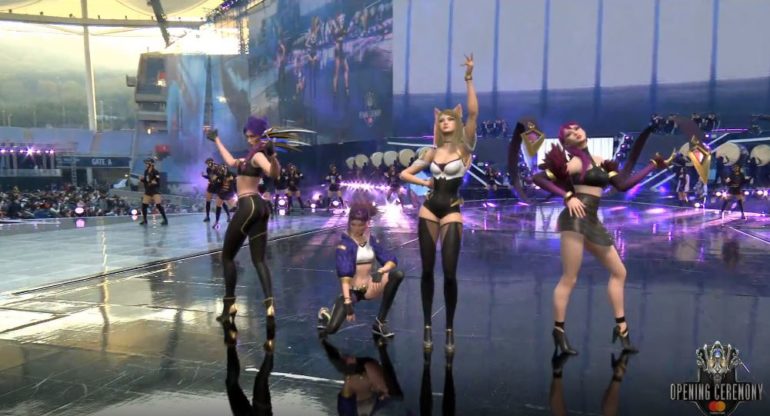
K/DA is comprised of League of Legends champions (left to right in picture above) Akali, Ahri, Kai’Sa, and Evelynn. While the look and champions for the K/DA skin line have already been previously announced — the existence of a new original song, collaboration with Madison Beer, (G)I-DLE, and Jaira Burns, and live augmented reality performance for the League of Legends 2018 World Finals Opening Ceremony will be a complete surprise to audiences attending the finals and watching worldwide.
The ceremony begins at 12:30 a.m. Pacific on November 3, and is being broadcast live from the Incheon Munhak Stadium in Incheon, South Korea.
See the full story here: https://venturebeat.com/2018/11/03/riot-games-uses-ar-imagery-to-kick-off-league-of-legends-2018-world-finals/
 Riot puts on an augmented reality K-Pop concert for Worlds in tandem with a brand-new music video
The 2018 League of Legends World Championship finals were the talk of the town all throughout the competitive community today. But there was one brand, shiny new thing that Riot showed off during the opening ceremony that can’t be ignored.
It was a small K-Pop concert featuring artists Cho “Miyeon” Mi-yeon and Jeon “Soyeon” So-yeon of the group (G)I-DLE and American pop artist Madison Beer. Perhaps the most exciting part of the concert, however, were the augmented-reality Kai’Sa, Ahri, Akali, and Evelynn dancing and singing on-stage alongside them. Not only that, but Riot released a music video to celebrate the new song and the Worlds performance.
See the full story here: https://dotesports.com/league-of-legends/news/riot-puts-on-an-augmented-reality-k-pop-concert-for-worlds-in-tandem-with-a-brand-new-music-video
Facebook reorganizes Oculus for AR/VR’s long-haul
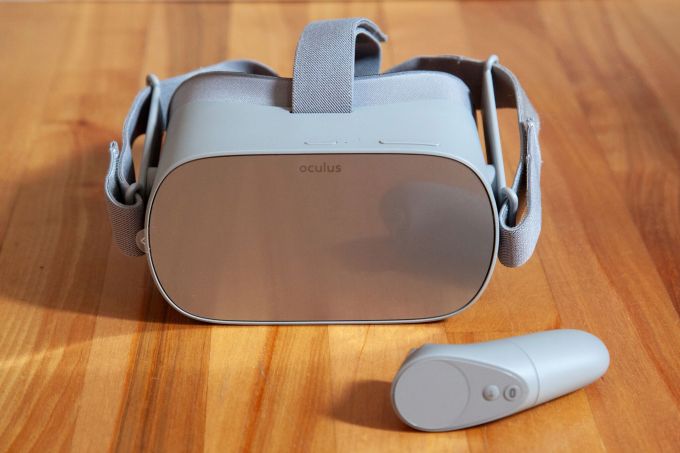 Facebook is again looking to whip Oculus into shape for its 10-year journey towards making virtual reality mainstream. According to two sources, Facebook reorganized its AR and VR team this week from a divisional structure focused around products to a functional structure focused around technology areas of expertise. While no one was laid off, the change could eliminate redundancies by uniting specialists so they can iterate towards long-term progress rather than being separated into groups dedicated to particular gadgets.
Facebook confirmed the reorg to TechCrunch, with a spokesperson providing this statement: “We made some changes to the AR/VR organization earlier this week. These were internal changes and won’t impact consumers or our partners in the developer community.” Oculus CTO John Carmack and Oculus co-founder/newly-promoted Head of PC VR Nate Mitchell will remain in their leadership positions within VP of AR/VR Andrew ‘Boz’ Bosworth’s hardware wing of the company.
Given the slow adoption of VR and engineering challenges of AR headsets, which at TechCrunch’s LA conference last month Facebook’s head of AR Ficus Kirkpatrick confirmed it was building, this structure could help Oculus iterate its way to long-term success rather than just getting the next product out the door.
See the full story here: https://techcrunch.com/2018/11/03/oculus-organization/
Self-Directed Learning and Augmented Reality: How to Teach Gen Z
 Some campus leaders still talk about millennials as if they were the prototypical undergraduates. But enrolling now is Generation Z, the most diverse cohort in modern American history, one that grew up during the Great Recession and its aftermath, entirely in the era of the smartphone and social media. Today’s students crave value and relevance, they seek campus services over amenities, and they’re near-constant users of Instagram and YouTube. To compete for a shrinking pool of high-school graduates and meet greater expectations for student success, colleges must adapt.
But when they come to campus, they’re looking for a mix of virtual and face-to-face learning, says Vickie S. Cook, an associate professor and executive director of the Center for Online Learning, Research, and Service at the University of Illinois at Springfield. That requires a new approach to synchronous learning (at a set time) and asynchronous learning (at your own pace).
See the full story here: https://www.chronicle.com/article/Self-Directed-Learning-and/244968