Facebook confirms it’s building augmented reality glasses
 This month, Facebook launched its first self-branded gadget out of its Building 8 lab, the Portal smart display, and now it’s revving up hardware efforts. For AR, Kirkpatrick told me, “We have no product to announce right now. But we have a lot of very talented people doing really, really compelling cutting-edge research that we hope plays a part in the future of headsets.”
a Facebook patent application for AR glasses was spotted by Business Insider that detailed using “waveguide display with two-dimensional scanner” to project media onto the lenses.
And a week later, Oculus’ Chief Scientist Michael Abrash briefly mentioned amidst a half-hour technical keynote at the company’s VR conference that “No off the shelf display technology is good enough for AR, so we had no choice but to develop a new display system. And that system also has the potential to bring VR to a different level.”
See the full story here: https://techcrunch.com/2018/10/24/facebook-ar-headset/
Spatial raises $8 million to bring augmented reality to your office life
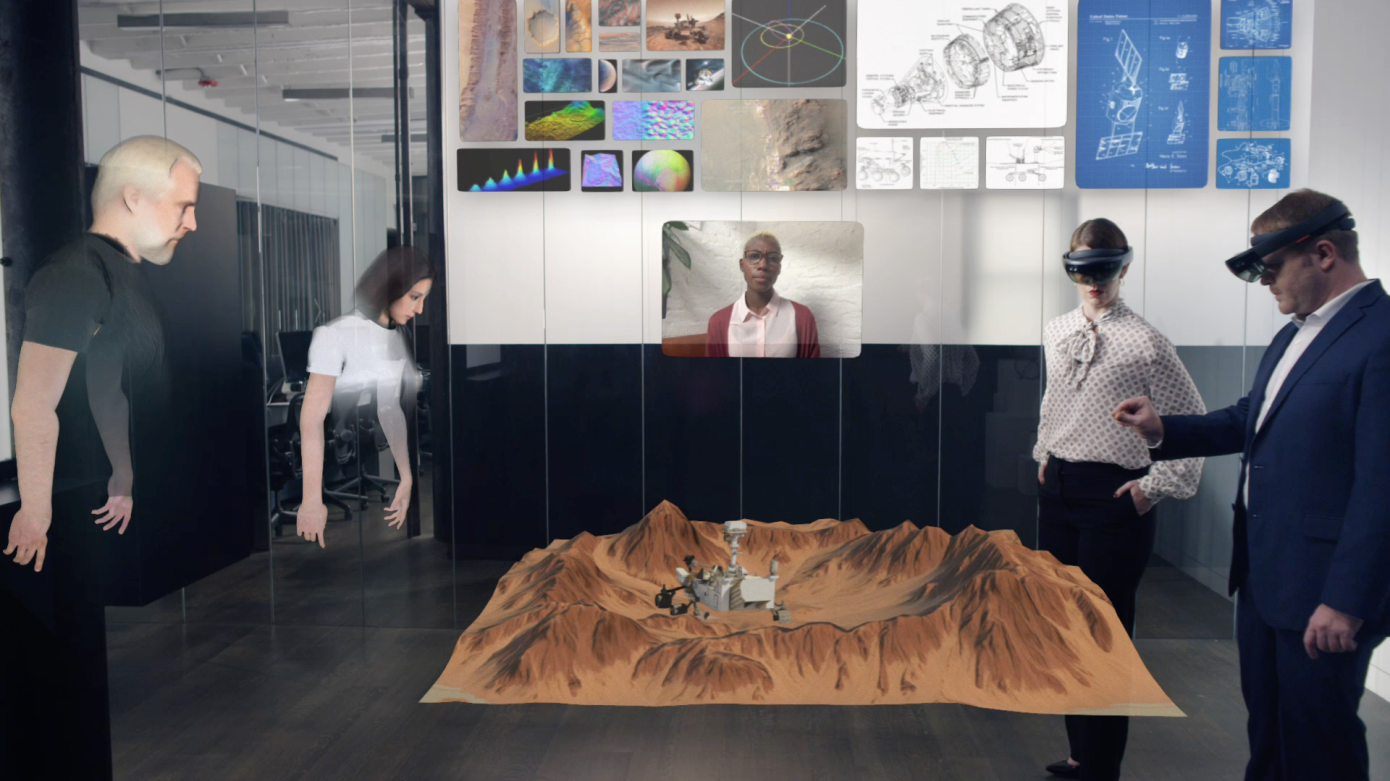 Legitimate augmented reality use cases are hard to come by. Spatial, which dubs itself as a cross-reality platform, is launching today with $8 million in seed funding from iNovia Capital, Uber co-founder and Expa founder Garrett Camp, Samsung Next, Joi Ito of MIT Media Lab, Mark Pincus and Andy Hertzfeld to bring augmented reality to enterprise customers. Spatial envisions its solution replacing tools like Google Hangouts, Zoom and the numerous other virtual workplace meeting apps.
While many companies are focused on games and entertainment, Spatial is looking at how everyday people can use AR for everyday work purposes.
“We think the future of work is going to be increasingly distributed,” Spatial co-founder and CEO Anand Agarawala told TechCrunch. “When you put on Spatial, they are in the room with you. It feels like they’re all sitting at the table, and they feel like they’ve been teleported into the space with you.”
Spatial is two things. One is a remote presence that enables people to feel like they’re face-to-face with their colleagues. The other is a suite of knowledge tools and an “infinite desktop” that uses the room as your monitor.
Currently, there are a handful of companies using Spatial’s technology. One of those companies is Ford’s incubator, Ford X, which is piloting the software to enable its teams working on mobility to collaborate remotely. As it stands today, Spatial can handle about 15 to 20 people at a time, but the goal is to scale up to be able to manage hundreds of people at once.
See the full story here: https://techcrunch.com/2018/10/24/spatial-raises-8-million-to-bring-augmented-reality-to-your-office-life/
Tim Cook calls for GDPR-style privacy laws in the US

Apple CEO Tim Cook delivers a keynote during the European Union's privacy conference at the EU Parliament in Brussels, Belgium October 24, 2018. REUTERS/Yves Herman
Apple CEO and long-time data privacy advocate Tim Cook has made an impassioned speech calling for new digital privacy laws in the US. At a privacy conference in Brussels, Cook said that modern technology has resulted in a "data-industrial complex" where personal information is "weaponized against us with military efficiency," and in a way that doesn't just affect individuals but whole sections of society.
"Platforms and algorithms that promised to improve our lives can actually magnify our worst human tendencies," said Cook. "Rogue actors and even governments have taken advantage of user trust to deepen divisions, incite violence, and even undermine our shared sense of what is true and what is false. This crisis is real. It is not imagined, or exaggerated, or crazy."
See the full story here: https://www.engadget.com/2018/10/24/tim-cook-calls-for-gdpr-style-privacy-laws-in-the-us/
Will There Be a Ban on Killer Robots? (not in the near future)
 The possibility of software and algorithms making life-or-death decisionshas added new urgency to efforts by a group called the Campaign To Stop Killer Robots that has pulled together arms control advocates, humans rights groups and technologists to urge the United Nations to craft a global treaty that bans weapons without people at the controls. Like cyberspace, where there aren’t clear rules of engagement for online attacks, no red lines have been defined over the use of automated weaponry.
Without a nonproliferation agreement, some diplomats fear the world will plunge into an algorithm-driven arms race.
Twenty-six countries have called for an explicit ban that requires some form of human control in the use of force. But the prospects for an A.I. weapons ban are low. Several influential countries including the United States are unwilling to place limits while the technology is still in development.
“A lot of A.I. technologies are being developed outside of government and released to the public,” said Jack Clark, a spokesman for OpenAI, a Silicon Valley group that advocates for more measured adoption of artificial intelligence. “These technologies have generic capabilities that can be applied in many different domains, including in weaponization.”
Defense contractors, identifying a new source of revenue, are eager to build the next-generation machinery. Last year, Boeing reorganized its defense business to include a division focused on drones and other unmanned weaponry. The company also bought Aurora Flight Sciences, a maker of autonomous aircrafts. Other defense contractors such as Lockheed Martin, BAE Systems and Raytheon are making similar shifts.
“You’re delegating the decision to kill to a machine,” said Thomas Hajnoczi, the head of disarmament department for the Austrian government. “A machine doesn’t have any measure of moral judgment or mercy.”
See the full story here: https://www.nytimes.com/2018/10/19/technology/artificial-intelligence-weapons.html
My Dead Wife, the Robot Car is a Black Mirror-equse podcast about autonomous cars
 In the beginning of Stitcher’s new podcast, My Dead Wife, the Robot Car, a widower named Matt signs up with a mysterious tech company to work as a test driver for a new autonomous car. After a confusing introduction — the company rep won’t divulge any details about the company or even tell him his name — he’s set up in one a car, when he receives a rude surprise: the car’s AI is programmed to replicate his recently-deceased wife Joyce, whom he was about to divorce.
“Yeah, you big idiot, what part of this are you not getting?”
See the full story here: https://www.theverge.com/2018/10/21/18000576/my-dead-wife-the-robot-car-stitcher-matt-besser-podcast-autonomous-vehicles
Building statues of hope in augmented reality
 Accurat, in partnership with the Google News Initiative, built an augmented reality app to build statues of hope:
We live in a world awash with information. Every time we walk the street holding our phones, every time we perform a research online or buy a product with our credit card data is created and often time communicated to us. How can we make people care about a specific dataset? How can we form our own opinions and points of view on what matters to us? With Building Hopes we wanted people to take a stance on what they are hopeful for, even in a historical moment that many define as hopeless and bleak, and have them look at Google search data through this framework of their own creation.
There’s a web version, but be sure to check out the AR version if you can. You walk around your area picking stones, each representing something to be hopeful for, and the app points to you to statues nearby that others built.
See the full story here: https://flowingdata.com/2018/10/22/building-statues-of-hope-in-augmented-reality/
North is trying to become the Warby Parker of augmented reality glasses
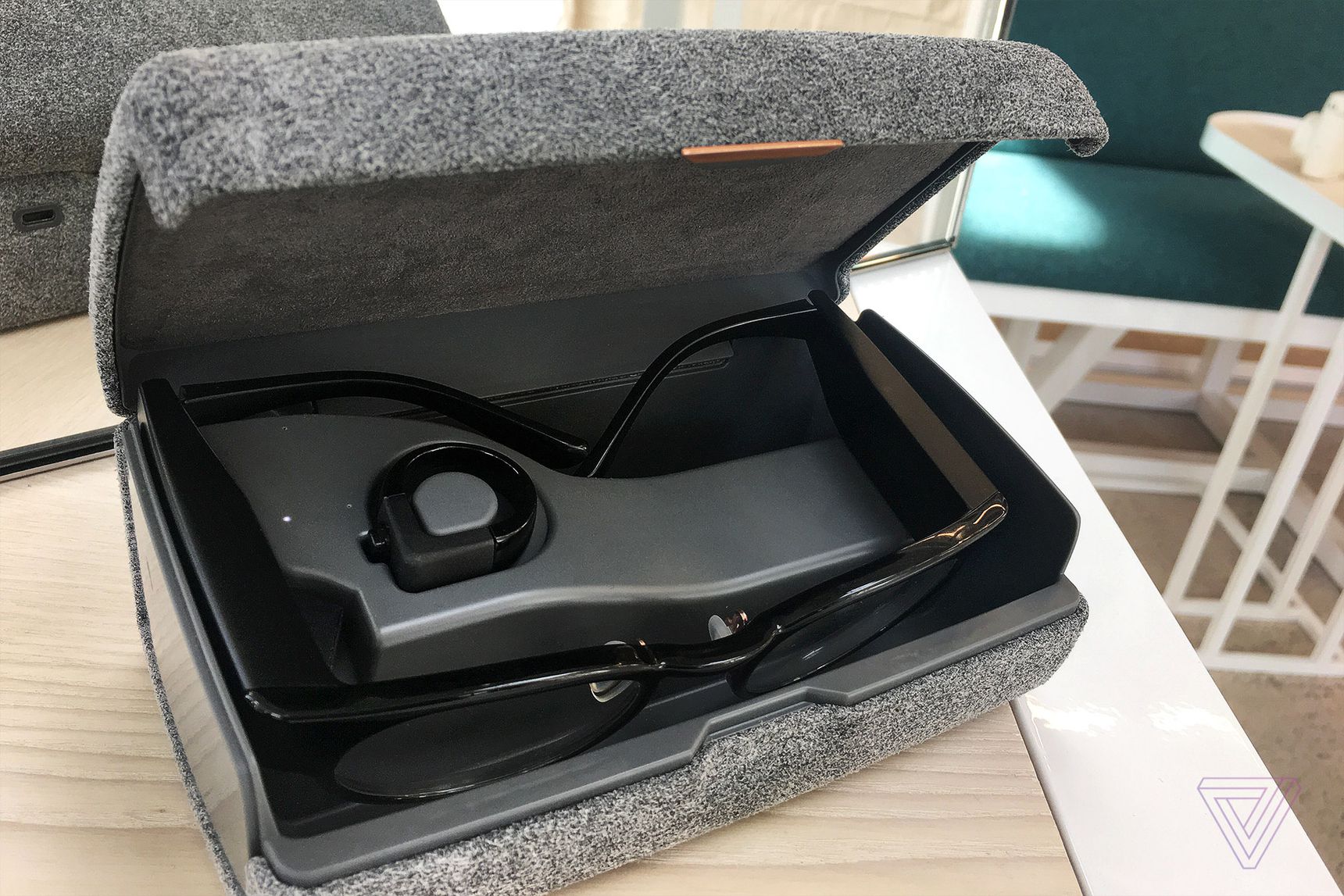
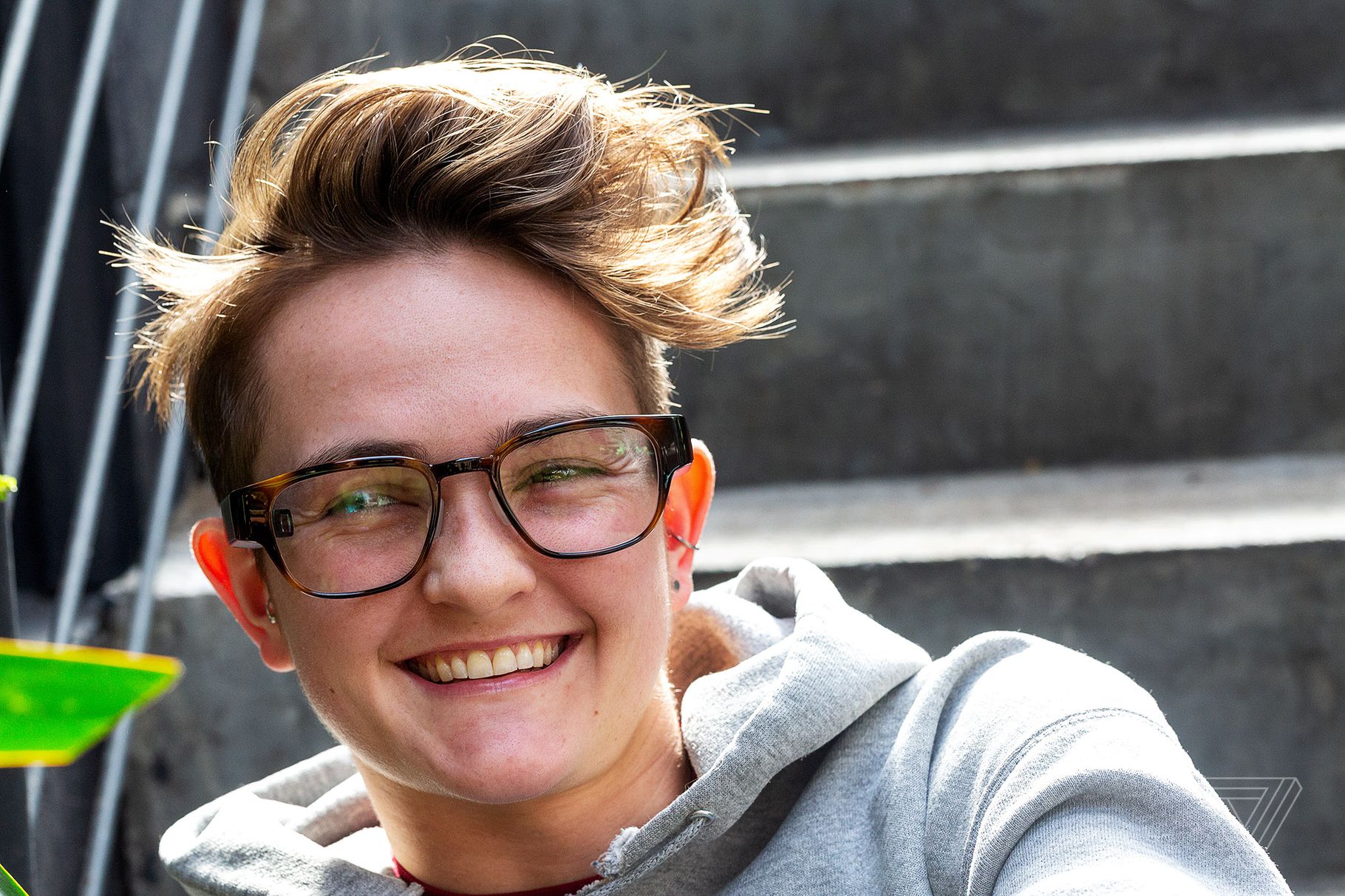 Although few people seem to really want to wear smart glasses or goggles — think Google Glass or Snapchat Spectacles — a startup thinks it’s figured out the recipe to augmented reality success. North, which just rebranded from Thalmic Labs, is launching its first product today, called Focals, with the goal of starting a bunch of Warby Parker-esque stores that’ll sell lots of connected glasses. It’s trying to create the first pair of “everyday smart glasses.”
The glasses show wearers a bunch of information from their phone; can call an Uber; and are extremely customizable to the point of requiring a 3D model of each wearers’ face to make them work.
Lake and his team took me through the purchasing process, which involves sitting in a dark room surrounded by 16 cameras and one attendant. I had to put my hair back in a cotton headband (that I got to keep!) and line my face up with a pair of software-created glasses on a screen. The cameras then took a bunch of photos simultaneously to create a 3D model of my ears, nose, eyes, and face. I’m sure it’s really attractive!
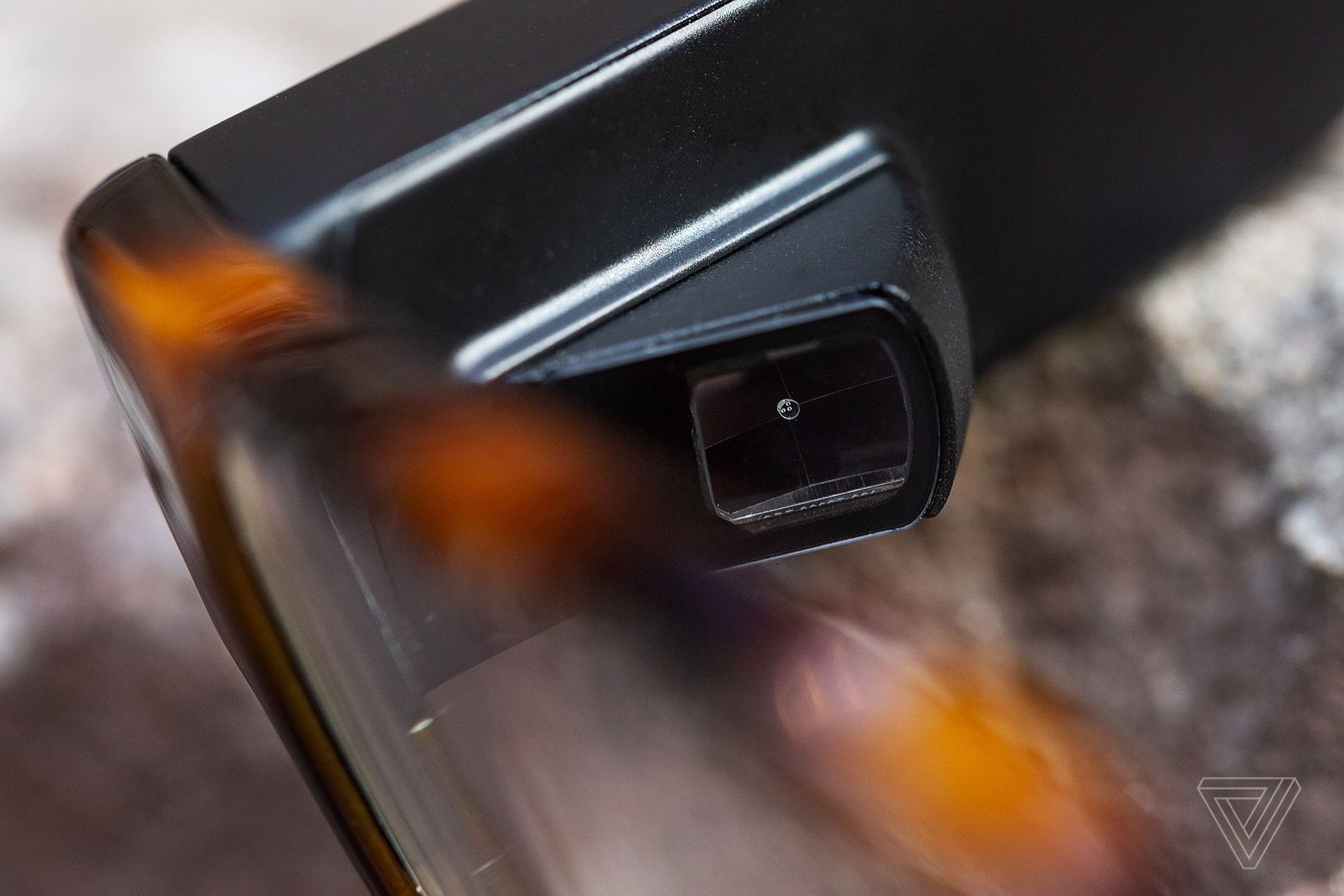
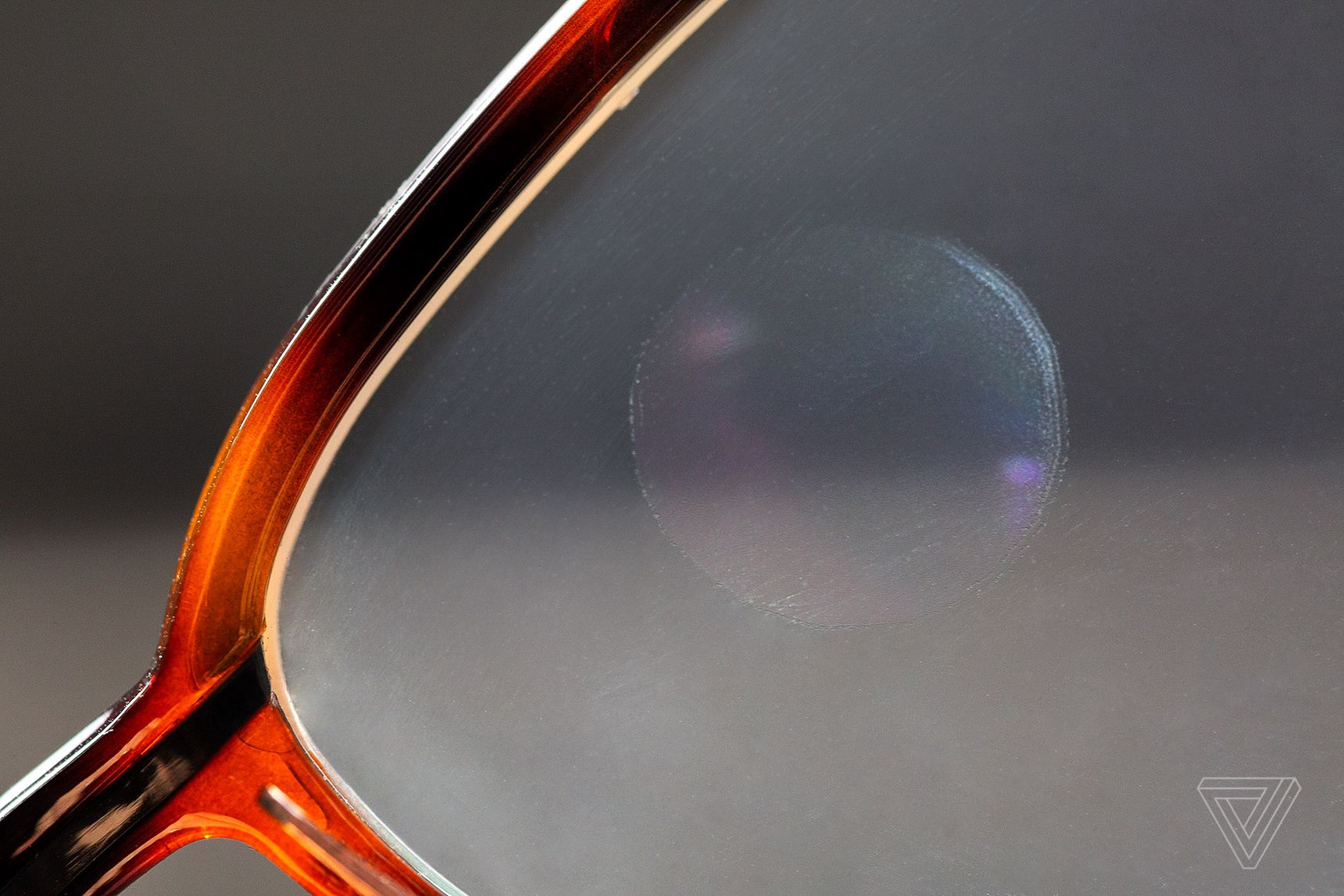
Each Focals pair features a tiny, color laser in the right arm that displays information from your phone over Bluetooth. That laser bounces off a piece of photopolymer material built into the glasses’ right lens, then heads into your eye. It creates a 15-degree viewing area that’s about 300 x 300 pixels.
The glasses work more or less the same as Intel’s disbanded Vaunt smart glasses project in that both take advantage of retinal projection, meaning the image they display shines on the back of your retina, which leaves everything in focus.
Each pair has enough battery to last 18 hours, North says, and can be recharged only through their companion case. This case also charges the essential Focals accessory: the Loop. The Loop is a plastic ring with a joystick-like button that looks like any plastic smart ring you’ve seen on the market. It’s bulky and doesn’t look so nice, but it allows wearers to swipe through their glasses’ interface without having to touch their glasses or do something with their head. A ring makes way more sense to me, although again, it’s ugly.
A pair costs $999, which includes lenses, the prescription, anti-glare coatings, and the fitting.
See the full story here: https://www.theverge.com/circuitbreaker/2018/10/23/18010468/north-focals-glasses-thalmic-labs
Can virtual reality help people become more compassionate? ( Stanford )
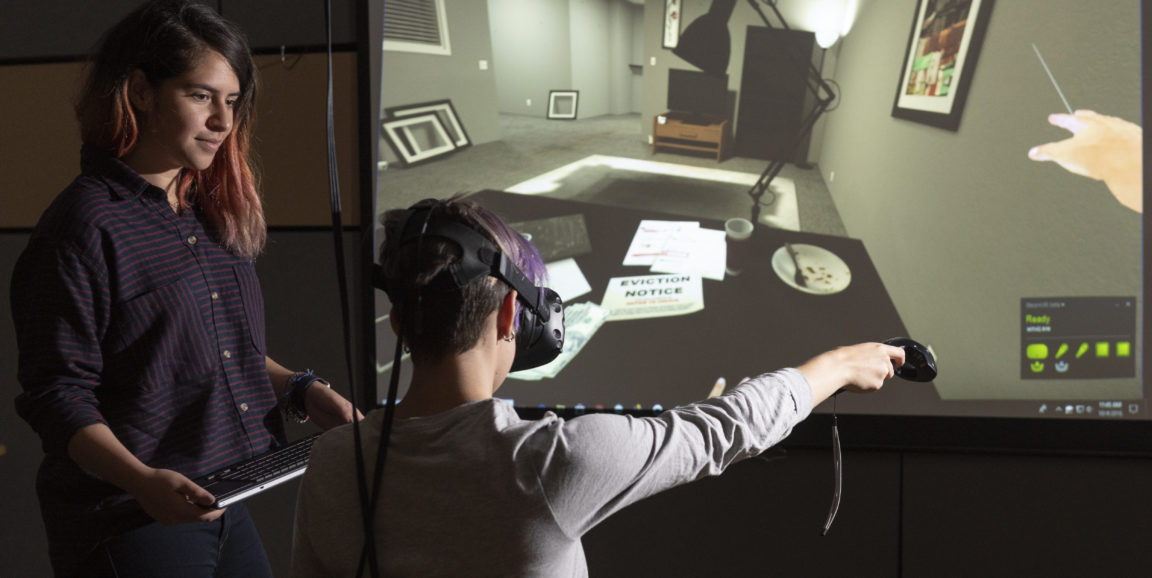
Fernanda Herrera, left, watches as fellow student Hannah Mieczkowski navigates through the VR experience that begins with an eviction notice.
Herrera helped to conduct a two-month-long study of over 560 participants from the ages of 15 to 88.
In two studies involving 560 participants, virtual reality was shown to affect people's level of empathy for others. More specifically, people who experienced via virtual reality what it would be like to lose their jobs and become homeless developed longer-term compassion for the homeless compared to those who were exposed to the information in different ways. Participants were also more likely to sign a petition in support of affordable housing after the study was over.
"Experiences are what define us as humans, so it’s not surprising that an intense experience in VR is more impactful than imagining something,” said Jeremy Bailenson, PhD, a professor of communication and a co-author of the paper.
See the full story here: https://scopeblog.stanford.edu/2018/10/22/can-virtual-reality-help-people-become-more-compassionate/